

One of the greatest concerns among military analysts and experts, not only in the US but across the entire West, is that the war with Iran, especially if it lasts for a long duration, will lead to a dangerous shrinking of Western arsenals and ammunition stockpiles. Analysts already point out that within the first 72 hours of the war, the US Navy launched approximately 400 Tomahawk missiles, a quantity that takes about five years to produce. While concern grows over the US arsenal, President Donald Trump hastened to message that the US possesses nearly unlimited weapon stockpiles allowing them to conduct wars indefinitely... a claim, however, not shared by many American generals and officials. At the same time, amidst this wartime chaos, Israel hurried to advertise the laser systems it uses to intercept Iranian drones, betting on the highly lucrative arms industry, as the war in the Middle East will undoubtedly increase international demand for ammunition and effective weapon systems.
Approximately 400 Tomahawks launched
As the website 19FortyFive reports, the first 72 hours of Operation "Epic Rage" against Iran created a strategic problem for the US Navy. According to preliminary estimates, up to 400 Tomahawk missiles (TLAM) were launched from 13 cruisers and submarines. This figure corresponds nearly to the quantity produced over five years, based on current rates. The article's author, Harrison Kass, a journalist specialized in national security and a former US Air Force pilot candidate, characterized these expenditures as "unsustainable."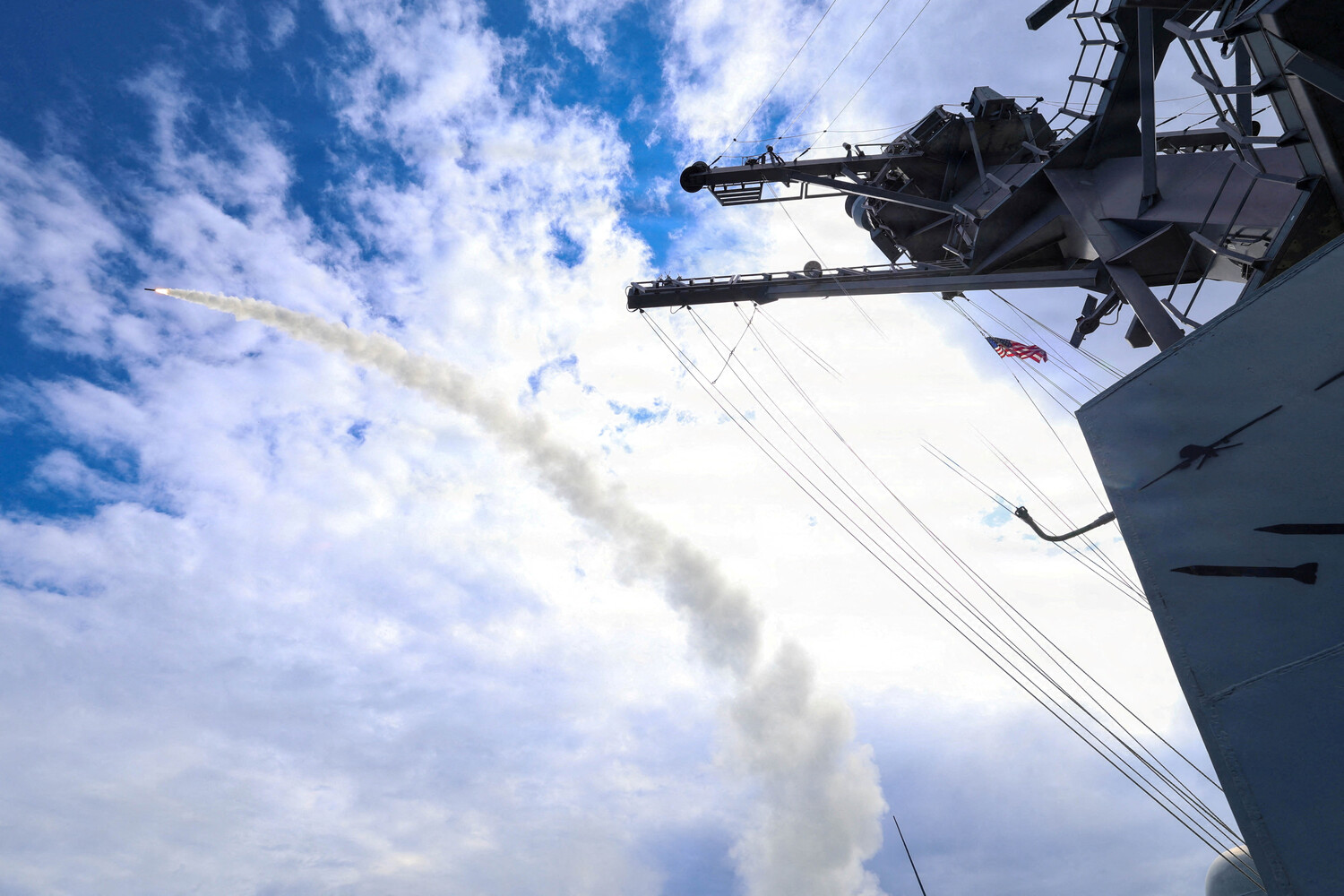
The numbers don't add up
According to his data, approximately 90 Tomahawks are produced annually, while in 2025, 72 missiles were produced. The assembly of each missile requires up to two years due to limited suppliers and specialized components. The Tomahawk is one of the primary missiles of the US Navy for strikes in the opening hours of a conflict. It is launched from ships and submarines, flies at a low altitude hugging the terrain, and is intended for hitting fixed targets—air defense hubs, command centers, air bases, and radars. The journalist emphasized that such intensive use has already caused concern regarding an "empty warehouses" scenario—a situation where arsenals are depleted quickly and cannot be replenished immediately.
The 3 critical issues
Analysts pointed out three critical issues: a shortage of solid-fuel rocket engines, dependence on specific high-precision component suppliers, and "cold" production lines that cannot be immediately shifted to wartime rhythms. In the event of a new crisis—for example, around Taiwan—this could severely limit US capabilities in the Indo-Pacific and delay supplies to allies like Japan and Australia.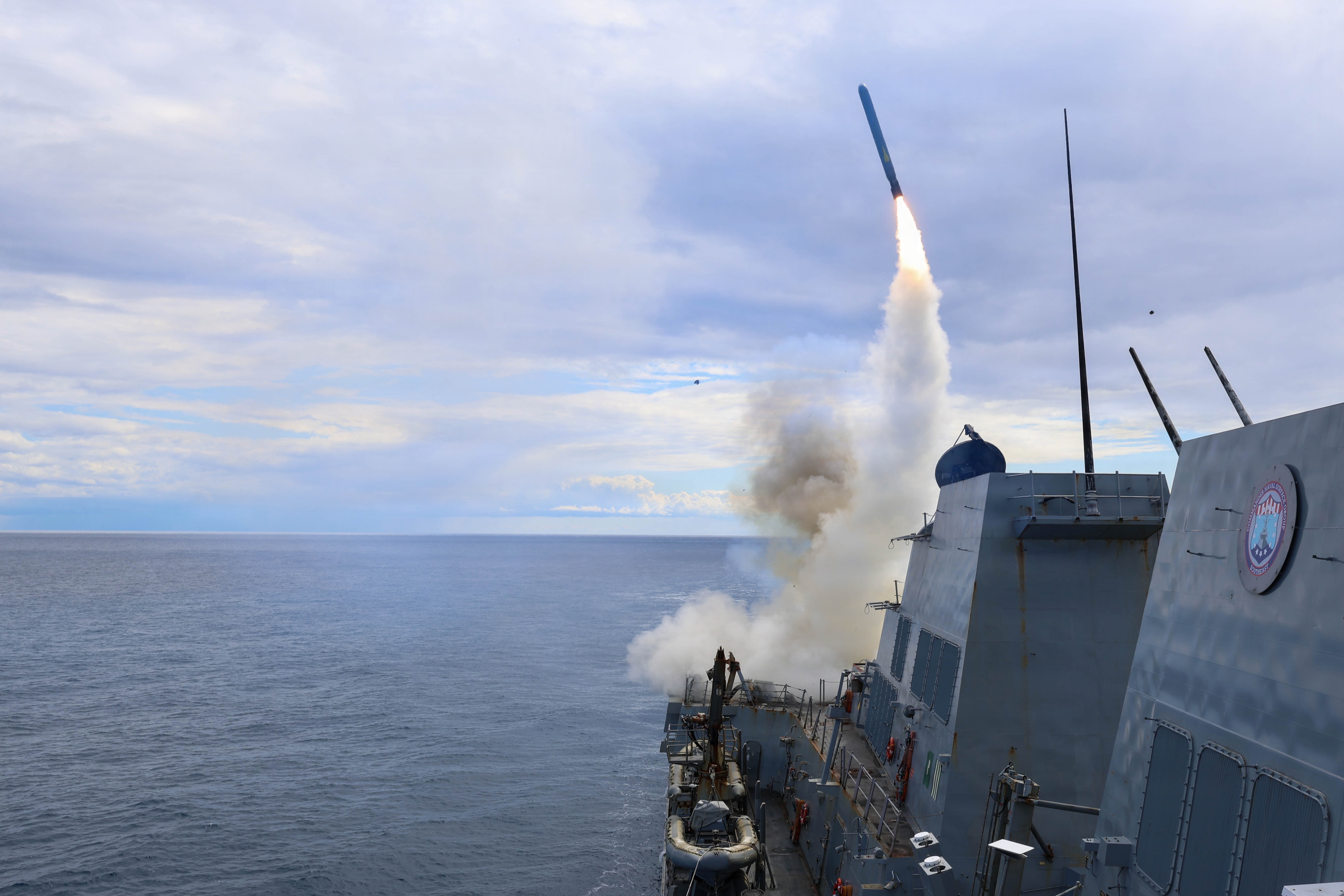
Significant signal from the Pentagon
A senior US official confirmed to CNN that American arsenals are decreasing rapidly due to the escalation in the Middle East. According to his words, the reduction in stockpiles of Tomahawk missiles for ground strikes, as well as SM-3 interceptors for ballistic threats, is causing particular concern. CNN noted that the intense use of weapons in the current war has already led to a noticeable depletion of stockpiles, causing alarm among the military leadership.
"War indefinitely"
However, US President Donald Trump stated on Truth Social that the US can conduct wars "indefinitely" thanks to "nearly unlimited" stockpiles of medium and high-level weapons. The American leader emphasized that the country's arsenals "have never been so large and high-quality" and that the corresponding ammunition has an "almost unlimited supply." "Wars can be conducted 'indefinitely' and with great success, using only these stockpiles (which are better than the best weapons of other countries!). In the end, we have good stockpiles, but we are not where we want to be," Trump wrote. He added that the US is ready to win "on a large scale." Many American stockpiles are kept outside the country. "In remote countries, many additional high-quality weapons are kept for us," the US leader wrote.
Europe concerned about reduced supplies to Ukraine
At the same time, Europeans expressed concern that the massive use of ammunition by the US and Israel during the attacks on Iran may decrease American stockpiles and affect Washington's ability to supply weapons to Kyiv. Bloomberg sources added that currently, the European Union is focused on maintaining US involvement in the Ukraine peace process and strengthening its own air defense system.
Washington is in a hurry
In this context, as the Wall Street Journal reported, the US is seeking the fastest possible conclusion to the military campaign against Iran, due to concerns over the rapid reduction of missile and other ammunition stockpiles. The report states that American resources in the region, especially in case of retaliation from Tehran, may be exhausted quickly, while immediate replenishment is limited. Thus, Washington's priority is the rapid destruction of Iranian missile and unmanned capabilities. WSJ sources clarified that the exact stockpiles of American interceptor missiles are not disclosed, but previous experiences in the Middle East show a trend of rapid consumption.
New weapons
During the attacks on Iranian infrastructure, the US also used new weapon systems. The War Zone (TWZ) reported that American forces used the PrSM (Precision Strike Missile) for the first time in combat conditions. Experts identified the new missile in a US Central Command video: it shows the launch of ammunition into Iran's territory using HIMARS systems. According to TWZ and American military personnel, the PrSM can hit targets at a distance of over 500 kilometers. In October 2025, Lockheed Martin announced plans to increase production to 400 units annually. Previously, Trump at the White House had set the operation's goals, stating that Washington intends to gradually destroy Iran's missile potential and production capabilities. "Our goals are clear. First, we are destroying Iranian missile assets every hour, hitting their ability to produce new missiles; they make quite good missiles. Second, we are wiping out their navy. We have already destroyed 10 of their ships; they are now on the seabed," the American President said.
Economist: Serious shortages in interceptor ammunition
As the military objectives of the United States and Israel appear to be shifting, there is uncertainty regarding Iran's missile capabilities, reports Economist military expert Shashank Joshi. Joshi said that recent messages from US President Donald Trump and Israeli Prime Minister Benjamin Netanyahu have changed since the attacks began on Saturday. "The war goals were not formulated as President Trump and Prime Minister Netanyahu presented them three days ago, in terms of preparing the Iranian people to revolt and overthrow this regime, but they presented them much more narrowly, regarding Iran's missile capabilities," the expert states, pointing out that the US and Israel are likely to maximize the disruption of Iran's war efforts. "We will see a continuous effort to hit not only Iranian missiles and launchers, but also—and this is very important—the supply chain of these missiles," Joshi predicted. As he said, no one knows the capacity of the interceptor stockpiles with which each country started this conflict. "But my assessment is that, after about another week, we will start to see very serious shortages, particularly in the most advanced missile interceptors," the military expert underlined.
Iran's weapons may be more than those of US, Israel
Meanwhile, Russian military expert Yuri Knutov argues that Iran likely gathered underground missile production, so Tehran's weapon stockpiles may be larger than those of Israel and the US. "The forces are massive. On American ships, there are from 500 to 1,000 Tomahawk missiles. But Iran also prepared; there are underground arsenals and bunkers. I assume there are entire underground cities for the civilian population. Regarding stockpiles, Iran possesses from 2,000 to 4,000 ballistic missiles. If Iran uses about 100 missiles a day, the US needs at least 100 interceptors," says Knutov. On his part, Russian doctor of military sciences and retired Admiral Konstantin Sivkov added that during the conflict with Israel, Iranian ballistic missiles covered distances of over 2,000 kilometers, so they can also reach Europe.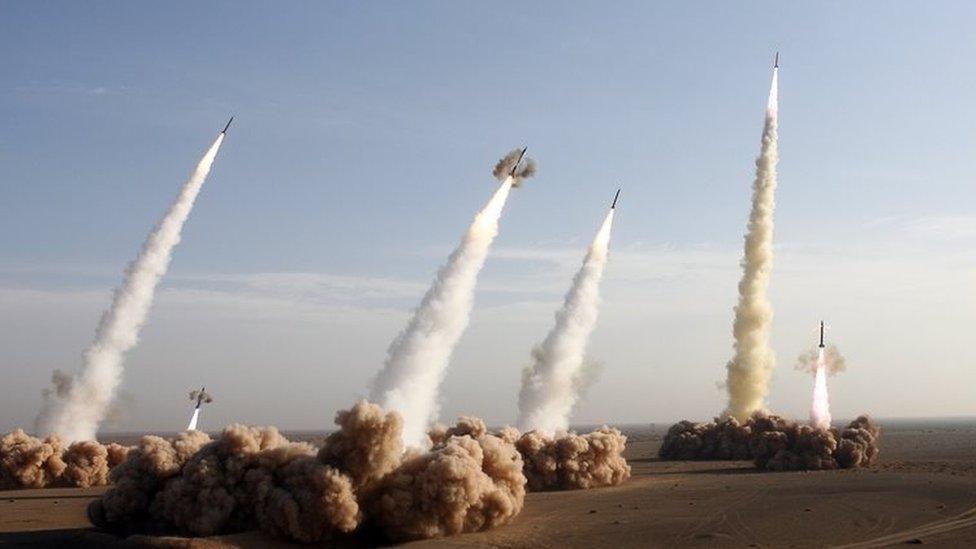
Israel's Star Wars
In the Israeli media, it was reported that Israel used a laser weapon for the first time in the world under combat conditions. The news was reproduced by some Russian Telegram channels, which reported that the Israelis used the Or Aytan system to intercept certain targets in the northern part of the country, while footage of the system's use was published "under military censorship"... supposedly, raising a veil of secrecy around an advanced technology. Although these channels wanted to gain publicity with information and arguments of the style... "it has never happened before," it is reminded that in May 2025, the IDF had already published a video speaking of "the first combat use" of the Magen Or system's laser. According to information, the system had been used in the second half of 2024 during the attack on Hezbollah. Its "victims" were light kamikaze drones, made of plastic and fabric.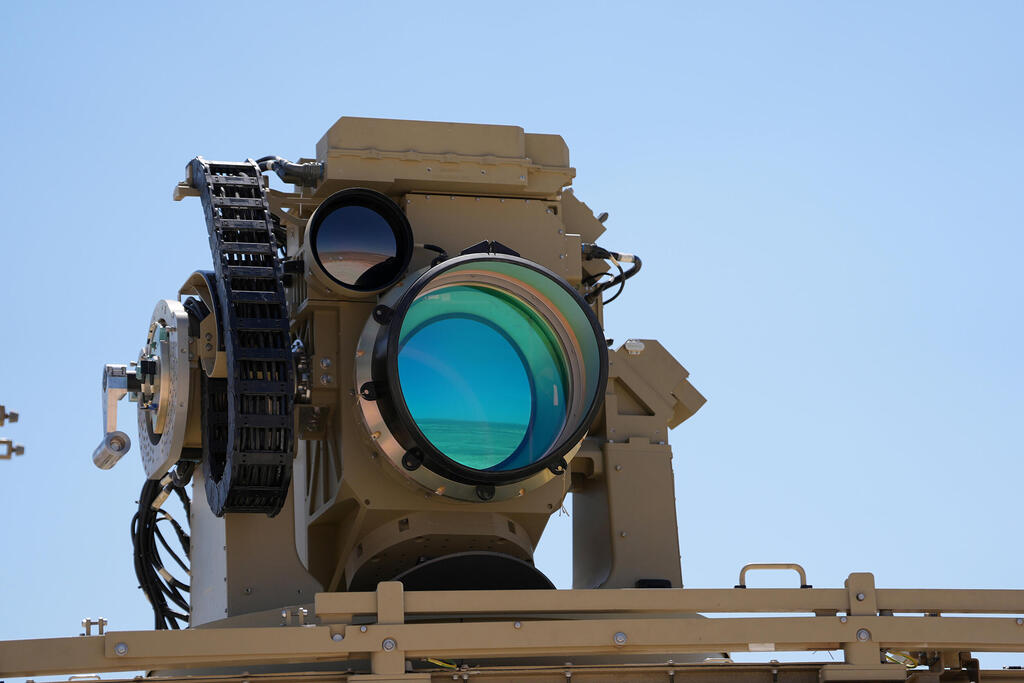
The Russian version
A little later, a video was released showing the use of a laser anti-aircraft system by one of the mobile anti-missile defense groups of Russia's OSpN Kochevnik special detachment. The system's premiere was accompanied by an atmosphere of secrecy, a fact that allowed some commentators to start discussions about allegedly secret developments of the Russian defense industry.
Also in the hands of the Revolutionary Guard
However, careful analysts quickly found that the "secret" laser system was nothing more than the Chinese Silent Hunter, which had already been purchased in 2019 by Saudi Arabia to protect its refineries, which had suffered attacks from Houthi unmanned aerial vehicles. Subsequently, Chinese partners repeatedly presented the system at various exhibitions, and it even appeared in Iran in use by the IRGC.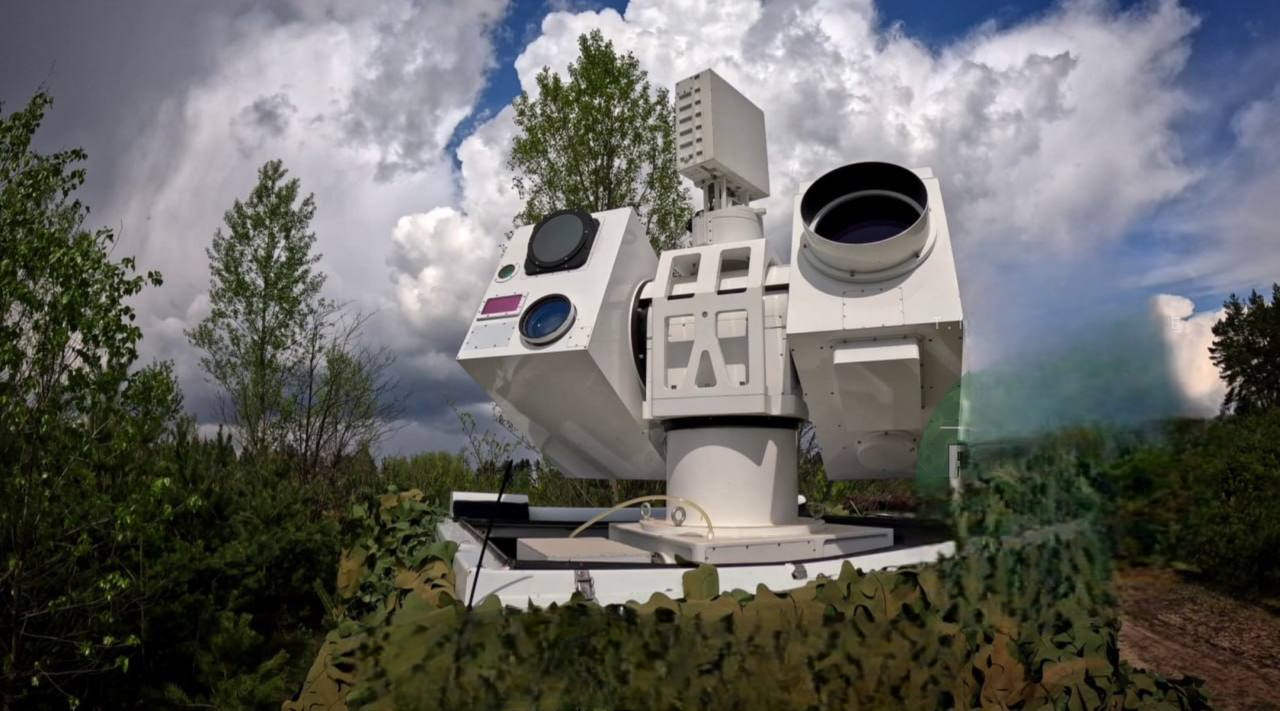
Promising
In Israel itself, an atmosphere that could well be described as a "hysterical cult" has been created around anti-aircraft lasers. The media do not hide their excitement, describing the accuracy, effectiveness, and low cost of interception. For years, fascinating stories have been told to the Hebrew public, such as: • a laser beam from a distance of 10 kilometers hits a coin, • a laser anti-aircraft system can shoot down ballistic missiles during their launch, • destroying a target with a laser costs the same as turning on the kitchen light.
The criticism
The truth is that some skeptics within Israel itself consider that behind all this fuss lies not some fantastic scientific achievement or triumph of Israeli technology, but a massive exploitation of billions from the... budget. Skeptics draw a parallel between the hysteria around lasers and the absorption of huge sums of money for the construction of a protective wall around the Gaza Strip, which was however breached by Hamas fighters on October 7, 2023. Furthermore, critics observed that during the 12-day war in June 2025, when Iran launched thousands of drones against Israel, there were no particular reports of successes exactly from laser weapons. Most of the work was done by the ground-based Iron Dome air defense system, the air force with cheap APKWS interceptor missiles, and even Apache helicopters, which mowed down the Shaheds over fields and deserts.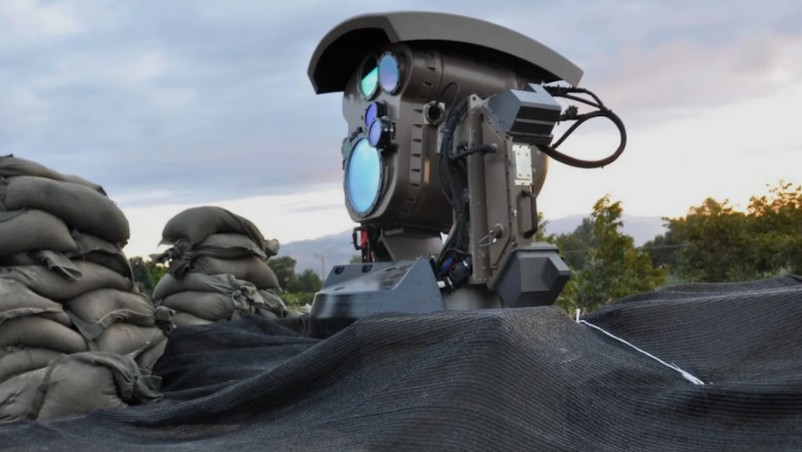
Expensive and... useless
By the way, footage of burning refineries is now arriving from Saudi Arabia, which were exactly supposed to be protected by Chinese Silent Hunter systems. In the opinion of skeptics, the massive promotion of the Iron Beam / Magen Or series of laser interception systems is connected to the fact that the manufacturer, Rafael, has very good relations with the government and simply cannot be left without orders. In reality, however, it is an expensive and almost useless supplement to a truly functional anti-missile/anti-aircraft defense system, the Iron Dome, as laser emissions can only be used for the defense of fixed targets and at very short distances.
Interception problems
The laser beam is presented as a cheap, effective, and advanced alternative to kinetic interception means. It is said that the beam can burn a target within a second, hits it at any distance, and costs as much as electricity. This hypothesis is reinforced by the observation that laser cutting machines are widely used in industry. That is, if a laser cuts steel on a cutting bench, why not do the same in the air? Well—at least, Physics has a few objections to this. The first problem is connected to a fundamental phenomenon, diffraction. Light behaves like a wave, and this means that as it covers distance, the beam will expand. This is a basic characteristic of light from which you cannot escape. An anti-aircraft system must operate at least at distances of kilometers. And it does not have a predetermined focal length, simply because the target is constantly moving. Thus, diffraction is activated, telling us that the emitted beam will have the shape of an expanding cone. And as the beam expands, the energy at its far end will be less than at its base. The greater the distance it travels, the greater the power loss. The magnitude of diffraction depends on many factors: wavelength, properties of the propagation medium, etc. Roughly, at a distance over five kilometers, the energy per square centimeter of the target surface can be 13 times smaller than what the emission gives at its output.
It cannot... burn
Furthermore, every material has a certain melting and ignition temperature, meaning it must be heated to a specific temperature to begin to be destroyed. Of course, we are not talking about the immediate burning of aircraft. Even a powerful laser needs time to heat the target. Again, depending on many factors, this time can be measured in seconds, tens of seconds, or even minutes. During this time, the target continues its course toward its destination. There is therefore a contradiction: at large distances, the emission cannot function; at short ones, its reaction speed is limited. For the same reason, the interception of large drone swarms with lasers seems extremely risky: the swarm will pass the interception zone, losing only a few machines. The energy that would be acceptable for air defense purposes—i.e., range and interception speed—could only be achieved with megawatt-class lasers, but the problem is that these weigh tens of tons and have the size of a train wagon, which is not practical for a weapon outside of ships. Not only is the laser extremely ineffective compared to kinetic means because of the fundamental properties of light, but huge problems are also created by the properties of the propagation medium through which it must reach the target. Another "deterrent factor" is the phenomenon of radiation reflection from metallic surfaces. A well-polished aluminum sheet can reflect up to 90% of the energy falling on it, further reducing the effectiveness of the laser beam by about 10 times. Understanding these simple physical rules leads us to the conclusion that the creation of laser systems with a range of tens or hundreds of kilometers is impossible due to fundamental physical constraints. The position of laser emissions in their current form is the interception of "soft," slow targets within a radius of a few kilometers. And indeed, one can do the same job with means that are dozens of times cheaper, more reliable, and more flexible.
From the show of the 80s... to the show of 2026
In the 1980s, when the Reagan administration was trying to involve the Soviet Union in the futile arms race of "Star Wars," they made a provocative demonstration: the MIRACL laser destroyed the casing of a Titan-1 missile. The experiment caused excitement in the US. And why not—after a few seconds of radiation, a huge missile exploded. Only, on television then they forgot to say that the MIRACL laser could produce about 1 MW of continuous power, weighed from 100 to 150 tons, radiated the missile from a distance of... 800 meters, and the missile casing itself was under excessive internal pressure (inflated with air) to ensure an impressive image of an explosion. It was a show. Today, the Israeli military-political leadership also presents its own show, hoping to sell some of its "miraculous" weapons to Arab countries. And here we must clearly understand that if for others the purchase of such systems is a very expensive game, for others, without exaggeration, it is a game with death. In Israel, laser systems are integrated into an excellently functioning Iron Dome. For example, Russia does not possess a comparable system that covers the entire territory of the country with air defense means.
www.bankingnews.gr












Readers’ Comments