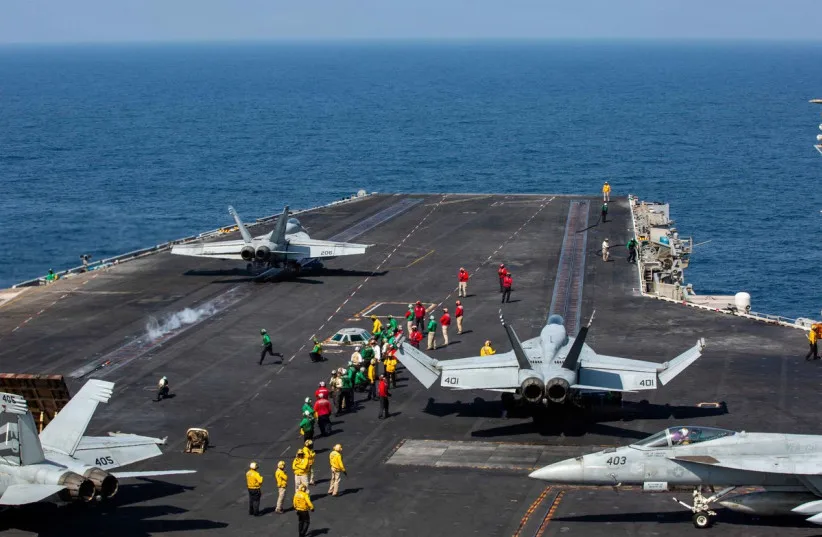
In an escalation that once again places the Middle East in a state of strategic tension, the elite units of the Iranian Armed Forces, the Islamic Revolutionary Guard Corps IRGC, announced an attack against the U.S. aircraft carrier USS Abraham Lincoln.
The attack, according to Iranian television IRIB, was carried out with four ballistic missiles, as stated by the IRGC press service on Telegram on Sunday 1/3/2026.
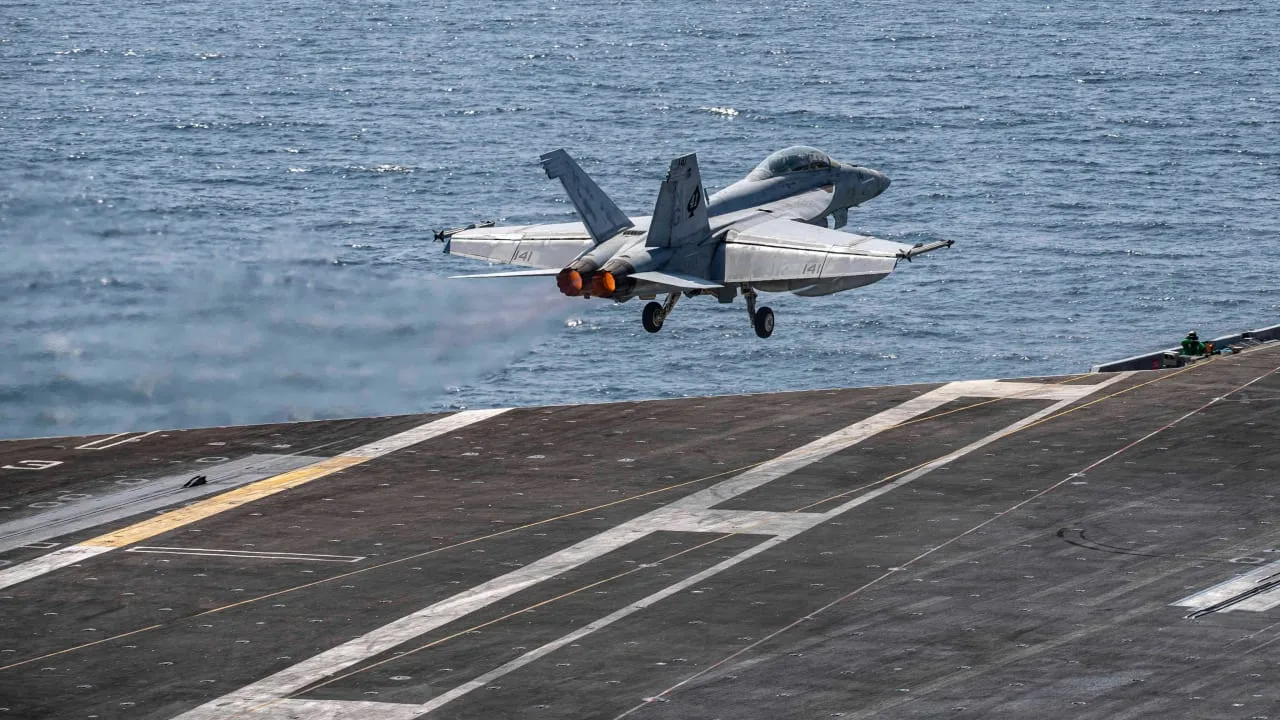
The announcement of the Revolutionary Guards
“The American aircraft carrier Abraham Lincoln was hit by four ballistic missiles,” the Revolutionary Guards said in a statement broadcast by local media, warning that “land and sea will increasingly become the graveyard of terrorist aggressors.”
The USS Abraham Lincoln has been operating in the Arabian Sea since late January. There was no immediate confirmation of damage or casualties from the U.S. military.
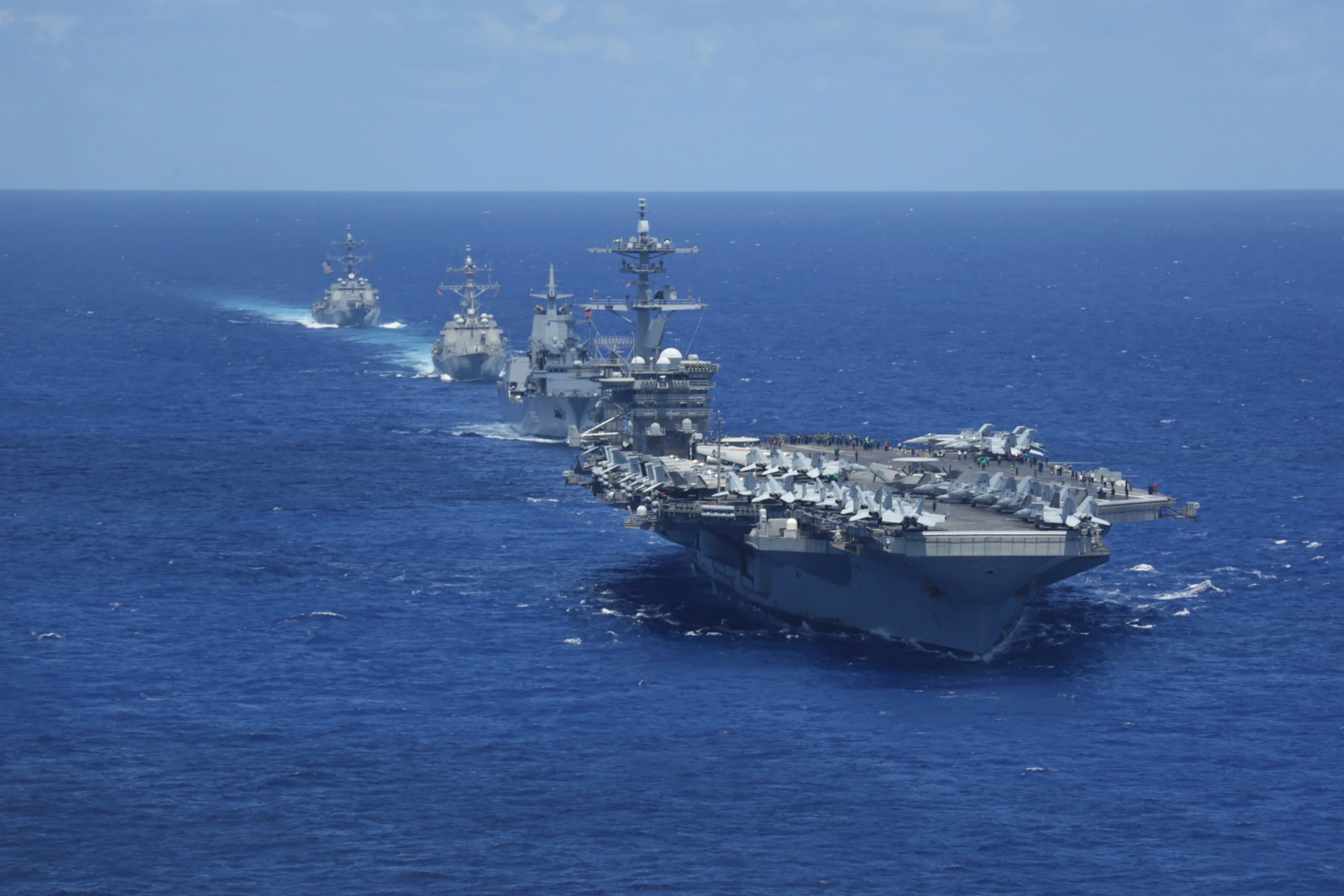
“We will sink it”
Despite the significance of the action, Forbes analyst Peter Suchiu underscores that it is almost impossible to sink a U.S. aircraft carrier with existing means.
Modern design specifications of aircraft carriers ensure the maintenance of buoyancy even after serious damage, making their total destruction through conventional missile attacks difficult.
This does not, however, reduce the intensity and risk of the situation.
Ballistic missiles can cause significant damage to the ship’s upper and critical systems, such as aircraft, flight decks and communication systems, temporarily reducing the aircraft carrier’s operational capability and creating serious pressure on U.S. command.
In the previous period and before the attacks of 28 February 2026, officials of the Revolutionary Guards were warning the United States that Iran would become the first country in the world to sink an aircraft carrier.
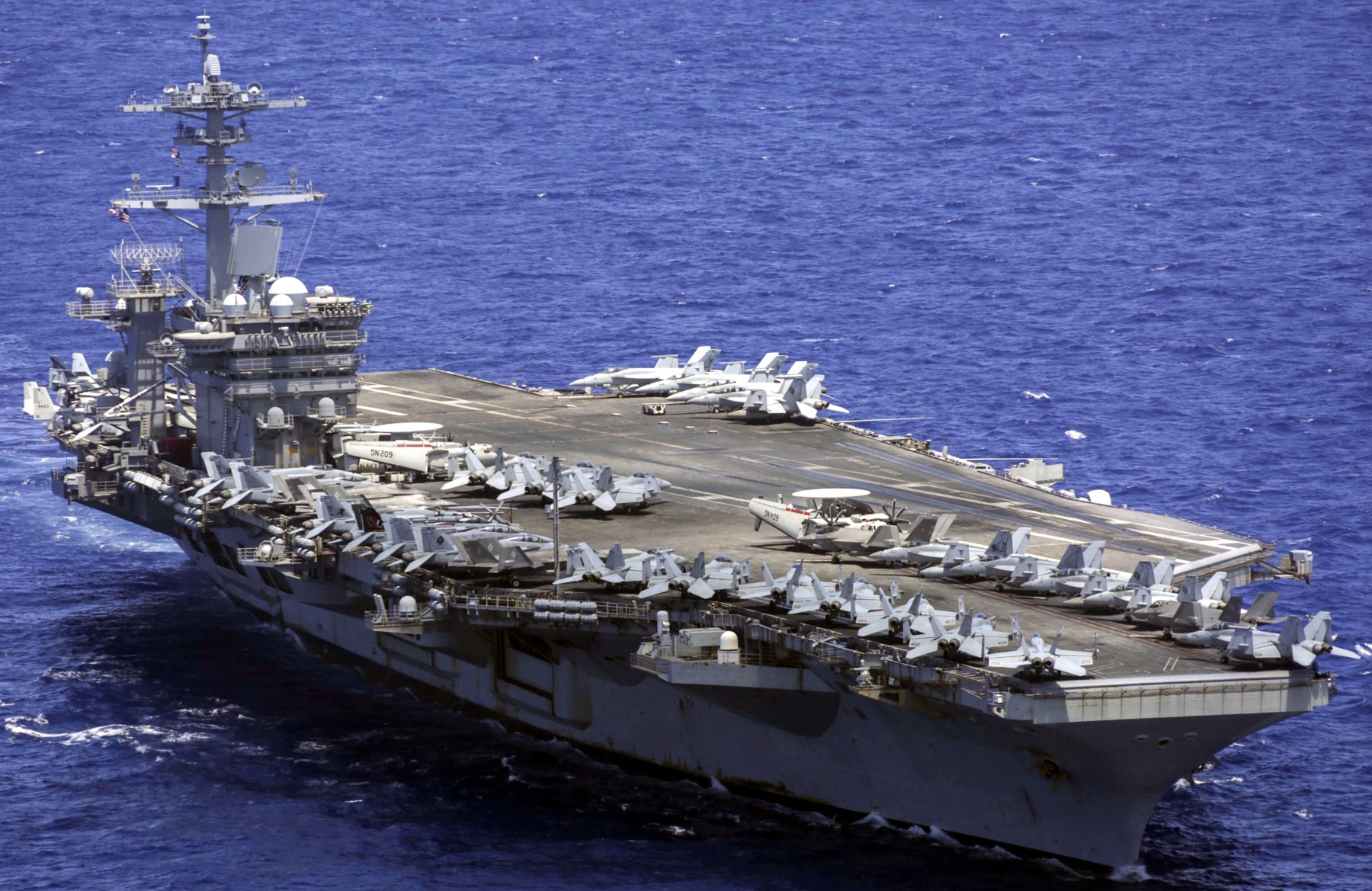
Target and purpose of the attacks
The Secretary of Iran’s Supreme National Security Council, Ali Larijani, earlier addressed an appeal to neighboring countries due to the escalation of the conflict, emphasizing that Iran’s attacks are directed exclusively at U.S. bases in the region.
This action comes as part of Tehran’s overall strategic response to U.S.-Israeli military operations, aiming to underline Iran’s capability to strike strategic targets even in long-range maritime areas.
The choice of the USS Abraham Lincoln as a target carries particular significance, as aircraft carriers constitute the primary instrument of United States power projection in the region.
The attack, regardless of its outcome, has clear political and strategic significance, sending a message of determination to Washington and its allies.
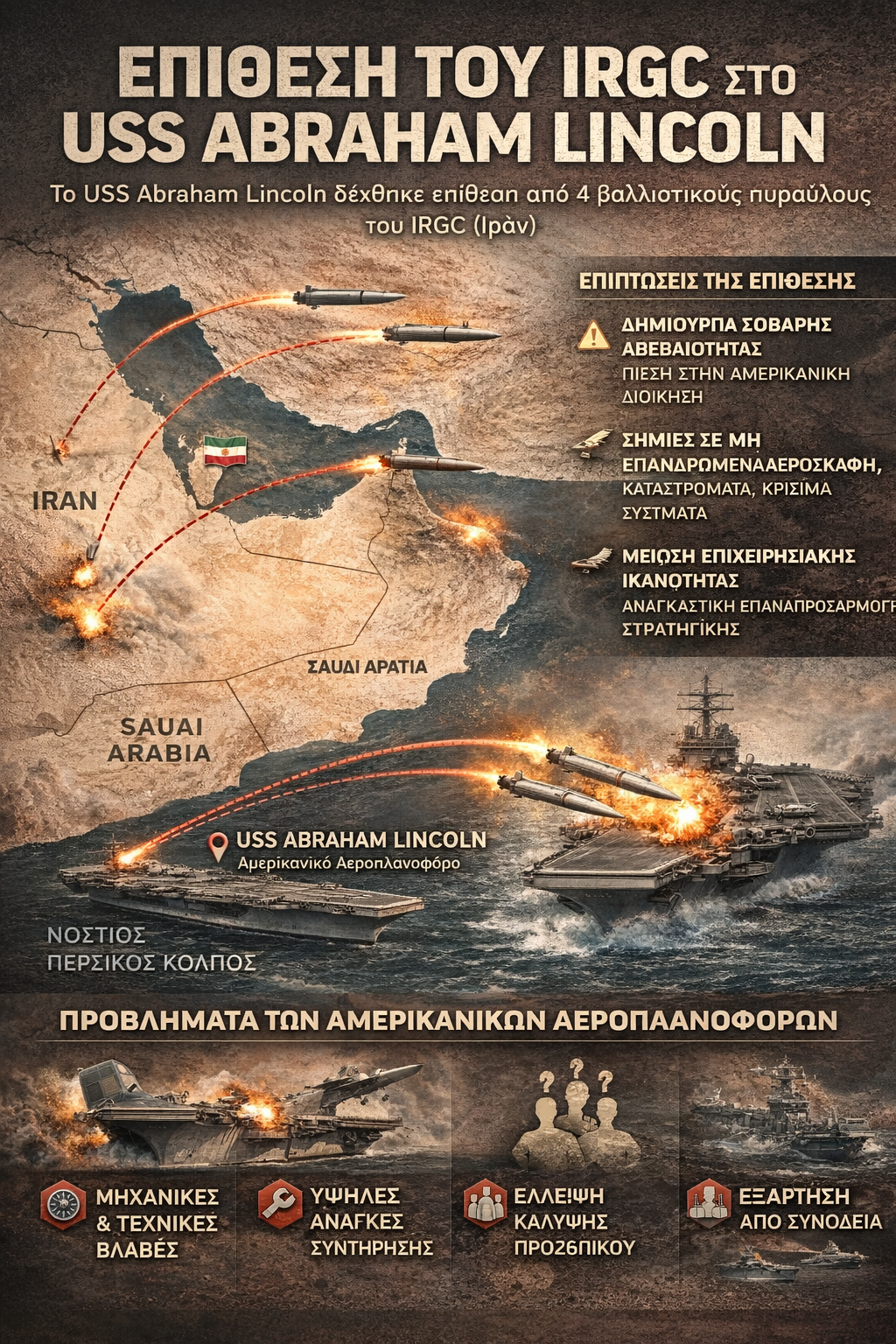
Geopolitical dimension
The IRGC attack acquires particular significance within the broader geopolitical framework of the Middle East:
1) Dispatch of a strategic message: Tehran demonstrates its ability to strike high-value U.S. targets, even in international waters, sending a message of deterrence.
2) Strengthening internal legitimacy: These actions are presented to the domestic audience as proof of the IRGC’s determination to protect national security.
3) Pressure on neighboring countries: Ali Larijani’s appeal to the states of the region underlines Tehran’s pursuit to limit third-party involvement in the escalation and to confine military operations to U.S. targets.
Strategic implications for the United States
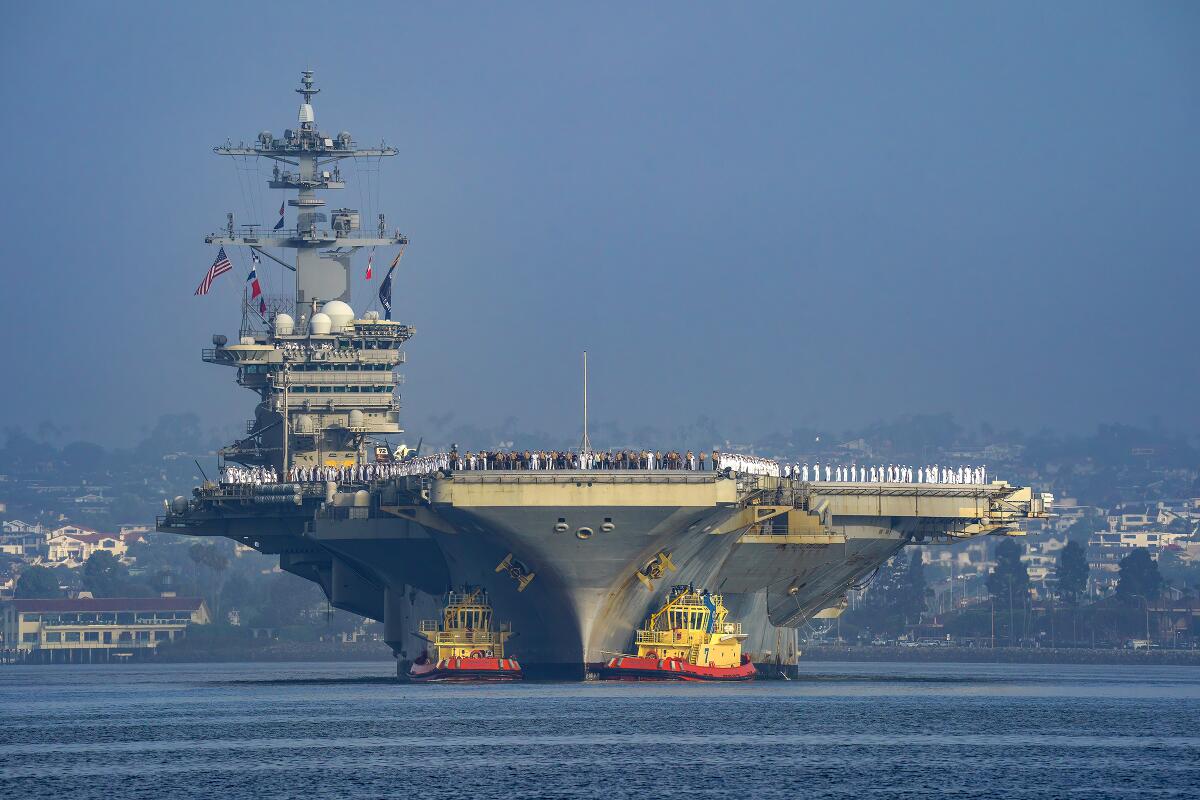
Although the likelihood of sinking the USS Abraham Lincoln is low, the attack carries significant strategic implications.
Temporary damage to aircraft, guidance systems and communications limits the ship’s ability to conduct full operations.
Washington is compelled to reassess the deployment of forces in the region, increasing protection of aircraft carriers and bases.
The attack places pressure on political leaders of the United States and their allies, highlighting the vulnerability of even the most advanced military systems.
Significant escalation
The IRGC attack on the USS Abraham Lincoln constitutes a significant escalation in the regional conflict and demonstrates Iran’s determination to defend its interests against the United States and Israel.
Despite the technical difficulties in the complete destruction of a U.S. aircraft carrier, the strategic significance of the action is indisputable: it underlines Iran’s ability to strike high-value targets, to affect U.S. operational power and to send a strong message of deterrence in the Middle East region.
This crisis highlights that, even in an era of ultra-modern technology, strategic influence is not based solely on the capability of total destruction, but also on the ability to exert serious pressure, uncertainty and strategic readjustment on the adversary.
The problematic image of U.S. aircraft carriers
In previous weeks, a particularly negative image was presented regarding U.S. aircraft carriers.
The USS Ford Although it was supposed to arrive in the Mediterranean on 24-25 February, its arrival was delayed due to technical problems, specifically due to its toilets.
The flushing system was not functioning, and as experts point out, it is not easy to serve approximately 4,500 crew members with 650 toilets experiencing malfunctions.
This led the “Gerald R. Ford” to visit the Souda base in Crete on 23 February for repair, maintenance and resupply, departing three days later, on 26 February.
Senator Mark Kelly, a former pilot, warned that the continuous presence of an aircraft carrier at sea for more than six months causes wear and increases the likelihood of accidents, not only with aircraft but also among the crew itself, as exhaustion and minor accidents become more frequent.
Admiral Mike Franken points out that the delay of scheduled repairs may lead to a dramatic increase in cost and to significant operational problems in the event of a conflict.
Previous incidents, such as the accidents of the USS Harry S. Truman in the Middle East in 2024-2025, prove that the excessive exploitation of U.S. warships can have serious consequences, even during periods when there is no active engagement in war.
The continuous presence of the USS Gerald R. Ford in multiple operational zones, Mediterranean, Caribbean, Middle East, increases the risk of human and technical errors, which worsens the overall image of U.S. military preparedness.
China’s assistance to Iran in sinking an aircraft carrier
In the previous period it had become known that Tehran was finalizing preparations for a large-scale purchase of Chinese CM-302 supersonic anti-ship missiles, which could pose a significant threat to U.S. naval forces in the region, according to Reuters.
As noted, negotiations for their acquisition began approximately two years ago.
The missiles have a range of approximately 290 kilometers and are designed to penetrate naval defenses by flying at low altitude and high speed.
Their potential deployment could significantly enhance Iran’s strike capabilities and increase risks for the U.S. Navy in the Middle East, the agency warns.
According to the report, the CM-302 are among the most advanced weapons systems that China could supply to Iran.
“If Iran deploys supersonic anti-ship missiles in the region, the strategic balance will change substantially,” a former Israeli intelligence officer told Reuters.
The agency also notes that the Chinese Ministry of Defense did not respond to a request for comment, which intensifies speculation surrounding the possible completion of the agreement.
www.bankingnews.gr















Readers’ Comments