The American air strategy toward Iran has repeatedly highlighted a critical problem, dependence on a very limited number of GBU-57, the extremely valuable penetration bombs designed to destroy underground bases.
Despite the impressive technology, the real strategic power of the United States is constrained by the extreme rarity and high cost of these weapons.
The launch of a large-scale air operation by the United States and Israel against Iran, which began on 28/2/2026, brings to light a central problem, dependence on a very limited quantity of Massive Ordnance Penetrator (MOP) bombs, considered unique in their ability to destroy Iran’s underground ballistic bases.
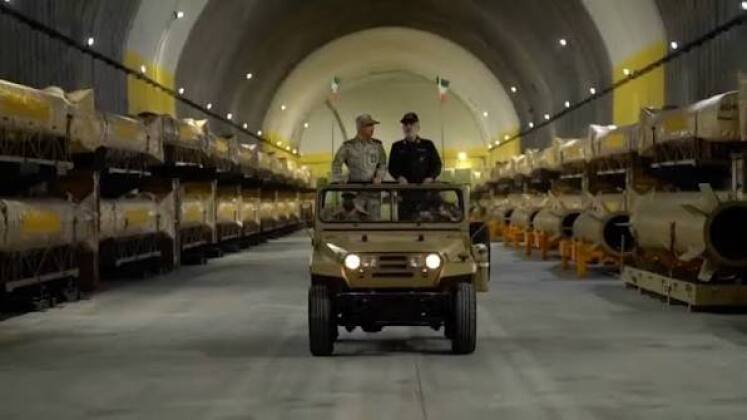
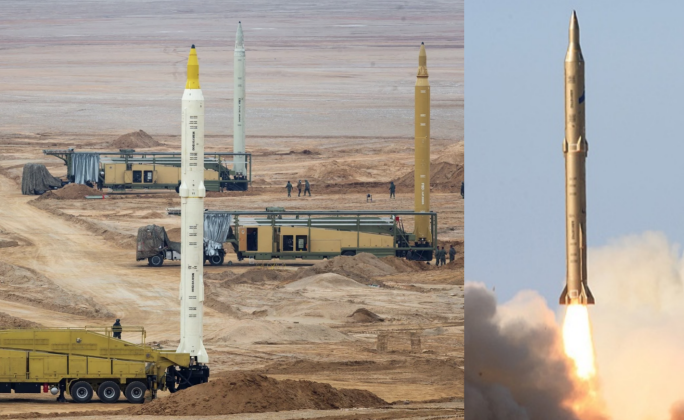
The selection of targets, missile bases in Khosrowshah, underground centers in the mountainous regions of Sahand, Urmia, Bandar Abbas and Qom, clearly shows that Washington seeks to neutralize the main pillar of Tehran’s deterrence, its ballistic missile arsenal.
This deterrent system has for decades limited the options of the United States and the broader Western Bloc to attack Iran without serious cost.
The limited but targeted missile attacks of Iran on American and Israeli facilities in the Middle East prove Tehran’s ability to respond effectively, making the full neutralization of the ballistic system a strategic prerequisite for any broader American operation.
The nature of the problem
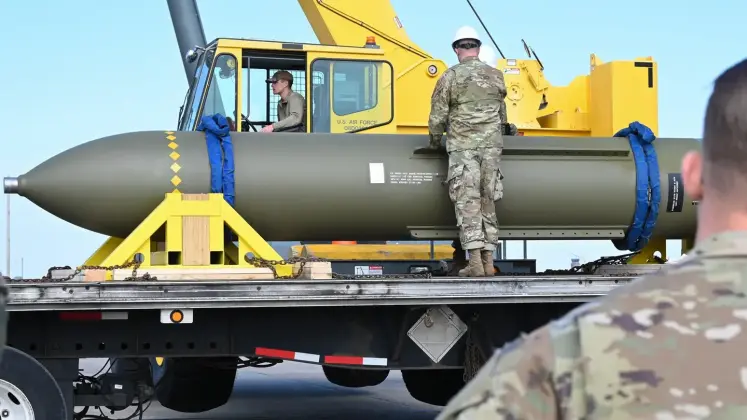
The GBU-57 bomb, also known as the Massive Ordnance Penetrator (MOP), has been designed to penetrate dozens of meters under rock and concrete, making it the unique choice of the United States for addressing underground Iranian missile bases.
Each bomb costs over 370 million dollars, and its production is limited.
After the use of 14 bombs during operation Midnight Hammer in June 2025 at the nuclear plants Fordow and Natanz, the stockpile was drastically reduced, today it is estimated that only 6 to 15 bombs are available.
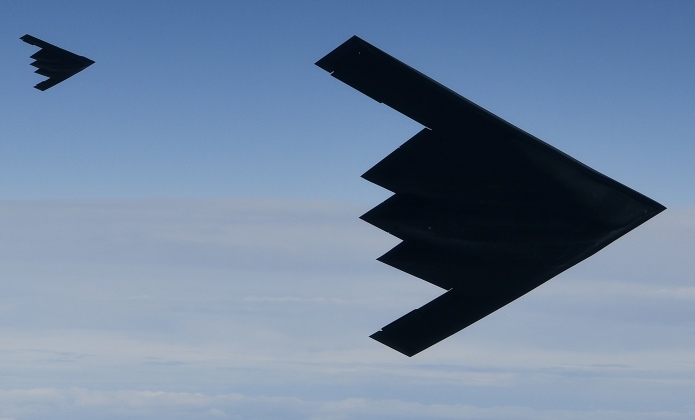
This extremely small quantity makes it practically impossible to conduct large strategic attacks against Iran’s underground facilities, even with full participation of the available B-2.
Even a single failure or loss of an aircraft or a bomb can cancel the entire strategic attack.
Even before this strike, the small fleet of stealth B-2 bombers, just 19 aircraft, constituted a significant constraint on the ability of the United States to execute major military operations. The combination of limited aircraft and an extremely limited number of GBU-57 means that the United States does not possess real capability for extensive destruction of Iranian underground infrastructure.
Exclusive dependence on a single supplier
The production of the GBU-57 depends exclusively on Boeing, which holds the intellectual property of the critical tail kit guidance system.
This situation creates a serious problem, the United States cannot replenish or replace critical components from other suppliers, nor can it increase production in a short period of time. To address the need to refill stockpiles, the Air Force was forced to conclude an exclusive contract with Boeing and to reverse-engineer a component from the ATACMS system, as analyzed by Military Watch Magazine.
The burden on production from dependence on a single supplier, known as “vendor lock,” constitutes a critical weakness for a superpower that supposedly possesses full strategic readiness.
The fact that deliveries of new GBU-57 are expected only in 2028 renders the B-2 fleet essentially incapable of striking underground targets in Iran during the next two years.
Implications for American strategy
The lack of a sufficient number of GBU-57 has immediate geopolitical consequences:
1) Limited capacity for full deterrence: America cannot guarantee the neutralization of all of Iran’s ballistic bases in an extended operation. The likelihood of survival of significant infrastructure increases Iran’s resilience.
2) Increased strategic risk: With limited weapons, each operation becomes high risk. The use of all available GBU-57 in one cycle of attacks leaves the country without means for future crises.
3) Strategic dependence on individual aircraft and weapons: The B-2 fleet and the GBU-57 constitute the crown jewel for the United States.
The loss of an aircraft or a bomb in operations could cancel the entire attack.
4) Delays in replacement and evolution: The successor of the GBU-57, designed for the new B-21 bomber, remains under development and will require several years to be available in sufficient numbers. Until then, the American strategy of full deterrence remains vulnerable and limited.
5) Complexity and uncertainty of operational planning: Iran’s underground bases are constructed in such a way that the use of the remaining American low-penetration weapons, for example conventional aerial bombs, does not provide reliable results, increasing operational risk and uncertainty.
Political and geopolitical consequences
The strategic weakness toward Iran is not merely a technical issue.
It has significant geopolitical ramifications.
The limited capacity for full deterrence gives Tehran room for strategic maneuver and diplomatic pressure.
High-risk American policy may trigger chain reactions in the region, as allies and adversaries monitor the effectiveness of the strikes
The multi-year delay in replacing the GBU-57 may affect future choices of the United States not only in Iran but also in other regions where underground installations constitute strategic targets.
Strategic gap
The American dependence on GBU-57 bombs highlights a significant strategic gap, technological superiority does not necessarily mean the ability to carry out large-scale attacks.
Limited resources, dependence on a single supplier and slow replenishment of stockpiles render the United States vulnerable to strategic surprises and limit its options in a dynamic region such as the Middle East.
This strategic reality underscores that, despite military power and advanced technologies, the American capability to overturn or eliminate Iran’s underground ballistic missile bases remains doubtful and dangerously limited.
The critical question concerns not only the military capability of the United States, but also its ability to maintain its influence and deterrence in the Middle East.
As long as production of new bombs is delayed and strategic dependence on Boeing remains, Washington faces a real strategic weakness, which may determine the balance of power in the region for the coming years.
Technological superiority without a sufficient number of critical weapons is not enough, the strategic power of the United States depends more than ever on its ability to replenish quickly, adapt and maintain high-value stockpiles to confront real threats.
Until then, the strategic power of the United States in Iran remains highly limited, fragile and high risk.
www.bankingnews.gr















Readers’ Comments