

The assassination of the Supreme Leader of Iran, Ali Khamenei, and members of his family is not merely another episode on the already explosive geopolitical chessboard of the Middle East.
It constitutes an event with enormous political, legal and moral implications, bringing back to the forefront the issue of international legitimacy and American strategy in the region.
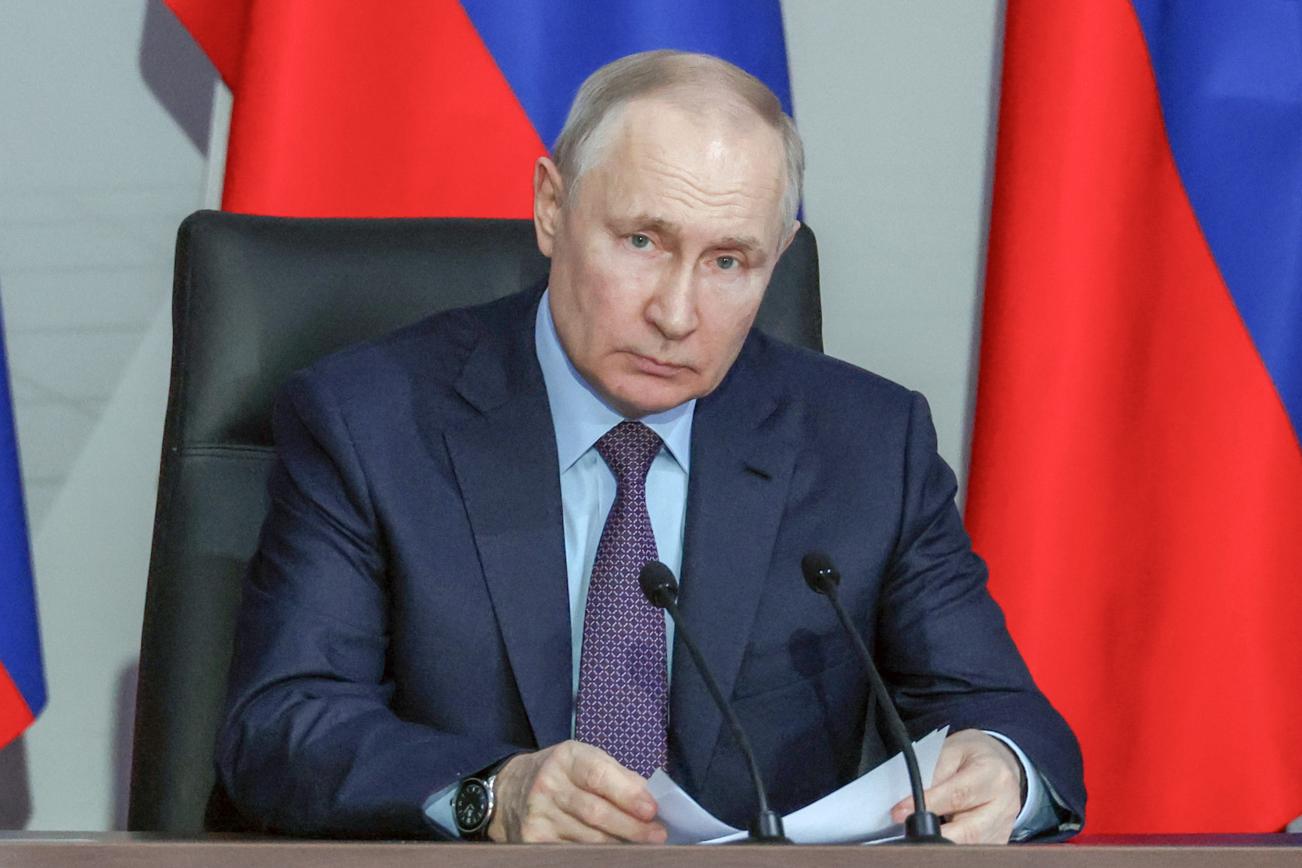
Moscow’s reaction was immediate and emphatic: the President of Russia, Vladimir Putin, described the assassination as a “cynical violation of all norms of human morality and international law,” in a telegram of condolences to his Iranian counterpart Masoud Pezeshkian.
A telegram with political weight
Putin’s message was not a routine diplomatic gesture.
In his wording, he stressed that the assassination of the “Supreme Leader of the Islamic Republic of Iran, Seyed Ali Khamenei, and members of his family” constitutes a blatant violation of fundamental principles of international law.
At the same time, he requested that “the most sincere words of sympathy and support” be conveyed to the relatives of the deceased, to the Iranian government and to the Iranian people.
Moscow did not limit itself to emotional tones.
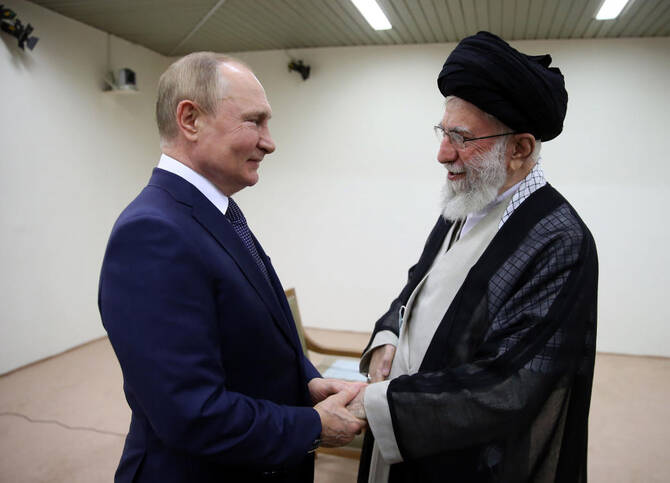
In the same statement, the Kremlin noted that Khamenei will remain in Russia’s memory as an “outstanding man” who contributed decisively to the development of Russian Iranian relations at the level of a “comprehensive strategic partnership.”
This wording reveals the depth of geopolitical cooperation between Moscow and Tehran, particularly at a time when both countries are facing Western sanctions and pressure.
The military operation and the justifications
On 28 February, the United States and Israel launched a military operation against Iran, striking major cities, including Tehran.
The White House justified the attack by invoking “missile and nuclear threats” that, according to Washington, were emanating from Tehran.
The invocation of “preemptive defense” is not new in U.S. rhetoric.
From Iraq in 2003 to targeted assassinations of officials in the Middle East, American policy has repeatedly relied on broad interpretations of the concept of self defense. However, the targeting of a sitting head of state, and within his own territory, raises serious questions regarding violations of sovereignty and the principles of the UN Charter.
The assassination of political leaders is not merely a military act.
It constitutes a political act with international consequences.
The international legal order, as shaped after the Second World War, is based on the principle of sovereign equality of states and the prohibition of the use of force, unless there is an immediate armed attack. The interpretation of this principle remains the subject of intense disputes.
The vision of a multipolar world more relevant than ever
Putin’s position is not limited to moral condemnation. It reflects the deeper conflict between Russia and the United States over the global balance of power.
Moscow promotes the narrative of a multipolar world, where no single power has the right to unilaterally impose its will.
For Russia, the attack against Iran fits into a broader strategy of destabilizing states that resist American influence.
Cooperation between Moscow and Tehran has intensified in recent years, both militarily and in the energy sector. Iran constitutes a critical link in the axis seeking to challenge Western hegemony.
Putin’s condemnation of Khamenei’s assassination therefore also functions as a message to Washington: Russia does not accept practices that undermine international stability, particularly when they strike its strategic partners.
Legal and moral dimensions
The targeted killing of a political leader raises critical issues of international law.
Although the United States has argued in previous cases that such actions constitute a lawful exercise of self defense, many legal scholars contend that this practice erodes the foundations of the international legal order.
The concept of “preemptive strike” has been used in the past to justify military interventions that later proved disastrous for regional stability.
The case of Iran risks repeating this pattern.
The White House’s statement regarding “threats” without transparent international verification intensifies doubts.
The international community is confronted with a dangerous precedent: if the targeting of heads of state becomes an accepted practice, the system of collective security will be dramatically weakened.
The next day in Iran
After Khamenei’s death, the Secretary of the Supreme National Security Council of Iran, Ali Larijani, announced that the responsibilities of the Supreme Leader will temporarily be assumed by the government council until the election of a successor.
The Iranian Constitution provides a clear transition process through the Assembly of Experts.
The internal cohesion of the Iranian system will be tested.
However, historically, the Islamic Republic has demonstrated institutional adaptability in times of crisis.
In 1989, after the death of Ruhollah Khomeini, the transition was completed without civil conflict.
The difference today lies in the external environment: military pressure is immediate and the rhetoric of escalation is intense.
International reaction and the future of the Middle East
The assassination of the Supreme Leader of Iran may act as a catalyst for broader regional conflict.
Iran maintains influence on multiple fronts, from Lebanon to Yemen.
Any response could trigger chain reactions.
The stance of the United States, based on military deterrence and the imposition of sanctions, has faced strong international criticism.
Many analysts argue that this policy, rather than limiting tensions, intensifies them.
The absence of multilateral dialogue and the downgrading of international institutions reinforce the perception of impunity.
Turning point
The assassination of Ali Khamenei constitutes a turning point for Iran and the Middle East. The condemnation of the act by Vladimir Putin is not merely a diplomatic formality; it fits into a broader confrontation over who determines the rules of the international order.
The critical question concerns not only succession in Tehran, but the future of international legality itself.
If targeted assassinations of heads of state become accepted as a “policy tool,” then the world enters a period where power prevails over law.
In this context, the international community is called upon to choose: will it allow the institutionalization of preemptive violence or will it reaffirm the principles that underpin collective security?
The answer to this question will determine not only the future of Iran, but also the stability of an already fragile international system.
www.bankingnews.gr







Readers’ Comments