Escalation in the war between Iran, the United States and Israel is accelerating and threatens to trigger a global financial crisis.
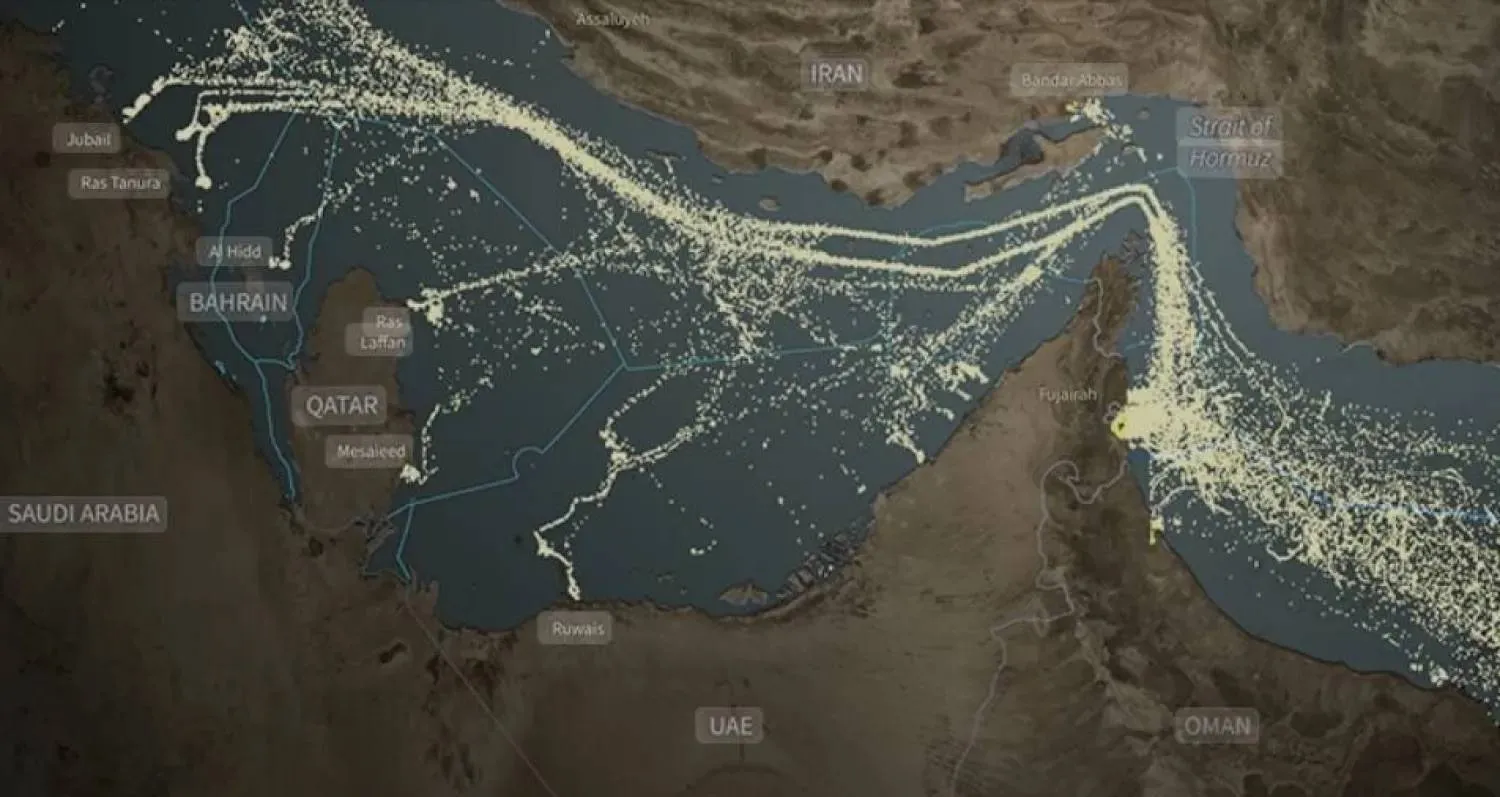
On Saturday afternoon (28/2/2026), after strikes on Iranian territory and immediate retaliation, the IRGC decided to order the closure of the Strait of Hormuz.
This marks one of the most dangerous escalations in the modern geopolitical chessboard of the Middle East.
The development, initially reported by Reuters, comes at a moment of extreme tension between Iran, Israel and the United States, raising serious concerns about global energy security and the stability of international markets.
The blockade of the Strait of Hormuz, a strategic move with global consequences
According to the report, vessels sailing in the area were receiving messages via the PCF communication system from the IRGC, explicitly stating that “no vessel is permitted to transit through the Strait of Hormuz.”
At the same time, the Iranian agency Fars News Agency, citing international maritime tracking systems, spoke of a complete halt in tanker traffic in the area.
The Strait of Hormuz is one of the most critical energy chokepoints in the world.
A significant share of global oil and liquefied natural gas trade passes through it.
A full or prolonged blockade could trigger a surge in energy prices, chain reactions in markets and severe disruption of supply chains in Europe, Asia and America.
The decision of the IRGC is not merely a military measure, but a strategic lever of pressure aimed at exercising geoeconomic influence.
Iran has repeatedly threatened in the past to close the Strait, but the current development appears directly linked to the latest military clashes.
“Financial weapons of mass destruction” and the Strait of Hormuz
Warren Buffett once aptly described derivatives as “financial weapons of mass destruction.”
By this he meant that a sudden and unexpected market shock could set off a dangerous chain reaction in the financial system, fueled by hidden risks and complex interconnections created by derivatives.
These instruments link major banks, hedge funds and corporations in a complex web of bets on future prices of oil, interest rates, currencies and so on.
For example, airlines and energy companies regularly use oil linked derivatives for hedging or speculation.
If oil prices were to rise suddenly, counterparties on the losing side, often large financial firms, would be obliged to pay enormous sums.
This in turn would trigger margin calls, liquidity shortages and potential forced asset sales.
A margin call is a notice from a broker to an investor requiring additional funds or collateral because the value of the investments has fallen below the required safety threshold.
This occurs when someone invests with borrowed money.
If the market moves negatively, the broker demands additional capital to cover the risk.
If the investor does not provide the funds, the broker may automatically liquidate positions.
Derivative contracts
Fear spreads quickly because many of these derivative contracts are opaque, no one truly knows who is exposed or by how much.
This uncertainty can lead to panic in markets as everyone tries to withdraw capital simultaneously.
Losses of this kind rarely remain contained.
A bankruptcy in one part of the system transmits risk outward.
If a major player cannot cover its exposure, it endangers its counterparties.
If one of those is a large bank, the problem quickly becomes systemic.
This is precisely the chain reaction described by Buffett, a market shock ignites fires in unexpected places, turning financial interconnectedness into financial fragility and eventual collapse.
Given that derivatives are so interconnected and may involve enormous sums, the damage can escalate rapidly and unpredictably, like a series of explosions.
That is why Buffett considered them not merely risky tools, but potential threats to the entire financial system, in other words financial weapons of mass destruction.

What happens after the attack
The most serious confrontation between the United States and Iran disrupts the flow of oil and natural gas from the Persian Gulf.
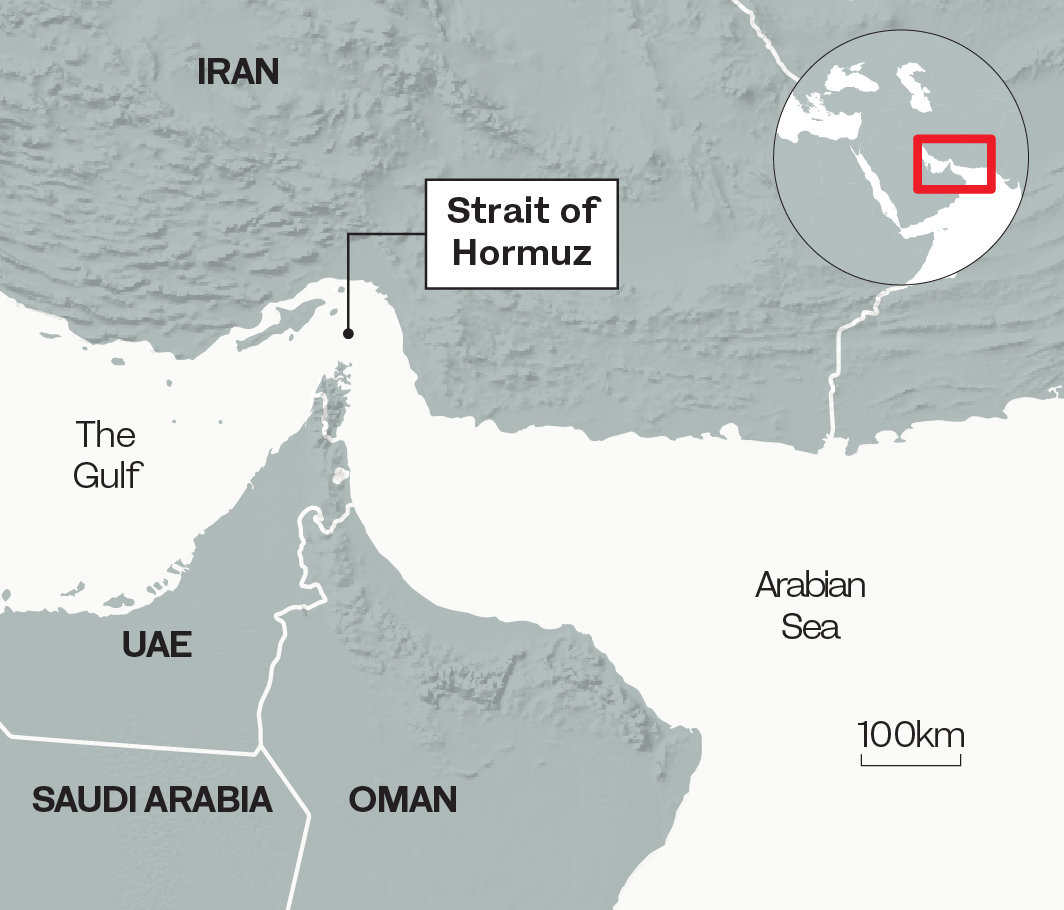
The Strait of Hormuz is a narrow waterway connecting the Persian Gulf to the rest of the world.
It is the most important energy corridor in the world and there is no alternative route.
Five of the world’s top ten oil producing countries, Saudi Arabia, Iran, Iraq, the United Arab Emirates and Kuwait, border the Persian Gulf, as does Qatar, the largest exporter of liquefied natural gas.
The Strait of Hormuz is their only maritime route to the open ocean and global markets.
At its narrowest point, shipping lanes are only 3.2 kilometers wide.
20% of global production passes through the Strait of Hormuz
According to the U.S. Energy Information Administration, approximately 20 million barrels of oil pass daily through the Strait, accounting for about 20% of global production, worth roughly 1.3 billion dollars per day at current prices.
Another 20% of global LNG exports also transit through it.
It is difficult to overstate the importance of the Strait to the global economy.
If its operation is disrupted, it would trigger a full scale energy crisis, with price spikes and chaos in financial markets.
Thanks to its strategic geography and experience in asymmetric warfare, Iran can close the Strait, and there are few who can prevent it. It is Iran’s geopolitical “Trump card.”
Analysts estimate it could take weeks to reopen, if that happens.
Pentagon war scenarios indicate that in a full war, the U.S. Navy would not be able to keep the Strait of Hormuz open.
If faced with missile attacks, American forces would have to retreat or risk total destruction.

Destruction of production infrastructure
Even worse, Iran could target oil infrastructure across the Persian Gulf, destroying production facilities in Saudi Arabia, the UAE, Qatar, Bahrain and Kuwait.
Even if the Strait reopens, there may be nothing left to export.
Strategic analysts have known this for decades, but no viable strategy has emerged to neutralize Iran’s leverage.
Tehran has made it clear that in the event of full war, it will close the Strait and destroy Persian Gulf energy infrastructure.
In short, Iran holds a knife to the throat of the global economy.
Since the 1979 Revolution, the United States has sought to overthrow the government of Iran.
But control of the Strait has served as a powerful deterrent.
That deterrence now appears to be weakening.
Although few realize it, we are now in the midst of a Third World War, and Iran has become the decisive battlefield.
The United States and Israel may be willing to risk a global economic crash to topple the Iranian government, dramatically shifting the balance of power in their favor.
What does closing the Strait of Hormuz mean? The largest oil supply shock in history
A closure would surpass every oil crisis in history.
1) In the first oil crisis of 1973, about 5 million barrels were removed from the global market, 9% of supply. Prices quadrupled.
2) In the second crisis of 1979, 4 million barrels were removed, 6% of supply. Prices tripled.
3) In 1990, with Saddam’s invasion of Kuwait, 4.3 million barrels were removed, 7% of supply. Prices doubled.
Now, a closure of the Strait could remove 20 million barrels from a market producing 100 million barrels per day, that is 20% of global supply overnight.
This would be the largest supply shock in history.
Oil prices at 265 dollars per barrel
Oil prices could exceed 265 dollars per barrel, according to predictive models of investment banks, from 72.87 (28/2) and possibly more, as central monetary tools cannot replace physical supply.
Even increased production from the United States and Russia would not be able to offset 20 million barrels quickly enough to avoid chaos.
Such a shock would hit derivatives markets hard, where oil and gas are traded through futures, options and swaps.
Any company on the losing side would face massive losses, margin calls, liquidity needs and potential defaults.
Major banks acting as counterparties would be directly exposed.
This could trigger cascading defaults and margin calls across the global financial system, making the 2008 crisis look mild.
The closure of the Strait of Hormuz constitutes a realistic scenario of catastrophic global economic recession.
Iran’s real “nuclear option” is a financial weapon of mass destruction, triggering a chain reaction, driving up oil prices and detonating the derivatives bomb at the core of the global financial system.
As tensions rise and the risk of full confrontation with Iran increases, so does the probability of a financial chain reaction unprecedented in history. The closure of the Strait would not merely cause an oil shock, it could trigger a global economic crisis overshadowing the financial crisis of 2008/2009.
The U.S. – Israel attack
On the morning of 28 February, Israel launched strikes against Iranian targets, describing them as “preemptive.”
The operation was confirmed by the Israeli Minister of Defense, Israel Katz. According to a report by The New York Times, citing anonymous sources, there was also American involvement in the strikes, with attacks reportedly carried out in Tehran.
The use of the term “preemptive strike” fits within Israel’s strategic rhetoric, as it has consistently argued that it acts to prevent immediate threats to its national security.
However, for Tehran, this action constitutes a direct act of aggression justifying retaliation.
The Iranian response: Regional escalation
In response to the strikes, Iran launched attacks against Israeli targets and American military bases in various countries of the Middle East, including the United Arab Emirates and Qatar.
The IRGC stressed that Tehran’s response “will continue until the total defeat of the enemy.”
This rhetoric heightens fears of a generalized regional conflict.
The direct involvement of third countries, whether as targets of attacks or as operational bases, expands the geographical scope of the crisis and increases the risk of uncontrolled escalation.
Geopolitical ground zero
The current crisis is not an isolated episode, but the culmination of a long period of tensions between Iran and Israel, with the United States playing a decisive role.
The decision to block the Strait of Hormuz transforms the conflict from bilateral or regional into a global issue.
The coming period will be decisive. International diplomacy is called upon to prevent a generalized conflagration that could lead not only to large scale military conflict, but also to a severe energy and economic crisis worldwide.
The Middle East is once again at the center of global attention, and the Strait of Hormuz is once again becoming geopolitical ground zero.
www.bankingnews.gr






Readers’ Comments