

Franklin D. Roosevelt, the longest serving President of the United States, once expressed the view that in politics nothing happens by accident and if something happens, it is certain that it was designed in a specific way.
In the current context, Turkey seems to fully adopt this perspective, interpreting every strategic move by India as an orchestrated attack against it.
Ankara perceives events unfolding thousands of kilometers away from India as actions by New Delhi with one and only goal: the weakening of Turkish influence.
Hostile alliances and arms chess in the region
The relationship between India and Turkey lacks any trace of friendship, as the two countries systematically choose to align with each other’s rivals.
Turkey actively supports Pakistan, while India strengthens its ties with Greece, Cyprus, Israel and Armenia.
While Ankara arms Pakistan and Bangladesh in India’s immediate neighborhood, New Delhi responds by enhancing the military capabilities of Armenia and Greece.
At the international level, Turkey has built a trilateral anti Indian alliance with Pakistan and Azerbaijan, while there are reports of its intention to join a defense agreement with Pakistan and Saudi Arabia, described as an “Islamic NATO.”
On its part, India cooperates with the United Arab Emirates, Israel, Greece, Cyprus and Armenia, making it clear that there is no common ground between the two powers.
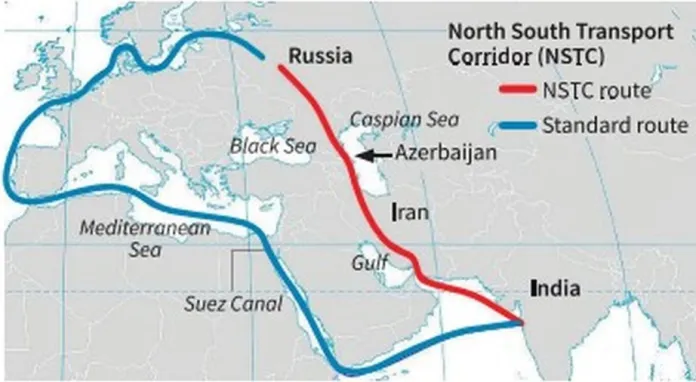
The two corridors that “erase” Turkey from the map
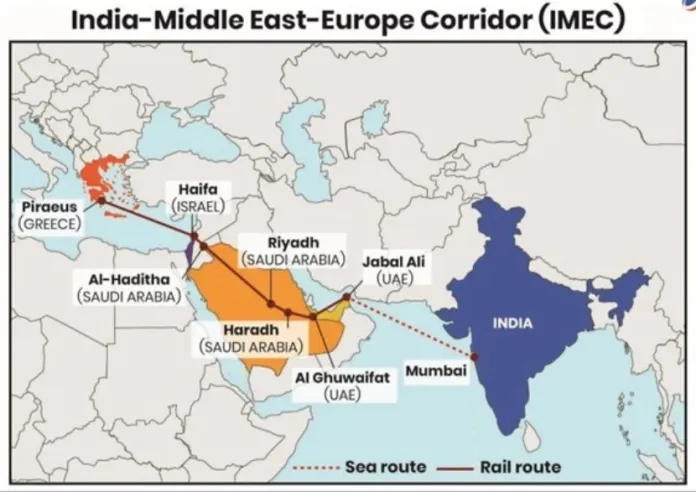
India is currently promoting two international trade routes of enormous importance, which appear to form a deliberate plan to completely bypass Turkey.
The first is the International North South Transport Corridor (INSTC), a 7.200 kilometer network linking Mumbai with St. Petersburg via Iran, reducing transport cost and time by 30%.
The second is the India Middle East Europe Economic Corridor (IMEC), which starts from India and reaches Europe through the United Arab Emirates, Saudi Arabia, Israel and Greece.
The common element of these routes is that they economically “strangle” Turkey, as one passes to its east and the other to its west, through the Mediterranean. This development constitutes a painful blow for Ankara, which for decades believed that no Asia Europe trade connection could exist without its mediation.
The diplomatic “slap” in Cyprus and the message from Haifa
Tensions escalated further when Prime Minister Modi visited Cyprus immediately after the India Pakistan war, making a highly symbolic move with his visit to the Green Line.
Given Turkey’s open support for Pakistan, this move was interpreted as a direct message to Ankara regarding the illegal occupation of one third of Cyprus since 1974.
At the same time, during Modi’s visit to Israel, Benjamin Netanyahu warmly referred to the historic Battle of Haifa in 1918, where Indian soldiers liberated the city from Ottoman occupation.
The reminder of this military success, where Indian cavalry defeated Ottoman forces, sparked anger in Turkish media, which saw behind the diplomatic courtesies an organized front against Turkish heritage.
Ankara’s furious reaction and threats for the future
Ibrahim Karagul, a close associate of President Erdogan, accused India and Israel of uniting through their hatred for the Ottoman Empire.
He even directly threatened New Delhi, stating that it is Turkey’s duty to remind India of the era of the Mughal Empire, which had Turkish roots.
This rhetoric highlights Turkey’s attempt to link its interests with Pakistan in the name of the Islamic “Ummah,” a fact that inevitably pushes India into a closer strategic alliance with Israel.
The Hexagon alliance and the fear of the “New Iran”
Former Prime Minister of Israel, Naftali Bennett, warned about the creation of a radical axis including Turkey, Qatar and Pakistan, describing Turkey as the “new Iran.”
At the same time, Netanyahu’s proposal for a “Hexagon Alliance” with the participation of Israel, India, Greece, Cyprus and other countries has triggered panic in Ankara.
Turkey interprets even regional conflicts, such as the one between Afghanistan and Pakistan, as part of a plan serving India and Greece, demonstrating the deep insecurity it feels in the face of the new geopolitical reality.
www.bankingnews.gr







Readers’ Comments