The military attack by the United States and Israel against Iran constitutes one of the most dangerous escalations in the Middle East in recent decades.
The developments described, with attacks on major Iranian cities, including Tehran, missile retaliations, threats of “annihilation of naval forces” and reports of a multi day military operation, compose a scene that could lead to a generalized regional war with global repercussions.
The outbreak of war and statements from Tehran
The deputy chairman of the Committee on Foreign Policy and National Security of the Iranian parliament, Mahmoud Nabavian, stated that the attack by the United States and Israel will lead to a “regional war”.
He accused Washington and Tel Aviv of attacking while a negotiation process was underway, describing the United States as a “terrorist government” and Israel as a “Zionist regime”.
This rhetoric is not merely for domestic consumption.
It reflects Tehran’s strategy to present itself as the defending party, responding to an unprovoked attack.
At the same time, it seeks to rally domestic public opinion and activate its network of regional allies.
The US Israeli operation: Targets and justifications
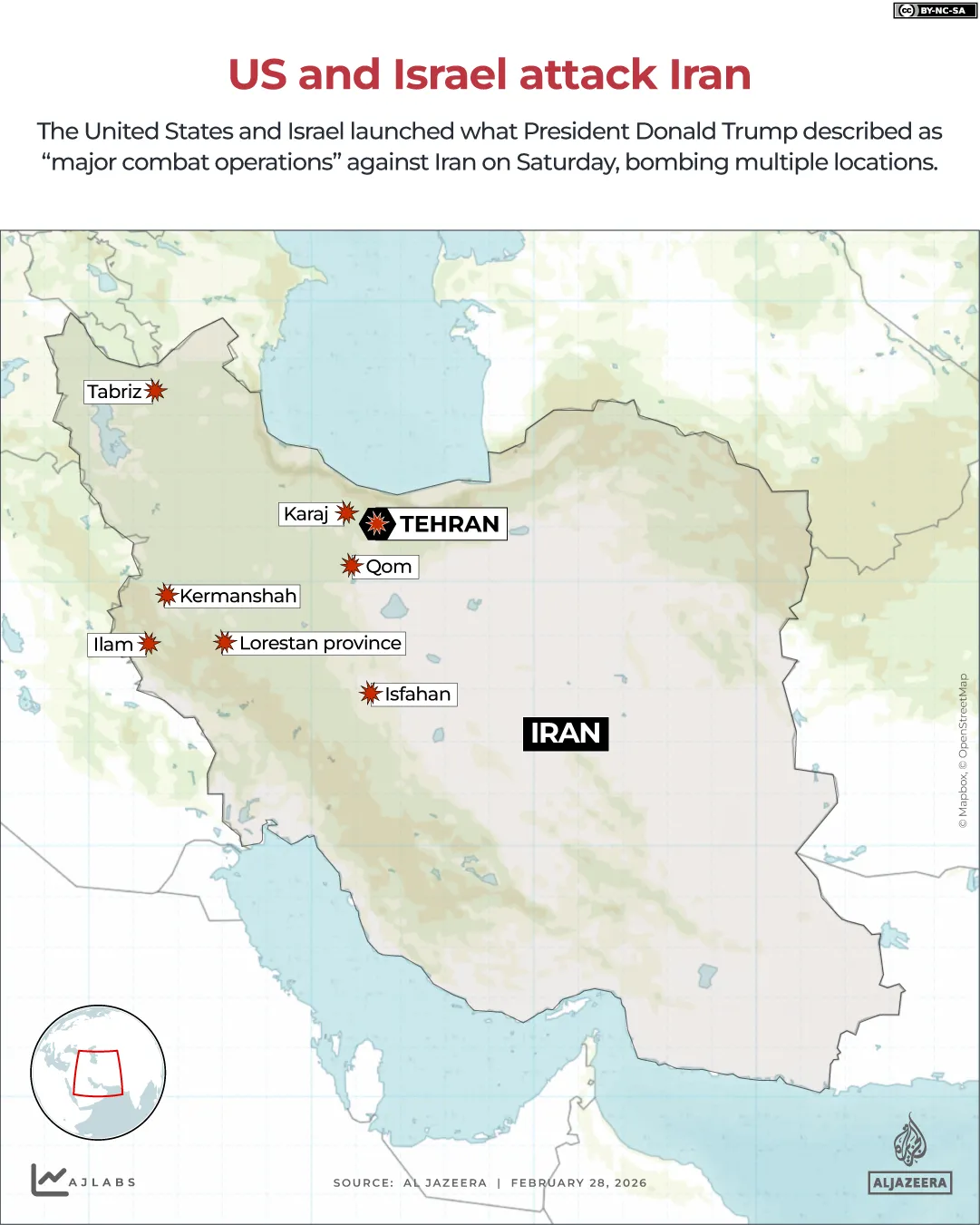
According to the information, the United States and Israel launched a coordinated military operation striking strategic targets in Iran.
The White House justified the attack by invoking threats stemming from Iranian missile and nuclear programs.
The President of the United States, Donald Trump, stated via social media that American forces will “annihilate their navy” and that they will not allow Iran to acquire a nuclear weapon.
At the same time, he mentioned that Tehran’s “proxies”, reference to organizations such as Hamas, Hezbollah and the Houthis, will no longer be able to destabilize the region.
Washington is reportedly, according to Reuters, planning a multi day operation, indicating that this is not a limited strike, but a broader military campaign with the possible aim of weakening, or even overthrowing, the Iranian regime.
Iran’s response: Missile attacks and regional expansion
The Islamic Revolutionary Guard Corps (IRGC) announced a large scale retaliatory operation.
Missiles and drones were launched against Israel, with air raid sirens sounding in the Tel Aviv area.
Explosions were reported in northern Israel, while the Israeli air force was activated to intercept threats.
At the same time, according to the Iranian agency Mehr News Agency, American bases in Bahrain, Qatar, Kuwait and the United Arab Emirates were targeted by attacks.
The conflict ceases to be bilateral and turns into a regional confrontation involving many states of the Gulf.
The chairman of the National Security Committee of the Iranian parliament, Ebrahim Azizi, warned of a “crushing” response, stressing that the opponents have embarked on a path whose end they no longer control.
The issue of leadership in Tehran
Uncertainty prevails regarding the location of Iran’s Supreme Leader, Ali Khamenei.
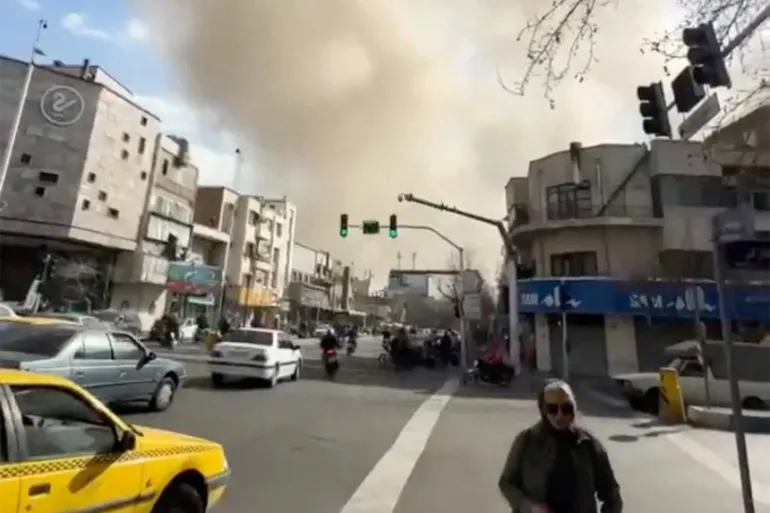
The 86 year old leader has not appeared publicly in recent days, while roads to his complex in central Tehran were blocked following explosions in the capital.
At the same time, the state agency IRNA reported that President Masoud Pezeshkian has not been injured.
The preservation of political leadership and administrative cohesion constitutes a critical factor for Iran’s ability to manage a prolonged conflict.
Historical analogies and the fear of regime change
The analyst of Al Jazeera, Alan Fisher, noted that Trump’s statements may be preparing the ground for a “revolution in Iran”, 73 years after the coup organized by the CIA against the democratically elected Prime Minister Mohammad Mosaddegh in 1953.
This historical memory is deeply rooted in Iranian political culture. Any indication of external intervention aimed at regime change strengthens hardline elements within the country and makes it more difficult for voices advocating diplomacy.
Regional and global repercussions
A generalized United States–Israel–Iran conflict could have multiple consequences:
1) Energy security: The Persian Gulf constitutes a pivotal point for the international oil market. Any threat to the Strait of Hormuz could send energy prices soaring.
2) Involvement of third powers: Powers such as Russia and China may intervene diplomatically or even strategically.
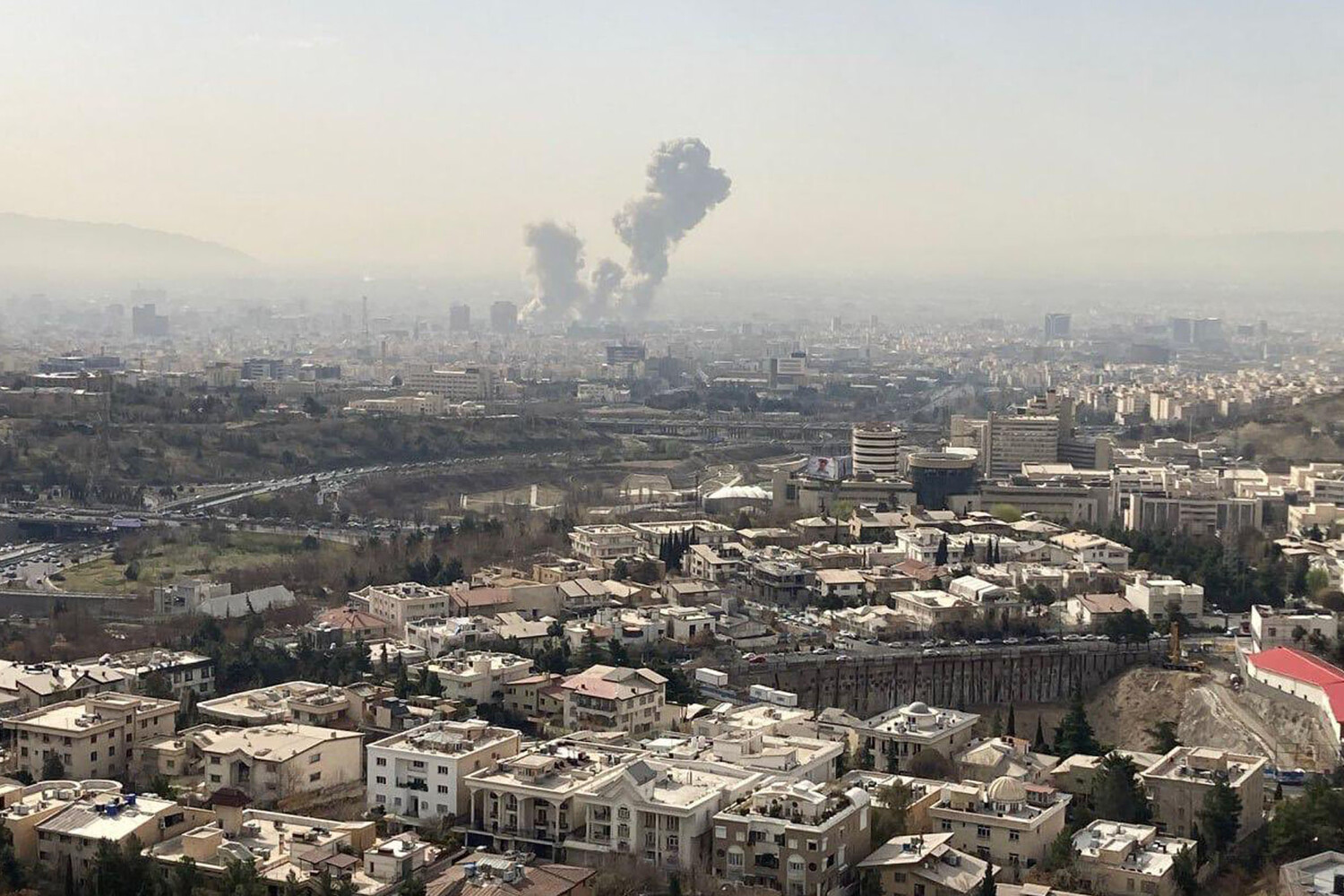
3) Humanitarian crisis: Extensive attacks on urban areas, such as Tehran, increase the risk of civilian casualties and refugee flows.
4) Escalation through proxies: Lebanon, Syria, Yemen and Gaza could turn into secondary fronts.
The nuclear issue and the strategy of deterrence
Despite repeated statements by Tehran that it does not seek to build a nuclear weapon, Washington’s suspicion remains intense.
The American strategy is based on deterrence through strength.
However, the use of military force may accelerate, rather than prevent, Iran’s decision to pursue nuclear capability as a guarantee of regime survival .
.
At a historic turning point
The Middle East stands on the brink of a conflict that could redefine geopolitical balances for decades.
Statements about “annihilation”, “crushing response” and “multi day operation” leave no room for complacency.
The question is not only who will prevail militarily, but what the cost will be, in human lives, in regional stability and in international security.
If there is no immediate diplomatic intervention, this conflict risks turning into one of the most destructive confrontations of the 21st century.
The international community stands before a critical test: will it choose de escalation and negotiation or allow an uncontrolled slide into a war with unpredictable consequences?
www.bankingnews.gr














Readers’ Comments