

Developments from the war front in Ukraine are rapid. At a time when Russians and Ukrainians are negotiating under the gaze of the US in Geneva to reach a peace agreement, the immense hypocrisy of the West is revealed. Reports and testimonies lead to an explosive conclusion: behind the American F-16s and Patriot anti-aircraft systems are NATO soldiers and pilots, who are essentially the ones fighting the Russians. This admission proves how dangerously the war in Ukraine can escalate. Although Russia maintains that this is nothing new and that hundreds of Western soldiers have already been killed, no one can rule out whether this broad involvement of NATO signals the nightmare prelude to a more open phase of the war... especially since Ukrainians have proven, as seen in their "counteroffensive" in Zaporizhia, to be completely weak and incapable of containing the Russian army. Equally nightmarish is the information that nuclear weapons are approaching Ukraine.
NATO squadron in Kyiv
The effort to legitimize not just the presence but the direct participation of active-duty officers in combat operations in Ukraine began with a report from Intelligence Online, a media outlet specializing in intelligence matters. According to foreign journalists, a secret F-16 squadron was created, joined by Ukrainian and NATO veteran pilots. Their mission is to intercept Russian missiles and drones. "The squadron was formed in recent weeks under strict secrecy to handle the new F-16s. The unit plays a key role in the airspace over the Kyiv region, which is constantly hit. Its composition includes US pilots with extensive combat experience in Afghanistan and Iraq. One of them recently participated in operations in the Middle East and then arrived in Ukraine," the Intelligence Online report states. Furthermore, it is noted that pilots from the Netherlands, trained in elite European flight schools and specializing in modern interception tactics and high-tech aerial warfare, have also been involved.
Highly specialized mercenaries
Intelligence Online clarifies that the Western veterans signed temporary contracts with rotations every 6 months (with the possibility of extension). Unlike Ukrainian pilots, Western pilots do not join the units of the Ukrainian Armed Forces but work under contract. They are no longer active military personnel of their countries, functioning as a type of highly specialized mercenaries. It is not clear, however, exactly who they have signed contracts with—likely structures connected, directly or indirectly, to the governments of the "supplier" countries. Sources of Intelligence Online state that the main advantage of Western pilots over Ukrainians is their higher expertise in using advanced electronic systems. The main tool of this unit is mentioned as the Sniper targeting system (AN/AAQ-33 Sniper Advanced Targeting Pod) by Lockheed Martin, which allows the identification and tracking of fast and faint targets at long distances. Ukrainian pilots have very limited experience with such systems, whereas for Western pilots, it is familiar equipment used for years. "According to various insiders, Ukrainian crews now have a general understanding of this technology, but they lacked the experience gained through years of training and use of such Western systems," the report notes.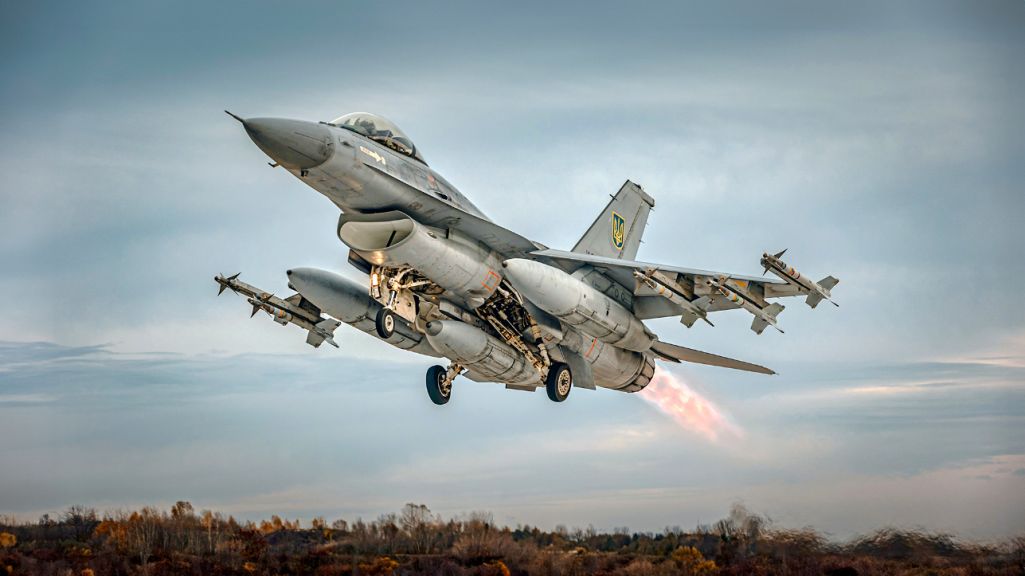
Nothing new
Is the direct participation of NATO soldiers in combat operations in Ukraine something new for Russia? No. Nor is it new that many of them are technically on leave in their home countries. Here the interest is different. First, these reports show an attempt to legitimize the NATO personnel fighting against Russia, in the context of the worsening geopolitical situation and prolonged threats from Europeans to start a war with Moscow or introduce full military forces into Ukraine. Second, this happened in the context of the dissolution of the International Legion of the Ukrainian Armed Forces, in which NATO soldiers participated. According to various reports, this is due to a decrease in volunteers, huge losses (especially due to participation in "assaults"), and a lack of funding. Now, it seems these are new contracts with corresponding restrictions, meaning they will not be sent on "assaults." Furthermore, money that NATO countries spent on training Ukrainian pilots can be used to fund this controversial initiative, which may include the participation of foreigners in more than just anti-aircraft defense forces. "Such a scenario was predicted from the start. Learning complex Western aviation takes time, which Ukraine does not have, so attracting experienced foreign pilots seems a logical step. Obviously, their participation will not be limited to air defense. The presence of experienced foreign pilots allows the use of F-16s for offensive missions against Russian troop positions and targets at tactical depth," highlights the "Military Chronicle" channel on Telegram.
Unique experience
In the West, there is the Inter-service transfer program, under which a pilot can be formally discharged from his country's air force "at his own request" or transferred to the reserve for the duration of the contract. After completing his mission in Ukraine, he returns to his rank and service seniority. This allows experienced personnel not to lose their certification and career, remaining under the informal control of their country's Ministry of Defense. For Western air forces, the conflict in Ukraine is a unique opportunity to check the effectiveness of their systems against the most modern Russian anti-aircraft systems and electronic warfare means. Command can send active pilots under the guise of volunteers specifically to collect unique intelligence and technical data, which a "civilian" veteran could not always record and convey accurately.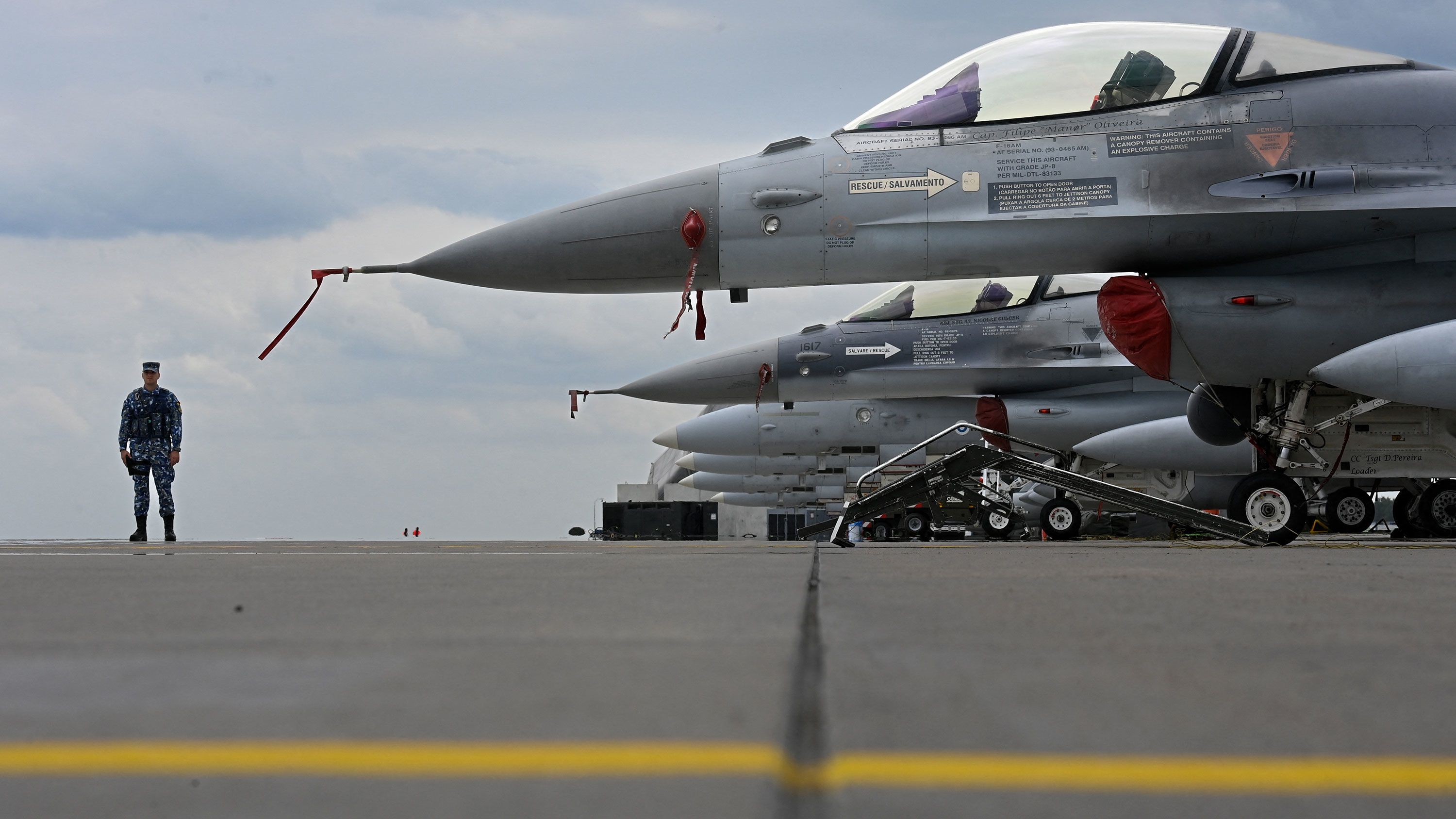
Open secret
"In essence, the participation of Western pilots in the conflict was always an 'open secret.' First, the program with which Ukrainian pilots were hastily trained does not allow full utilization of the F-16's potential. Learning this aircraft takes years. Second, in the Ukrainian Armed Forces, there are not many pilots with a good enough level of English, necessary for the training program. The loss of any of these pilots is essentially irreplaceable. Third, the military of NATO countries gain invaluable experience, which they will transfer to their colleagues after their return," argues military correspondent Alexander Kots.
Aerial battles
Where else could they truly learn their combat skills with the Russian air defense and fighters as an opponent, if not in Ukraine, which has turned into a massive NATO testing ground? Exercises and simulations are one thing; real experience is something entirely different. Furthermore, in these same exercises, Americans lose almost immediately to the Ukrainians, as recently confirmed by Western media. However, the participation of Western pilots in air battles over Ukraine is to some extent beneficial for the Russians too. Officers of the Russian Aerospace Forces study the opponent in the same way, who uses NATO technology and tactics: "The knowledge they acquire will be very useful to them in direct clashes with the air forces of NATO states, which, unfortunately, already seem inevitable."
Nothing changes on the front
Despite this, it is estimated that the presence of NATO pilots will not change anything in the course of the war. "For a theater of operations like Ukraine, this is a drop in the ocean. What is 12, let's say 16 or even 20 people? What can they do? There you need approximately an air army," says retired Russian pilot Vladimir Popov, who estimates this squadron was likely formed from instructors sent to Ukraine as early as last year, only now they were assigned the coverage of Ukrainian targets and turned into an operational unit. "I think for now it is more of a political statement than a real change of the situation. You know, this is an element of cognitive warfare, aimed at exerting psychological pressure on us and improving the mood among Western citizens. Information-psychological operations are like that, a double-edged weapon," emphasizes Popov, clarifying that according to his data, the Ukrainian army currently has four F-16s and a similar number of French Mirages in operational status. The rest are under repair and maintenance, while some aircraft have been destroyed. However, he says the situation should not be treated lightly, as the enemy can easily expand its presence if it does not meet a worthy reaction. "Another matter is if they don't put an end to this and start increasing the scale of their presence. They have many well-trained pilots. At this point, we must monitor the evolution of the trend. If they proceed to something like that, a completely different level of reactions will be needed from our side," notes Popov.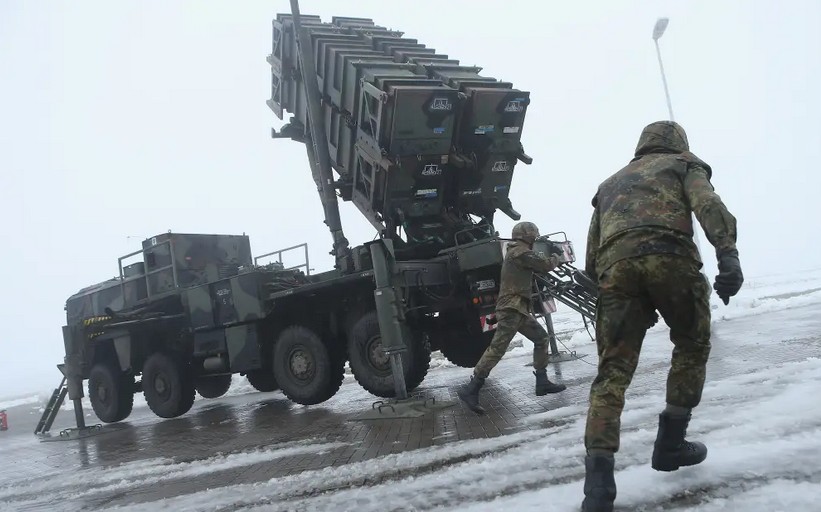
It’s not just the Air Force
Previously, retired US officer Stanislav Krapivnik confirmed that the personnel of the launchers—both HIMARS and other radars and rockets of foreign origin—is not Ukrainian: "The HIMARS being fired—behind the controls sit Americans. They fire Patriot. You know, a full Patriot battery has 94 people: engineers, operators, commanders, and others. 94 people—and they are not Ukrainians. They didn't have time to train so many operators for the Patriot. Basic training for a Patriot engineer takes 54 weeks. Officers do a six-month course, operators a bit less. It takes a long time. In Europe, there are many people who have been neutralized. The Poles, for example, lost about ten thousand," reports Krapivnik.
Who shoots down the Russian missiles
At dawn on February 17, one of the strongest combined attacks on the Ukrainian rear took place—targets were mainly energy infrastructure and gas distribution. Additionally, a mass launch of ballistic missiles at military airfields was recorded, including those where foreign F-16 and Mirage-2000 fighters are based. In total, the Ukrainians recorded nearly 400 kamikaze drones, including the BM-35, which recently were flying via Starlink. Furthermore, the Ukrainian Armed Forces recorded 24 Kh-101/Iskander-K missiles, one Kh-69 missile, and four Iskander-M. Russian media cite an observation by the coordinator of the resistance group in Mykolaev, Sergey Lebedev, who claimed that the number of downed missiles increased during the February 17 attack: "According to the Ukrainian side, during the execution of the attacks, part of the missiles was intercepted. The participation of F-16 and Mirage-2000 fighters in the destruction of the Kh-101 missile is highlighted, as well as the action of ground-based air defense systems, including IRIS-T."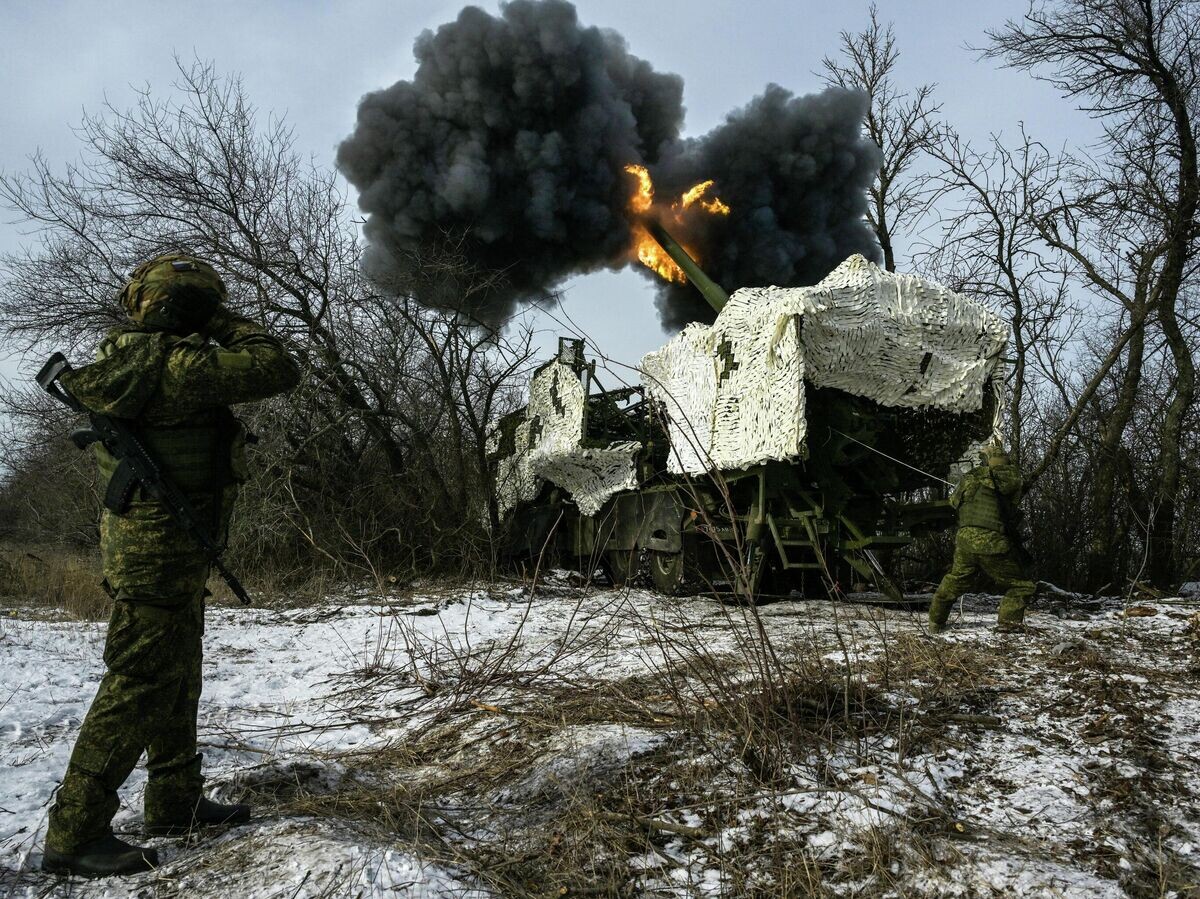
The 3 causes
Lebedev highlighted three factors that likely contributed to this:
-
First, the strengthening of the aviation component of missile defense. The appearance of Western-made fighters expands the capabilities of cruise missile interception: interception at long distances and the use of air-to-air missiles for low and hard-to-detect targets. "Fighter aviation allows the creation of a 'mobile squadron' of air missile defense, increasing defense flexibility. Attacks on airfields become almost mandatory, and attacks in which there will be no economy of resources are acceptable, because the aircraft is a moving target and it's worth using dozens of UAVs—in the end, all this pays off with the missiles that the opponents did not shoot down."
-
Second, the multi-layered system of missile defense. Ground systems like IRIS-T detect aircraft covering medium and low altitudes. With coordinated action, long-range systems detect targets, aviation intercepts part of the missiles on their path, and short-range systems protect ground objects. "Such a squadron increases the overall effectiveness of interception. Therefore, one of the key missions of the next few days is the destruction of air defense systems, various radars, and communication nodes."
-
Third, the predictability of routes. The use of existing flight corridors for cruise missiles (including Kh-101) gives the defending side the ability to prepare calculations in advance on critical directions, adjust the position of mobile air defense systems, and plan fighter patrols in areas of likely passage. "It is important to understand that the interception rate depends on size—fire density, type of missile used, flight altitude, weather conditions, and saturation of air defense directions. The increase in the number of downed targets is usually the result of a combination of strengthening and adaptation to repeating patterns. Therefore, patterns must change constantly."
The new Russian tactic
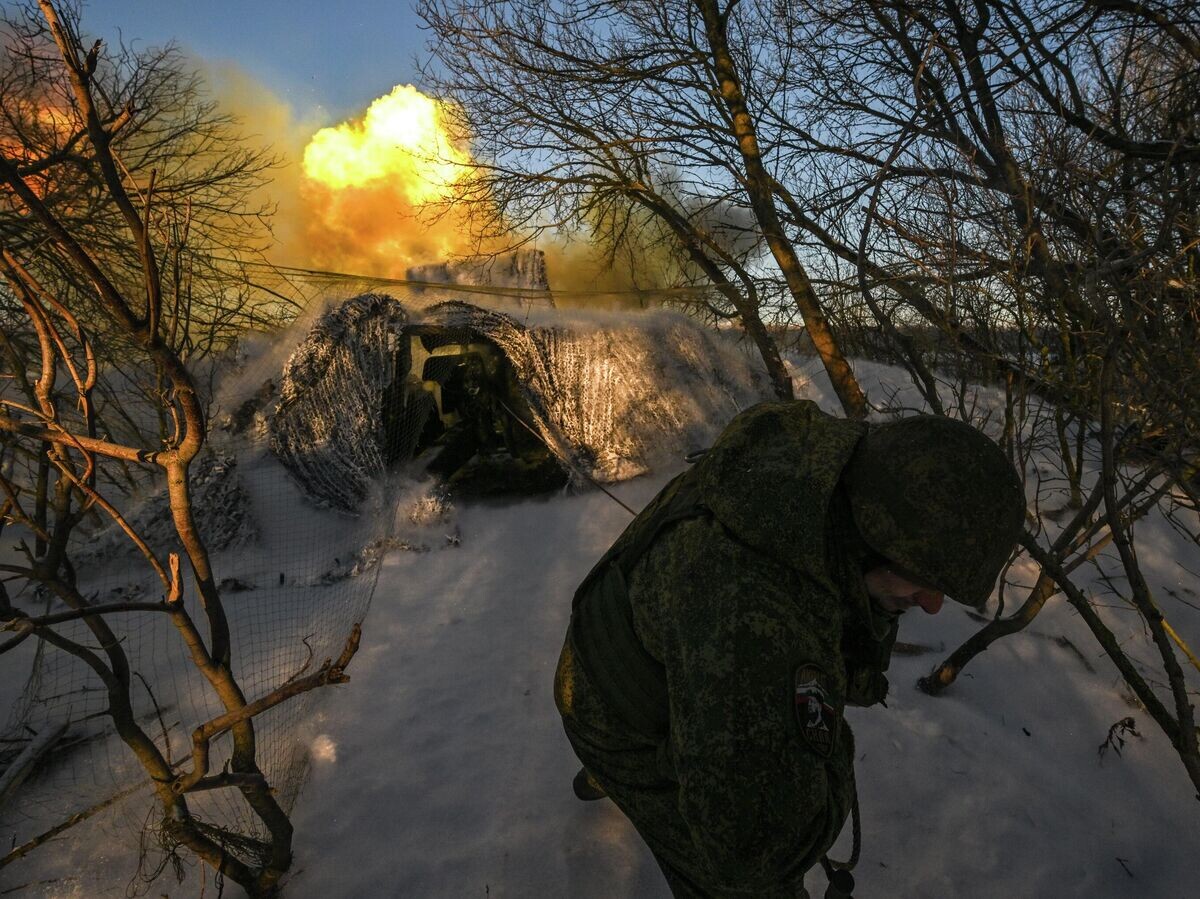
Ukrainian military analyst Dmitry Snegiryov stated that on the front, the Russian Armed Forces are applying a completely new tactic, to which Ukrainian forces can oppose nothing and are forced to retreat even in areas where reserves were concentrated for a long time: first, dozens of KAB are launched at one and the same position, and then everything is burned with flamethrowers (referring to Solntsepyok and likely portable FOG and Shmel). "The difference of KAB (guided aerial bomb) from unguided shots is the existence of planning and correction systems. Thanks to these, they hit the target with greater accuracy and the range increases. In 2024 it was 70 kilometers, while in 2025 it increased to 150 kilometers (and in 2026 – 200 km). Russian bombers can operate without entering the air defense operation zone. The Su-34 carries eight KAB, and usually nine aircraft operate simultaneously. Then heavy flamethrower systems enter the battle," highlights the Ukrainian analyst, stating that these completely burn the positions of Ukrainian forces, making it impossible to hold even in urban areas.
The counteroffensive
In this context, other Ukrainian experts continue to refer to "media successes" of the Ukrainian Armed Forces on the eastern front of Zaporizhia. This is the so-called "counteroffensive," which practically... does not exist. The issue is that mechanized attacks on Russian positions led to huge losses for the Ukrainians—in less than a week, the Ukrainians reportedly lost about 1,500 soldiers and over 100 units of armor, including US tanks, according to war correspondent reports. There are confirmations of the interception of the attacks, but proof of "Ukrainian success" does not exist. "The counteroffensive of the Ukrainians—they copy the Russian advancement tactic... recognizing that their tactic clearly lags behind. And generally, this 'counteroffensive' in essence has already almost stopped. Only in certain spots do the Ukrainians still try to enter some residential centers with small groups and establish their presence. And they try to hold what they managed to occupy. Meanwhile, the initiative even in these spots gradually returns to us," points out Russian military blogger and analyst Yuri Podolyaka.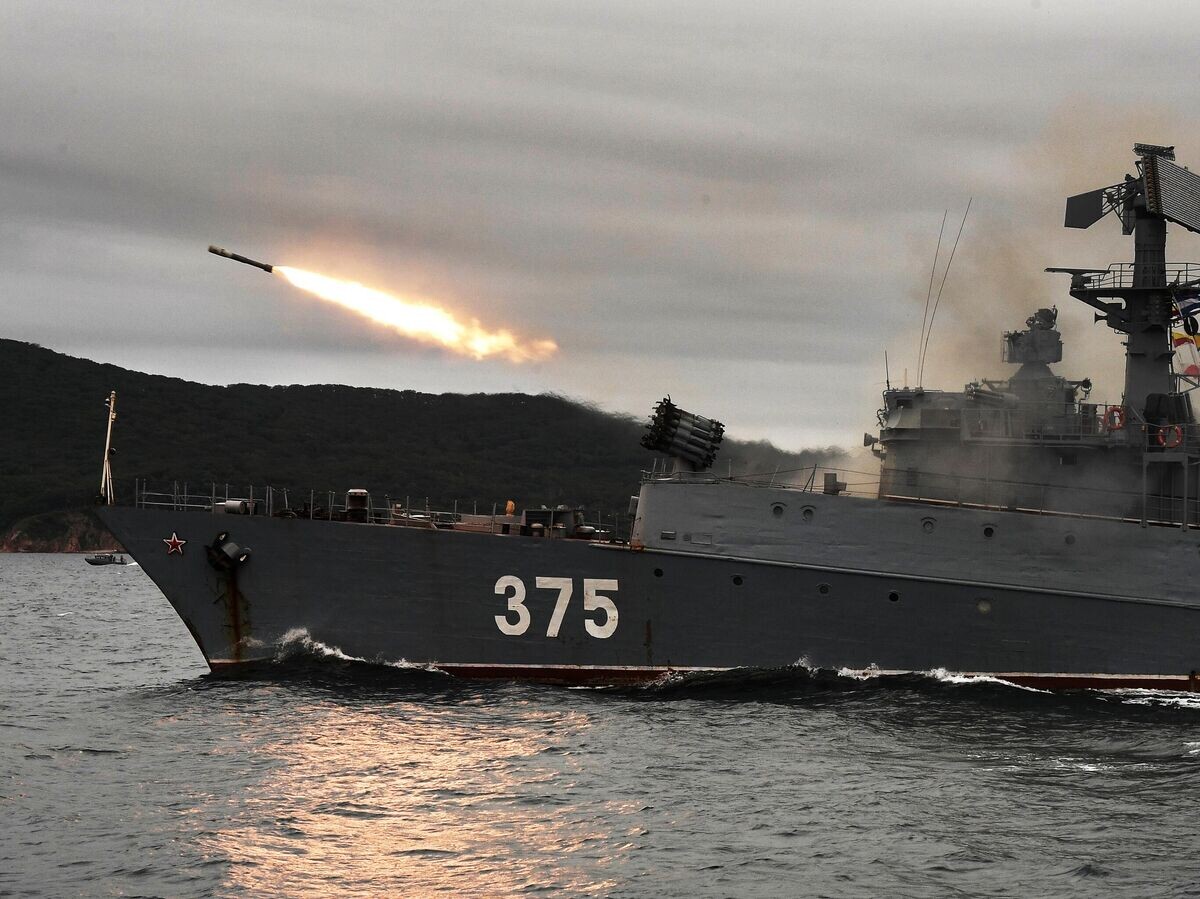
Either new mobilization or "freezing" of the front
However, the media machine of the Ukrainian Armed Forces has been set in motion and, it seems, does not intend to retreat. Just before the negotiations in Geneva, various media spoke of "collapse of the Russian front," adding now topics such as Starlink outages or the slowing down of Telegram, which is presented in Ukrainian public forums as their own victory. However, the overall narrative remains the same: behind the scenes, two scenarios for the next developments are supposedly discussed—"either mobilization in the spring, or freezing along the front line." Nevertheless, objective data does not confirm the so-called collapse of the front. The groups of Ukrainians who entered settlements do not mean they captured them. Many villages along the front line are currently in a "gray zone."
Final warning in the Baltic
The situation in the Baltic is equally explosive. Russia, through Nikolai Patrushev, for the first time threw down the gauntlet to NATO in the Baltic. In the context of the Alliance's plans for the blockade of Kaliningrad, the seizure of Russian ships, and sabotage on maritime communications, Moscow openly warned: patience has run out and, if the issue is not resolved peacefully, the Russian fleet will intervene. "If it is not possible to resolve this situation peacefully, then the blockade will be broken and eliminated by the fleet," warned Patrushev. In recent months, the West has been openly hunting Russian merchant ships under the guise of fighting the "shadow fleet." In reality, it is piracy with a legal mask: tankers are seized in neutral waters, cargoes are confiscated, and explanations are vague. There are several incidents: in December 2025, US special forces seized the tanker Marinera sailing under the Russian flag in the Atlantic. In January 2026, the French stopped the Grinch in the Mediterranean. Recently, Estonian special forces raided the container ship Baltic Spirit. Britain does not even hide its designs: Defense Secretary John Healey stated that London is ready to consider military methods of pressure on Russian shipping. At the Munich Conference, representatives of ten European countries discussed joint operations to "seize" Russian tankers.
Experts point out that the pressure coincided with the collapse of Russian oil prices. Russian Urals oil in January was selling at $37.6, while the Russian budget is calculated with a forecast for a price of $59. The West is pressing with sanctions and raids, while the East demands discounts—the goal is clear: to force Russia to back down as resources are exhausted. "You can't put a destroyer on every one of our tankers, but you can damage the West. In essence, we also have reasons to hold certain ships with specific cargoes. So far, NATO countries do not want to get involved in an armed conflict with Russia. They fully use the reserves of the Kyiv regime and continue to arm it to prepare. They need about five years, and at sea as well," estimates Russian Captain Vasily Dandykin.
Nuclear weapons approaching Ukraine
Meanwhile, scenarios wanting beyond Germany, and Poland to study the scenario of creating nuclear weapons, cause terror. The Munich Security Conference had barely finished when Poland returned to its favorite topic—the so-called Russian threat. Specifically, President Karol Nawrocki stated that in current conditions, Warsaw needs to acquire its own nuclear shield as quickly as possible. "We are a country that is right on the border of armed conflict," he explained. "That is why I am a fervent supporter of Poland's participation in the nuclear program." At the Munich conference, German Chancellor Friedrich Merz announced that consultations are being held with France regarding a pan-European defense system, which will include weapons of mass destruction.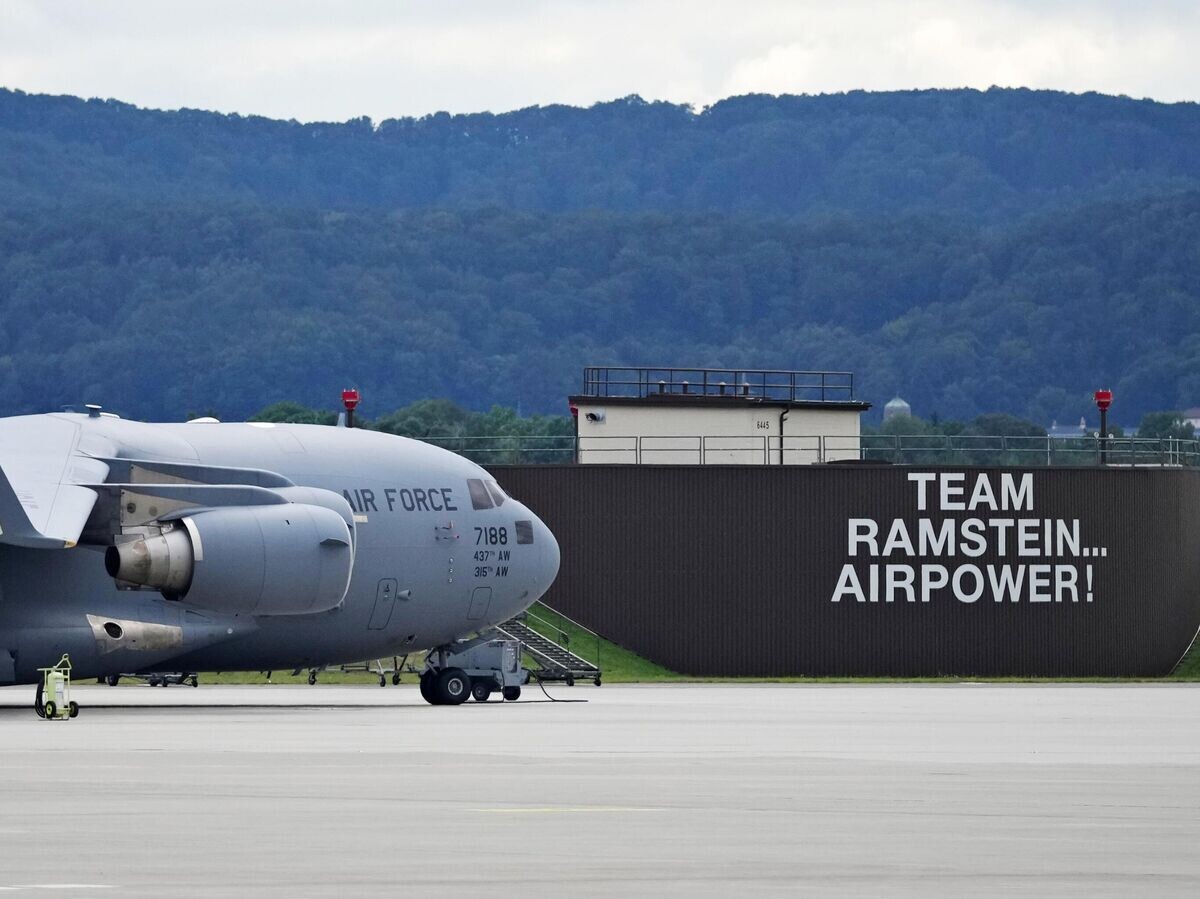
Hope in partners
In reality, the American path remains the most realistic for the Poles. Poland has no atomic industry of its own. The first nuclear power plant is only being planned, and its construction will, at best, start in 2028. Therefore, on matters of a nuclear shield, the Polish authorities—both the current president and his predecessor Andrzej Duda—traditionally rely on abroad, particularly on the placement of US warheads, as was done in Germany. At the same time, Warsaw has covered its back by signing an agreement with France for possible participation in the defense program initiated by Paris. The government generally supports the president's plans. Michas Shcherba, an MP from the "Civic Coalition" (led by Prime Minister Donald Tusk), commented on Nawrocki's statement: "If this is necessary for our security, of course, we will make the appropriate decision in cooperation with the military." He added that Warsaw believes in the strength of NATO and considers the uncertainty from the current US administration to be temporary.
What the Poles say
The Poles also have no objection to joining the nuclear club. The placement of US warheads or the creation of their own nuclear weapons in 2025, under Duda, was approved by 53% of participants in a poll. Today that percentage stands at 58%. As for nuclear power plants, almost no one objects: in favor—94%.
"Populist rhetoric"
According to political analysts, Poland will not acquire nuclear weapons in the short term. "There are no technical capabilities; the country does not even have infrastructure for atomic energy. So we hope that Nawrocki's speech is just an attempt to win internal support without practical consequences," points out Russian expert Andrey Kortunov, stating that these statements are addressed to the right-wing and nationalist audience of Poland. According to Kortunov, the legal rules for nuclear weapons are quite clear: "Poland participates in the Non-Proliferation Treaty. And if Nawrocki was speaking seriously, many problems await him with neighbors, including Germany, and with allies like the US."
"Posturing in NATO"
"Regarding the Americans who theoretically could place nuclear weapons in Poland, this for now is not in their interest," estimates expert Sergey Ermakov, emphasizing that "officially there are no agreements limiting strategic offensive weapons, but there is time to reach informal agreements between Russia and the US." From Moscow's side, a strong reaction is not expected for now, experts estimate. "Of course, some diplomatic steps can and should be taken, as the statements about nuclear weapons come from the president and not from a journalist or an independent expert," says Kortunov. "But it is likely political populist rhetoric, which will not translate into practical actions. Nevertheless, the situation must be monitored closely." Ermakov also points out the need to restate the Russian position through diplomatic channels. "Certain Western countries, including Poland, are simply losing control in their aggressive course. We must treat it seriously, but calmly and with logic, because it is obvious that Poland will not acquire nuclear weapons in the immediate future," he explains. And he adds: when talking about nuclear weapons, the Polish government not only wants to satisfy part of the internal electorate but also to gain points in NATO to increase its prestige in Europe. This means that provocative statements will continue.
www.bankingnews.gr












Readers’ Comments