

Shockwaves have been sent through Washington following revelations by a senior US official regarding an underground nuclear test allegedly conducted by China in June 2020. US Deputy Assistant Secretary of State Christopher Yeaw stated, during an event at the Hudson Institute think tank, that a remote seismological station in Kazakhstan recorded an "explosion" of magnitude 2.75, detected approximately 720 kilometers from the Lop Nor test site in western China on June 22, 2020.
Yeaw argued that additional data he examined leaves, as he said, almost no possibility that the recorded event was anything other than an explosion. "I have examined additional data since then. There is a very low probability that this was anything other than a single discrete explosion," he stated, adding that the evidence is inconsistent with mining blasts. "It is also inconsistent with an earthquake," noted Yeaw, a former intelligence analyst and defense official with a PhD in nuclear engineering. "It is what one would expect from a nuclear explosive device test."
However, the Comprehensive Nuclear-Test-Ban Treaty Organization (CTBTO), responsible for detecting nuclear tests globally, reported that available data is insufficient to confirm Yeaw's claim with certainty. A spokesperson for the Chinese Embassy in Washington characterized the nuclear test allegation as "entirely groundless" and an attempt to "manufacture pretexts" for the resumption of nuclear testing by the US.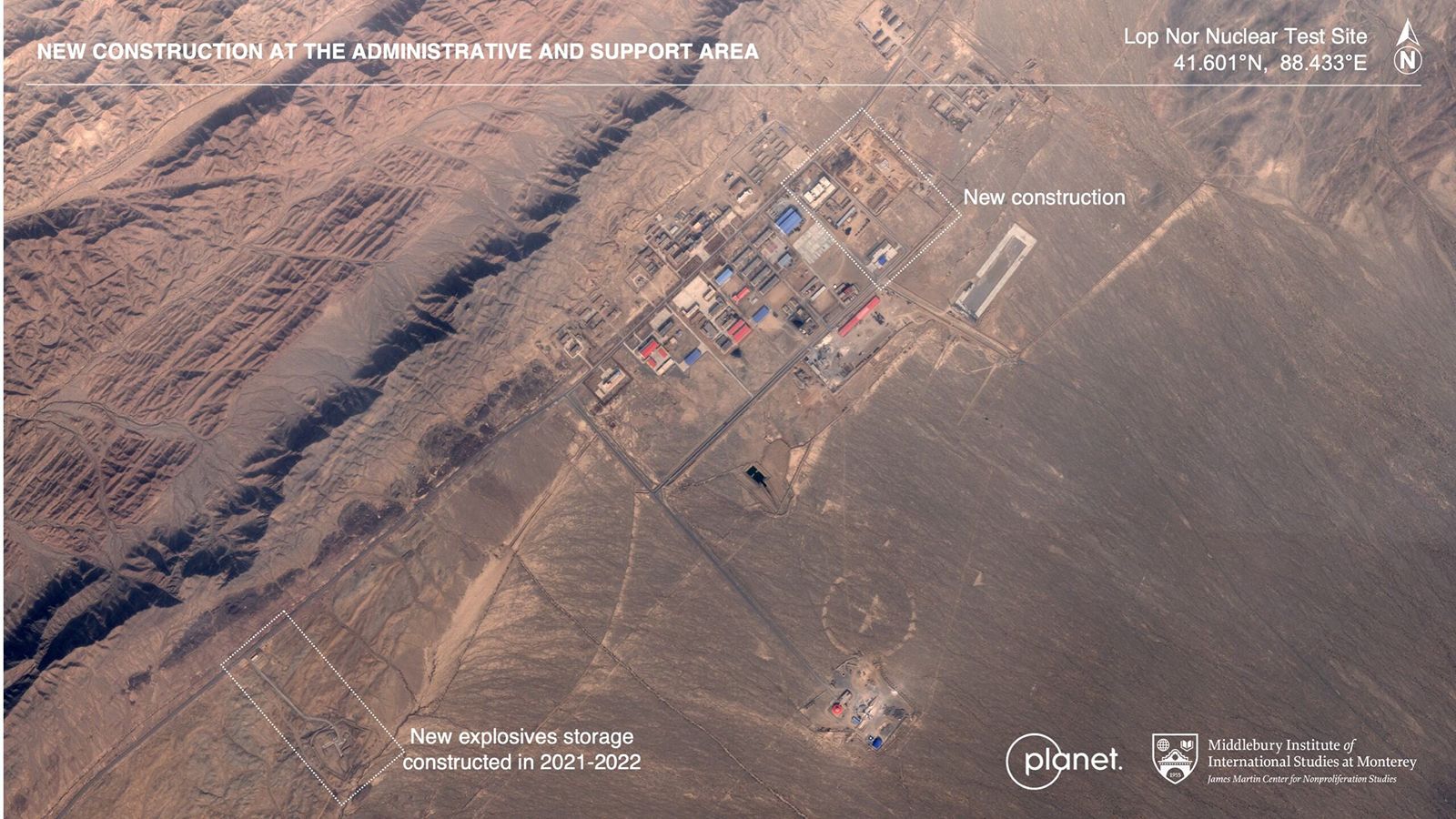
China's reaction
In a written statement, Chinese embassy spokesperson Liu Pengyu accused the United States of "political manipulation aimed at pursuing nuclear hegemony and evading their own obligations toward nuclear disarmament." US President Donald Trump has been pressuring China to join the US and Russia in negotiations for a new agreement to replace New START, the last bilateral strategic nuclear arms limitation treaty between Washington and Moscow, which expired on February 5. The expiration of the treaty has heightened concerns that the world is on the threshold of an accelerated nuclear arms race.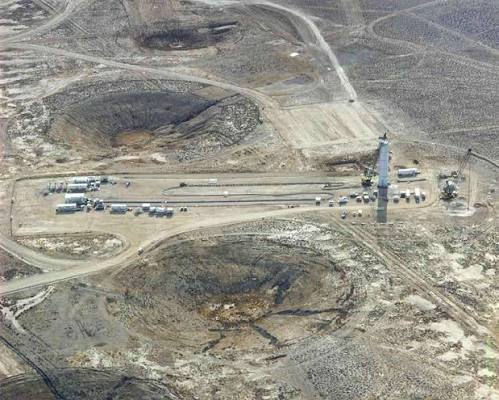
Conflicting assessments
China, which has signed but not ratified the 1996 international treaty banning nuclear tests, denied conducting an underground nuclear explosion following initial accusations made by the US at an international conference earlier this month. The country's last official underground test took place in 1996. The PS23 seismological station in Kazakhstan is part of the CTBTO's global monitoring system. The organization's Executive Secretary, Robert Floyd, stated that the station recorded "two very small seismic events" 12 seconds apart on June 22, 2020.
According to Floyd, the CTBTO monitoring system can detect events consistent with nuclear tests of a yield of at least 500 tons of TNT. "These two events were well below that level. Therefore, with this data alone, it is not possible to assess their cause with certainty," he stated. For his part, Yeaw argued that China may have attempted to hide the test using the decoupling method, in which the nuclear device is detonated inside a large underground cavity to reduce the magnitude of the shockwaves.
Like China, the United States has signed but not ratified the test ban treaty, a fact that obligates them under international law to adhere to it. The US conducted its last underground nuclear test in 1992 and has since relied on a multi-billion dollar program of advanced tools and supercomputer simulations to ensure the reliability of its nuclear warheads.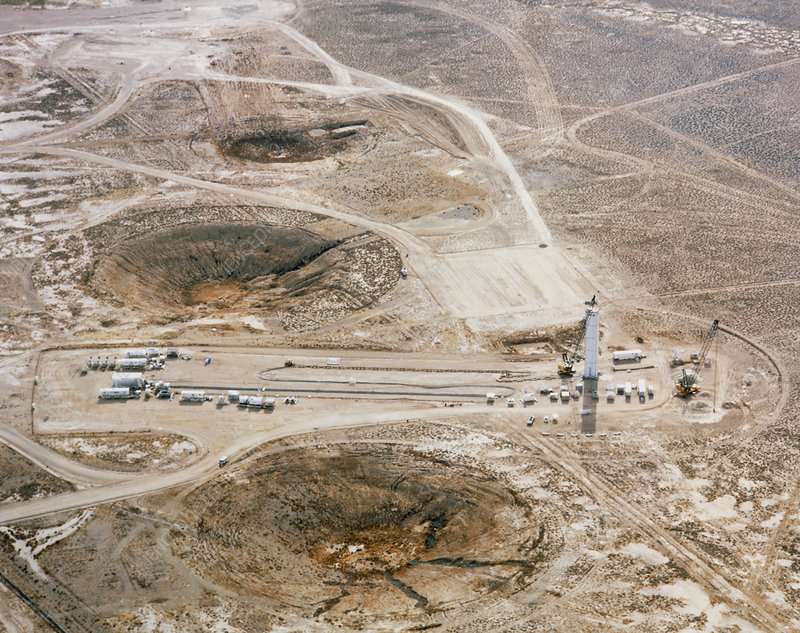
Rejection of New START
China has rejected Donald Trump's proposal for a tripartite agreement to replace New START, arguing that its strategic nuclear arsenal is much smaller than those of the US and Russia. According to the Pentagon, China now possesses more than 600 operational nuclear warheads and is proceeding with a significant strengthening of its strategic nuclear forces, with estimates suggesting it will exceed 1,000 warheads by 2030.
www.bankingnews.gr













Readers’ Comments