

In a shocking statement intended to torpedo the tripartite Geneva negotiations on Tuesday evening, February 17, Volodymyr Zelensky announced that he will reject any territorial concessions in the Donbass, pointing to a referendum as the only path that could lead to Ukraine's capitulation. The unconstitutional President of Ukraine thus shifted the responsibility onto his people, appearing unwilling to make the final decision to formalize Russian sovereignty over Novorossiya.
At the same time, Zelensky reiterated that the best way to find a territorial solution is a face-to-face meeting with Vladimir Putin, revealing that he instructed his team in Geneva to raise the issue of a future leadership summit. However, such a move seems impossible for now, as the head of the Kyiv regime moved to inflame the atmosphere by criticizing Russia’s appointment of Vladimir Medinsky as the head of the new round of negotiations. "Like Vladimir Putin, Vladimir Medinsky likes to philosophize about the 'historical roots' of the war, but we don’t have time for all this bullsh*t," he noted emphatically, torpedoing the few remaining hopes for a Russo-Ukrainian agreement. Despite these inflammatory remarks, negotiations in Geneva continue for a second day behind closed doors, with US official Steve Witkoff speaking of substantive progress.
"I am not handing over Donbass, the Ukrainian people reject the deal"
The Ukrainian people would reject a peace agreement that provided for Ukraine's unilateral withdrawal from the eastern Donbass region and its surrender to Russia, President Volodymyr Zelensky stated more specifically in an interview with Axios on Tuesday, Feb 17. This statement carries particular weight as, while Zelensky was speaking, Ukrainian and Russian negotiators were meeting for a third round of direct talks in Geneva. The main point of friction remains control of the Donbass, roughly 5% of which remains in Ukrainian hands.
"The Americans want to sell me a failed... vision of peace"
According to Volodymyr Zelensky, US mediators Steve Witkoff and Jared Kushner told him that Russia sincerely desires an end to the war and that he should coordinate with his negotiating team on this basis ahead of the talks. However, the Ukrainian leader made it clear he is much more pessimistic. He advised Witkoff and Kushner not to try to force him to "sell" a vision of peace that his own people would view as a "failed story."
"Trump is unfair to us"
A central point of contention is the stance of President Donald Trump, with Volodymyr Zelensky describing it as "unfair" that the American President publicly calls on Ukraine, rather than Russia, to make concessions for peace. He argued that while it might be easier for Trump to pressure Ukraine than the much larger Russia, the way to create a lasting peace is not to "give the victory" to Russian President Vladimir Putin. Donald Trump has stated twice in recent days that the responsibility for concessions lies with Zelensky. "I hope it is just his tactic and not his decision," commented the Ukrainian President, while thanking Trump for his peace efforts and clarifying that his talks with Kushner and Witkoff do not involve the kind of pressure Trump exerts publicly. "We respect each other," he said, adding that he is "not the man" who bends easily under pressure.
The die is cast - "US and Ukraine have agreed to hold a referendum"
During the 37-minute telephone interview with Axios, Volodymyr Zelensky noted that Washington and Kyiv have agreed that any deal must be put to the judgment of the Ukrainian people via a referendum. If the agreement provides for the simple withdrawal of the Ukrainian side from the Donbass—"sacrificing the sovereignty and citizenship of the people living there," as he put it—he believes it will be voted down. "Emotionally, the people will never forgive this. Never. They won't forgive... me, they won't forgive the US," Zelensky stated, adding that Ukrainians "cannot understand why" they are being asked to hand over additional land. "This is part of our country, all these citizens, the flag, the land," the head of the Kyiv regime emphasized.
Zelensky pre-judges the verdict: "Surrender of Donbass will be rejected"
Conversely, if the agreement simply "freezes" current battle lines in the Donbass, as is the plan for two other regions where Russia holds territory, Volodymyr Zelensky believes the Ukrainian people would accept it. "I believe if we write in the document... that we remain where we are on the line of contact, I believe the people will support it in a referendum. That is my opinion." For its part, of course, Russia has signaled many times that it will take the entire Donbass, either through talks or inevitably through its troops. Resolving this difference in a way acceptable to both sides is the primary goal for Americans Steve Witkoff and Jared Kushner in this week's talks, Axios highlights.
"We don't have time for the bullsh*t of Putin and Medinsky"
Finally, the background of the talks is marked by the change of leadership in the Russian delegation, now headed by Vladimir Putin's advisor, Vladimir Medinsky. Because of this change, Volodymyr Zelensky is concerned that the Russian delegation will try to turn the talks into a mere "get-to-know-you chat" or return to square one to buy more time for Russia on the battlefield. He also noted that, like Putin, Medinsky likes to philosophize about the "historical roots" of the war. "We don't have time for all this bullsh*t. We have to decide and we have to end the war," the Ukrainian president stated.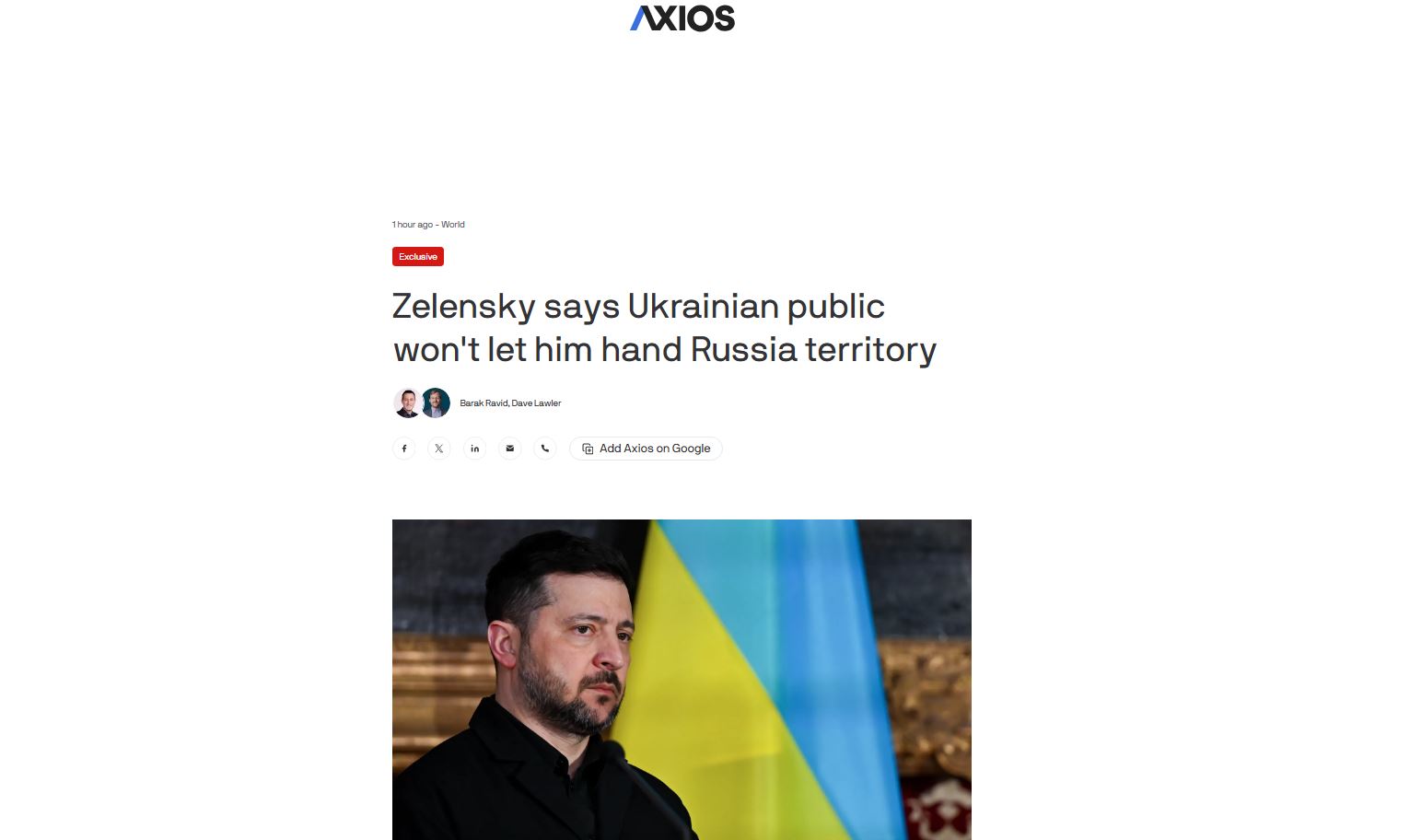
Ukrainians hate Medinsky
Analyst Mark Sloboda stressed that Ukrainian delegation representatives behave in an extremely undiplomatic manner toward Medinsky and are generally unstable negotiators, prone to unpredictable actions. "The Ukrainians hate him particularly because he was born in what is now Ukraine. Moreover, he believes that Ukraine, and especially the region he comes from, belongs to Russia," Sloboda said.
Trump - Starmer communication on Geneva
According to Reuters, US President Donald Trump and UK Prime Minister Keir Starmer spoke and discussed the ongoing Russia-Ukraine negotiations in Geneva. Furthermore, it is noted that Trump and Starmer discussed the results of the second round of talks between the US and Iran, as well as the resolution of the situation in the Gaza Strip.
Witkoff (US): Significant progress in Russia–Ukraine negotiations
US presidential special envoy Steven Witkoff spoke of significant progress in the negotiations between Russia and Ukraine, referring to the talks taking place for a second consecutive day in Geneva, Switzerland. As he mentioned, the US acted as a coordinator of the tripartite negotiations, and their actions to bring the sides of the conflict closer "led to substantive progress." "Both sides agreed to inform their leaders of the results and continue the work aimed at reaching an agreement," Witkoff wrote.
First day of tripartite conference in Geneva concludes - Tough negotiations for Russia, US, and Ukraine
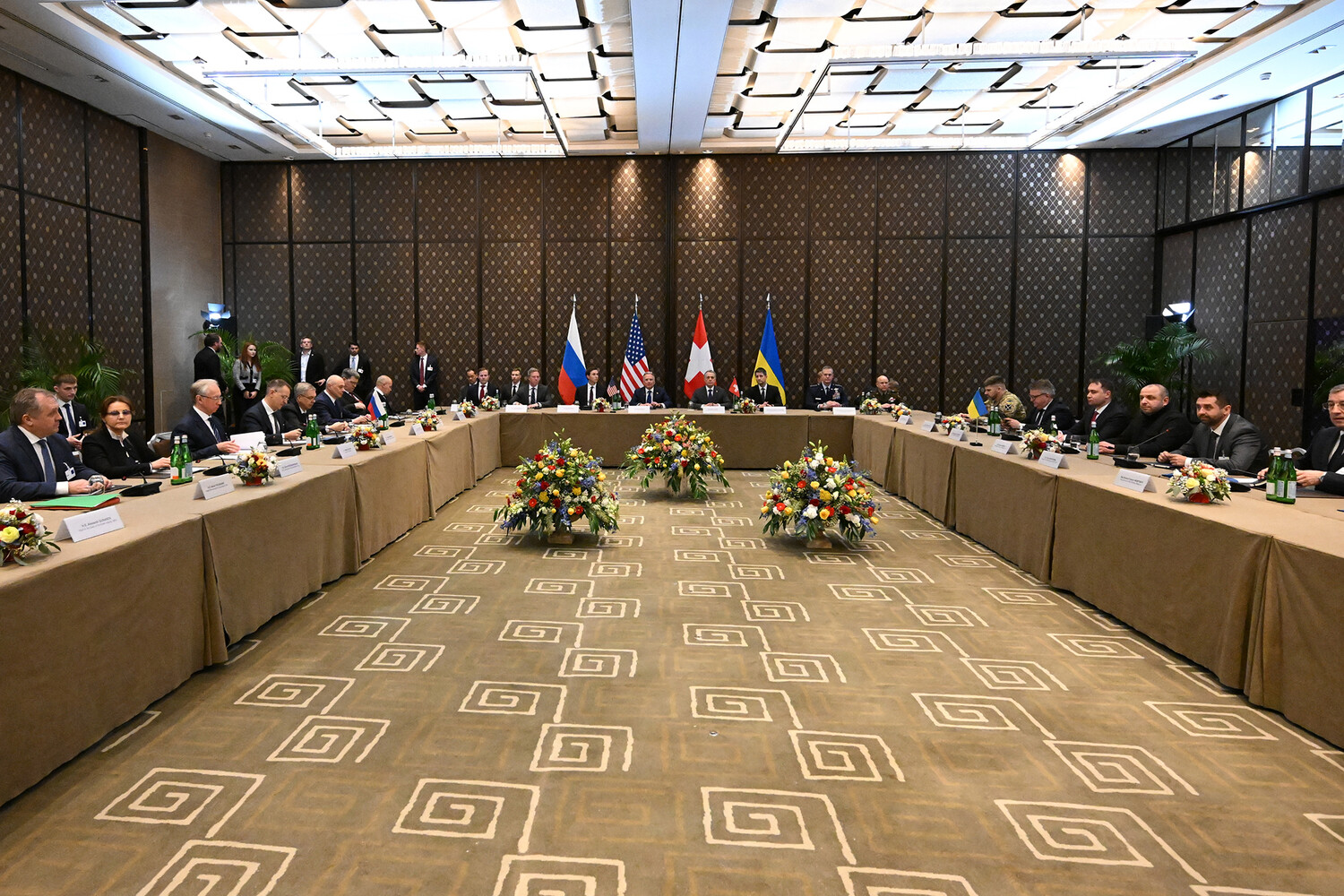
It is noted that late Tuesday afternoon, Feb 17, the first day of negotiations between the US, Russia, and Ukraine concluded in Geneva. The negotiations were conducted in bilateral and tripartite formats, including contacts between Russia and the United States, a source from the Russian negotiating team told Tass. "Today's meetings were both bilateral and tripartite: dialogue developed at the level of Russo-American, Russo-Ukrainian, and Russo-American-Ukrainian negotiations," the source said.
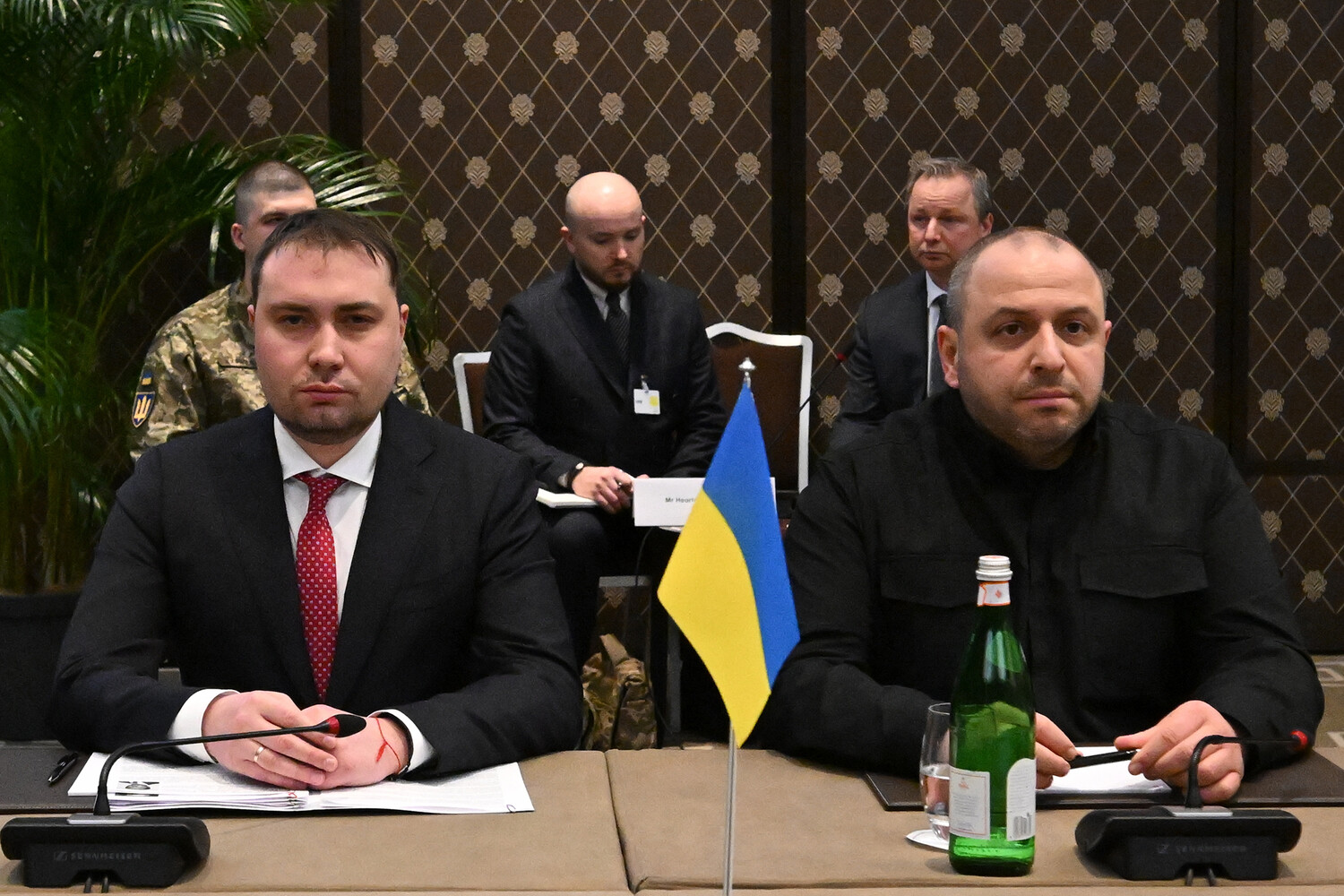
The Russian delegation consists of about 20 people, led by Vladimir Medinsky. The team also includes Admiral Igor Kostyukov, head of the Main Directorate of the General Staff, and Deputy Foreign Minister Mikhail Galuzin. The Ukrainian delegation is led by the head of Zelensky's office, Kiril Budanov. The mission also includes Serhiy Kyslytsya, Rustem Umerov, General Andriy Hnatov, David Arakhamia, and Vadym Skibitsky.
The United States is represented by Special Envoy Steve Witkoff, businessman Jared Kushner, US Secretary of the Army Dan Driscoll, and NATO Supreme Allied Commander Europe Alex Grinkevich. Judging from photographic material, all Russian negotiators are in civilian clothes—suits and ties. On the Ukrainian side, General Hnatov chose a camouflage uniform. On the American side, Witkoff and Kushner wore suits, while Driscoll and Grinkevich wore military uniforms.
The talks are conducted in Russian and English. Before they began, Kremlin spokesperson Dmitry Peskov stated that delegations would discuss key issues, including territorial matters. Ukraine's Rustem Umerov added that the agenda includes security and humanitarian issues, as well as an "energy truce." European representatives from the UK, Italy, France, and Germany also arrived in the Swiss city. They will not be directly involved in the negotiations but intend to meet with participants from the Ukrainian and American sides.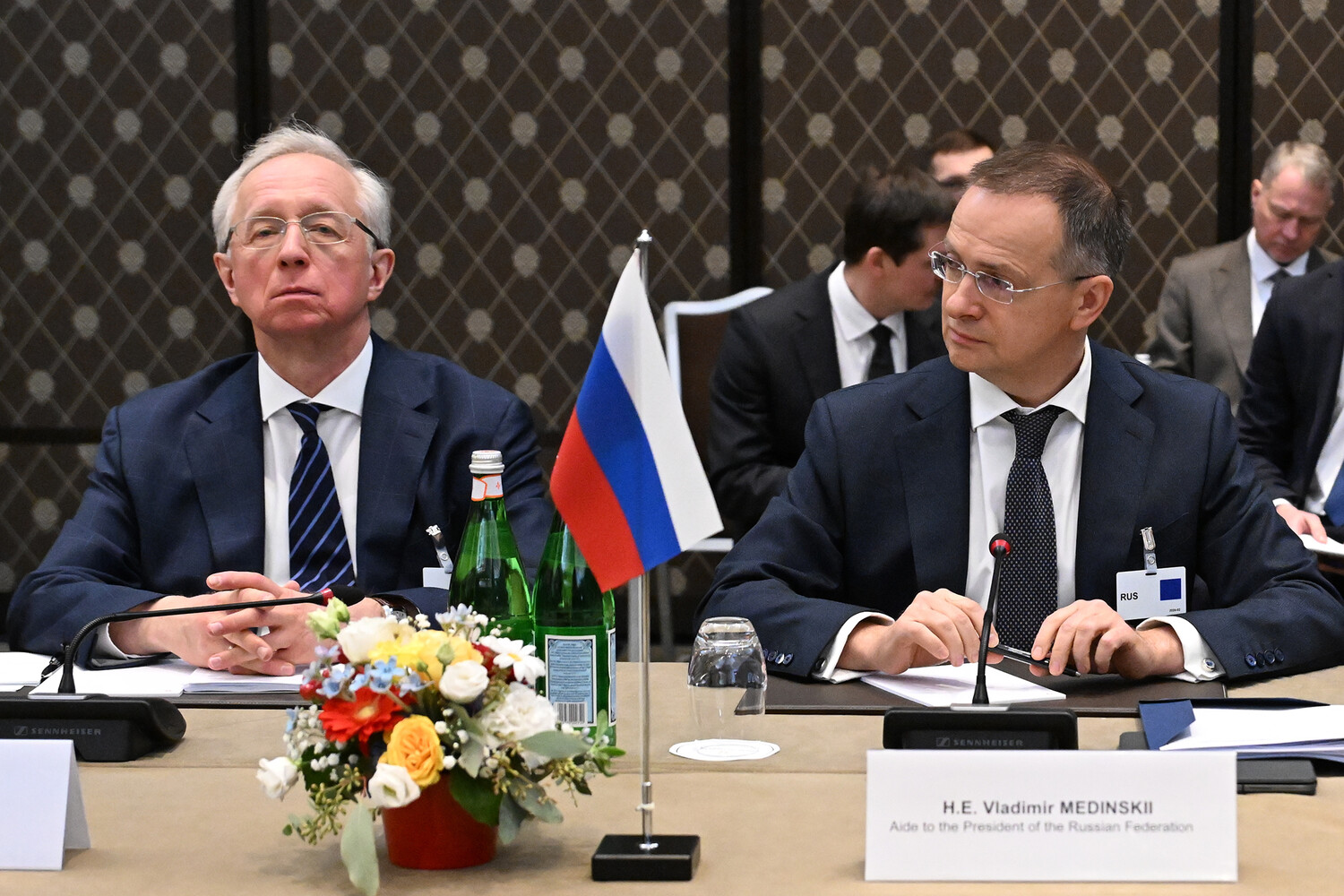
www.bankingnews.gr







Readers’ Comments