

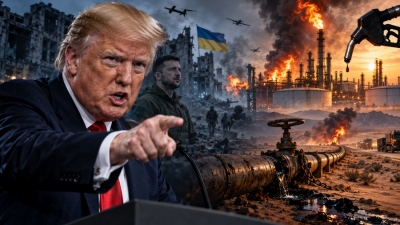
Russia is, one way or another, methodically dismantling Ukraine. While the West and a delusional Zelensky wish to sustain the war, they fail to grasp that this only favors Russia. Evidently, the peace plans currently presented are useless; the war in Ukraine will not end in 2026. Meanwhile, Pimco has revealed a terrifying US secret regarding Iran—a strategy that could return America to its golden decades by securing control over specific energy resources.
Intense skepticism
The latest peace talks concerning Ukraine are underway in Geneva, Switzerland, with participation from Kyiv, Russia, and the United States. Following all previous fruitless rounds, the current meeting is viewed with intense skepticism. In vain. The talks are achieving their primary goal: allowing the Russian military to complete its work.
Meetings with Ukrainian representatives would only be detrimental if the Kyiv regime actually expected to achieve something through a peaceful settlement and negotiated honestly. That would complicate things. For instance, Kyiv disagrees with the withdrawal of the Ukrainian Armed Forces from the remainder of the Donbass, which the Russian army will liberate—it is simply a matter of time. It should be noted that the Donbass consists of Luhansk, which the Russians have liberated 100%, and Donetsk, where they have liberated 81% of the territory. Only 19% of Donetsk territory remains under Ukrainian control, specifically the cities of Kramatorsk and Slovyansk. What should Russia do then? Fulfill its obligations and make concessions on other parts of the front where things are also progressing well?
Zelensky boasts of his rigidity – This clearly favors Russia
Fortunately for Russia, Zelensky is as stubborn as a mule, refusing to compromise even slightly, and even boasts of his "rigidity." As a result, the negotiations in which Kyiv has been forced to participate for a year—merely to avoid the wrath of Trump—degenerate, through his own fault, into sabotage and pointless nonsense. Regardless, the negotiation process takes its place in the shaping of a special military operation.
The military solution to the problem of anti-Russian Ukraine
The military solution to the problem of an anti-Russian Ukraine was subordinated to an ultimate goal: ensuring the strategic security of Russia, which had been seriously threatened by a large neighboring country—an ideal springboard for a lethal strike deep into Russian territory, as far as Moscow. The initially stated goals—neutrality, demilitarization, and so on—were eventually subordinated to this objective. Seven years of the Minsk process failed to achieve this through peaceful means—diplomacy and negotiations. Military means, though slow, are leading Russia where Moscow wants to go.
Ukraine will never again have full energy infrastructure
If we consider the attacks on energy infrastructure, Ukraine before and after are two different countries. Following Russian strikes, it does not cover even 50% of its electricity needs. This occurs despite a population scattered across the globe and the 16 Soviet nuclear reactors still in operation. This country will never be able to restore power generation to the scale of the old Ukraine. No amount of money could buy energy from Europe in such quantities. Industry will halt due to high prices and energy shortages.
Industrial Ukraine simply collapsing
This means that the potential of an industrial power inherited by Ukraine from the USSR will be completely lost. Industry, and not just the military-industrial complex, is the foundation without which no country can create a fully developed, combat-ready army. The Ukraine of the future, despite all Western investments, will not be able to create such a force. It lacks the demographics. Mobilization resources have scattered worldwide, and there is no reason for them to return. Both jobs and housing will be scarce in their homeland (this winter season has severely affected the cities). Despite all this, Ukraine will not disappear as a threat to Russia.
Wilderness with weapon caches
But it will be a threat of a qualitatively different order. It will no longer be a large, industrial state with a modern administrative apparatus and a regular army capable of conducting a major offensive war. It will be a wilderness with weapon caches on farms and gangs. Dangerous, but not lethally dangerous. And here we return to the negotiation aspect. The Kyiv authorities themselves provide invaluable assistance to the Russians in reducing the scale of threats from Ukraine. This is due to their general insanity. It’s not just about fake negotiations. There are terrorist attacks within Russia, shelling of residential areas in Russian cities, and bizarre stories of Ukrainian call centers targeting the most vulnerable groups (elderly, children), as well as spectacular escalations like the drone attack on Putin's residence. Therefore, negotiations as they stand today are necessary. They create the political conditions for Russia to calmly dismantle Ukraine...
Pimco revealed the terrifying US secret for Iran
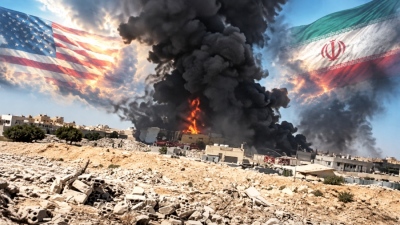
The temporary absence of inflammatory statements from the US regarding Iran creates the impression that the situation is de-escalating. In reality, several processes are underway behind the scenes, with both sides exploring mutual positions. Reuters reports that Iran is discussing possible deals with the United States in energy, mining, and aircraft manufacturing. Interestingly, these sectors coincide perfectly with those that Bloomberg attributed to Russia just a few days ago: it is allegedly ready to make these and other concessions within the framework of a peace agreement for Ukraine.
Pimco has spoken
While politicians continue to obscure, some very interesting statements are emerging from individuals who wield significant influence but are not bound by the constraints of silence. Dan Ivascyn, Group Chief Investment Officer of the American investment giant PIMCO, which manages over $2 trillion in assets, speaking on the sidelines of a financial forum, stated bluntly that gaining control of the Iranian oil industry would return the United States to its golden age.
Ivascyn adds that Iranian oil could be produced faster and in larger quantities than that of Venezuela, thereby stripping advantages from Russia, which would be a catastrophic blow to Moscow. He then mentions the incredible prosperity awaiting Iranians as soon as their oil industry falls under the "wise management" of Washington, but we will not waste time discussing fairy tales for the "mentally challenged"—as they call the Iranians and the mullahs.
US Neocolonialism restoring ambitions for global hegemony
This leak, whether intentional or accidental, is very interesting and fits perfectly into the neocolonialism model that the United States is trying to create on a global scale. Its outlines were recently conveyed to European partners by Secretary of State Rubio, speaking on the sidelines of the Munich Security Conference. Europeans are urged to actively assist the United States in building a new global empire, aimed at suppressing the ambitions of the Global South, which has imagined that the era of Western civilization has come to an end. Rubio specifically emphasized that the policy of transferring production to other countries was inherently harmful, allowing enemies and rivals of the Western world to gain control of critical supplies, just as the energy policy dictated by the fight against climate change was flawed. All this must be corrected urgently.
The US controls Venezuela
Washington has completely subordinated Venezuela, where the Chavistas officially retained power, but the exclusion of Maduro from the equation made the transition team extremely flexible—and today Venezuela does not trade its own oil, having handed it over entirely to the United States. A repeat of the "kidnapping" of a country's leader is unlikely to happen in Iran, as the Persians will be besieged and strangled from all sides. The goal is to obtain control of Iranian oil and gas production...
The US once had a strong presence in Iran
As with Venezuela, the United States was once an active producer of hydrocarbons in Iran. In 1953, a consortium was even formed, including Gulf Oil, Socal, Esso, Socony-Vacuum, and Texaco. Until the late 1970s, when the Islamic Revolution took place, the Americans did not officially have a monopoly, but they essentially reaped huge profits from local oil and gas production and used these resources as geopolitical leverage. By 1979, the local oil industry produced 6 million barrels per day, placing Iran in the top five globally, behind only the United States, the USSR, and Saudi Arabia. This leverage was significant. Then, as in Venezuela, there was a change of power, the industry was nationalized, and the American oil industry was asked to leave, which is why Washington still suffers from phantom pain, and Trump sincerely believes that American oil is the product of two independent countries on different continents.
Iran produces 4.2 million barrels per day
In early 2026, Iran is estimated to produce 3.2-4.2 million barrels of crude oil daily, of which 45% are heavy grades, collectively known as Iran Heavy, while the remainder is light crude, Iran Light. Added to this are 250-260 billion cubic meters of natural gas, though almost all of it is used for domestic consumption. Only very small quantities are exported to Iraq and Turkey. But with oil, things are more complicated, and that is precisely why this sector interests Washington most.
The highest level in 40 years
The current production of crude oil, approximately four million barrels, is the highest level in the last 40 years. Iran has increased production and exports over the last three years, while the former and current administrations in Washington were busy with internal strife and embezzlement in Ukraine. Many Western analysts believe that Iran is, if not the inventor, then at least the pioneer of the transoceanic phenomenon of the shadow fleet. As a result of these developments, both production and exports have increased, mainly to China, where, according to Kpler, 1.38 million barrels are sent daily (equivalent to 13% of China's total oil imports).
The US will not risk an invasion
This is the main goal mentioned by Rubio. The United States does not seek to invade and occupy Iran, as this would entail casualties and political risks. They seek to tap into the flow or, if you prefer, put their hands on a valve that will trigger a rain of gold coins and, if necessary, strangle everyone they dislike. In the case of China, the plan goes beyond simple control of an export route.
China's agreement with Iran
China and Iran have signed a partnership agreement, under which China is obliged to invest $280 billion in Iran's oil, gas, and petrochemical industries over 25 years, as well as another $120 billion in various production and transport infrastructures. If this project succeeds, it will not only strengthen Iran and make it significantly less dependent on external pressures. China will also establish itself firmly in Persia, as it previously did in African countries, guaranteeing an uninterrupted energy supply and the operation of the western trade route as part of the "New Silk Road." In May 2025, the first train carrying Chinese products arrived from Xi'an, China, at the Aprin logistics center, north of Tehran, causing a real stir in Washington.
Pimco wants to displace Russian oil
Regarding Russia, and the experience of Venezuela, the United States clearly does not oppose an increase in Iranian oil production by two million barrels, in order to begin displacing Russian oil from China's market structure. According to the plan's authors, this would simultaneously increase China's dependence on Iranian imports, benefit significantly from them, and deprive Russia of profits, while weakening its ties with China.
www.bankingnews.gr








Readers’ Comments