

Indirect negotiations between Iran and the US regarding the former's nuclear program appear to be entering a new, more substantive stage. According to the official Iranian news agency, the Islamic Republic News Agency (IRNA), an agreement has been reached on several key issues. The talks took place in Geneva, mediated by Oman, lasted approximately three and a half hours, and are part of the indirect contacts between Tehran and Washington to revive the negotiation process surrounding the nuclear issue.
Seyyed Abbas Araghchi: "We have entered a new phase"
Following the conclusion of the second round of indirect negotiations in Geneva, Iranian Foreign Minister Seyyed Abbas Araghchi announced that contacts with the US have now moved to a new stage. As he stated, the two parties reached a general consensus on basic principles, and the process of transitioning to drafting the text of a potential agreement has begun. "The second round of negotiations took place today at the Embassy of Oman, though talks had begun yesterday. We had good meetings with the Director General of the International Atomic Energy Agency (IAEA), Rafael Grossi. In this round, more serious discussions took place compared to the previous one, and the climate of dialogue was more constructive. We reached a general agreement on a series of 'fundamental principles that will serve as guidelines' to begin the process of drafting the text of a possible agreement," he characteristically stated.
"It does not mean an immediate ceasefire"
However, Araghchi was quick to clarify that the progress recorded does not equate to a final agreement. "We cannot say that the matter closed quickly, but the path of negotiations has opened and progress has been made. From Iran's side, a clear and positive course has been shaped. There are still issues to be examined. Different views were expressed and addressed with seriousness. From here on, we will proceed based on these principles," he noted. These developments create cautious optimism for the restart of a more systematic negotiation process during a period of heightened geopolitical tensions in the Middle East. More details are expected in the coming period as the two sides move toward shaping the framework of an eventual deal.
Meanwhile, the "Wall Street Journal" reports that Iran is ready to suspend uranium enrichment as part of an agreement with the United States, while also considering the possibility of transferring part of its stockpiles to a "third party, such as Russia." According to the report, Iranian officials have indicated in discussions with regional partners that they could agree to a suspension of uranium enrichment for a period of up to three years. Additionally, Tehran is examining the possibility of transferring part of its stockpiles to third countries.
Pezeshkian: Iran is not abandoning its nuclear program
Tehran will never abandon its peaceful nuclear program, stated Iranian President Masoud Pezeshkian, just hours after the negotiations between American and Iranian officials concluded in Geneva. Iran is ready to allow verification that it is not seeking to acquire a nuclear weapon, Pezeshkian also emphasized. "We are not seeking to acquire nuclear weapons," he said in an interview posted on the Iranian presidency's website. "If anyone wants to verify this, we are open to such verification," he said.
Harsh message from Khamenei: The real danger is not the US aircraft carrier, but the weapon that will sink it
As nuclear negotiations continue in Geneva, Iranian Supreme Leader Ayatollah Ali Khamenei sent a clear message to the United States, responding to the threats of President Donald Trump. "We will strike with our powerful weapon," he stated, underlining Iran's military readiness. Yesterday, Khamenei met in Tehran with residents of Tabriz, praising the prudence and resistance of the Iranian people against the events of December. The Iranian leader emphasized: "If there is something more powerful than a warship, it is the weapon that will send the ship to the bottom of the sea."
Khamenei reiterated the need to strengthen national unity: "We consider all those who lost their lives in the uprisings, whether they were security defenders, innocent citizens, or deceived by naivety and anger, as our own children." He stressed that the events of December were not just an uprising but a "planned coup" suppressed by the Iranian nation. The leader urged government officials to double their efforts to solve key problems, curb inflation, and protect the value of the currency. Referring to Trump's statements, Khamenei noted: "The US complained that they have not managed to destroy Iran for 47 years. I tell him: neither will you."
Regarding the events of December, he stressed that the US and Israel, with the help of foreign intelligence services, were planning an attack to undermine the regime but failed. "The resistance of the people, the Basij, the Revolutionary Guard, and the security forces crushes any coup," he stated. Khamenei warned that potential US actions would meet the same fate: "Any attack will be crushed by the decisive response of the Iranian people. They know that an army that considers itself the strongest in the world can suffer such a serious blow that it will never recover," Khamenei emphasized, adding that threat-response institutions are prepared. In his speech, he described the economic, political, and social problems of the US as signs of the collapse of the "American empire": "The problem the US has with us is that they want to swallow Iran, but the Iranian people and the Islamic Republic prevent them." Khamenei accused the US of predetermining the outcome of nuclear negotiations: "If the result is predetermined, then what are you really negotiating? This is pure nonsense."
Iran launched missiles in the Strait of Hormuz as part of an exercise
Meanwhile, the atmosphere predicted anything but an agreement... The Tasnim news agency, which maintains close ties with the Revolutionary Guards, reported that missiles launched from within Iran and from coastal areas successfully hit targets in the Strait of Hormuz. Tehran had announced that the Revolutionary Guards began a live-fire exercise early Monday morning in the Strait of Hormuz, the Persian Gulf, and the Gulf of Oman—maritime areas of pivotal importance for international navigation and global trade. This is the second time in recent weeks that Iran has conducted a live-fire exercise in the Strait of Hormuz, intensifying the already tense climate in the region.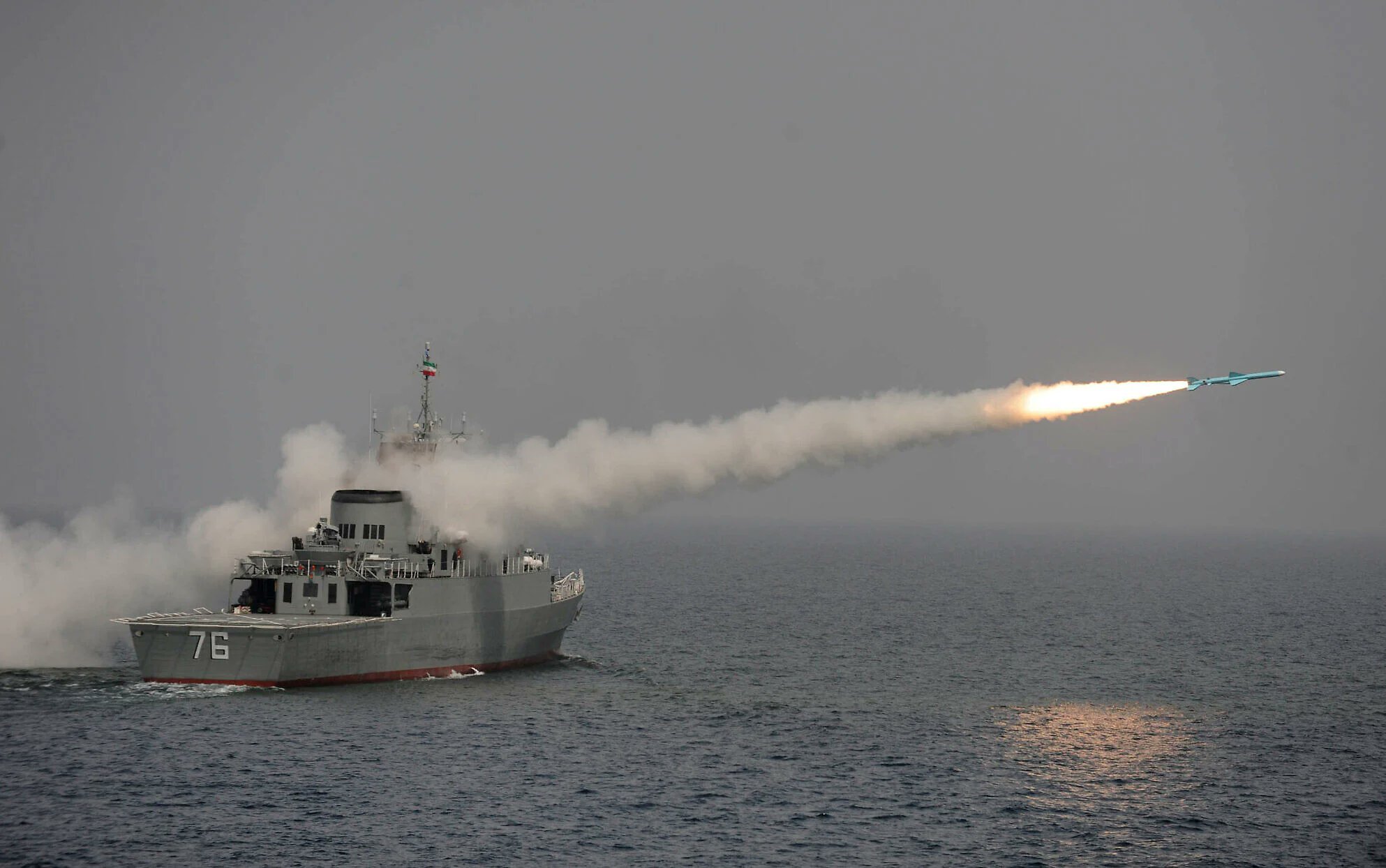
At the same time, Ayatollah Ali Khamenei escalated his warnings to the United States regarding its increased military presence in the Middle East. "Of course, a warship is a dangerous mechanism, but more dangerous than the warship is the weapon that can sink it into the depths of the sea," Khamenei stated, according to Iranian state television. He also warned Washington that "predetermining the outcome of the talks is a wrong and foolish action," leaving clear hints about the course of negotiations. At the same time, F-22 and F-16 stealth fighters were moving from the United States and Europe to the Middle East, according to data from the flight tracking platform Flightradar. It is estimated that more than 10 F-22s and over 30 F-16s have already taken off, in a move that significantly strengthens the US military presence in the region.
Trump "green light" to Netanyahu
In the meantime, information from CBS caused concern, reporting that Israel had received a "green light" from the US for an attack on the ballistic missile program and facilities of Iran. Trump was reportedly said to have accepted Netanyahu's request for a strike on Iran's ballistic program in case the Washington-Tehran negotiations did not bear fruit. Notably, Netanyahu has repeatedly stated that any agreement with Iran must include restrictions on ballistic missiles, in addition to the nuclear program itself. Conversely, the Iranians have stated that they are discussing the limitation of their nuclear program, but the ballistic one concerns their defense and is not up for negotiation.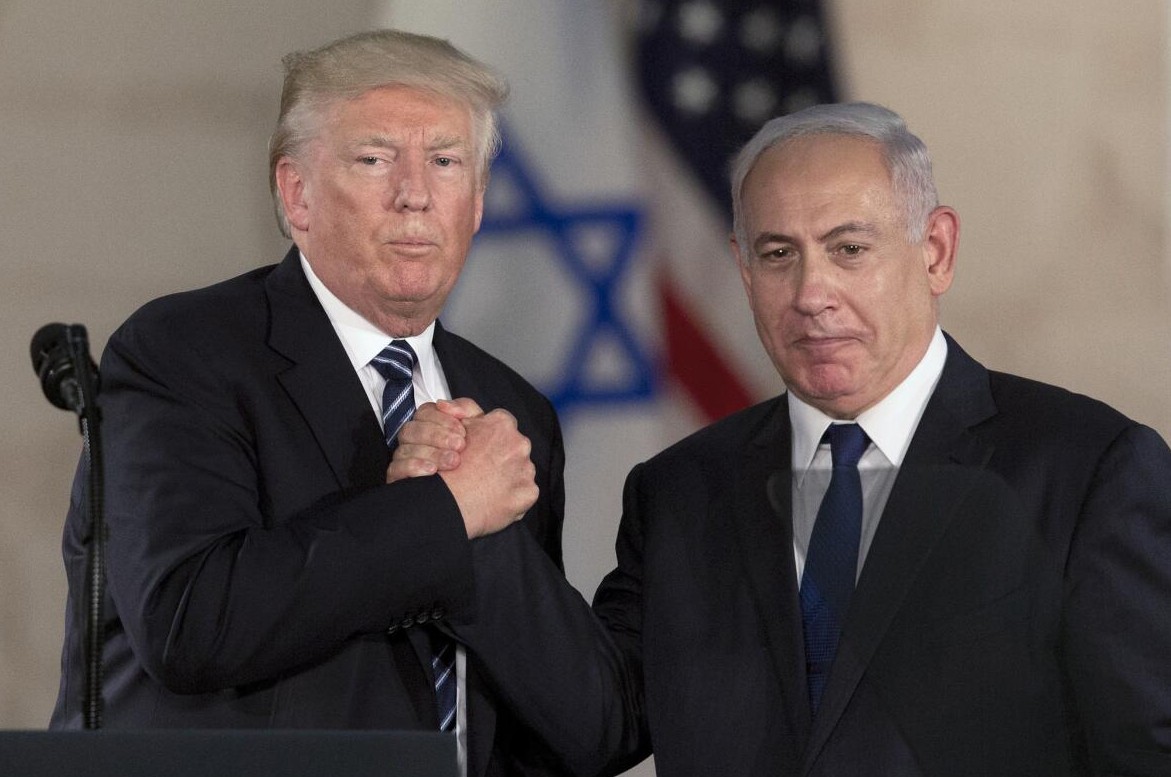
What will happen
A conflict would likely begin with air strikes by the United States. The goal would be the destruction of air defenses and critical military infrastructure. However, a large part of Iranian facilities is located deep in mountainous areas, designed specifically to withstand bombardment. Even if the air defense is neutralized, the missile network will remain active. This means that US bases, fleets, and troops will be constantly under threat. The most critical result could be political rather than military: the acceleration of the development of nuclear weapons by Iran. If a country receives repeated attacks, the nuclear deterrent is considered the only reliable guarantee of security.
Escalation without limits
In a ground invasion, NATO would have limited participation, while the main advance would take place through Iraq. It would require hundreds of thousands of soldiers, multiple aircraft carrier groups, and massive air support. The Iranian reaction would be immediate through the mass mobilization of hundreds of thousands of soldiers and the activation of allied armed organizations (Hezbollah, Houthis) in the region.
At the same time, a mining of the Strait of Hormuz is likely, as well as missile strikes on bases and fleets of the US and their allies. Oil prices could skyrocket to levels of a global economic crisis. Battles in coastal cities like Bushehr and Bandar Abbas, as well as in the Khuzestan province, would be conducted on difficult terrain. The advance towards Tehran would require months or even years of bloody conflict. Even if the regime of the Ayatollahs collapses, the result could be geopolitical chaos similar to that in Afghanistan after American interventions.
www.bankingnews.gr












Readers’ Comments