

Europe sidelined in both Ukraine and Gaza negotiations as Munich Security Conference begins
"Europe has failed"... This is the categorical conclusion of Wolfgang Ischinger, president of Europe’s most prominent security forum. Speaking to CNBC ahead of the Munich Security Conference (MSC), Ischinger stated that it is "her own fault" that Europe’s influence on the international stage has withered. "Europe failed to speak with one voice to China and about China; it failed to form a unified stance on the future of the Middle East, including how to manage or not manage the Iranian nuclear issue," said Ischinger, a former German ambassador to the US.
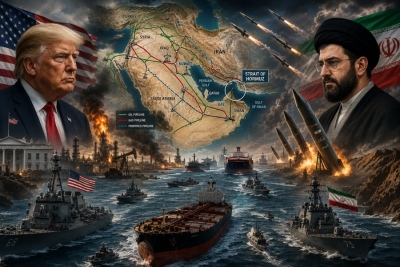
Earlier this week, the MSC published its 2026 report, featuring a foreword by Ischinger. The report warns that "the world has entered a period of sledgehammer politics," where "widespread destruction is the order of the day." The report notes that US President Donald Trump is "at the forefront of those promising to liberate their countries from the constraints of the existing order," arguing that he represents a movement "fueled by resentment and remorse over the liberal path their societies have taken."
Europe… on the sidelines
Ischinger told CNBC that Europeans find themselves "completely on the sidelines" regarding negotiations for Gaza and Ukraine. "We have no role. The decisions are made by others," he said. "When I look at the war in Ukraine, Europe has no place," he added, noting that the US and Russia are leading the discussions.
American envoys have been leading peace talks with Ukrainian and Russian officials since late 2025, while European officials struggle to maintain a say in how the four-year war between the two nations will end. "Why do we not have a seat at the table? This is our continent. It is our future," Ischinger declared. "The answer is not that Donald Trump is wrong. The answer is that we failed to speak with one voice."
Ischinger added that he rejects "the blame game toward the United States," but acknowledged there are areas where Europe has "clearly failed" to adopt a strategic position. Delegates from around the world are gathering this Friday (Feb 13, 2026) for the Munich Security Conference, which runs through Sunday (Feb 15, 2026).
Ischinger told CNBC that the "sledgehammer" is being used "by many" besides Trump, including far-right extremist parties across Europe and Russian President Vladimir Putin. However, he described Trump as "the most prominent example" of someone who "challenges existing arrangements and tries to replace them." "For countries like Germany, which depend so heavily on existing international rules, this is a deeply worrying development," he added.
The case of Greenland
Transatlantic trust has also been damaged by Trump's attempt to annex Greenland, according to Ischinger. Following weeks of rhetoric regarding placing the Arctic island—a Danish territory—under Washington’s control, Trump threatened to impose tariffs on European allies who stood in the way, before announcing that a "deal" for Greenland had been reached.
Defense spending
Since Trump’s return to the White House, European leaders have pledged to drastically increase defense spending. Last summer, European NATO members agreed to raise defense spending to 5% of their national GDP, a move Trump has long pushed for.
These spending plans have bolstered European defense industries, with some seeing their stock prices more than double as order backlogs hit record levels. Ischinger told CNBC that Europe needs "to create a more integrated, more competitive, and more unified defense industry."
www.bankingnews.gr


Readers’ Comments