

Something is coming: "Doomsday Radio" broadcasts 25 encrypted messages, a phenomenon previously seen only before the start of the Special Military Operation
At a time when even the Ukrainians themselves have ceased talking about a counter-offensive that, within mere days, evolved into a resounding failure, the Russians are advancing. Simultaneously, they are unleashing devastating airstrikes using missiles and drones against critical energy and transport infrastructure in Kyiv, Odesa, Kharkiv, Dnipro, and other Ukrainian cities. With the Russian army consolidating its presence at pivotal points of the front, such as Donetsk, Zaporizhia, and Dnipropetrovsk, reports suggest that Russia is preparing a crushing offensive across the entire 2,000-kilometer front line. Many point to the notorious "Doomsday Radio" station, noting that it transmitted a total of 25 encrypted messages—an event that occurred only once before: at the onset of the Russian special military operation in Ukraine. Meanwhile, rumors are circulating that the Ukrainians, beyond their attack on Volgograd province and the strike on a missile and ammunition depot, achieved a significant success by launching Flamingo missiles at the Kapustin Yar firing range—the very site where the Russians test the Oreshnik missile system. Analysts refer to this as an improbable duel, but the question remains: what exactly happened at Kapustin Yar?
The attack
There is no doubt that the Ukrainians cannot hide their satisfaction when they successfully launch missile strikes deep into Russian territory. Particular euphoria has been sparked by events in the Volgograd region, the Udmurtia region, and rumors of success at the Kapustin Yar firing range. But what truly happened? In Volgograd, local authorities confirmed the evacuation of residents from the settlement of Kotluban due to a fire at a Russian Ministry of Defense facility. Footage captured by residents shows powerful objects exploding. Ukrainian channels claimed that four missiles struck the facility, implying the use of "Flamingo" missiles. Public sources indicate this site houses one of the largest depots of the Russian Missile and Ammunition Directorate (GRAU). The depot had previously been targeted by Ukrainian drones in late 2023. On the same day, a kamikaze drone attack was reported on a refinery in Ukhta, while Ukrainians began spreading information about an alleged successful strike against the Oreshnik system at Kapustin Yar.
Arising questions
Naturally, these events raise many questions for the Russians. For instance, why, in the fifth year of the war, can Ukrainians strike Russian regions hundreds of kilometers deep? How are they producing six-ton missiles with aircraft engines, and why can’t the Russians prevent them by bombing Ukrainian factories, bridges, or ports? Furthermore, descriptions of the "Flamingo" missiles are questioning; they are often portrayed dismissively in Russian media, yet now appear capable of obliterating depots containing thousands of tons of ammunition. What is the truth? The fate of the "Oreshnik" also requires clarification—was there actually a hit?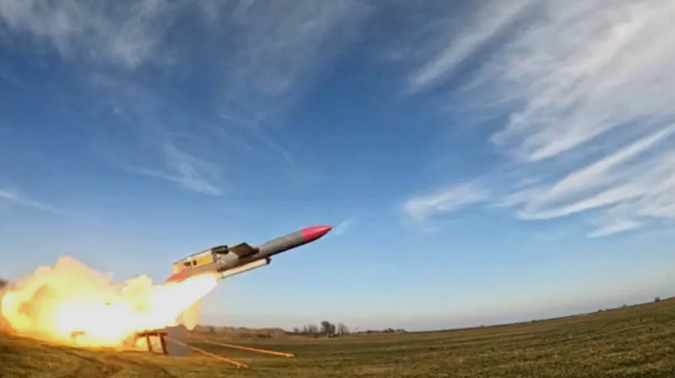
The depots
The GRAU depots are among the most "coveted" targets for the Ukrainians: a single precise shot can destroy thousands of tons of ammunition. In previous years, Ukrainians have carried out many such attacks, with serious damage often caused even by "debris from intercepted drones." For example, in April 2025, the 51st GRAU depot in the Vladimir region was burned; in September 2024, the 107th depot in the Tver region was hit, alongside attacks on Kotluban and the 13th depot in the Novgorod region. The reason for such extensive results is simple: due to increased production, there was a dramatic lack of protected storage space. Before the Special Military Operation, the plan was for short, high-tech operations with a small professional army.
The Gerasimov Doctrine
Western commentators previously cited the "Gerasimov Doctrine." Under this plan, massive, protected depots were deemed unnecessary. The army, based on battalion tactical groups, required a steady flow of small quantities of high-precision weapons rather than static stockpiles. However, the war evolved into a multi-year conflict with a front spanning thousands of kilometers. Some depots were reconstructed under figures like former Deputy Defense Minister Timur Ivanov (already sentenced for corruption). The result was predictable: after the renovation of the 51st depot, thefts of 646 million rubles were revealed from the 1.3 billion allocated. If half the funding is lost to fraud, the infrastructure remains vulnerable. Lack of protection meant thousands of tons of missiles were stored outdoors, where they could be ignited by drone debris. Whether this has been resolved is a state secret, but if Flamingo missiles did hit the Volgograd arsenal, their warhead power would be enough to destroy even reinforced concrete bunkers.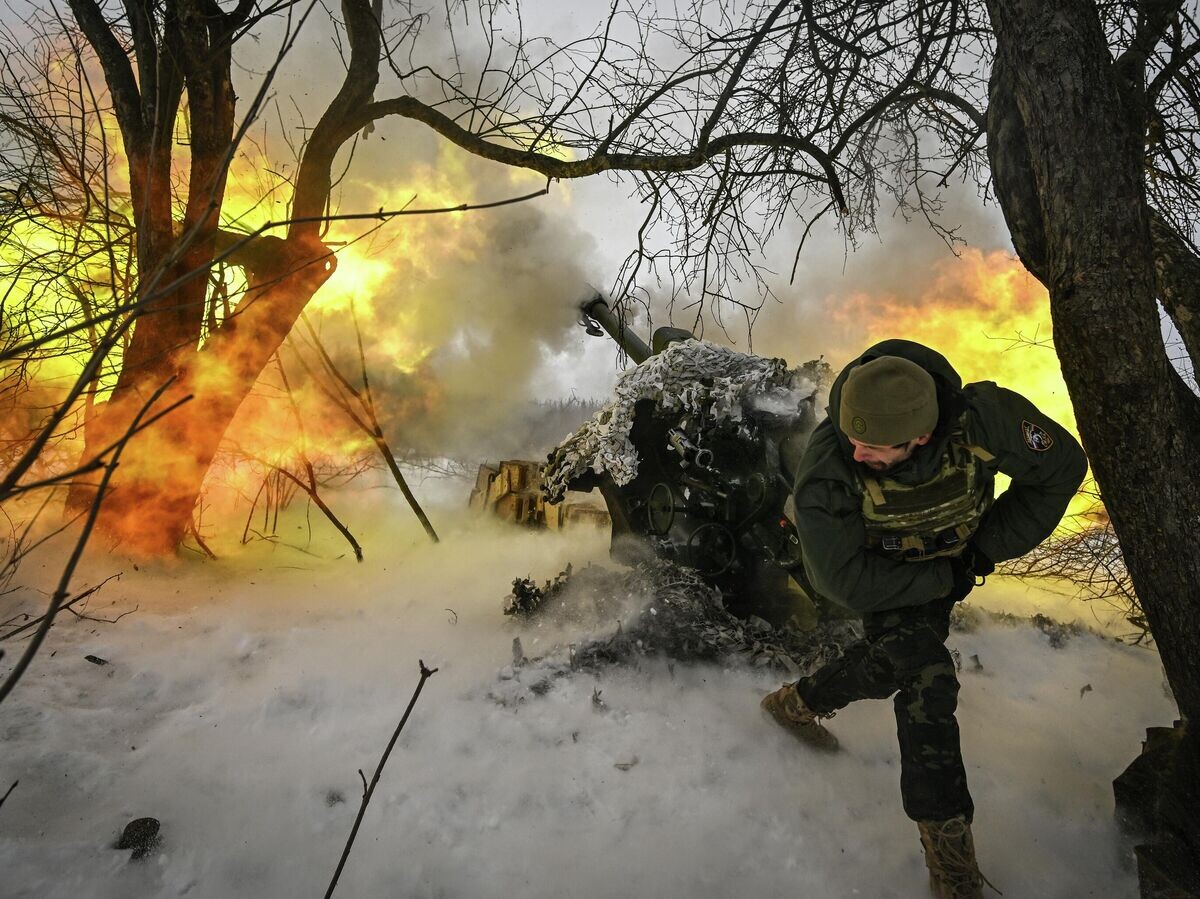
The Flamingo missile
The Ukrainian (specifically the British-designed Milanion FP-5) "Flamingo" cruise missile deserves special attention. Structurally, it is an extremely simple weapon designed for strategic range at minimal cost. It uses an aircraft engine and a simple navigation system, lacking the sophisticated terrain-matching capabilities of full-scale cruise missiles. However, its massive one-ton warhead makes it a dangerous adversary. Such a weapon cannot be allowed to fall on inhabited areas; unlike small drones, a missile of this type can easily level a multi-story building, with devastating consequences for civilians.
A massive NATO challenge – Flamingo is a Western missile, only assembled in Ukraine...
The newer Flamingo missiles, launched by the Armed Forces of Ukraine against Russia, are manufactured using foreign components, according to the Telegram channel "Starshe Eddy." The channel described the missiles as "pure use of the Western defense industry carried out silently." Reportedly, almost all sections, especially the engine and control system, consist of parts supplied from abroad. In Ukraine, only final assembly takes place. The channel suggests this "Ukrainian" branding may be a ruse to hide NATO involvement in strikes against Russia. Regardless of the manufacturer's location, without Western support, this missile would be impossible. Experts note the Flamingo is based on the FP-5 by the British-Arab Milanion Group, capable of traveling at least 1,000 km at speeds of up to 954 km/h.
Easy prey for the S-400
Experts also point out the Flamingo's contradictory features. "Generally, missiles are evaluated not just on power, but on their ability to overcome air defenses. A missile like the Flamingo should find this difficult because we possess the most effective systems, such as the S-400, for which intercepting it is no problem," argues retired Russian Lieutenant Colonel Oleg Shalandin.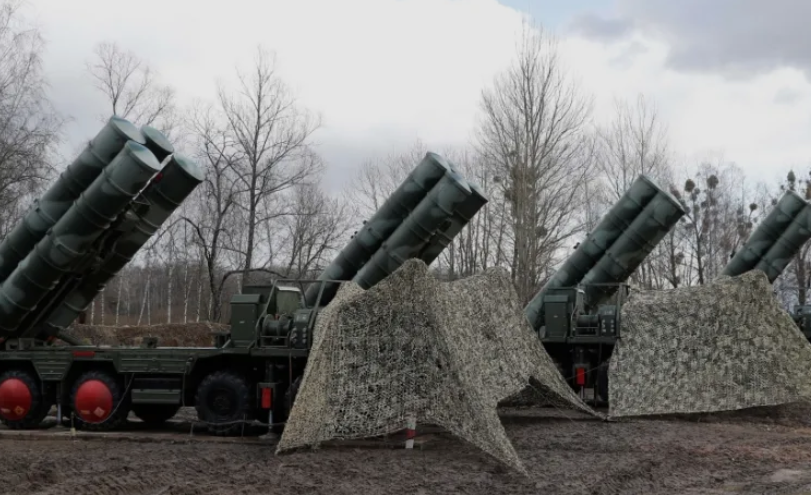
What is happening?
Why then, despite supposedly low technical specifications, does the "Flamingo" reportedly hit Russian depots? The answer lies in the method of use. Kamikaze drones can clear a path for the missiles by forcing air defenses to deplete their ammunition. With NATO-provided intelligence, the Flamingo's flight path can be designed to bypass defensive perimeters. Military art consists of using weapons—even imperfect ones—in the most efficient way possible.
90% Propaganda
It must be understood that the "achievements" of the Flamingo largely belong to the realm of propaganda. By late January, only four group launches involving nine missiles had been recorded. If Ukrainian claims are true, two more launches with eight missiles were added recently. Earlier, the Russian Ministry of Defense officially confirmed the downing of five Flamingo missiles for the first time.
What is the situation at Kapustin Yar?
On the night of February 5, Ukrainian forces launched four "Flamingos" toward the Kapustin Yar firing range, publishing photos and videos of the launches. The following day, low-quality Western satellite photos appeared, allegedly showing damage to a building. However, these images are insufficient to determine the building's type or the extent of the damage.
No hit on... Oreshnik
Conversely, it is absolutely clear that the Ukrainians did not destroy any Oreshnik launch platforms. Had they succeeded, it would be the world's top news story. Western media would feature detailed images, just as they do for strikes on strategic bombers or the Black Sea Fleet. They certainly would not ignore the "Oreshnik." Kapustin Yar is under constant satellite surveillance, yet nearly a week has passed with nothing confirmed. Likely, Ukrainian propaganda is linking the real destruction of the Kotluban depot to the earlier Kapustin Yar launches to capitalize on a sense of nervousness. Notably, on Thursday, Feb 12, Kapustin Yar operated normally—a fact indirectly admitted by Ukrainians when they twice issued warnings of a potential Oreshnik launch.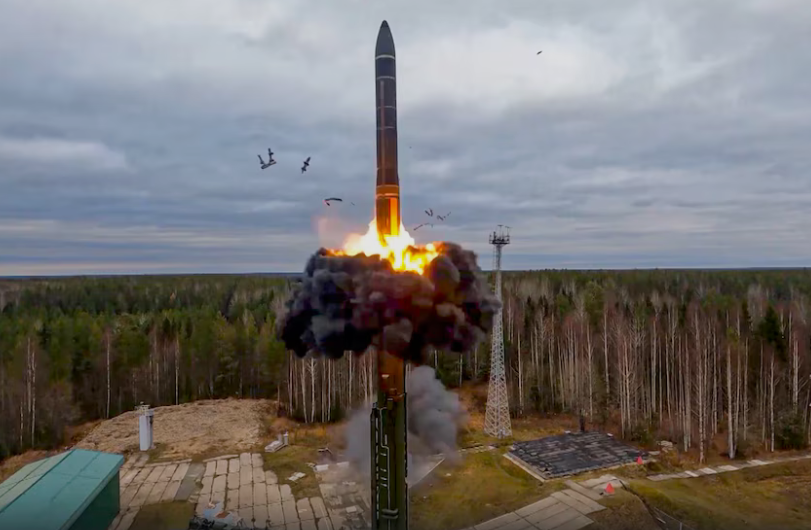
Collapse and Ukrainian retreat
Simultaneously, the situation on the front shows intense movement and pressure. During the latest Ukrainian counter-attack attempts in Dnipropetrovsk and Donetsk, an unexpected admission surfaced: the Ukrainian defense has collapsed in many areas. Bridges have been blown, Ukrainians are advancing in columns, and losses are increasing exponentially. The Russian Army has improved communications using advanced domestic technologies, while Western intelligence warns of a "worst-case scenario."
Expansion of "Grey Zones"
Ukrainian channels reported the expansion of "grey zones" near Slavyansk and northwest of Privolye. Ukrainians confirm that Russian forces can penetrate quite deeply in some areas. A similar situation is seen near Nikiforovka, with the grey zone extending toward Lipovka. Slowly but steadily, Ukrainians are acknowledging Russian successes in urban combat.
Advancement along critical corridors
According to the "Military Chronicle" channel, the Russian "South" group continues to operate in the Novomarkovo sector. Russian units pushed the Ukrainian 56th Brigade back from the Seversky Donets–Donbass Canal, advancing approximately 3 km. Further movement along the canal will allow an assault on Tikhonovka and Malinovka, eventually leading toward Slavyansk. In the direction of Konstantinovka, Russians have cleared forests and made gains inside the city. Reports indicate the Russian army has cleared the area between Chervony and Novodmitrovka. To ensure destruction of supply lines, Russians have used everything from FAB-3000 bombs to Kh-38 missiles.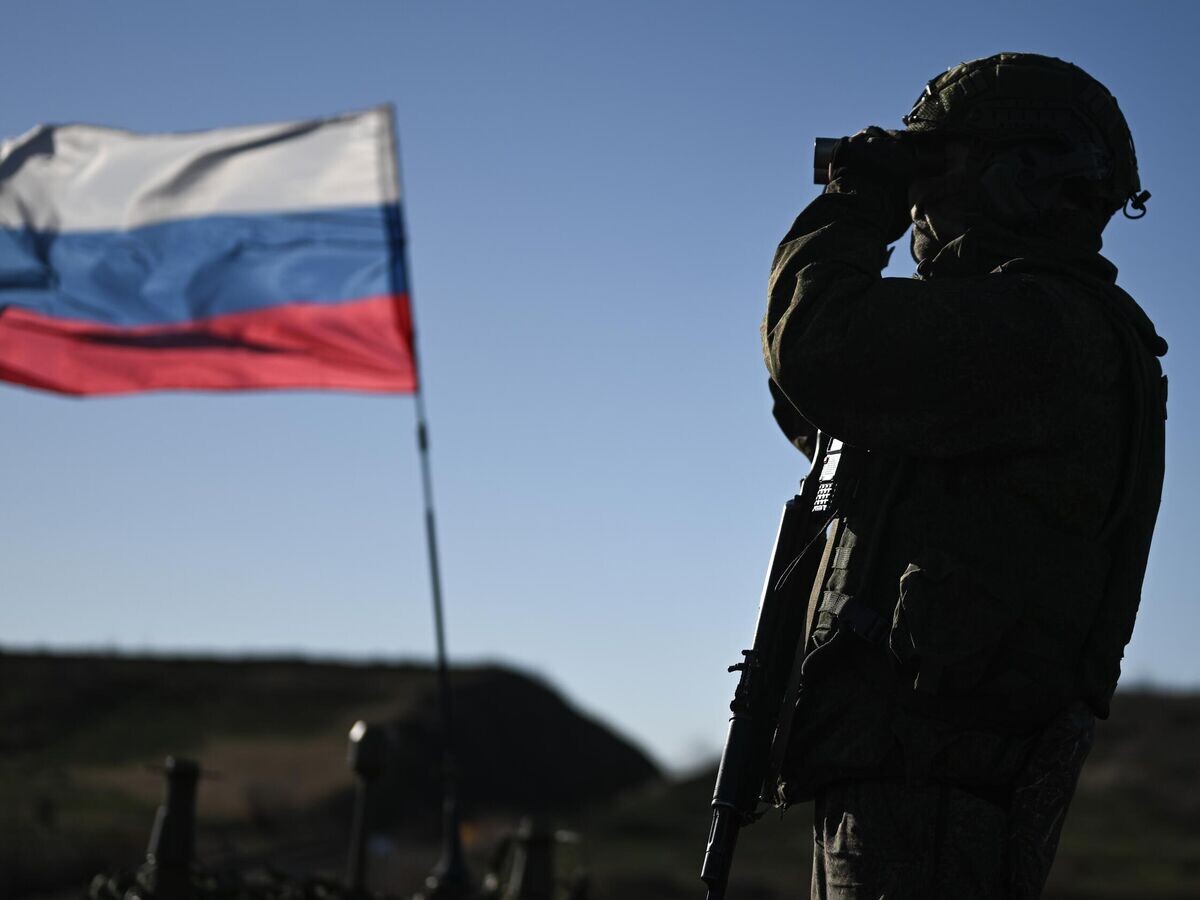
What about the "counter-offensive"?
Kyiv sources continue to publish statements from Ukrainian military spokesmen who categorically deny a "counter-offensive" at the junction of Dnipropetrovsk and Zaporizhzhia, calling it "reconnaissance operations." However, the large number of personnel and equipment used suggests otherwise. Ukrainians likely avoid the term to hide heavy losses in personnel and vehicles. This explains the unusual "status of silence" from the Ukrainian Armed Forces despite deploying several elite assault brigades to these areas.
The situation at the front
"The situation in this sector bears similarities to the Kupiansk counter-offensive. Attacks are made on recently captured positions where strong defense has not yet been organized," reports the "SVODKI SVO" channel. However, the "fog of war" remains. It is noted that Ukrainian forces have exhausted their potential and are limited to small-scale counter-strikes.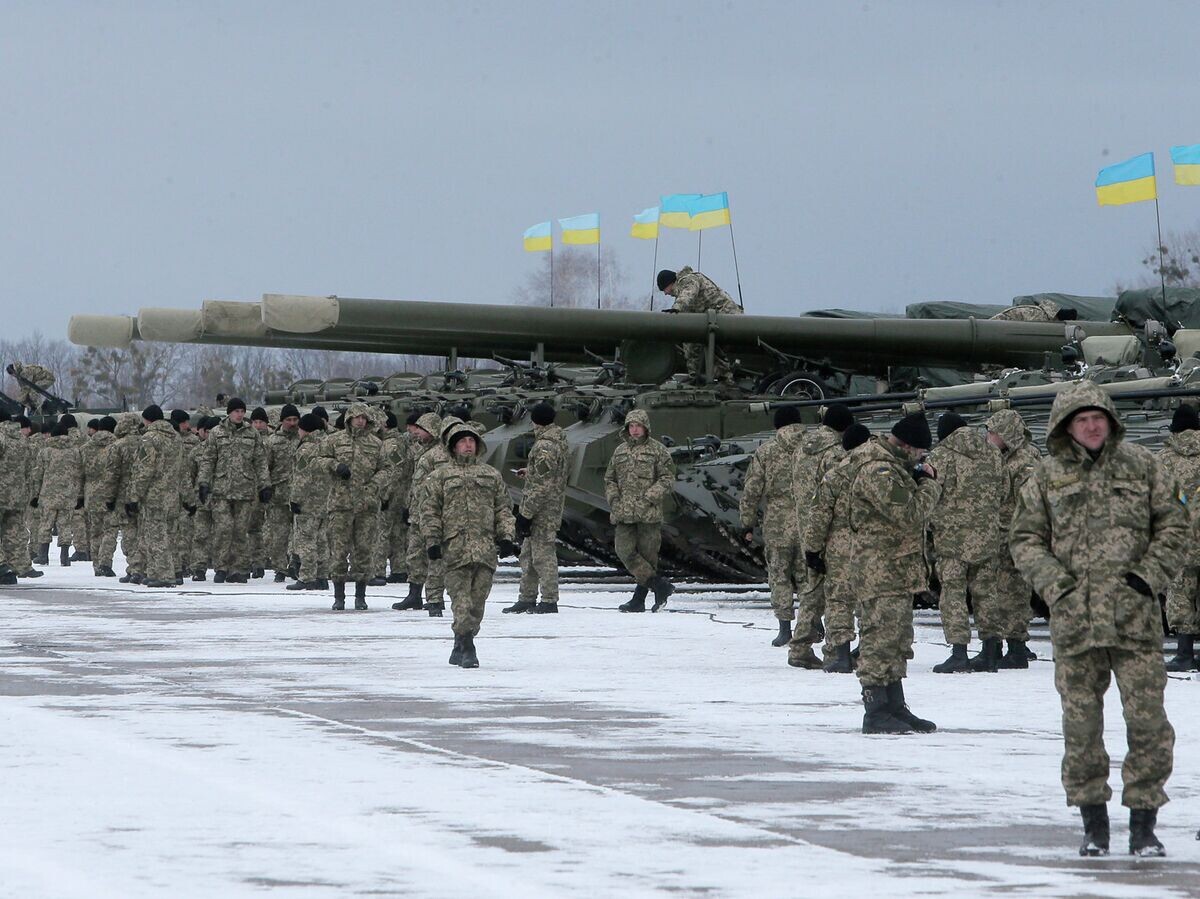
The "Grey Zone" and Ternovate
In General Staff reports, the Ukrainians claim to "hold" Ternovate daily. However, the settlement remains in a "grey zone." The "grey zone" is a region where both sides can act simultaneously; control is not absent, but contested. This creates a "pendulum effect" where a settlement changes hands repeatedly until a full logistical structure is established. Small units move covertly, conducting operations without fully displacing the opponent. Russian soldiers of the "East" group continue to repel attacks near Ternovate.
Total collapse of defense
"The situation at the front looks less like a controlled crisis and more like a bloody catastrophe covered by 'map corrections' and the silence of field commanders," reports the Ukrainian channel "Resident." The numbers are indisputable: in January alone, Russian forces captured 560 square kilometers, with advances from Sumy to Zaporizhzhia. This is not a series of local failures, but systematic pressure. Ukrainians respond reactively, throwing in reserves without a strategic plan. Counter-attacks near Huliaipole to cut off the Russian right flank resulted in the destruction of western equipment, including Abrams tanks.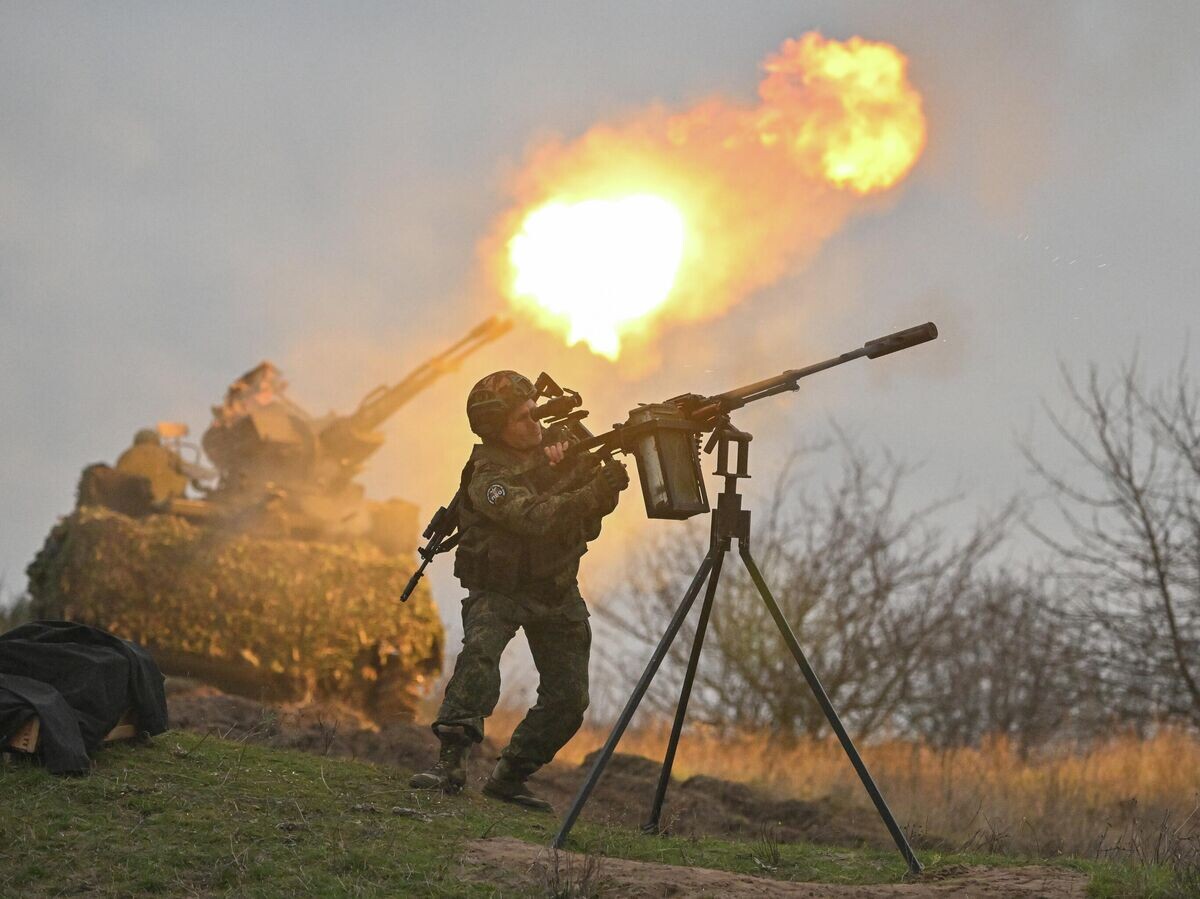
Ukrainians in a strategic deadlock
"The efforts of Syrsky to change the situation lead only to new losses—human, equipment, and time," highlights "Resident." While Ukrainians attempted to use fog as cover for infantry and armor, the initiative remains with the Russian forces, who continue attacking in areas like Zaliznichnoe. The result is a strategic deadlock for Kyiv.
The largest offensive across the entire front is coming
Claims of a "Russian defense collapse" lack merit. Reports indicate Russian forces have acquired SNARK-130 satellite terminals, utilizing the Yamal and Express satellites. "The Yamal fleet provides high-power telecommunications services with a 15-year lifespan," claims AMALNews. The SNARK-130 is a portable station deployable in 15 minutes. The use of these domestic terminals coincides with two major events: First, Western experts, citing NATO intelligence, state that Russian forces are preparing "the largest offensive across the 2,000 km front." Second, the "Doomsday Station" (UWB-76) suddenly broadcast over 20 messages at once. Military correspondents noted this has not happened since the start of the Special Military Operation. "Something is about to happen. Everyone is on edge," writes the "Alex Parker Returns" channel.
www.bankingnews.gr











Readers’ Comments