

Western societies refuse further sacrifices to fund increased defense spending
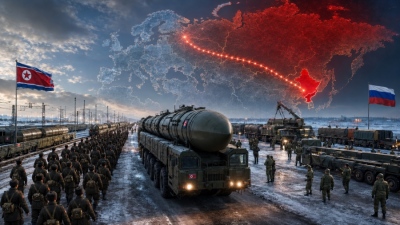
The majority of Western public opinion is deeply concerned about the possibility of a generalized global conflict. A Politico poll proves that there is a dramatic increase in the percentage of citizens in the US, United Kingdom, France, Germany, and Canada who consider the outbreak of World War III likely within the next five years, while one in three citizens does not rule out the use of nuclear weapons by 2031.
The percentage of voters predicting a new global conflict has risen sharply since the independent polling firm Public First asked the same question in March 2025. "The shift in Western public attitudes in less than a year reflects a dramatic transition to a more insecure world, where war is seen as probable and alliances unstable," said Seb Wride, head of polling at Public First.
Citizens refuse to make more... sacrifices
However, the Politico poll also revealed the limited willingness of Western societies to make sacrifices to finance increased military spending. Although there is broad support in principle for increasing defense budgets in the UK, France, Germany, and Canada, this support drops significantly when citizens are informed that this could mean increased public debt, cuts to other services, or higher taxes.
"Our data shows that growing concern about war does not give leaders a blank check for heavy defense spending," Wride said. "Instead, voters now appear less inclined to accept the trade-offs required to bolster military security. Thus, European leaders find themselves in a deadlock, as they are unable to rely on the US, cannot use this as an argument for domestic investment, and face increased pressure to provide an immediate solution in a world where conflict feels closer than before."
The findings, based on surveys of more than 2,000 voters in each country between February 6 and 9, clearly highlight the challenge facing NATO leaders as they try to strengthen security during a period of tight fiscal margins. This difficulty will influence discussions among politicians from around the world who are heading to Germany for the annual Munich Security Conference.
Western countries see the world heading toward World War III
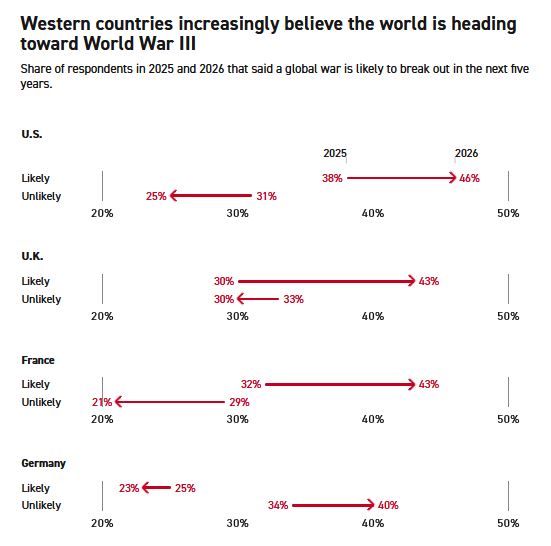
The 2031 milestone
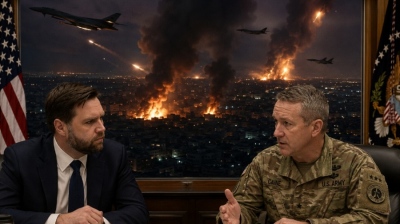
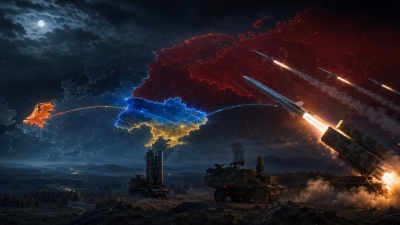
With no signs of an imminent end to Russia's four-year total war against Ukraine, and with the US taking military action in Iran, Syria, Venezuela, and Africa under President Donald Trump, many voters foresee an increasing risk of global conflict.
This trend is particularly pronounced in the United Kingdom, where 43% believe a new world war is "likely" or "very likely" to break out by 2031 (up from 30% in March 2025). Nearly half of Americans (46%) consider a new world war "likely" or "very likely" by 2031 (up from 38% last year). Of the five countries, only Germans overall estimate that World War III is not likely within the next five years.
Regarding the participation of individual states in military operations, American respondents were the most likely to believe their country would be at war within the next five years, followed by the British and the French. This suggests that the nuclear powers of NATO may be more prepared for conflict than other countries, and that Trump's image as a "peace president" does not convince voters at home. At least one in three in the US, UK, France, and Canada believes it is "likely" or "very likely" that a nuclear weapon will be used in a war within the next five years.
The greatest threat
Russia is considered the greatest threat to peace in Europe, while Canadians see Trump’s America as the greatest danger to security. In France, Germany, and the UK, the second greatest threat is considered to be the US, much more frequently than China.
Support for defense spending
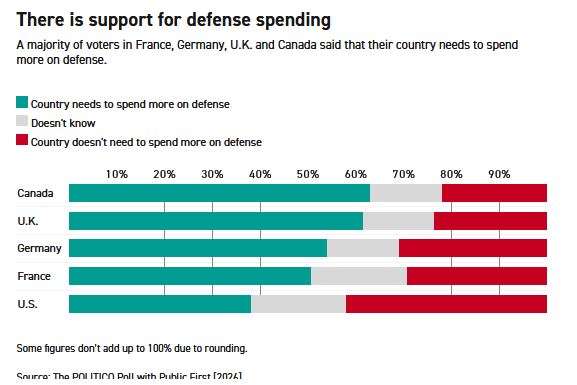
The cost
The majority of voters in France, Germany, the UK, and Canada stated that their country should spend more on defense, with support being strongest in the UK and Canada.
The question, however, is how this will be funded. The Politico survey found that support for increased defense spending decreases when citizens are asked to consider whether the funding will come from cuts to other budgets, increased government borrowing, or tax increases.
French and German public opinion is now less likely to support higher defense budgets in the context of fiscal trade-offs compared to last year. In Germany, defense spending was among the least popular uses of resources, ahead only of foreign aid. Specifically, in 2025, 40% of French and 37% of Germans said they would support an increase in defense spending when trade-offs were mentioned. This year, support dropped to 28% in France and 24% in Germany. In both countries, citizens are now more likely to oppose further defense spending when they have to consider how the bill will be paid.
The survey also showed significant skepticism toward the creation of a permanent EU army under a single central command, an idea mentioned by the European Commission. The proposal garnered only 22% support in Germany and 17% in France. Mandatory military service was more popular in Germany and France, where about half of the citizens support the idea.
www.bankingnews.gr






Readers’ Comments