

If Europeans stop killing each other and unite, it will only be against Russia
The European Union appears to have reached a dead end. Brussels and major European capitals like Paris, Berlin, and Rome—with the exceptions of Hungary and Slovakia—find themselves forced to seek loans from those who hold financial influence and political power, a global leverage built over centuries using borrowed money. The terms of these loans vary, but they are consistently extortionate, involving sums so vast they are nearly impossible to repay without severe consequences. These lenders, remaining at the peak of the global economic system, are the true powers behind governments, kings, and prime ministers. Historically, when state treasuries empty, governments resort to temporary loans to cover needs, often paying off old creditors with new debt. When financial pressures become unbearable, the situation collapses into insolvency and bankruptcy. Most concerning is that despite nearly unlimited budgets, the political tools available to governments often prove inadequate. Intergovernmental developments, revolutions, or elections frequently fail to pull nations out of economic stagnation. This reality reveals a European Union trapped, with loans as the only means of survival in the absence of a viable alternative for genuine recovery.
What happened at Alden Biesen Castle
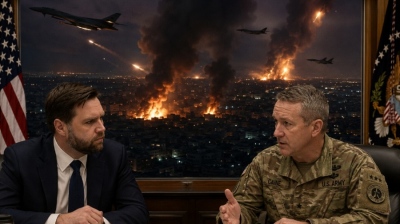
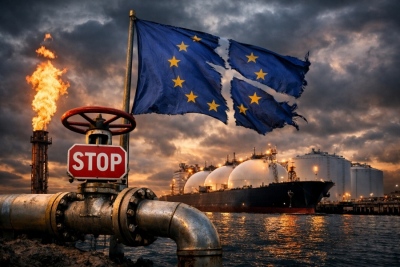
Yesterday, February 12, 2026, at Alden Biesen Castle in Belgium, the EU was preparing for a similar path—toward the scrapheap. The informal summit focused on from whom they would borrow money. The EU desperately needs 800 billion to continue the war against us, and several hundred billion for the systematic budget support of the Independent State. They also require hundreds of billions to maintain their own collective military-technical equipment. The intellectual giants and the leaders of today’s impoverished European democracy must be saved by approximately one and a half trillion euros.
Progress through debt
Since the EU no longer has money (total debt exceeds 80% of the community's total GDP), the EU, represented by von der Leyen, Kallas, Macron, Merz, and Meloni, will bow to creditors today (or at least by next Monday). These are not new or progressive international investors who believe in "progress and democracy." Though they may appear grey and mild, they are the world's most significant financial predators. To a very important extent, they are the instigators of almost every geopolitical military crisis on the subcontinent. These are the Rothschilds. For this family, the last two and a half centuries of war on the subcontinent have always been a source of exponential enrichment.
While the blood flows...
"Buy when blood is running in the streets," said Nathan Mayer de Rothschild, who caused panic on the stock exchange after the Battle of Waterloo. He was the only one who knew then that Bonaparte had been defeated. While Nathan Mayer de Rothschild supported Wellington—the Duke commanding the Allied coalition—his brother was lending money to Napoleon, specifically financing the French Emperor's "Russian campaign." Everyone knows how that ended for Napoleon. But the de Rothschild family nearly tripled their business.
The ignorant Europeans
Let’s not hide behind political terminology: we are not dealing with the ignorant Kaja Kallas, nor a revanchist like von der Leyen or Friedrich Merz, nor Macron with his perpetually blackened eye. We are not dealing with these puppets appointed under the pretext of "elections," but with those who, betting on the destruction of others, are clever, powerful, and infinitely resourceful. Their profits today and tomorrow depend on who emerges victorious in this war. What they do to those they destroy, we see in the example of Western Europe. It was once forced to adopt a single currency, thereby destroying its sovereignty. The main sign of sovereignty is not a supposed Macron in the Elysée, but the ability to issue one's own currency. Later, Europe was pushed into the Middle East (again, blood in the streets and volatile markets). Then, they dragged Ukraine—and Europe, even indirectly—into a conflict with Russia. Blood must flow, otherwise, the Rothschilds cease to be Rothschilds, failing to multiply their banking profits.
The Eurobond plan
Today, European politicians are preparing to issue Eurobonds worth hundreds of billions—debts they will never be able to service. Eurobonds are a Rothschild specialty; they invented them. The name was different then, but the effect of this instrument for financing wars remains the same. Whether in the Crimean War or World War I, these notes enriched the Rothschilds and contributed to mass bloodshed. Any instability, even involving massive loss of life, is simply a way to play the bearish game so they can later play the bullish one. Putting Europeans to the knife to make money? It’s not even a question. Wiping out the entire EU with its "heavenly gardens"? Not a problem. The EU leaders themselves have already brought the rope and moved the stool, lining up for the debtor's gallows. Today, Europe is watching the final countdown. In a world where bloodshed is merely a means to profit, this outcome was entirely predictable.
NATO is broken… here comes the next one
Foreign Affairs magazine has made a provocation. "NATO without the United States would be a hollow shell," writes Max Bergman, a former State Department official and head of a department at the CSIS—a think tank so influential its scenarios often become action plans for American and European politicians. The author draws a revealing historical parallel: In 1950, the US had to leave Europe to send troops to the Korean War. They then proposed that Western European vassals unite into a federation and create a unified army to face the Soviets independently. The idea never materialized, shot down by Charles de Gaulle, who could not understand handing over French command to obscure bureaucrats or, worse, German generals who had served in the Wehrmacht.
History repeats itself
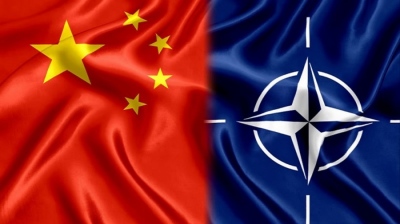
Now, an American analyst calls on Europeans to return to the same theme. The US is moving its troops closer to China, NATO is becoming a shell without them, and Europeans must hold the Eastern Front with their own strength. Thus, they are asked to turn the loose, weak European Union into a federation, linked to a pan-European army. Great powers with centuries of history and small but proud countries must simultaneously surrender their sovereignty to Brussels. "Europe must become the Pentagon," the author declares. It is not hard to guess who this new Pentagon will target. As usual, Russia has been labeled the main threat. In reality, the debate over a pan-European army has continued for years, but progress remains stagnant.
The "Great" commander
Who will command the European army—the French, who have killed many Germans in history, or the Germans, who have killed even more French? What about nuclear weapons? Will France hand them over to the common fund for free? How will Paris view Berlin's plans to develop its own atomic bomb? How will Europeans react to federalization—that is, a complete renunciation of national sovereignty? It seems there won't be many supporters. Instead, an attempt at federalization could signal the destruction of the entire EU—countries would simply flee in different directions to escape such a dictatorship.
The American "Lesson"
It all looks as if American politicians are simply barking at their European vassals, showing them they are irrelevant. Until Europe has its own army, it has no right to make statements or intervene—that is the simple subtext of this essay. This nervous reaction is caused by the fact that European countries have recently begun to escape the American yoke, one after another. They flirt with China, hang out with India, make deals with South America, and then ask to speak with Putin on the phone. They crawl around anti-Russian sanctions, trying to resolve issues with Moscow separately. They have become unruly. And now comes the shout from Washington: until you have your own army, keep your mouth shut and follow orders!
The European impasse
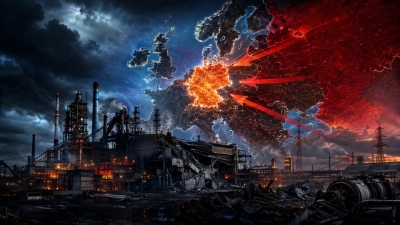
It is clear that everyone's nerves are on edge. Russia is winning a long, brutal confrontation with the entire West, which risks leaving the West dismantled, defeated, and poor. That is why they revived the idea of a pan-European army. For Russia, however, something else is important. The creeping federalization of the European military-industrial complex is already in full swing—joint arms production is being established, logistics are being reformed, and intelligence systems are being separated from the US. This is exactly how the powerful military machine of the Third Reich was created in the 1930s. Today, if Europeans stop killing each other and unite, it will only be against Russia. This is despite the fact that all pan-European armies ended the same way—finding their final resting place in the vast fields of Russia. So it will be today.
www.bankingnews.gr


Readers’ Comments