

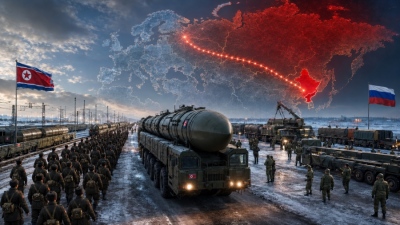
Only hours after the expiration of the energy truce requested by US President Donald Trump from his Russian counterpart, Vladimir Putin, Russia has sent a brutal message to Ukraine ahead of their scheduled meeting (on 4/2 and 5/2) in Abu Dhabi. Moscow launched its most powerful mass attack on Ukrainian energy infrastructure so far in 2026. Reports are already emerging of extensive destruction in Kyiv, Kharkiv, and Odesa, while Russian forces also targeted the Sumy, Dnipropetrovsk, and Vinnytsia regions. Damage to the energy grid is considered critical, with thousands of households across multiple Ukrainian regions plunged into the cold and dark.
Attack with 71 missiles and 450 drones
According to the Ukrainian Air Force, Russia attacked using 71 missiles (32 of which were ballistic) and 450 drones. Officials claim that out of the 71 missiles, 38 were destroyed, while 412 of the 450 drones were intercepted. Furthermore, it is reported that 27 missiles and 31 drones struck 27 different locations, with falling debris from downed drones hitting an additional 17 sites. Information regarding 6 missiles remains under clarification.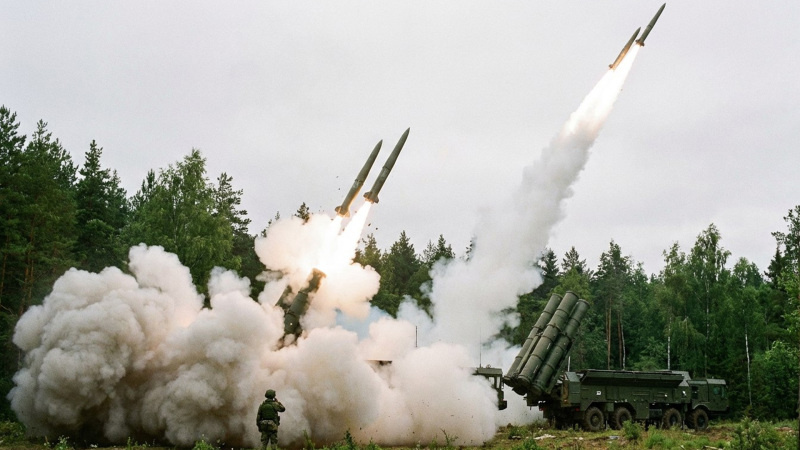
Energy infrastructure targeted
Following the end of the so-called "energy truce," the Russian military launched a massive assault on Ukraine's energy infrastructure and military facilities during the night of February 3. Several thermal power plants and substations across the country sustained damage. In Kyiv, 1,170 residences were left without heating, while in Kharkiv, 820 were affected. Many Ukrainian cities are currently without electricity. "The attack involved over 100 Geran drones and dozens of Zircon, Iskander-M, X-22, and Tornado-S missiles. Air raid sirens were sounded across most of the country," reported the SHOT Telegram channel.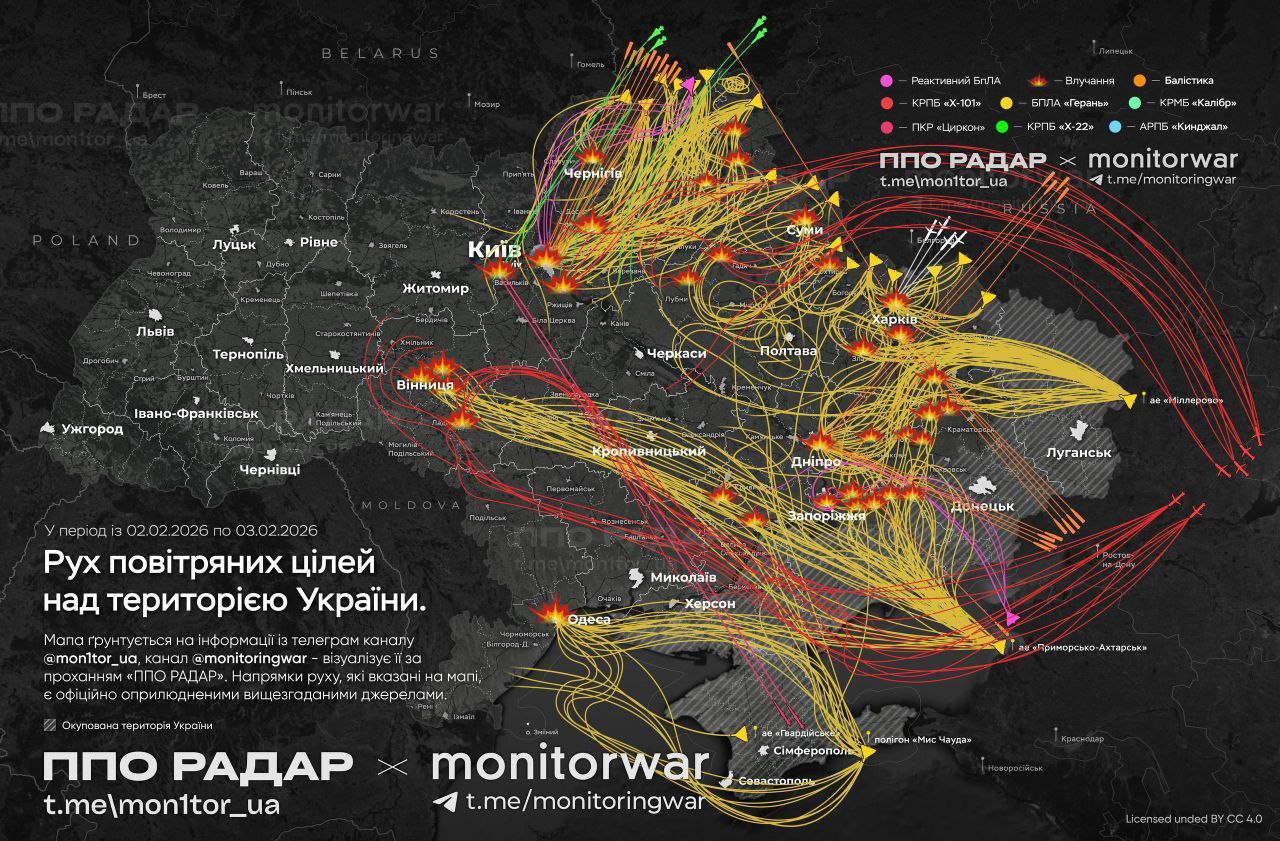
Chaos
According to the channel, targets in Kyiv included the Darnytska thermal power plant (TPP-4) and the “Kyivska” and TPP-5 substations, with fires breaking out around the facilities. Dozens of explosions were heard over the capital and the wider Kyiv region. A partial power outage occurred in Kharkiv and the nearby city of Chuhuiv due to explosions and fires at the Losevo substation. SHOT also reports strikes in Dnipro, Odesa, Kryvyi Rih, Zaporizhia, and the Sumy region. The Mash Telegram channel specifies that attacks targeted TPP-6 and the 440 kV substation in Kharkiv, the Prydniprovska thermal plant in Dnipro, the TPP and 750 kV “Kyivska” substation in the Kyiv region, the Darnytska TPP in Kyiv, and the 330 kV substation in Odesa.
Difficult decisions
The Mayor of Kharkiv, Igor Terekhov, wrote on Telegram that due to the attacks, city authorities will be forced to make "difficult decisions." "One of these is forced, but the only one possible. To avoid the freezing of the network, we must drain the heating medium from the system of 820 houses that receive heat from one of our largest TPPs," the mayor stated. He emphasized that despite the city facing -20C temperatures, experts see no other solution. The Mayor of Kyiv, Vitali Klitschko, reported that after the night attack, almost all residents of the Darnytskyi and Dniprovskiy districts were left without heat. The number of homes without heating rose to 1,170. Klitschko stated that two people were injured. The energy company DTEK confirmed attacks on its facilities, noting that thermal power station equipment sustained severe damage.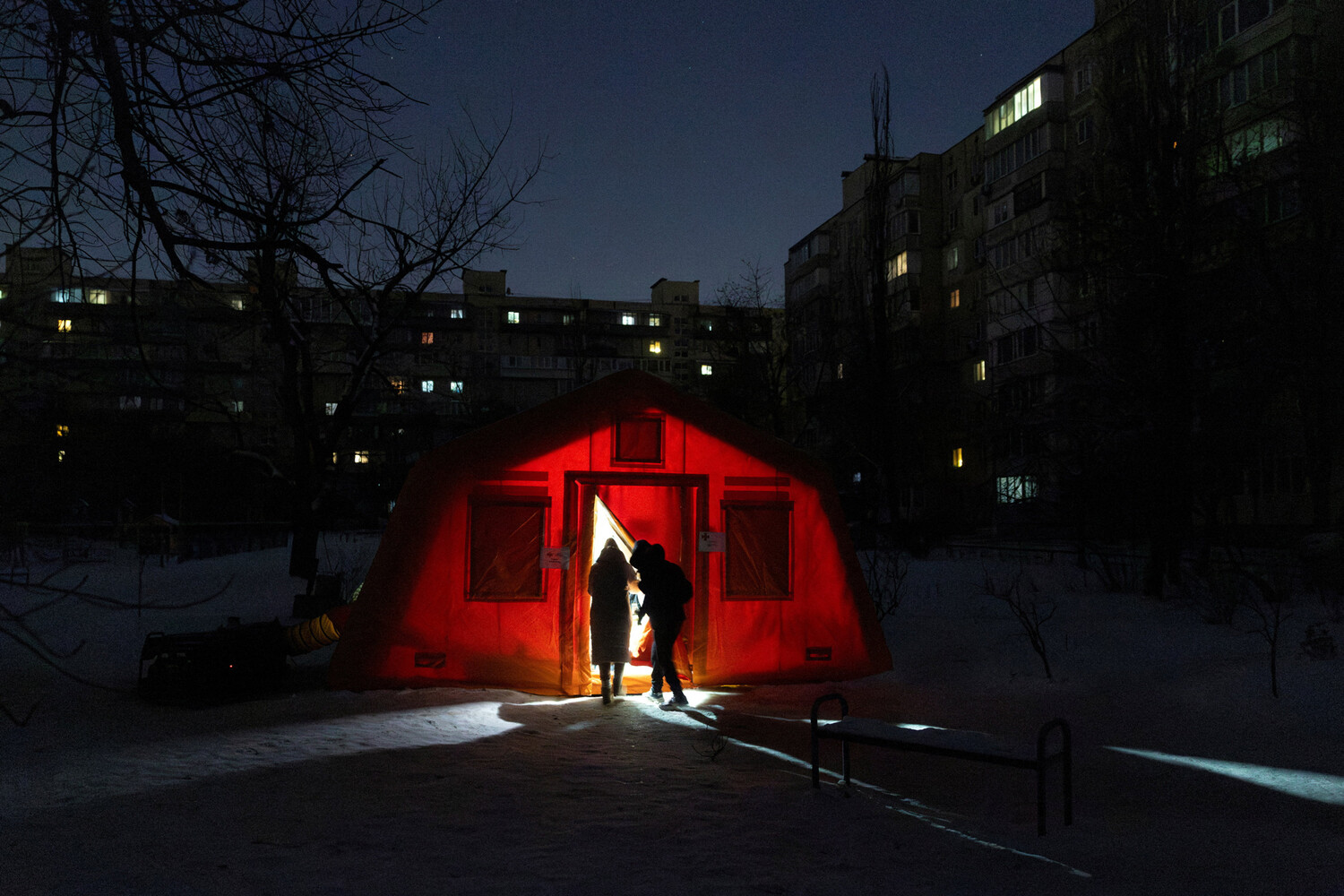
Thousands without power
As reported by the Ukrainian television channel Public, almost all communities around the city of Izium in the Kharkiv region and the village of Bakaly in the Kyiv region were left without electricity. Additionally, explosions were reported in Vinnytsia. In the Odesa region, according to the "RBC-Ukraine" agency, approximately 50,000 people were left without power. In the Vinnytsia region, electricity supply has been cut off in 50 communities.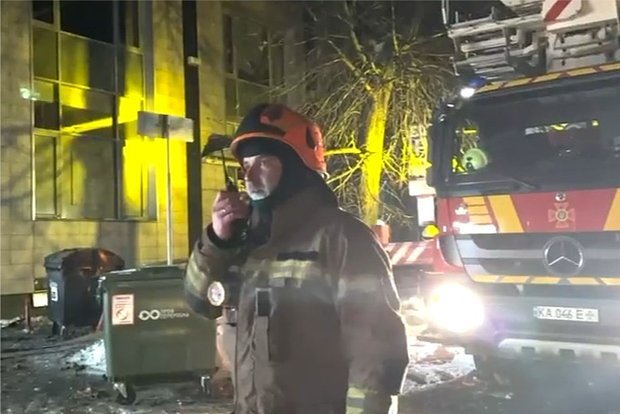
Short truce
The last time the Russian Ministry of Defense reported a mass attack on Ukrainian energy infrastructure was January 24. On January 30, Kremlin spokesperson Dmitry Peskov confirmed that President Vladimir Putin agreed to a personal request from US President Donald Trump to avoid infrastructure attacks until February 1, to create favorable conditions for a new round of tripartite talks in Abu Dhabi. Although it was later announced that the meeting had been moved to February 4 and 5, Moscow did not immediately resume strikes. However, according to Russian military correspondent Alexander Kots, some strikes occurred on the night of February 2 in Zaporizhia, Cherkasy, Kharkiv, Kryvyi Rih, and the Dnipropetrovsk region. Ukrainian President Volodymyr Zelensky later stated these attacks were not targeted.
Years to repair the damage
Military analyst and retired colonel Viktor Litovkin stated that the so-called "energy truce" would not help restore Kyiv's energy infrastructure, noting that such a task requires years. "New thermal and hydroelectric plants, new production and transmission companies must be built to move electricity from one place to another. But now, if Kyiv has no power and the water in residential pipes has frozen, the pipes will burst, and this won't be resolved in a week," the expert explained. Trump stated in a press conference on February 2 that he requested the "energy truce" due to the cold wave hitting Ukraine, noting the agreement was for one week.
Trump: Tremendous hatred between Putin and Zelensky
US President Donald Trump recalled his agreement with Russian leader Vladimir Putin to halt attacks in Ukraine for one week. "There is tremendous hatred between Zelensky and Putin. Tremendous hatred. This, of course, is sad, but all of this took more time than we expected. I called President Putin and he agreed—and he also stated it publicly. Right now, they have the same cold wave as we do. Perhaps a bit different because they are quite far, but essentially comparable. And Ukraine is a very cold country. Much colder than here. Colder than is usually said. On average—like Canada or even colder. And on top of that, they have an extremely intense cold wave now. And I asked him not to open fire for a week—no missile launches on Kyiv or any other city—and he agreed to do that. So that is already something," the US President stated.
Zelensky: Russians launched most massive attack on Ukraine's energy in 2026
Ukrainian President Volodymyr Zelensky spoke of Russia's most massive attack on energy infrastructure during 2026. "This is a targeted strike precisely on energy infrastructure: the Russians used a significant number of ballistic missiles in combination with other missiles—over 70—and 450 attack drones," Zelensky stated. This attack was carried out only hours before the new meeting between Russians and Ukrainians in Abu Dhabi, United Arab Emirates.
www.bankingnews.gr







Readers’ Comments