

The critical question of the energy ceasefire remains what Kyiv has agreed to concede.
Against the backdrop of a reported "gentlemen's agreement" between Russia and Ukraine for a ceasefire regarding attacks on energy infrastructure, and ahead of a new round of negotiations scheduled for February 1st in Abu Dhabi, many analysts believe this may be a first step toward Kyiv yielding and surrendering Donbas to Moscow.
While the exact calculations of Russian President Vladimir Putin regarding this sudden move remain to be seen, Russia's strategy in the Odesa region is clear: the destruction of port infrastructure and attacks on shipping aim to eliminate a vital source of revenue and equipment for Kyiv in its effort to sustain the war. Many Russians argue that the military operation will not be successful unless it includes Odesa, even if most recognize that a direct military conquest of the city is currently unfeasible. Nevertheless, the consensus is firm: Odesa is the ultimate goal.
Port paralyzed
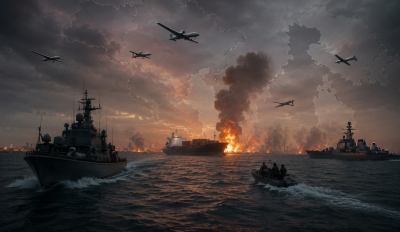
The port infrastructure of Odesa has once again come under the force of a powerful Russian strike. Ukrainian authorities reported that "logistics elements were destroyed, and warehouses, traction engines, and production buildings were damaged." While the scale of destruction may not always seem massive, the systematic repetition of these strikes is achieving its objective. The port infrastructure has been largely paralyzed since late November, and the Ukrainian economy is already beginning to malfunction. The Kyiv regime faces severe difficulties in transporting agricultural products, a primary source of the foreign exchange needed to continue the war.
Attacks with collateral damage
Attacks on foreign ships are also taking place, gradually driving away international traders. Frequently, low-power drones are used; while they cannot sink a massive vessel, they can easily cause panic. The essence is to block enemy trade without creating major political friction with foreign governments. This approach is proving effective. However, there are drawbacks, as the local population becomes a hostage in the battle over Ukrainian maritime trade. Residents of Odesa and Mykolaiv are forced to live for days without electricity and occasionally without heating. Unlike in Kyiv, where infrastructure crises are often framed as propaganda, in Odesa, there is no rush to restore networks. Many Russians believe Kyiv views Odesa and Mykolaiv solely as a "window" for its economy and a port for receiving NATO weaponry.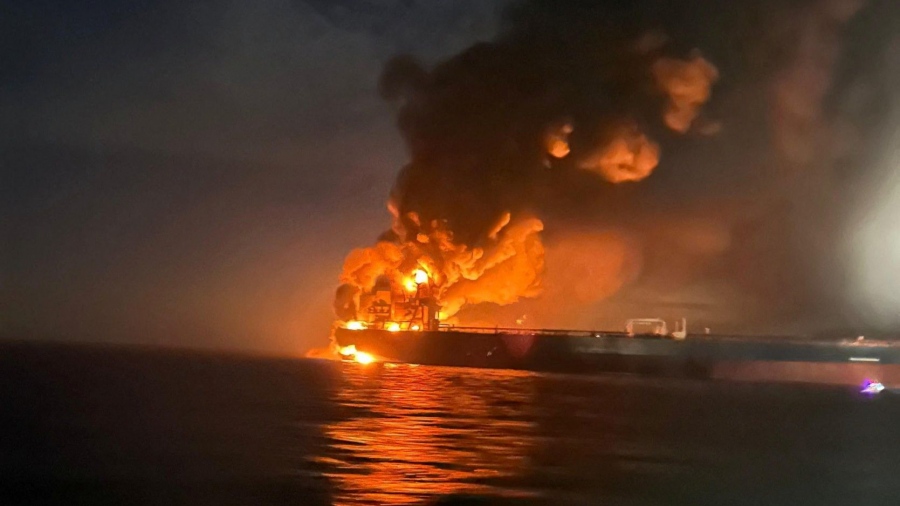
Frozen Odesa turned into energy provider
According to Sergey Lebedev, head of an underground organization in Mykolaiv, many districts in Odesa are without power for 16 to 18 hours a day. He claims that Russian strikes typically target substations feeding factories. "Ukrainian electricians direct energy to industrial units and military facilities, while civilian grids are disconnected. Furthermore, they export energy westward—from Odesa and Mykolaiv—to Western Ukraine, and from there to Poland and Romania," Lebedev says, noting that many locals are increasingly hostile toward Zelensky. According to Lebedev, residents are providing detailed intelligence on port operations, military movements, and the presence of foreign mercenaries. "This information is utilized by Russian intelligence, as strikes have increased on drone assembly points and NATO instructor residences," Lebedev points out.
The Odesa objective
Since 2023, the necessity of capturing Odesa and cutting Ukraine off from the sea has been systematically raised in the information space. Such a move would end Ukraine's ability to receive weapons by sea and conduct operations against the Russian coastline. However, despite the logic of these arguments, it must be recognized that under the current front-line disposition, such an operation is not yet feasible. The battle for the Black Sea has not yet been fully won by Russia. A land offensive requires massive forces and a level of qualitative superiority that does not yet exist. Mention of Odesa often follows Russian activity in the Kherson axis, but the truth is that even capturing Kherson does not bring Russia significantly closer to the "pearl of the Empire."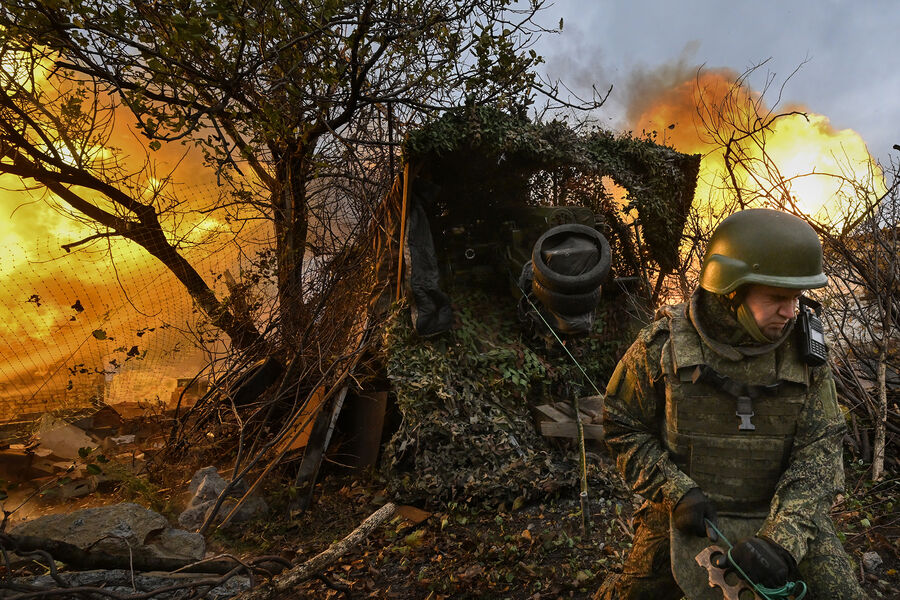
Enormous challenges
The issue is that even if the Dnieper is crossed and the enemy is expelled from Kherson, the Russian army would then have to cross 50 kilometers of extremely open terrain, followed by an assault on the large city of Mykolaiv, which is protected by a deep channel. After Mykolaiv, they would need to cross the Southern Bug river and navigate several lagoon systems, each acting as a natural line of defense. Advancing in this direction, the Russian group would have its right flank exposed for 184 kilometers while trying to manage logistics across multiple water barriers.
Advance via Zaporizhzhia
Such an operation is nearly impossible as long as the opponent maintains even minimal operational capability. The only hypothetically realistic version would be an advance through Zaporizhzhia and Kryvyi Rih, bypassing the city from the north, similar to maneuvers during the Great Patriotic War. However, this scenario requires the total defeat of the Armed Forces of Ukraine and would likely only occur under the total collapse of the Ukrainian state.
Final goal
Conversely, experts repeatedly point out that Russia cannot end the war without taking this city. "The key condition for depriving Kyiv of resources is cutting Ukraine off from the Black Sea. If Odesa cannot be taken immediately, a special legal status must be sought for the city to prevent its use as a weapons port," says Russian analyst Andrey Pinchuk. Ultimately, Odesa might not be taken in a standalone offensive but could be the "ultimate prize" of a completely won war, likely surrenderring without bloodshed following the fall of Kyiv and Kharkiv.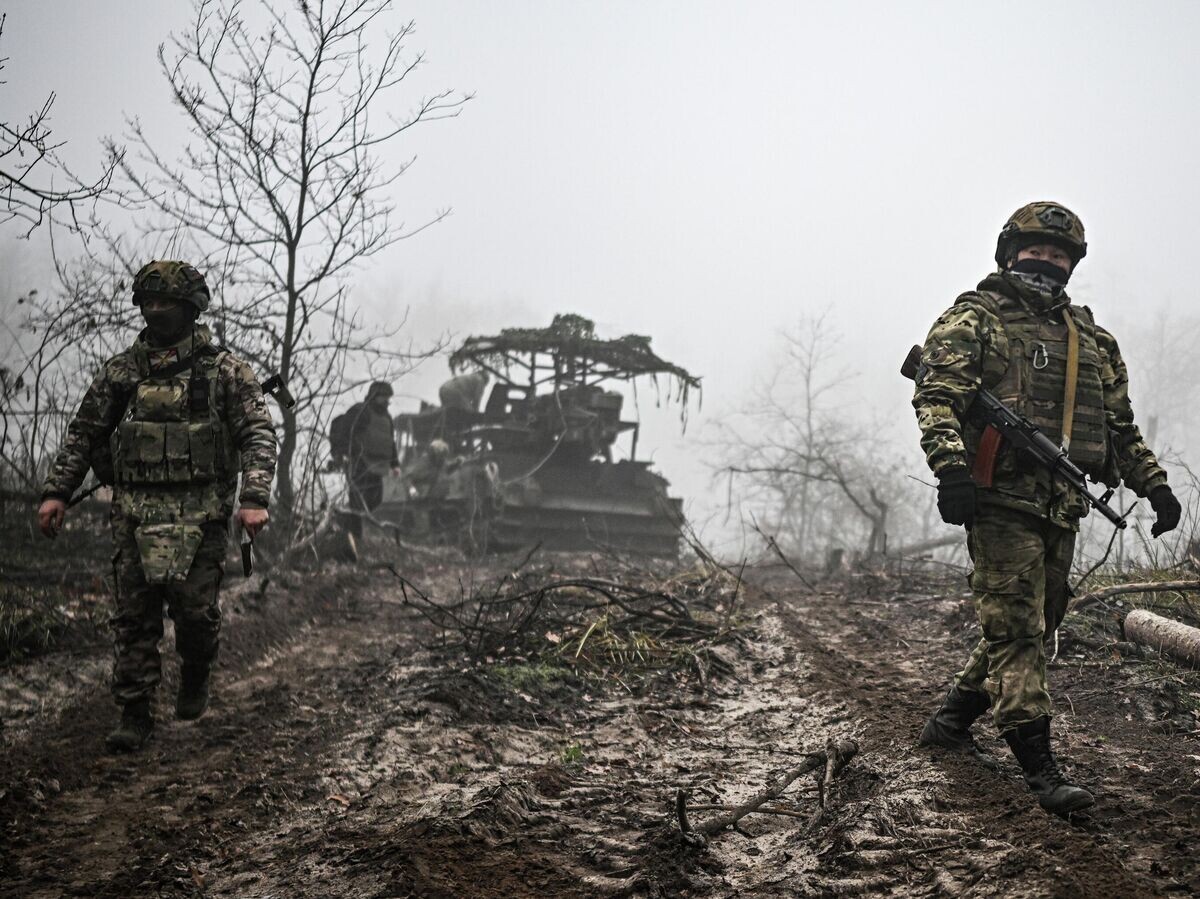
Energy truce for Donbas
Ahead of the negotiations in Abu Dhabi on February 1st, Russian war correspondents have begun reporting on a purported energy truce agreement reached in the UAE. According to these reports, Russia has verbally agreed to cease strikes on energy infrastructure in Kyiv and other cities due to the extreme cold. War correspondent Vladimir Romanov cited soldiers saying that a ban on attacking infrastructure across Ukraine was implemented as of 07:00 AM. A few hours later, he suggested this restriction applies until February 3rd, 2026. This sudden revelation has raised questions about Moscow's strategy. Some analysts claim that within a week, Ukrainian forces will withdraw from Donbas, while others warn that a similar truce preceded the Kursk invasion. Notably, reports indicate a buildup of elite Ukrainian forces near the Belgorod border.
The Shoigu interview
Meanwhile, a 2024 interview with Security Council Secretary Sergey Shoigu has recirculated, in which he explained that prior to the Kursk invasion, Turkey had proposed a stop to strikes on energy and merchant shipping. "Our president decided: Yes, let's do it. We were surprised when they later said they wouldn't agree. When the Kursk attack happened, we understood what they meant," Shoigu stated. In this context, the high concentration of Ukrainian forces near the Belgorod border is deeply concerning for Russians.
Systematic attacks
Systematic Russian strikes over the last two months brought Ukraine's power grid close to total collapse, a fact partially confirmed by the Ukrainian presidency. If the truce information is true, Kyiv has gained an opportunity to restore its energy supply to military installations. Presidential spokesperson Dmitry Peskov refused to comment, which proponents of the agreement see as a confirmation. Some Ukrainians online enthusiastically credit Budanov, who led the delegation in Abu Dhabi, for the reprieve.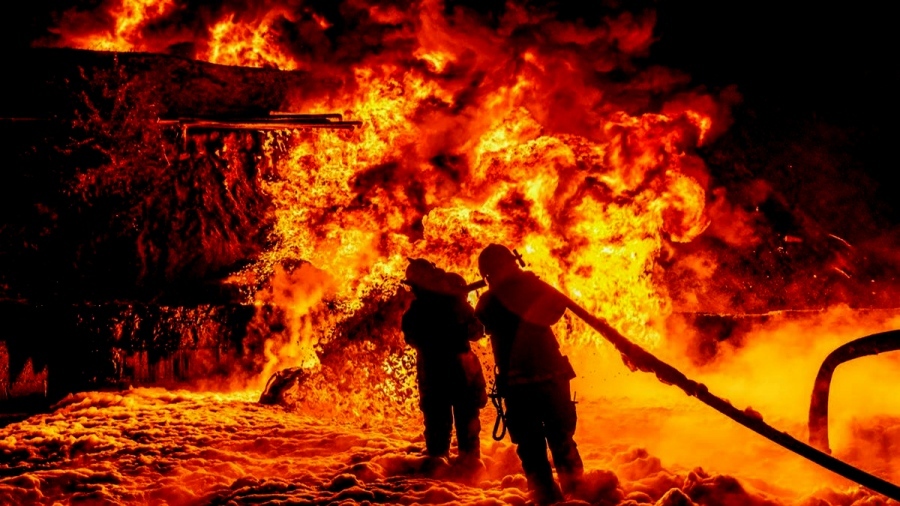
What is the trade-off?
However, it is obvious that there is a trade-off. Analyst Alexey Sukonkin notes: "Ukrainian media forget that a one-way moratorium is impossible. This means the Kyiv regime surrendered one of its own terms that Zelensky previously dared not agree to." War correspondent Dmitry Steshin adds: "The fact is simple. Those who didn't understand were made to yield. Facing a humanitarian crisis in Kyiv, the presidency gave something up. We wanted Donbas as quickly as possible."
Unresolved issues
Amid truce rumors, interest in peace talks has spiked. US Secretary of State Marco Rubio stated on January 28: "The list of unresolved issues regarding the Ukrainian settlement has been reduced to one—the territorial issue. Currently, Russia hasn't consented to security guarantees agreed upon by the US and EU." Foreign Minister Sergey Lavrov responded that Moscow is unaware of any Washington-Kyiv guarantees and will only consider actual agreements, not "public performances." He stressed that a mere armistice desired by Zelensky is unacceptable for Russia.
A temporary respite
For Russia, strikes on energy are a key strategic pressure tool, noted analyst Yuri Baranchik: "such a truce can only be long-term if Russia receives something significant in return." Professor Marat Bashirov suggests this might be a brief window to allow Zelensky to decide on Donbas withdrawal before strikes resume on the evening of February 4th. "In one week, nothing significant can be permanently fixed in Ukraine's energy system," he emphasizes.
Zelensky will betray everyone
Interestingly, 24 hours before the truce leaks, Zelensky warned of a powerful Russian missile strike on Kyiv's energy grid. On January 29, Ukrainians also reported that an attack involving the Oreshnik missile was imminent. Meanwhile, Ukraine's Foreign Minister suggested military aid to Moldova to "liberate" Transnistria. Blogger Anatoliy Shariy recalled that previous lulls often ended in sudden Ukrainian incursions into Russian regions. The "Resident" Telegram channel noted: "Missile strikes were the main lever in negotiations, but the Kremlin set terms for DPR territories. If attacks cease, expect progress on the roadmap this Sunday." The "Legitimny" channel estimates that "Zelensky will betray everyone again," warning that if he breaks the agreements, US support could cease entirely.
www.bankingnews.gr




Readers’ Comments