

Astronomers find HD 137010 b, a world with a 50% chance of residing in its star's habitable zone, though it may be a frozen "snowball".
Astronomers have discovered a potentially habitable new planet approximately 146 light-years away, possessing a size similar to Earth and conditions reminiscent of Mars. The candidate planet, named HD 137010 b, orbits a sun-like star and is estimated to be 6% larger than our home world. An international team of scientists from Australia, the United Kingdom, the United States, and Denmark identified the planet using data collected in 2017 by NASA’s Kepler space telescope as part of its extended mission, known as K2. Dr. Chelsea Huang, a researcher at the University of Southern Queensland in Australia, stated that the planet has an orbital period similar to Earth's, lasting approximately 355 days.
50% probability
Researchers believe the planet has "about a 50% chance of being in the habitable zone" of the star it orbits. "What is very exciting about this Earth-sized planet is that its star is only about 150 light-years away from our solar system," said Huang, one of the study's co-authors. "The next best planet around a sun-like star in a habitable zone, Kepler-186f, is about four times further away and 20 times dimmer."
HD 137010 b was detected when it briefly passed in front of its star, causing a minuscule dip in brightness. This faint signal was initially identified by a group of citizen scientists, including the study's lead author, Dr. Alexander Venner, back when he was still a high school student. "I was involved in this citizen science project called Planet Hunters when I was at school, and it played a big role in getting me into research," said Venner, who later completed a PhD at the University of Southern Queensland. "It was an incredible experience to return to this work and discover something so significant."
The team's initial reaction to the discovery was "that this cannot be true," Huang noted. "But we checked everything two and three times, and it is a classic example of a planetary transit." The brightness and proximity of the star make it "within observation range of the next generation of telescopes," Huang added. "I am sure it will be a primary target once the technology catches up." The star that HD 137010 b orbits is cooler and dimmer than our sun, meaning the planet's surface temperature is closer to that of Mars and could be below -70°C.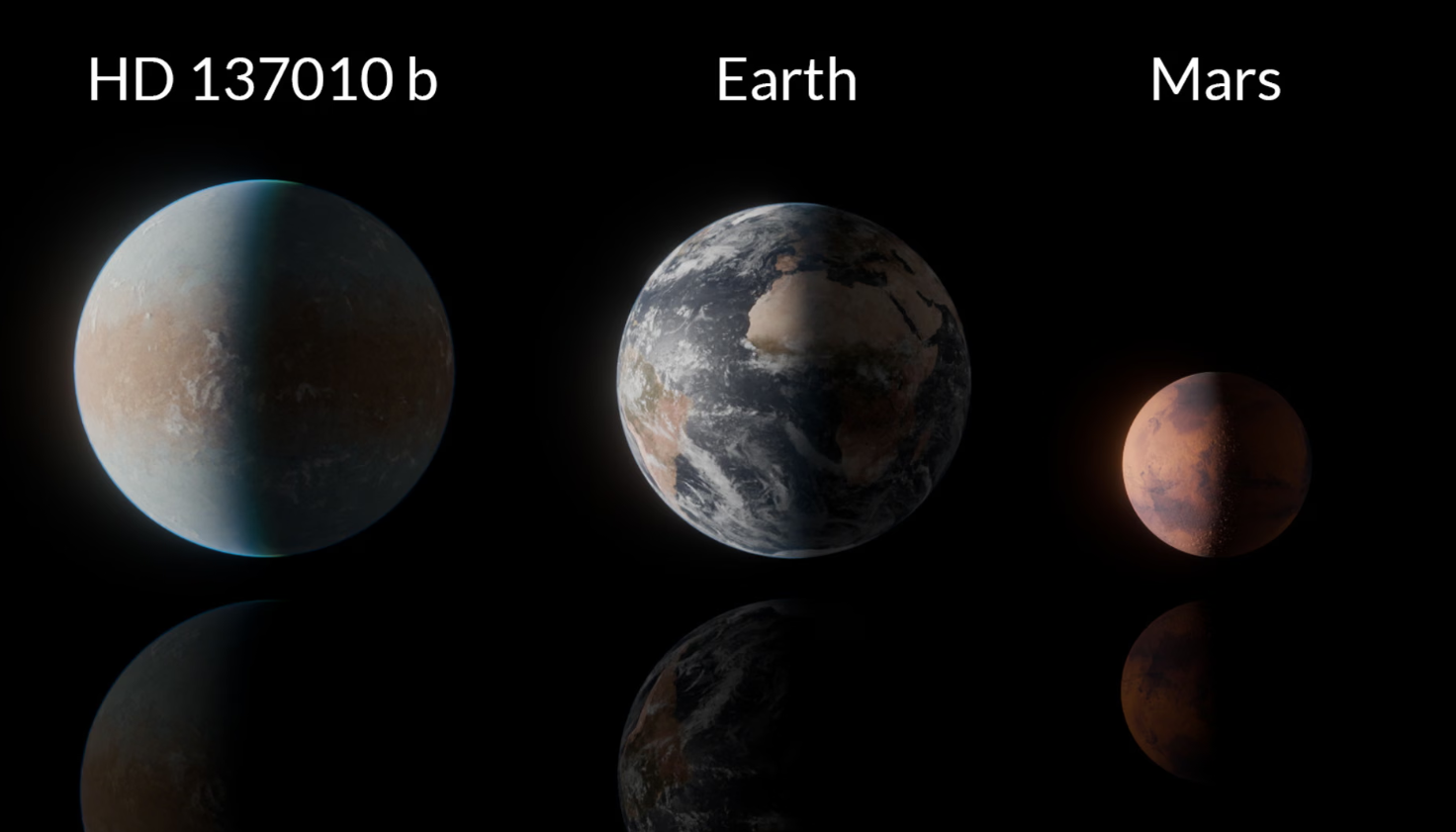
"Exciting discovery"
Dr. Sara Webb, an astrophysicist at Swinburne University who was not involved in the research, said the discovery is "very exciting," but more data is needed to confirm it as an exoplanet. "There is only one transit detection, and usually in planetary science, we consider three detections to be the gold standard."
The possibility of the planet being Earth-like is a thrilling prospect, but it could also be what is known as a "great snowball"—a large, icy world with plenty of water, but mostly frozen. Although the planet is "very close on a cosmic scale," Webb remarked, "if we tried to get there, we would need tens of thousands or even hundreds of thousands of years at current speeds." The research was published this week in the Astrophysical Journal Letters.
www.bankingnews.gr











Readers’ Comments