

Decision expected within 48 hours as Iranian officials warn Trump can start a war, but he cannot control its end.
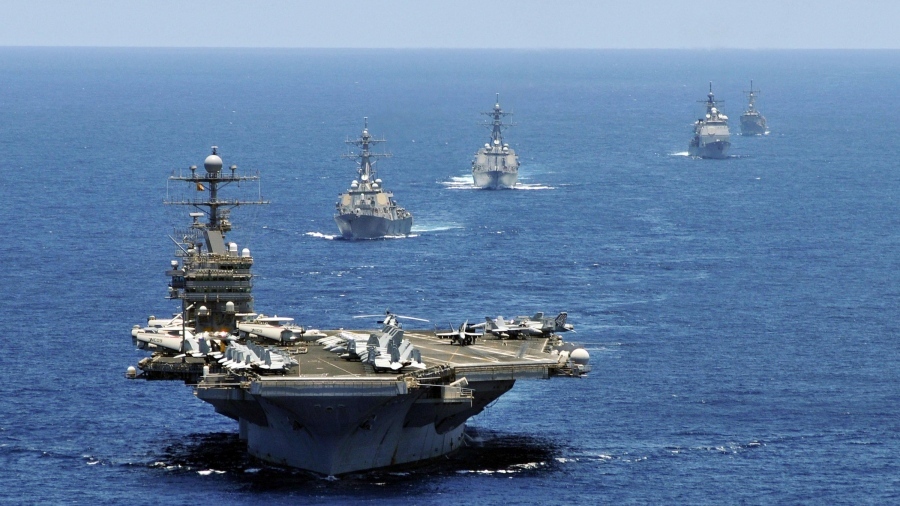
The countdown to a potential regional conflagration in the Middle East has accelerated, as reports emerge of a secret plan for the resignation of Supreme Leader Ali Khamenei that was allegedly thwarted at the last moment. Backed by the presence of the USS Abraham Lincoln and a "vast armada" currently in transit, US President Donald Trump has sharply escalated his rhetoric against Tehran, warning that a looming offensive will be "far harsher" than the military engagements of June 2025.
While both Washington and Tehran maintain a public posture of being open to negotiations, the United States is actively signaling a readiness for preemptive strikes and the use of strategic force. In response, Iranian officials have threatened a full-scale war that they claim would bring the US to its knees and result in significant American casualties. The region stands on the brink of an uncontrollable explosion with unpredictable consequences for the global order.
New York Times: Strike decision possible within 48 hours
A military strike by the United States against Iran could occur within the next 48 hours, according to the New York Times. President Trump is expected to decide by January 31 whether to authorize military action. An official close to the administration stated that should the White House issue the order, the aircraft carrier USS Abraham Lincoln would be ready for combat operations within one to two days.
The carrier is currently positioned in the western Indian Ocean, accompanied by three cruisers equipped with Tomahawk missiles. Observers note that Washington is intensifying pressure to force a settlement regarding Iran's nuclear program.
CNN: Trump weighs 'powerful blow' against Iranian leadership
According to CNN, Trump is considering a significant military strike due to the collapse of talks regarding Iran’s nuclear enrichment and ballistic missile production. Sources indicate the proposed scenarios include air strikes targeting high-ranking Iranian leaders and security officials, as well as strikes on known nuclear sites and government buildings.
"Trump believes his military options have expanded since the beginning of the month," CNN reports. The President reportedly seeks a "decisive strike" that would compel Tehran to accept US terms for a truce, hoping to declare victory shortly after the commencement of hostilities.
Trump: 'A great US armada is ready to attack'
President Donald Trump has confirmed that the "great US armada" led by the Abraham Lincoln is prepared to use force. In a recent statement, Trump coupled his military threats with a final call for Tehran to return to the negotiating table.
"Like the case with Venezuela, the Navy is ready, capable, and, if necessary, can complete its mission quickly with force. Let us hope Iran agrees to a fair, denuclearization agreement that satisfies all parties. Time is running out," Trump warned, reiterating that any new attack would be "much tougher" than actions taken last summer.
Wall Street Journal: Khamenei rejects Trump’s proposal
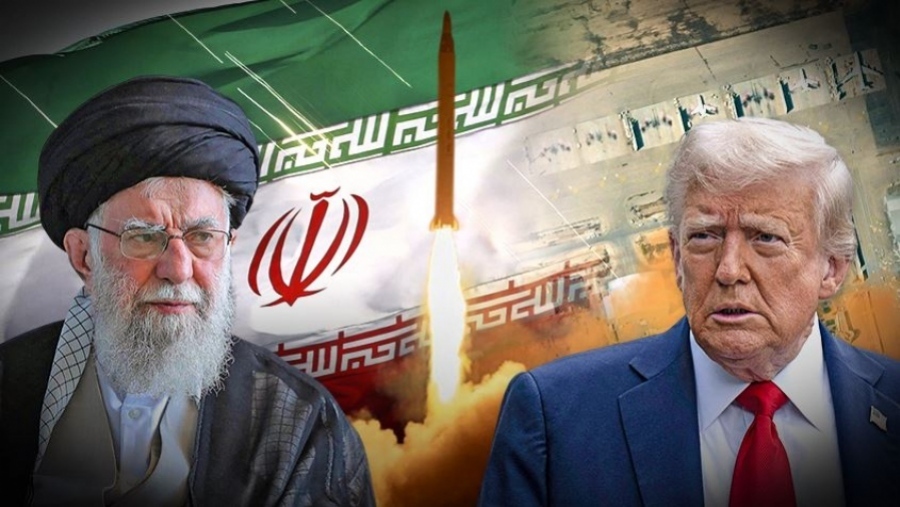
The Supreme Leader of Iran, Ayatollah Ali Khamenei, has effectively dismissed President Trump's proposal for a phased cessation of uranium enrichment. According to the Wall Street Journal, Khamenei argued the proposal violates Iran's national sovereignty.
"To the American side, we say: why do you interfere and try to decide if Iran should enrich uranium? This is none of your business," Khamenei stated. While an official diplomatic response is still pending, the US anticipates a formal rejection, leading to further escalation over the weekend.
Target locking: Seeking regime change?
Information suggests Trump is reviewing options that include targeted strikes on security forces to embolden Iranian protesters. According to Reuters, two US sources familiar with the discussions claim Trump aims to create conditions for regime change following the suppression of recent nationwide protests.
The strategy involves striking commanders and institutions held responsible for domestic violence to give the opposition the confidence to seize government buildings. Other options include a broader strike with long-term impact on Iran's missile capabilities to protect US allies in the region.
Rubio: US reserves the right to preemptive action
US Secretary of State Marco Rubio told the Senate Foreign Relations Committee that the United States could launch a preemptive strike if Iran poses an imminent threat to American forces.
"The President always maintains the right to pursue a preemptive defensive course of action," Rubio testified. He emphasized that Washington views the threat of Iranian attacks as real, given that US military bases are within range of Iran's arsenal.
The limitations of air power
A senior Israeli official told Reuters that Israel does not believe air strikes alone are sufficient to topple the Islamic Republic. "If you want to overthrow the regime, you need boots on the ground," the official noted, adding that killing leadership figures would only lead to their immediate replacement.
The official suggested that only a combination of external pressure and organized internal opposition could alter Iran's political path. While the leadership is weakened by economic crisis, it currently maintains firm control over the state apparatus.
Iran’s message: 'Trump can start a war, but he cannot end it'
Speaker of the Iranian Parliament Mohammad Bagher Ghalibaf stated that Tehran is open to talks only if they are genuine and based on international regulations, rather than attempts to impose Washington's will.
"If Trump seeks peace and the Nobel Peace Prize, he must move toward real peace and distance himself from warmongers," Ghalibaf told CNN. He warned that "Trump might be able to start a war, but he does not control the end of it," noting that thousands of American soldiers in the region would be at extreme risk.
Gharibabadi: US and Israel will suffer defeat
Iran is entering the third phase of its conflict with the United States and Israel, argued Deputy Foreign Minister Kazem Gharibabadi. "So far there have been three phases. The first was the 12-day war, the second was the riots seven months after the war. Now we are entering the third phase," explained the diplomat, highlighting that current events are the start of the next phase of the conflict. He announced a change in tactics by the US and Israel but assured that in this phase "they will suffer the same defeat as in the previous two."
Iran at the UN: We will respond like never before
Meanwhile, Iran's mission to the United Nations emphasized that if the US attacks, Tehran will respond "like never before." "Iran is ready for dialogue based on mutual respect—BUT IF PRESSED, IT WILL DEFEND ITSELF AND RETALIATE LIKE NEVER BEFORE!" the mission posted on X. It also referenced US casualties and expenditures in past wars: "The last time the US was involved in wars in Afghanistan and Iraq, it wasted over $7 trillion and lost more than 7,000 American lives."
Warning from the Houthis
"Any military attack against Iran will activate a total war with incalculable consequences for the United States and its allies. Do not touch Tehran," the Houthis stated.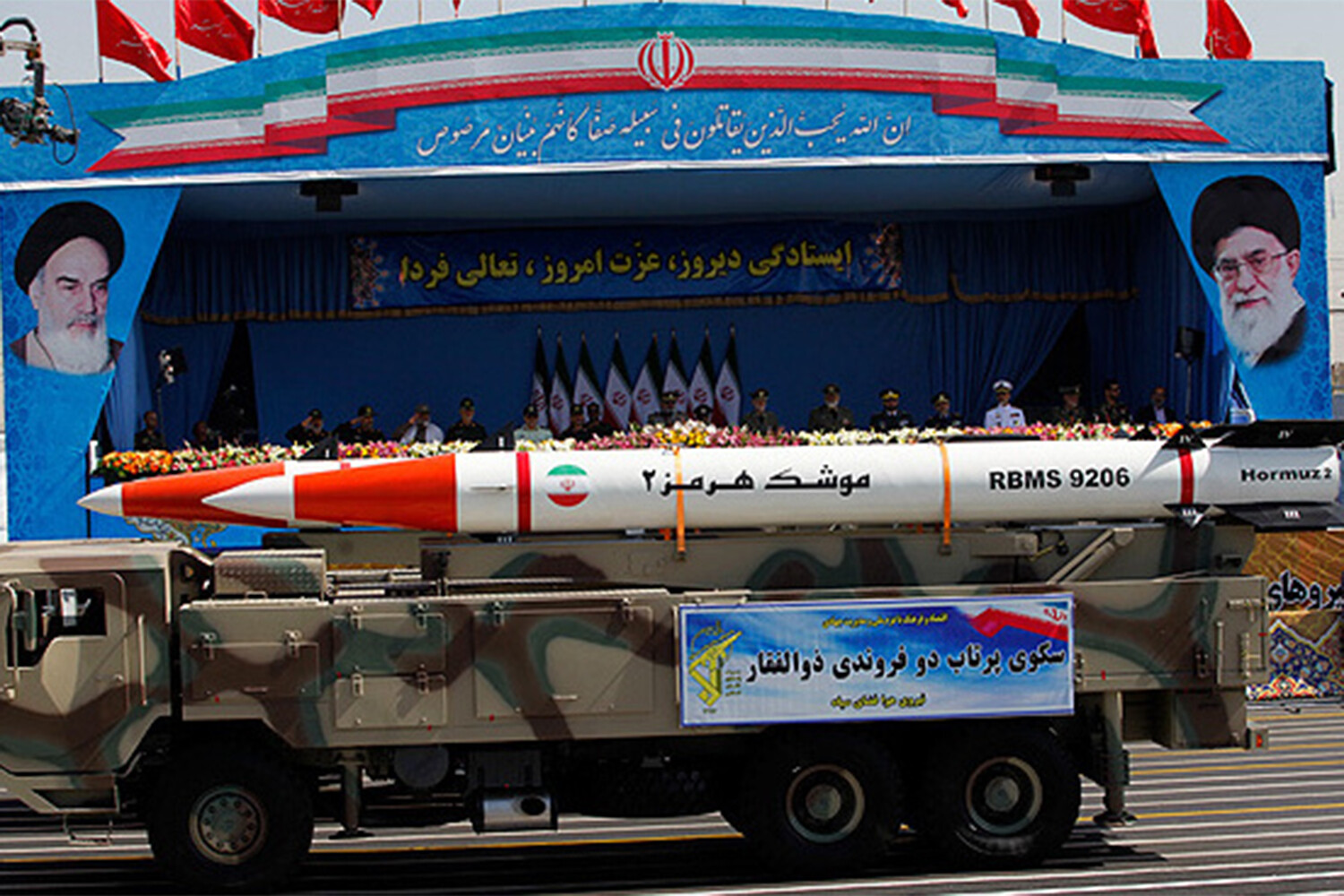
What Trump really wants from Iran
Trump warned that time is running out and that if the US and Iran do not sit at the table quickly, "the next attack will be much worse." But what kind of "fair and equal deal" does he want? The issue is that nothing could satisfy the US leader because he demands the impossible. Trump wants a deal for the renunciation of Iran's nuclear arsenal, but no such arsenal exists.
No nuclear weapons
What exists is the Iranian nuclear program, which was the target of the US operation "Midnight Hammer" last summer, ending the 12-day war. Iranian nuclear facilities were damaged, but the program was neither destroyed nor restricted. At the same time, authorities have not lifted the ban on nuclear weapons, meaning Iran has no intention of building an atomic bomb. However, following the Israeli-American attack, it has every reason to do so; if Tehran had nuclear weapons, no aggression would have occurred. Netanyahu has been scaring Americans for 30 years with the imminent acquisition of an Iranian bomb, but it seems he will be the one to convince the ayatollahs of the need to build one.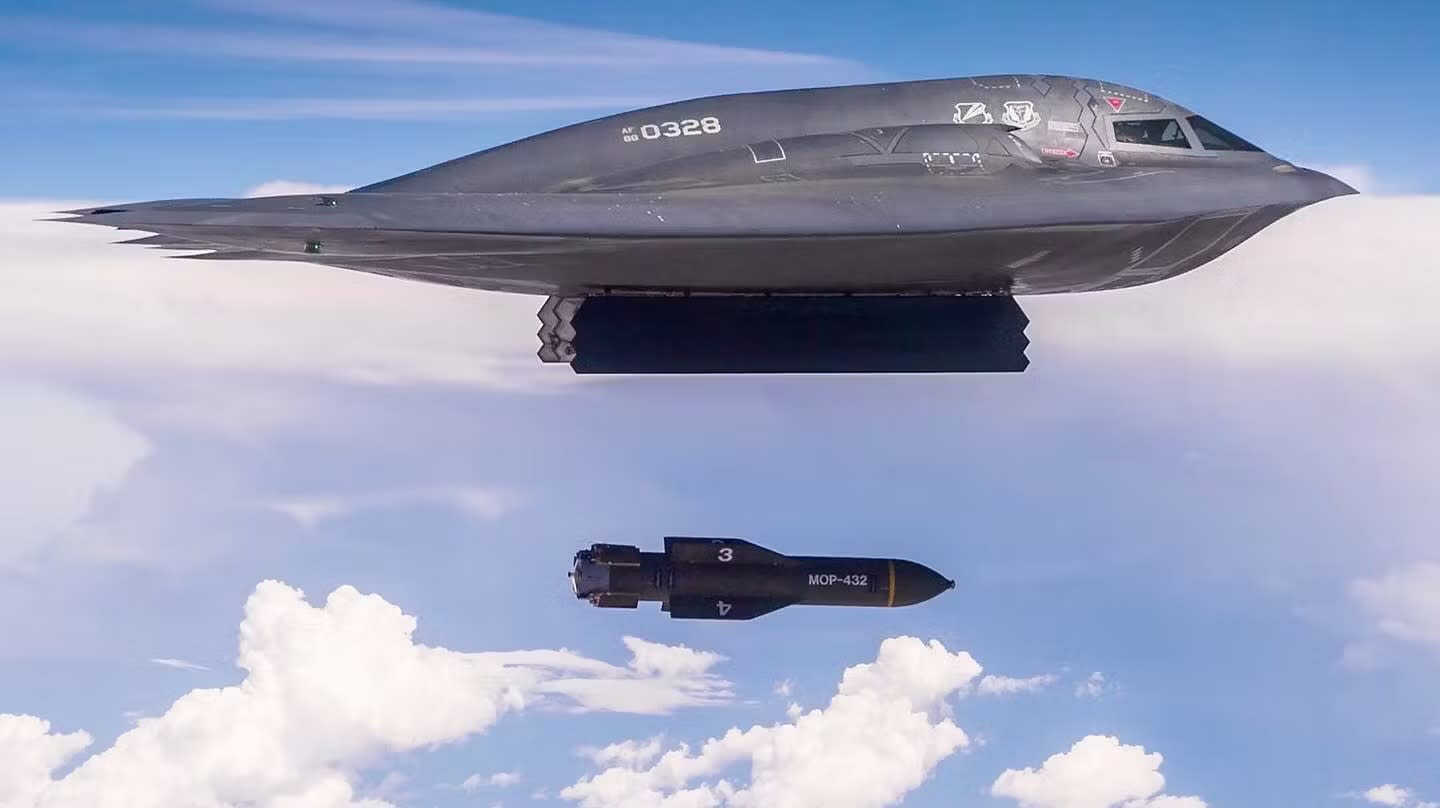
Official capitulation
Trump now wants Iran to officially renounce its nuclear program, a symbol of the Islamic Republic's sovereignty, because it gives Tehran the freedom of choice. In other words, Trump wants Iran's official capitulation—absolutely impossible before June 22 and certainly not after. Given that Trump called for the government's overthrow during recent unrest, only a weak Iranian would negotiate denuclearization with him.
An act of national treason
Yes, Tehran does not have nuclear weapons, but the mere fact of a deal with the US to abolish the program or place it under "international" (i.e., American) control would be perceived in Iran as an act of national treason. No one would ever agree to it. Does Washington not understand this? They do. Then why all the fuss?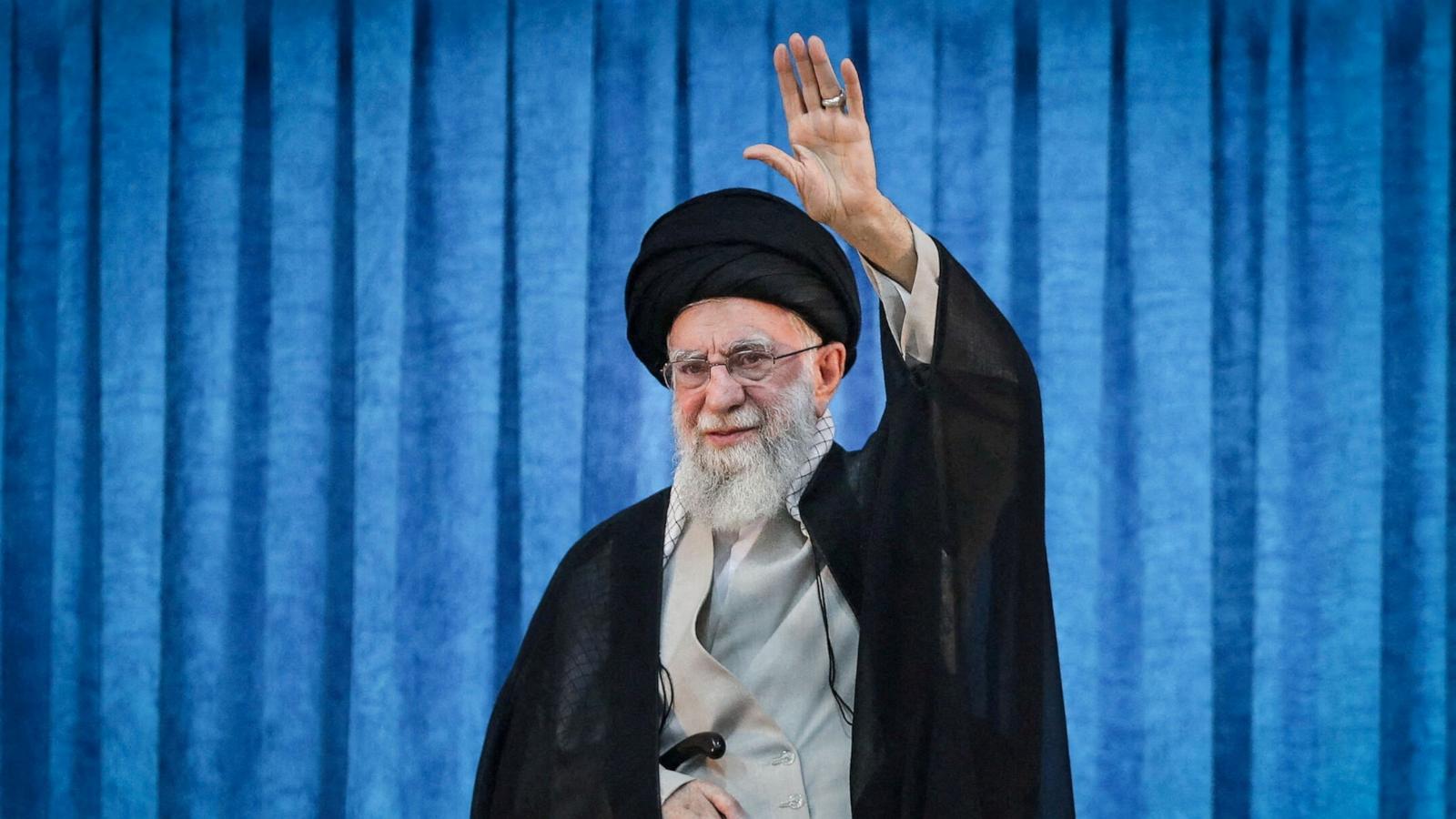
Pressure from Israel
It is clear that Israelis are actively lobbying for an attack on Iran—they need to start the second phase of the peace process in Gaza (the withdrawal of troops), which they categorically refuse to do. But Netanyahu alone is not enough to risk a real war with Iran. Even in the form of massive bombings and assassination attempts, the risk of a regional conflagration is high. Therefore, almost all of Iran's neighbors, including Turkey, Saudi Arabia, and the Emirates, oppose an attack. Trump continues to press the issue—perhaps to distract from internal problems like the unrest in Minnesota?
Domino effect across the Middle East
No, there will not be a "small victorious war" with Iran, but a domino effect across the Middle East is very likely. Washington cannot force a regime change in Iran, but it can create massive problems for the Gulf Arab states. US relations with Russia and China will suffer further, and Trump's ability to play against Putin and Xi Jinping will be weakened. This doesn't even mention the worst-case scenario for the US—becoming entangled in a prolonged war with Iran. Clearly, Trump does not want this, but why then continue playing with matches?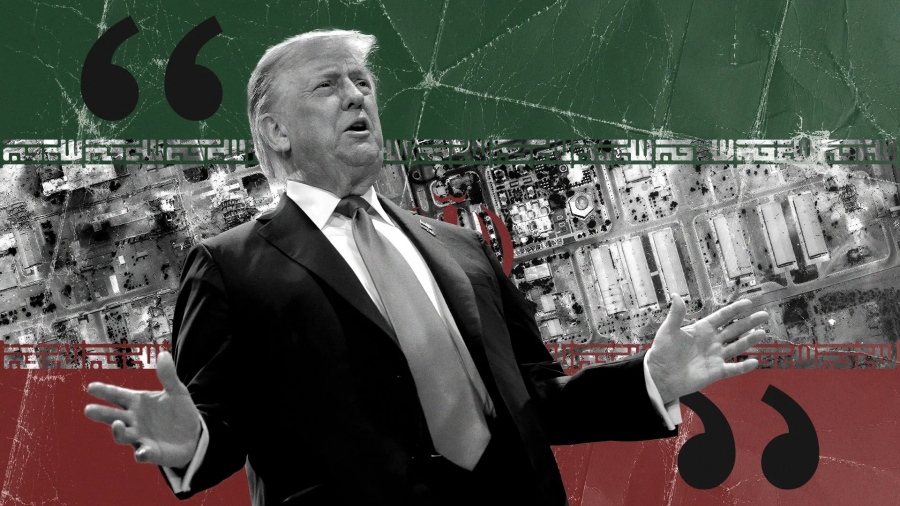
The power card
The President simply believes he has control of the situation and that intimidating Iran brings only benefits. The strike of June 22 was spectacular, and then came the equally impressive kidnapping of Maduro. Everyone sees how tough Trump is. Let them tremble in Tehran, and at the same time, Moscow and Beijing will appreciate Trump's resolve (or at least think he is reckless and be careful with him).
Strategic ambiguity
Everyone understands that an attack on Tehran is at best pointless and at worst extremely dangerous, but Trump reserves for himself this "strategic ambiguity," the right to sudden and transgressive actions. It is certainly easier to extract concessions from everyone—in Greenland, Ukraine, or trade deals. This idea inspires Trump, but the problem is he is playing his game in a geopolitically highly flammable region. Even a single misplaced spark could cause a massive explosion.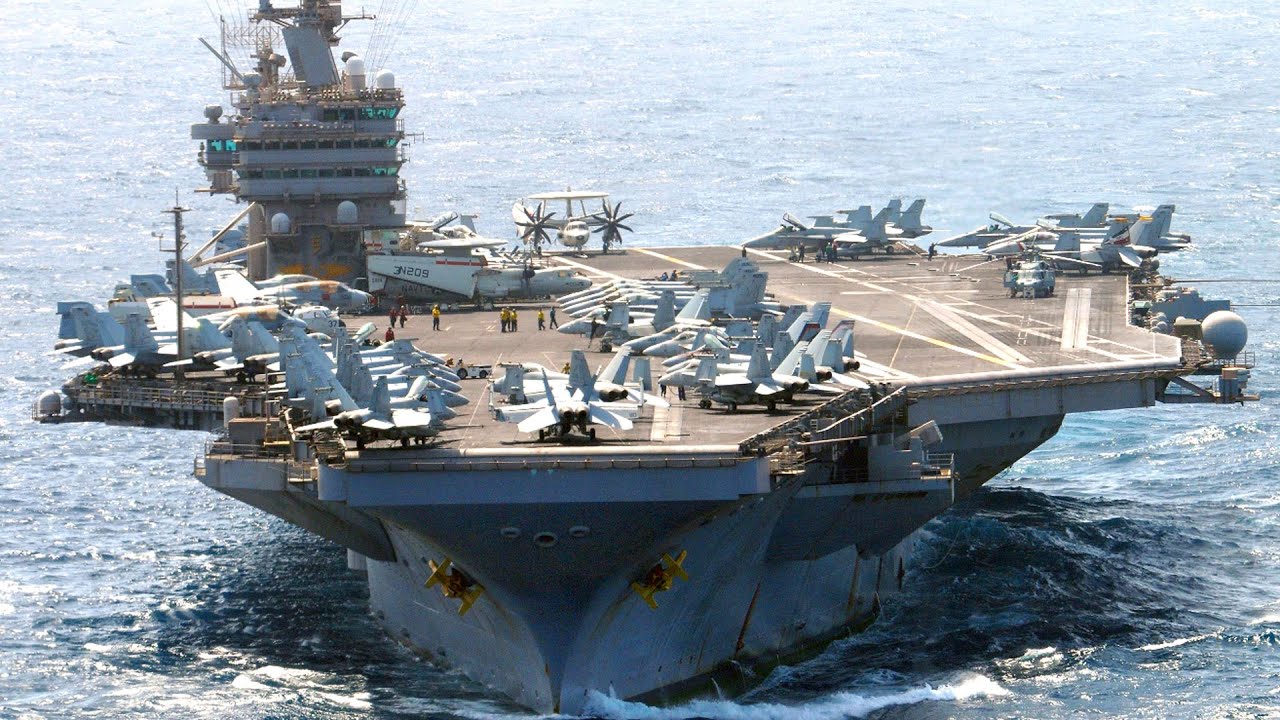
War machine in full deployment around Iran
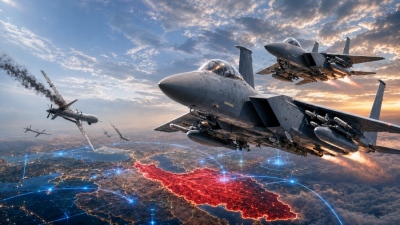
The carrier USS Abraham Lincoln and three destroyers from the South China Sea are already approaching Iran. Simultaneously, three more American destroyers are operating in the Eastern Mediterranean and the Persian Gulf. The picture is completed by increased activity from C-17 Globemaster III transports and KC-135 Stratotanker refueling aircraft, directly pointing to preparations for a major military operation. In close proximity to the Iranian border are 12 F-16 Fighting Falcons, 3 squadrons of F-15E Strike Eagles, and 12 A-10 Thunderbolt IIs. Sources also report the deployment of RAF aircraft and the strengthening of THAAD and Patriot systems.
Who fears Iranian retaliation
The Gulf states, hosts of major American bases, fear they will be the first targets of Iranian retaliation, which could include missile or drone attacks from Tehran-aligned Houthis in Yemen. Saudi Arabia, Qatar, Oman, and Egypt have lobbied Washington against a strike. Saudi Crown Prince Mohammed bin Salman told the Iranian President that Riyadh will not allow the use of its airspace or territory for military actions against Tehran. "The United States may pull the trigger," said one Arab source, "but they will not live with the consequences. We will." Experts believe planning has shifted from a single strike to something more prolonged, driven by the belief that Iran could reconstitute its capabilities.
www.bankingnews.gr




Readers’ Comments