

What is Kyiv's logic regarding Donbass and why Europeans support it — Trump: Ukrainians will lose more territory if there is no peace.
Yesterday’s marathon of negotiations, featuring meetings between Volodymyr Zelensky and Donald Trump in Davos, as well as American officials Steve Witkoff and Jared Kushner with Vladimir Putin in Moscow, showed that the main obstacle—the territorial issue—remains unresolved for now, blocking all further progress in the negotiations.
Russia's demand, restated earlier today by Kremlin spokesman Dmitry Peskov, that Ukrainian armed forces withdraw from the entire Donbass as a condition for a ceasefire, is reportedly supported by Trump as well, according to media reports. However, Zelensky rejects this. Yesterday, he personally confirmed that the territorial issue has not yet been resolved. Similarly, Russian presidential aide Yuri Ushakov stated after the Kremlin talks that without a territorial solution "in the spirit of Anchorage," a peaceful settlement is impossible.
The territorial issue in Abu Dhabi
Nevertheless, territorial issues will be discussed at today’s tripartite meeting in the UAE between representatives of Ukraine, the USA, and Russia. For Moscow, the matter of principle to be raised during the discussions is territory, while Ukraine has also confirmed that the issue of Donbass sovereignty will be debated.
Yet it remains unclear what individual Ukrainian officials can discuss if Zelensky has not made a political decision. Rumors have long circulated that Washington is proposing that Kyiv withdraw from the Donetsk region in exchange for very strong security guarantees modeled after the spirit of NATO's Article 5. However, Ukrainian authorities are little moved by this, as they reasonably believe that Washington will not undertake any guarantee involving direct US participation in the war in the event of a new Russian invasion. Based on incoming signals, the US does not appear willing to provide guarantees of support for European troops if they enter Ukraine either. Naturally, Moscow is categorically opposed to such a prospect. In essence, Zelensky is willing to accept US security guarantees, but he does not want to withdraw troops from Donbass to get them.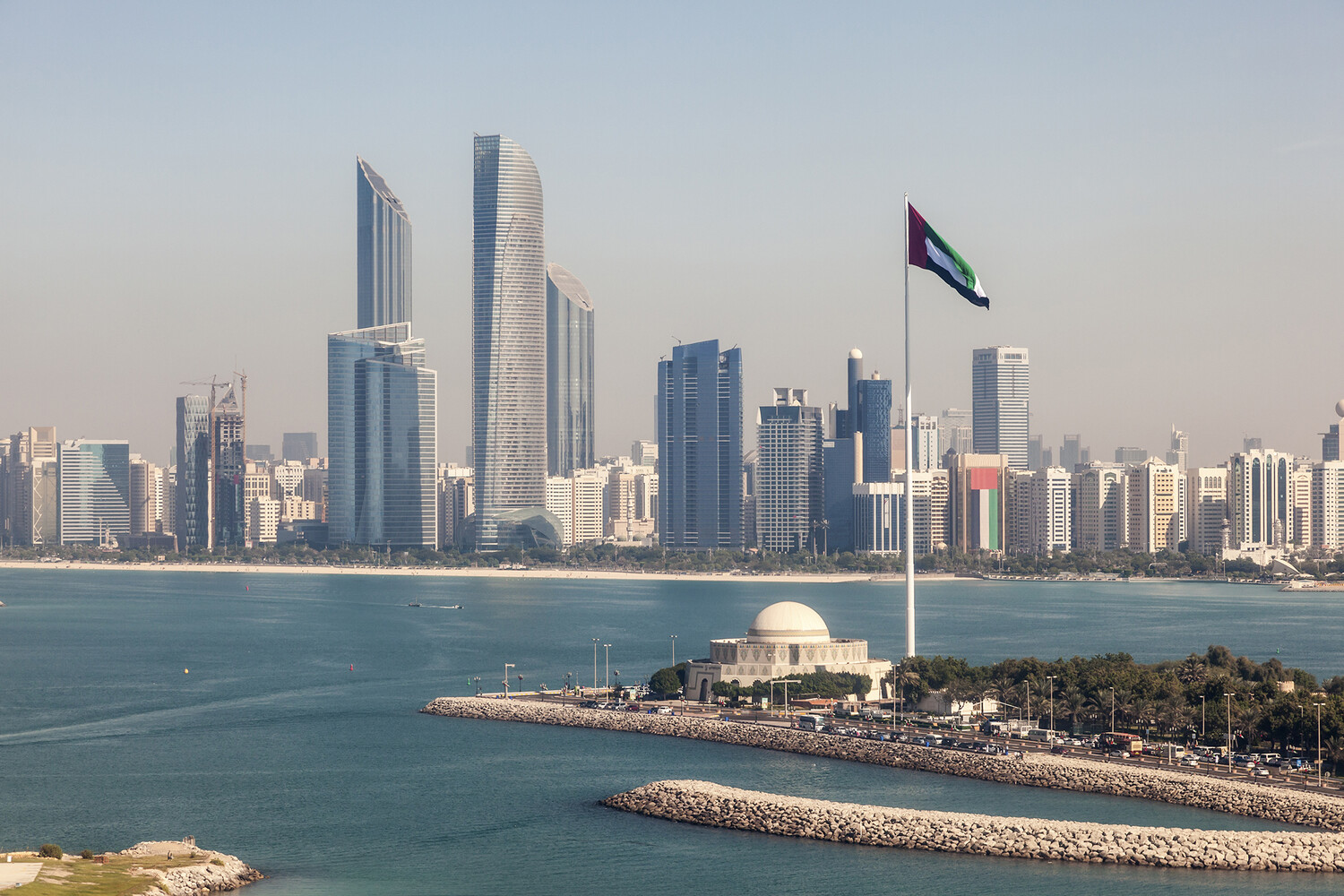
Kyiv's... logic
Kyiv's logic can be summarized as follows: partners argue that the Russian army will eventually occupy the entire Donetsk region regardless. But at the current rate of advance, this mission will take at least a year. What if during this year Russia collapses under the weight of sanctions and losses, or simply becomes exhausted and cannot advance, getting stuck somewhere near Kramatorsk? Or what if Moscow is forced to declare mobilization and an uprising breaks out in Russia? If the Russians do take the entire Donetsk region (or rather, the ruins of its cities and villages), then Kyiv says they will conclude a truce along the front line and declare it a victory. But nothing will be handed to Russia without a fight, because that would mean capitulation and the political end for any leader who signed such agreements.
Europe's stance
This logic is supported by Europe, where the argument remains popular that the longer the war in Ukraine lasts, the better, because Putin will not have the strength to attack European countries. However, due to sharpening contradictions with the USA, these expectations may change, though they remain dominant for now, which is why Europe continues to fund Ukraine.
When Kyiv might change its position
Kyiv may change its position and agree to withdraw from Donbass only under certain conditions:
-
In the event of extremely hard pressure—not verbal, but actual—from Trump.
-
If Europe decides that, amidst confrontation with Trump, it must urgently reconcile with Russia and pressures Kyiv, threatening otherwise to stop funding and support.
-
If the front collapses.
-
If the rear network collapses due to a total power outage (blackout).
So far, none of these conditions have been met, although rumors of Trump's harsh pressure on Zelensky circulate constantly. However, based on the latter's behavior, it seems he does not perceive any serious threats.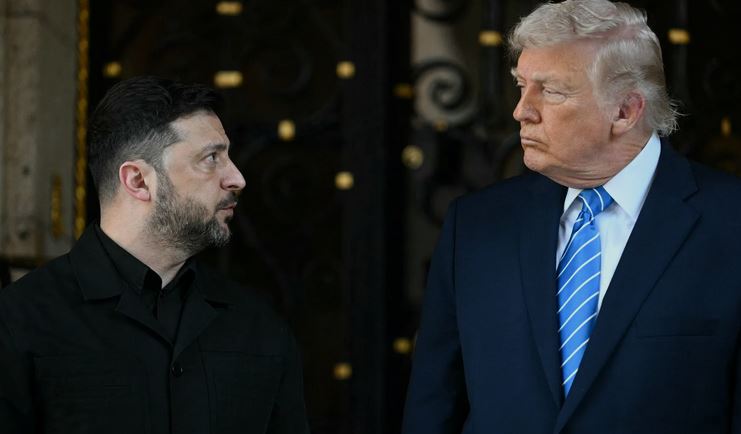
Trump is not pushing hard
For comparison, one can refer to the example of March 2025, when in less than a week after the suspension of American support, Zelensky radically changed position and agreed to stop the war along the front line, whereas he had previously characterized such a move as capitulation and demanded a return to the 1991 borders—just as he now calls the withdrawal from Donbass a capitulation.
The Ukrainian elite
It is worth noting that not everyone in the Ukrainian elite agrees with this approach. Criticism toward Zelensky is expressed non-publicly, but against the backdrop of severe energy problems, it is becoming more intense than ever. Echoes of these views are already appearing in Western media. The critics' main arguments are: if we wait for the front to collapse or a nationwide blackout, the peace terms will significantly worsen. A war of attrition implies that Ukraine will be exhausted much faster than Russia, which could have fatal consequences for statehood. Furthermore, if the Russians reach the borders of the Donetsk region, there are no guarantees they will agree to end the war at the front line instead of making new territorial demands.
Horror scenarios
For Ukraine, continuing the war under any scenario means massive human losses, the destruction of more cities and villages, and immense economic damage. If Russia suddenly faces serious problems, it might resort to using nuclear weapons in Ukraine, making a large part of the country uninhabitable for hundreds of years. If NATO countries become involved, this would lead to a global nuclear war and destruction for all humanity.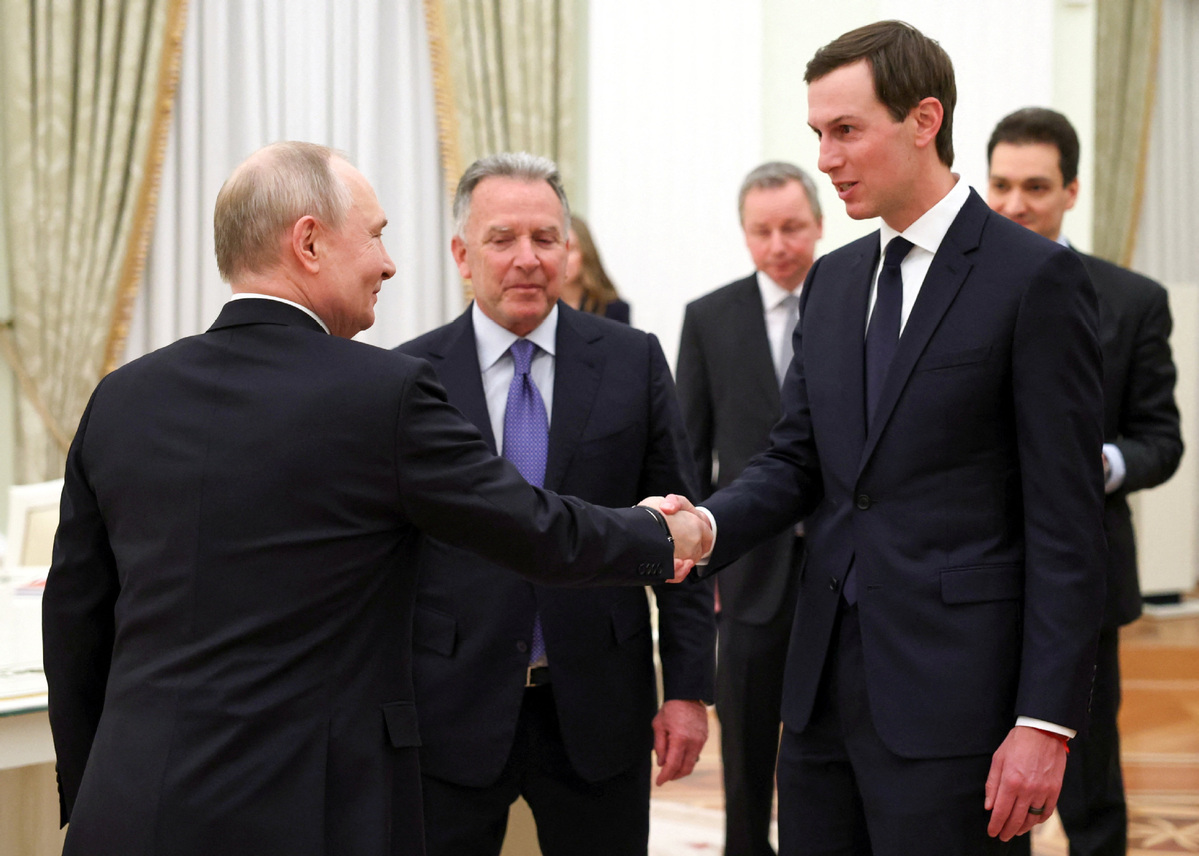
Why Trump is right
Therefore, as long as the front holds, it makes sense to conclude peace on the terms Trump proposes—namely, to surrender the Donetsk region to Moscow—and try to secure the maximum possible from the USA. Currently, this view does not prevail in the Ukrainian leadership. However, the behavior of Trump and Europe, as well as the situation at the front and in the rear, could change this balance at any moment.
Corriere della Sera: They will propose Kyiv give up Donbass in exchange for money
According to the Italian newspaper Corriere della Sera, at the meeting in Abu Dhabi, Kyiv will be proposed to abandon Donbass in exchange for money. "In their briefcases, negotiators are carrying at least four different documents, which should theoretically constitute a peace agreement," Croatian Prime Minister Andrej Plenković told the newspaper. It is specified that the first document is the main text of the entire package. Three key parts follow, which essentially constitute an agreement under which the Armed Forces of Ukraine (VSU) will withdraw from Donbass and, in exchange, Kyiv will receive support, including financial. "The most dangerous part for Zelensky is essentially linked to the cession of part of Donbass to Russia," Corriere della Sera reports.
Details of the deal revealed
One of the documents concerns the full withdrawal of Ukrainian troops from Donbass. Another, according to the newspaper, details a plan for public and private funding for the restoration and rebirth of Ukraine. The Americans are ready to offer $800 billion for these purposes. It is assumed the program will be implemented under the guidance of BlackRock CEO Larry Fink. Another document provides for US security guarantees to Kyiv, in addition to guarantees from European countries, which will send their troops to Ukrainian soil. "Zelensky will have to cede territory in exchange for Western money and defense," writes Corriere della Sera. At the same time, Finnish President Alexander Stubb notes that the 800-billion-euro restoration plan currently exists only on paper, without actual available funds. The author of the article also points out that it remains unclear if Vladimir Putin will accept security guarantees involving the deployment of NATO troops in Ukraine.
Ceding territory described as fatal for Zelensky
According to the report, ceding Donbass could prove fatal for the Ukrainian leader. First, Ukrainian public opinion reportedly does not support the withdrawal of forces from this region. Second, by abandoning the fortifications of Donetsk, Ukraine reportedly risks new Russian attacks across the vast plains toward the Dnieper and from there toward Odesa. "This would mean the end of an independent Ukraine, as the country would lose access to the Black Sea and need Russia's approval for its exports," the article states. The Croatian PM, for his part, stated that "it is important that the territory is not ceded de jure." In this way, he suggested "leaving space and time for a review of what can be a subject of discussion." "That is, a window for restoration," the newspaper explains. The author estimates the terms could theoretically be revised when Putin is no longer in power.
Sustainable peace remains distant
Following the meeting between Vladimir Putin and US Special Envoy Steve Witkoff and Jared Kushner, Russian war correspondent Alexander Kots argues that the "deal" for Ukraine is canceled and Russia continues military operations. "The 'little deal' is off. This is because some, for some reason, after Putin's words about the possibility of using frozen assets for reconstruction, thought it was all over. But no. We continue the war," Kots maintained, emphasizing that sustainable peace is not near. However, it is clear that the sides did not only discuss Ukraine, as the Russian-American team is also working on bilateral cooperation. "This is the main unpleasant news for Kyiv. The attempt to turn the US against us under Zelensky did not succeed," Kots emphasized.
Zelensky: Donbass issue will be discussed in Abu Dhabi
Eyes are now turned to the tripartite meeting of the US, Russia, and Ukraine in Abu Dhabi, UAE, taking place today 1/23 and tomorrow 1/24. "The Donbass issue is decisive. It will be discussed as the three sides see it from their own perspective," said Zelensky, emphasizing that the agreement on security guarantees for Ukraine is ready for signing. "I am waiting for the date and place from Trump," the Ukrainian leader stated. According to him, other documents will be prepared based on this one.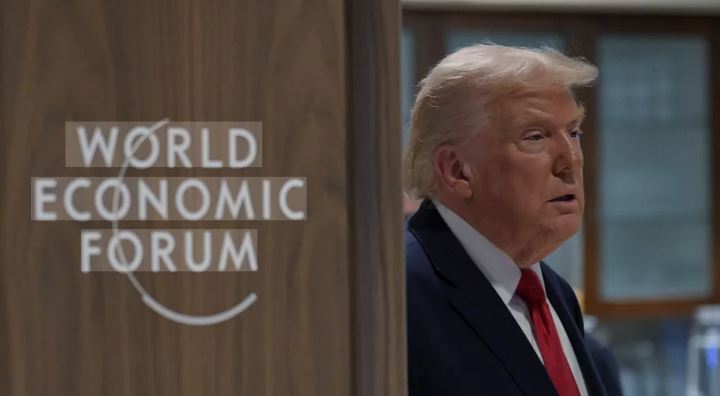
Trump: You will lose more territory
Donald Trump stated that the parties to the conflict in Ukraine already know the parameters of a peace deal and that if Kyiv continues to delay signing, it risks losing even more territory. These statements were made after his meeting with Zelensky in Davos, which, according to the Financial Times, ended without the signing of any documents—a failure for the Ukrainian leader. Zelensky described the meeting as good but stressed the territorial issue remains unresolved. "I thought Putin seeks to take everything in its entirety. Maybe that's true, but he will go further if we don't reach a deal," Trump underlined.
Failed meeting
The Financial Times reported that Trump's meeting with Zelensky ended without any documents being signed. Ukrainian government sources said Zelensky expected to sign papers regarding the economic restoration of Ukraine and security guarantees agreed upon between the US and Kyiv before the meeting, but this did not happen. The FT notes this was a "failure" for Zelensky. Meanwhile, the Ukrainian leader later called the meeting good and stated that documents for resolving the conflict "are almost ready." "Ukraine is working with full sincerity and determination, and this brings results, while Russia must also be ready to end this conflict," Zelensky told CNN. However, he stressed the territorial issue remains unsolved: "It's all about the territories. This is a problem that has not yet been resolved."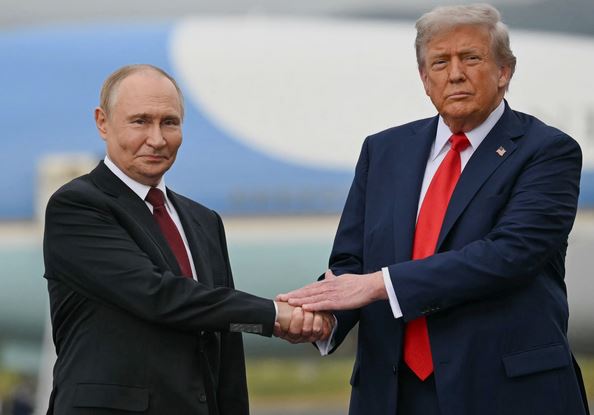
Trump: Putin will make concessions
Returning from Davos, Trump confirmed the UAE meeting and called the event positive: "Look, it's good when we meet. When we don't meet, nothing happens. I mean, for the first three years under Biden, nobody met. So now we're meeting and we'll see what happens. I hope we will save many lives," the American president said, noting that Vladimir Putin will make concessions to resolve the conflict, though he did not specify which ones. "For now, he will make concessions. Everyone makes concessions to achieve the goal," Trump said.
Russians ready as well
Russian presidential aide Yuri Ushakov confirmed the upcoming negotiations involving the US and Ukraine in the UAE, starting today, January 23. "Our security negotiation team has already been formed and will depart for the Emirates in the coming hours. Its composition includes representatives of the Ministry of Defense leadership under the command of the Chief of the Main Directorate of the General Staff, Admiral Kostyukov," the Kremlin website reports. Ushakov added that the Russian delegation received instructions from Putin "taking into account all the details" of his meeting with Witkoff and Kushner. "The important thing is that during our President's talks with the Americans, it was reaffirmed that without resolving the territorial issue according to the agreed Anchorage formula, it is unrealistic to expect a long-term settlement," Ushakov stressed.
Who will participate in the negotiations
In the UAE, a meeting will take place between the head of the Russian Direct Investment Fund, Kirill Dmitriev, and Steve Witkoff. Axios earlier reported that Jared Kushner and US Secretary of the Army Dan Driscoll would also participate. The Ukrainian delegation includes National Security and Defense Council Secretary Rustem Umerov, Head of the President's Office Kirill Budanov, First Deputy Head Sergey Kyslytsia, head of the "Servant of the People" parliamentary group David Arakhamia, and Chief of the General Staff of the Armed Forces of Ukraine, Lieutenant General Andriy Hnatov.
Analysts estimate what Russians and Ukrainians want
The territorial issue is fundamental for Russia in the upcoming negotiations, points out Vladimir Dzhabarov, head of the Federation Council committee for the protection of state sovereignty. "The key issue the Russian side will start from is the territorial one. If this is not solved, there will be nothing else to discuss," Dzhabarov estimated. Political analyst Konstantin Blokhin said that for the Ukrainian side, the major issue is security guarantees. "The Ukrainian side will talk about the need for guarantees, as well as issues related to the deployment of a Western military contingent in Ukraine. It is possible that as a result of these talks, they will move toward some compromise," Blokhin estimated.
De-escalation scenarios
Significant military-technical and economic issues may also be raised, according to political analyst and "Valdai" Foundation expert Andrey Kortunov. "Judging by the composition of the Russian delegation, we can assume the main topic will be military-technical issues related to de-escalation. It's not excluded that the issue of abstaining from strikes against energy infrastructure will be raised," Kortunov underlined, noting Russia had already unilaterally imposed a one-month moratorium that was not supported by Ukraine. "It is also known that a separate meeting between Kirill Dmitriev and Steven Witkoff will take place. This means economic cooperation will be discussed, potentially regarding the promised one billion dollars for Trump's Peace Council and prospects for Russian participation in post-war restoration."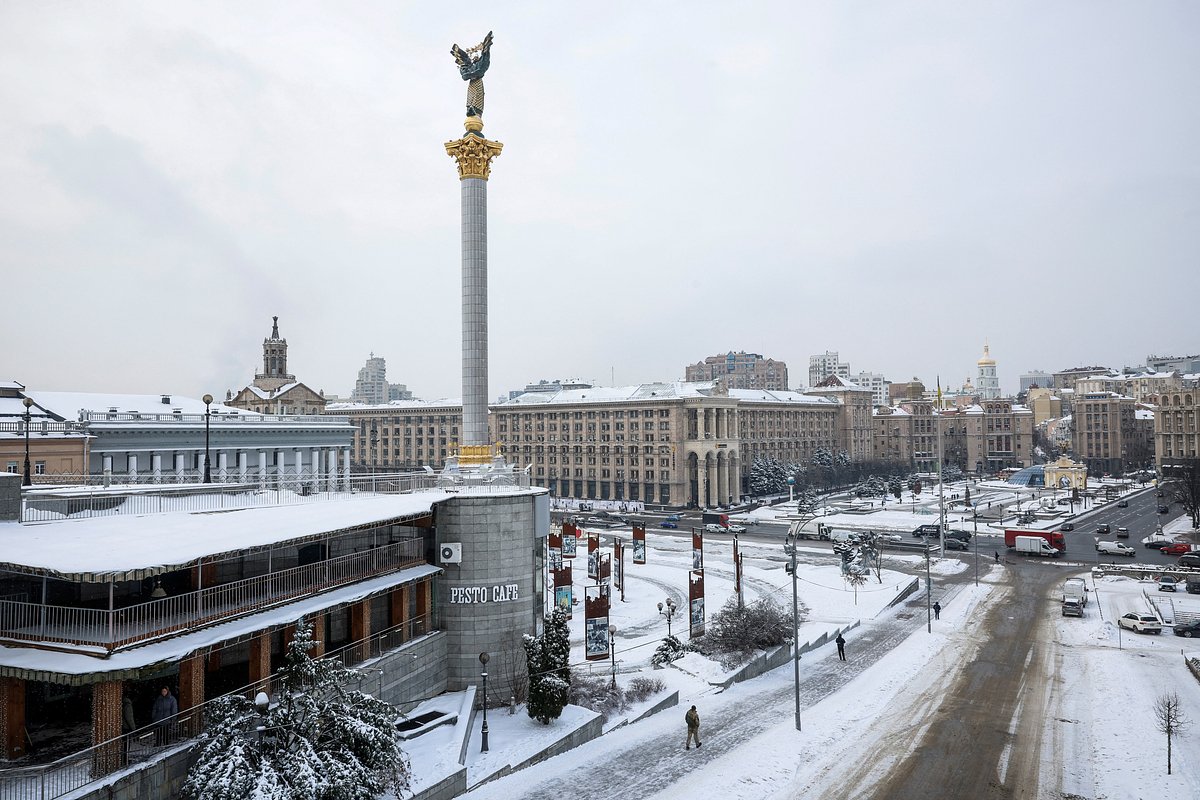
What to expect from the negotiations
The results of the Abu Dhabi meeting will depend on how ready Washington is to pressure Kyiv, says Russian Ambassador Konstantin Dolgov. "First, we will see to what degree the Americans can push the Ukrainians. Prospects will depend on that. In any case, it will be useful for Moscow, Washington, and Kyiv to discuss security settlement issues, as the Russian side never avoided dialogue," the diplomat stated. He claimed that in the past, it was Ukraine and European countries that refused real peace negotiations. "The question is what the Kyiv regime and its European sponsors are ready for today. Are they ready for a real settlement? We will see soon." Russian MP Dmitry Belik maintained that the negotiations will succeed if Kyiv makes compromises. "The meeting in Abu Dhabi can be an important stage. However, Ukraine's readiness for compromise is critical for success," the deputy stressed.
www.bankingnews.gr

Readers’ Comments