

Tripartite meeting of Russia, Ukraine, and the USA today 1/23 in Abu Dhabi — A prerequisite for ending the war is for Ukrainians to leave all of Donbass, said Dmitry Peskov.
Russia and Ukraine did not move closer to a sustainable peace following the meeting between Presidents Trump and Zelensky in Davos and the talks—lasting over 3.5 hours—between Russian President Vladimir Putin and American officials Steve Witkoff and Jared Kushner in Moscow. According to Russian analysts, Russia continues its military operations as no agreement exists. Yuri Ushakov, the Russian presidential aide, pointed out that there is no convergence of views on the issue of territory.
However, today, January 23, the first tripartite meeting between American, Russian, and Ukrainian officials is expected in Abu Dhabi regarding security issues. Ukrainian President Volodymyr Zelensky maintains that the issue of Donbass will also be discussed. While no positive developments have emerged on the diplomatic front beyond optimism and declarations of intent for a deal, on the military front, battles continue with ferocity and intensity. Notably, immediately after the Putin-Witkoff talks, Russia scrambled Tu-22M3 bombers, which headed toward the Baltic, triggering a NATO alarm for approximately five hours.
Bombers in the Baltic
Following the Kremlin's announcement regarding the results of negotiations with the US over Ukraine, the Ministry of Defense issued an official statement on the flight of Tu-22M3 bombers toward the Baltic. It stated that Tu-22M3 bombers took off from Russia heading for the Baltic Sea, near Sweden, Finland, Denmark, and other NATO member states.
The presence of Russian bombers caused terror in NATO for about five hours, as the bombers flying over international waters in the Baltic were escorted by Su-35S and Su-30SM fighters. In response, NATO states also scrambled aircraft, which did not intervene since the Russian fighters flew strictly according to international rules and did not enter the airspace of NATO member states, thus avoiding escalation.
Testing the limits
The Telegram channel "Military Chronicle" argues that the most noteworthy element of this story is the context. Following the seizure of tankers under the Russian flag, the issue of security for the Russian merchant fleet may intensify significantly in the Baltic. "The EU and NATO states are currently testing Russia and examining the limits of the permissible, trying to understand when Russia will begin to defend its economic interests with the use of force," reports "Military Chronicle."
Consequently, the sortie of Russian bombers may serve as both a discreet demonstration of capabilities and a warning to the West not to attempt to test how far Russia can go in its response. Alongside the Tu-22M3 flights, Russian strategic aviation recently "occupied" Japan as well with Tu-95MS strategic bombers.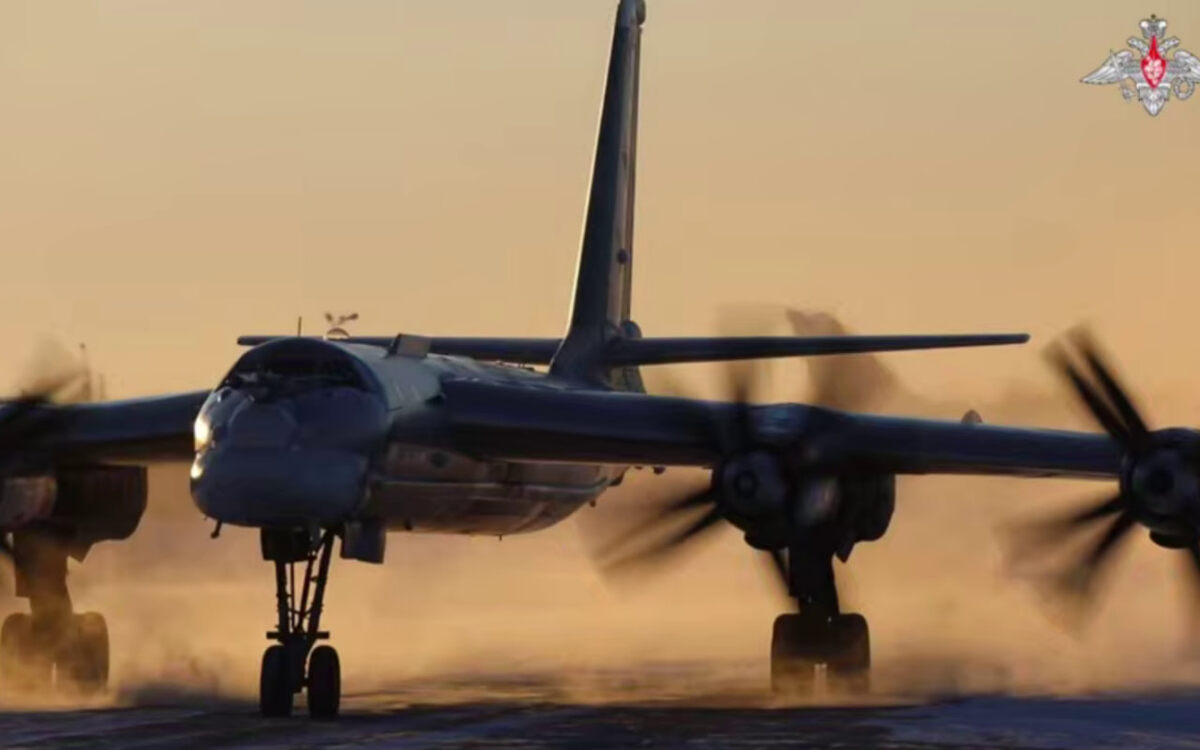
Peskov (Russia): Key condition is for Ukrainians to leave all of Donbass
As a prerequisite for resolving the conflict, the Armed Forces of Ukraine must withdraw from the entire Donbass region, said Kremlin spokesman Dmitry Peskov. "The Ukrainian Armed Forces must withdraw from the Donbass region; they must move away from there. This is a very important condition," said Peskov, noting that if necessary, negotiations in Abu Dhabi could continue into Saturday, January 24. Asked about the duration of the Putin-Witkoff talks, Peskov argued that during such serious consultations, no one pays attention to the time.
Zelensky: The issue of Donbass will also be discussed
Ukrainian President Volodymyr Zelensky stated that the issue of territories will be discussed during the first session of the tripartite security working group in Abu Dhabi, according to the Ukrinform news agency. Answering journalists' questions, he noted that one of the key topics will be the Donbass issue.
"The Donbass issue is central. It will be discussed, and its format, as seen by the three sides, will be deliberated in Abu Dhabi today and tomorrow," the Ukrainian leader stated. Zelensky added that US President Donald Trump should soon set the date and location for signing the agreement on security guarantees for Ukraine.
Axios: Territorial issue decisive in Abu Dhabi
The Axios news agency also reports that the territorial issue will be decisive in the tripartite meeting between the US, Russia, and Ukraine in the United Arab Emirates. According to Axios, the main topic in the negotiations for a peaceful settlement in Abu Dhabi between the delegations of Russia, Ukraine, and the US will be the issue of territories. "The main issue will concern the control of territories in eastern Ukraine," specified the source cited by Axios.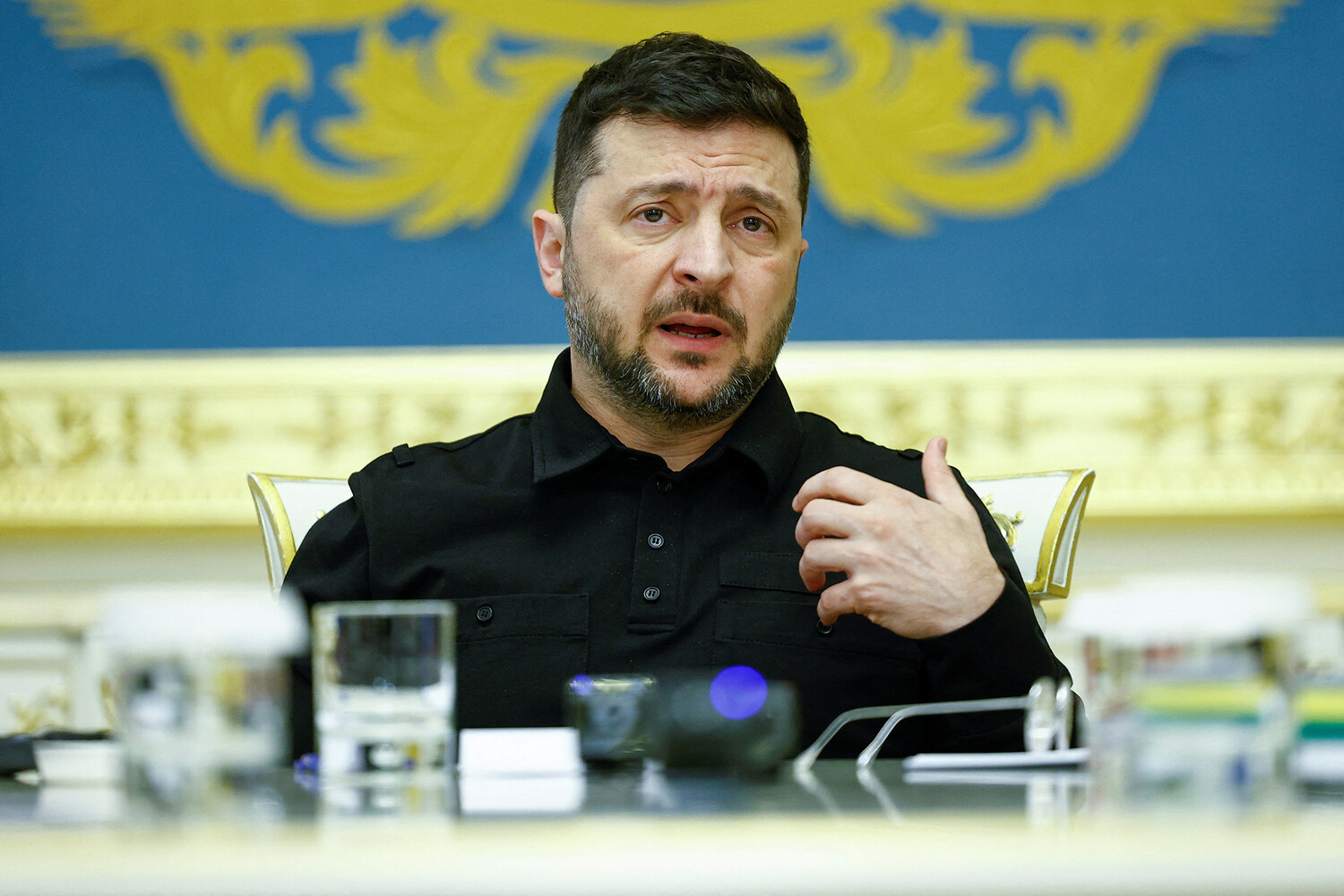
A sustainable peace is not near
Russia will continue combat operations in Ukraine and "the deal" is currently canceled, argues Russian war correspondent Alexander Kots, referring to the meeting of Russian President Vladimir Putin with Donald Trump's special envoy, Steve Witkoff, in Moscow. According to the journalist, Russia "continues to fight." "The agreement is canceled. We have not come closer to a sustainable peace," Kots commented.
Ushakov (Putin aide): Without resolving the territorial issue, there can be no long-term solution
Following the Putin-Witkoff meeting, Russian presidential aide Yuri Ushakov stated that the talks were of an "absolutely frank and confidential nature," pointing out that without resolving the issue of territories, there can be no long-term resolution to the conflict in Ukraine. "The main thing established during these negotiations between our president and the Americans is that without resolving the territorial issue according to the formula agreed upon in Anchorage, it is not worth expecting a long-term settlement," Ushakov stated.
Negotiations in Abu Dhabi
Ushakov announced that today, Friday, January 23, the first session of the tripartite Russia, US, and Ukraine working group on security issues will take place in Abu Dhabi. He said the Russian delegation for participation in this meeting has already been formed, received instructions from the president, and will soon depart for the United Arab Emirates.
"Our security negotiating team has already been formed and will depart for the UAE within the next few hours. The team includes representatives from the leadership of the Ministry of Defense under the head of the General Staff, Admiral Kostyukov," Ushakov stated. Additionally, a separate meeting in Abu Dhabi is planned between the heads of the bilateral working group on economic issues—Kirill Dmitriev and Steve Witkoff.
Did the Ukrainians strike with a Flamingo missile?
While Ukrainians and Russians, in the presence of the Americans, prepare for talks, on the front, each side attacks with all the weapons systems at its disposal. The Ukrainian attack on a suburb of Krasnodar—in the village of Novaya Adygea—which destroyed a six-story building and injured nearly 15 people, left one main mystery: what did the Armed Forces of Ukraine strike with?
As Russian media report, the most important element proved to be left out of the frame of this tragedy—both literally and figuratively. First, it is not difficult to notice that in the publications, at least so far, only photos appear where the crater left by the Ukrainian bomb at the point of impact is not visible. Although a partially destroyed building and burned car husks are depicted, the most important detail that would immediately provide answers to the basic question is missing: exactly what did the Ukrainians manage to use to reach the village? Official statements also do not mention the type of Ukrainian bomb.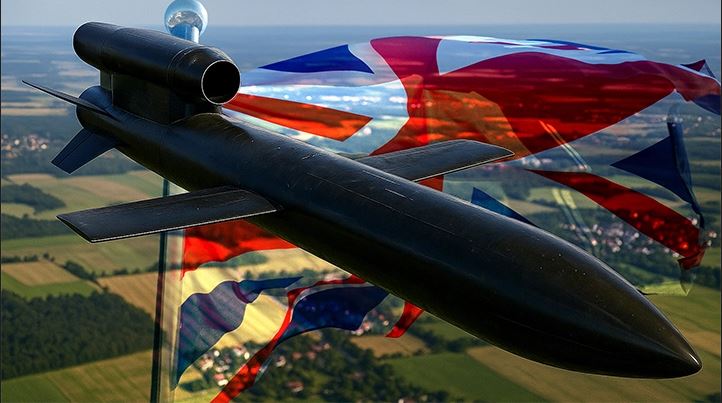
Something fast, heavy, and very powerful
The attack, it is recalled, took place late on the night of January 20. The flight of the bomb was recorded by local residents, whose videos were posted in local chats and groups. The footage clearly shows that the drone was a jet, moving on a gentle downward trajectory, quite fast, while at the moment of the explosion, the fire lit up much of the night sky.
The recorded ground damage was corresponding: we currently know of 13 injured, nine of whom were hospitalized and two are in intensive care. The explosion caused damage to 12 apartment buildings and 40 cars, 15 of which were completely burned. The losses could have been much higher if the enemy bomb had not landed in the parking lot. The greatest damage was sustained by a six-story building located about ten meters from the site of the explosion. The shockwave destroyed balconies on four floors; the building not only lost its glass, but the window frames were swept inside the apartments by the blast. Given that the explosion occurred at some distance from the building, there is no way a drone carrying a 50-100 kg warhead caused such destruction. The scale of damage fits more with the consequences of a car bomb explosion than a small flying vehicle. Also drawing attention is the corner of the building hit by fragments: the gouges are large, relatively few, and look more like traces from the destruction of an object found between the epicenter of the explosion and the building.
The scenarios
Ukrainian sources are promoting the version that the damage was caused by a falling anti-aircraft missile. In reality, however, this is not justified. First, an anti-aircraft missile, if that were the case, would fall on a steep trajectory. Second, the explosion is too powerful even for systems as large as the 48N6 of the S-300/S-400 systems. Third—and this is where the damaged corner of the building is needed—anti-aircraft missiles are designed to create a dense fragmentation field over a wide sector.
If such a missile had exploded in front of the building, the entire facade would be covered with thousands of gouges from pre-formed destructive elements. In the photos, however, it appears the building was "scraped" specifically by the shockwave—the character of the damage is more explosive than fragmentary. In other words, neither a propeller drone nor an anti-aircraft missile is capable, in principle, of leaving behind such damage as recorded. In the Ukrainian weapons stockpile, there is essentially only one means that fully corresponds to the "suspect's" profile and the traces found at the strike site—the FP-5 "Flamingo" cruise missile.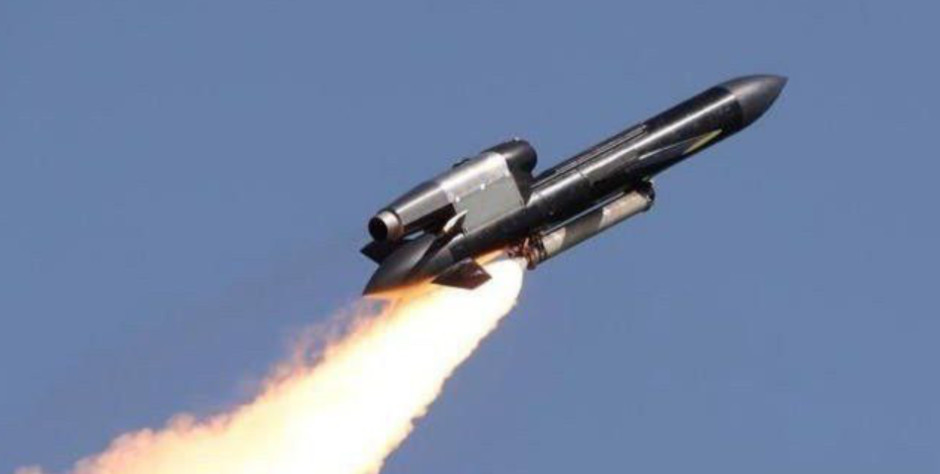
British development in Ukrainian hands
The missile was first presented early last year at the IDEX 2025 exhibition in the United Arab Emirates by the British company Milanion Group. By summer, however, the Ukrainians presented it as their own development. It was then announced that the "Flamingo" has a total weight of 6 tons, carries a one-ton warhead, can reach speeds of up to 950 km/h, and fly a distance of up to 3,000 kilometers.
Conceptually, the system is primitive and essentially repeats the German "V-1" rocket, implemented however at a modern technological level. The missile's creators assembled it from ready-made units and components: the engine was taken from an old Czech "Albatros" aircraft, while the flight electronics were assembled based on components sold on the open market. They later admitted choosing elements that were cheaper rather than those that functioned better. As a result, the Ukrainians acquired a flying "Frankenstein": a massive steel missile without any indication of stealth technologies, controlled by the simplest possible electronics.
What about effectiveness?
Based on the sum of its characteristics, the missile proved to be an ideal target for Russian anti-aircraft defense systems. The steel fuselage, the steel vertical diaphragm between it and the engine mounted above, and the tail fin system that essentially repeats the form of corner reflectors make the missile extremely visible to any domestic radar. Simultaneously, the top mounting of the massive engine, which leaves a strong thermal trace, facilitates the guidance of missiles with infrared seeker heads.
The missile lacks complex course-correction systems based on ground images or downward-looking radar. It simply flies toward the target according to the coordinates entered into the computer, reading data from the satellite navigation system. As a result, both Russian anti-aircraft missile systems and electronic warfare means can easily deal with this "monster." And yet, the question arises: how did it manage to reach the village of Novaya Adygea, which is located 500 kilometers away from the nearest launch area?
Gap in Russian air defense
The issue lies in the missile's ability to fly at low altitude. The Ukrainians occasionally launch several "Flamingos" simultaneously. They are usually detected and destroyed near the border—as happened during the Ukrainian Armed Forces' attack on the city of Oryol or the raids against Crimea. But this time, one of them found a gap in the defense.
The advantage of the "Flamingo" is its vast range, which allows for the plotting of extremely complex routes, bypassing our anti-aircraft defense deployment areas. Military expert and LNR Colonel Vitaly Kiselev points out: "Regarding defense, this is a quite complex missile: the strike radius reaches about 3,000 kilometers. Now look: from central Ukraine to any point on the border is about 500 kilometers, leaving another 2,500 for maneuvers based on coordinates. To Volgograd is about 1,000 km, to the Urals around 2,500–3,000 km. That is, this exact radius allows for the execution of the missions assigned to it." However primitive a cruise missile may be, as long as it is capable of low-altitude flight, it retains the primary advantage of its class: the ability to hide in terrain folds, following riverbeds and low areas.
Final assessment
What happened in Novaya Adygea was not a surprise. The incident was predictable and, in fact, inevitable. "The vast range will allow the 'Flamingo' to threaten areas not usually hit by Ukrainian air attacks. A particular problem is the giant warhead weighing one ton. Such a weapon must under no circumstances fall over populated areas or even be allowed to pass over them. Unlike drones carrying tens of kilograms of load, such a missile can easily cause the collapse of an apartment building, with obvious consequences for hundreds of residents," report Russian media, pointing out that Russia needs aircraft—or even better, long-range early warning and targeting drones.
The hardest battles
At the same time on the military front, conflicts are raging with particular intensity. According to Ukrainian reports, the most fierce battles on the Pokrovsk front continue in the Gryshyno area. According to data from Ukrainian "Military analytics," the Russian army is "trying to establish itself on the eastern outskirts of the village," while Ukrainian forces carry out sorties with small infantry groups toward Pokrovsk.
On the Rodynske – Ivanivka line, the current front layout is hidden "in the fog of war," the Ukrainians point out. Simultaneously, in Dobropillya, the Ukrainians are using robotic vehicles with explosives to demolish buildings, justifying this action by the presence of Russian infantry there (though nothing has been reported by the Russian side regarding battles in Dobropillya). "According to one version, Ukrainian forces are tearing down buildings as part of preparing the city for defense. Previously, this tactic was applied by the Ukrainians in the battle for Toretsk and in the Novopavlivske direction, destroying in advance structures that could serve as shelter for Russian units from drones and artillery," reports Ukrainian "Military analytics."
Suddenly... Pokrovsk and Myrnohrad fell
The most noteworthy element in this data is the fact that Kyiv, which just a few days ago boldly announced it was "holding Pokrovsk and Myrnohrad," suddenly surrendered the cities. For the Ukrainian armed forces, they had been lost long ago. According to Ukrainian sources, Pokrovsk had the fate of Bakhmut—Kyiv continued to state for months that "there are no Russians there," at the moment when the Russians had advanced dozens of kilometers ahead.
Russian advance
Meanwhile, foreign analysts state that Russian soldiers advanced into Konstantinovka simultaneously from the north and south and that "this advance can no longer be stopped." Particular reference is made to the role of fiber-optic UAVs. For the Ukrainian armed forces, this became a serious problem. Logistics retreated, while the personnel shortage intensified further. In this context, Russian offensive formations gained the ability to move deeper into the city. From the Russian side, the situation looks different.
The final battle for Donbass
The supply of offensive units relies increasingly on the city itself, where ammunition and all necessary materials are actively delivered by drones. "After the loss of dominant heights by the Ukrainian armed forces on the northeast and southwest flanks of Konstantinovka, the city located in a valley is now visually controlled and exposed to fire at almost every point. This drastically reduces the durability of the Ukrainian defense and all their movements. Abroad, they worry that for Russia the final battle for Donbass has essentially already begun, as Konstantinovka, Druzhkivka, Kramatorsk, and Sloviansk have almost merged into a single sprawling urban fabric. The loss of one hub automatically creates a threat to all others," emphasizes the "Military Chronicle" channel.
www.bankingnews.gr






Readers’ Comments