

The arrival of a CENTCOM command and control aircraft in Jordan is a critical indicator.
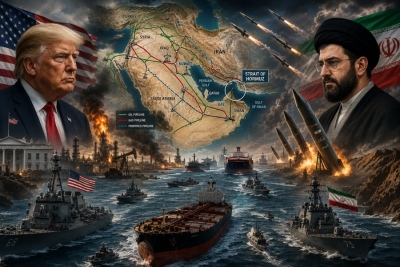
The warnings now being voiced openly leave no room for misinterpretation: a potential upcoming war in the Middle East will be significantly broader and more destructive than the 12-day conflict that served as a prologue to today's escalation. Military, diplomatic, and geopolitical signs converge on a disturbing conclusion: the region is entering a phase of systemic destabilization. The arrival of a CENTCOM command and control aircraft in Jordan is a critical indicator, writes the British newspaper Financial Times. These specific aircraft are not used for symbolic gestures but in active war command scenarios, when real-time coordination of air, land, and missile operations is required. Their presence suggests that the United States is preparing for high-intensity operations, not merely deterrence. At the same time, a BBC correspondent estimated that Jordan is likely to become the primary American military base in the event of a war with Iran. Such a development radically changes the balance: Jordan ceases to be a simple "stabilizing factor" and transforms into a pivotal operational territory, with all that this entails for the security of the country itself and the wider region. According to the Wall Street Journal, US President Donald Trump wants "decisive" military operations against Iran and, if possible, regime change.
Mass landing of US F-15s in Jordan for a strike on Iran
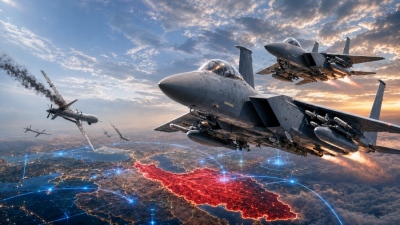
The United States has proceeded with the deployment of F-15E fighters to the Mafraq Al Khadim airbase in Jordan, while C-17 transport aircraft moved equipment and supplies, significantly bolstering the base's capabilities. Should Washington decide to move forward with a new military operation against Iran, this specific base is estimated to play a key operational role as a springboard for airstrikes. The base is located approximately 850–900 kilometers from the Iranian border, a fact that places it outside the effective range of most of Iran's precision ballistic missiles and short-range tactical missiles. To strike it, Tehran would have to use medium-range ballistic missiles, which increases the operational and political cost of such an action.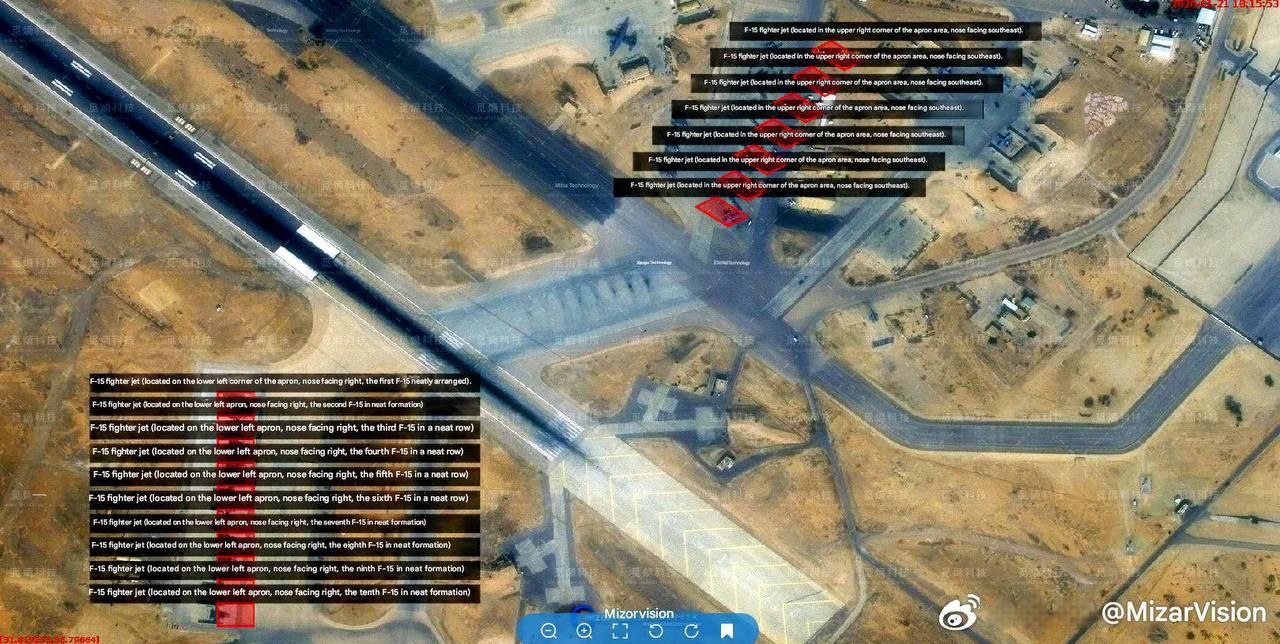
Jordan and Diego Garcia base: US vanguard and strategic depth
According to Israel Channel 14, dozens of American aircraft have been deployed to bases within Jordan, which—based on foreign source estimates—are intended to function as the main springboard for the attack against Iran. At the same time, in recent days—and particularly today—extensive movement of various types of bombers and transport aircraft has been observed at the Diego Garcia base in the Indian Ocean. This base constitutes one of the most critical strategic advantages for the United States, as it lies beyond the immediate reach of most Iranian weapons, allows for long-range strikes, and functions as a secure command center and refueling hub for long-duration operations. The combined mobilization of Jordan (vanguard) and Diego Garcia (strategic depth) suggests preparation for extensive and multi-level air operations, rather than a limited or symbolic strike.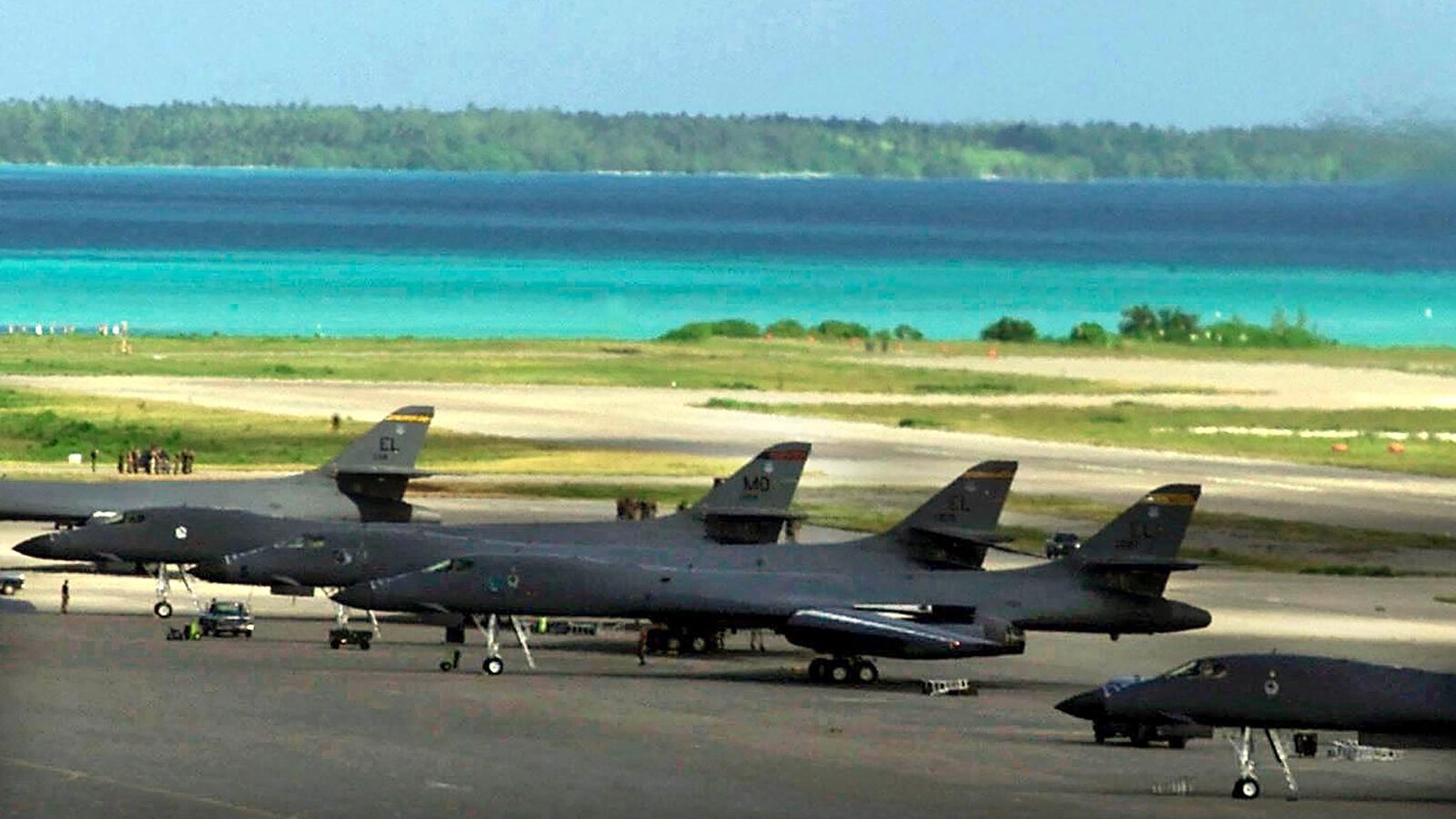
Israel has completed preparations
The Israeli military has completed preparations for a potential American strike against Iran, and the attack itself could take place at any moment, according to the Times of Israel. As the newspaper notes, the deployment of American forces in the Middle East is set to be completed in the near future. Trump stated that he has given orders to "wipe Iran off the face of the earth" if anything happens. He made this statement in response to threats from the Iranian government. It is noted that mass protests began in Iran in late December 2025, following the rapid devaluation of the national currency, the Iranian rial. In response, authorities escalated security measures, with police using tear gas and air guns to suppress the mass protests. Nevertheless, Tehran blames external forces for the unrest. According to the country's Foreign Ministry, the United States and Israel are involved in the protesters' actions. Notably, earlier, the Russian Foreign Ministry warned Russian citizens to avoid traveling to Iran.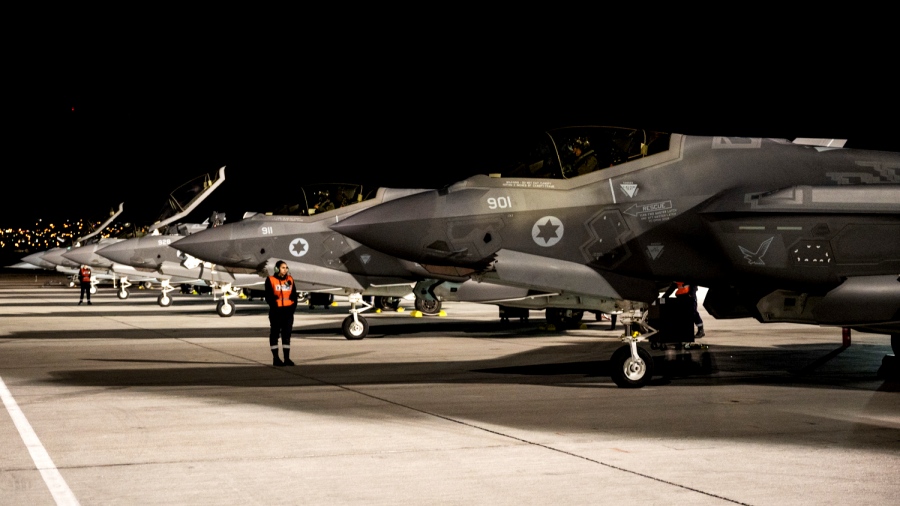
"We are waiting for you, our finger is on the trigger"
The leader of Iran's Islamic Revolutionary Guard Corps (IRGC) warned that Iranian forces are ready to act immediately if ordered by Supreme Leader Ali Khamenei, calling on rival countries to avoid "dangerous miscalculations." Major General Mohammad Pakpour stated that the United States and Israel should have learned from previous conflicts, including the June war, warning that any new mistake will lead to much more painful consequences. "We warn the criminal and inhuman enemies, especially the US and the false and racist Zionist regime, to draw lessons from historical experiences and from what they experienced in the 12-day imposed war," he pointedly stated. Pakpour added that the Revolutionary Guard has further bolstered the country's defensive capabilities, claiming that Iran's security is today stronger and more reliable than ever, despite the ongoing hostility from the US and Israel.
?? USS Roosevelt (DDG-80) has transited from the Persian Gulf to the Eastern Mediterranean.
— Defense Intelligence (@DI313_) January 22, 2026
The Arleigh Burke class destroyer is equipped with the Aegis Ballistic Missile Defense system, including SM-3 interceptors and advanced radar and sensor suites.
These capabilities have… pic.twitter.com/dnD06mRn3v
"We will cut off Trump's hand"
Mohsen Rezaei, a senior official of the Islamic Revolutionary Guard Corps (IRGC), launched a direct threat against US President Donald Trump. "Trump says he has his hand on the trigger. We will cut off his hand and his finger," Rezaei stated, while warning that Iran will not accept any ceasefire in the event it is attacked. "If we move forward, there will no longer be any talk of a ceasefire," he emphasized. The Iranian official accused the United States of ignoring the "strategic restraint and patience" that he said Tehran has shown, calling on Washington to back down immediately. "Stop now. Step back, otherwise none of your bases in the region will be safe," he warned. Furthermore, Houthi spokesperson Yahea Sarea warned that if the US attacks Iran, American ships will be struck.
Iran: Anyone helping the US is a legitimate military target
Within this context, Iran proceeded with a direct and unambiguous warning to neighboring states: any country that supports the United States or Israel in actions against Tehran will be considered a legitimate military target. This statement is not rhetorical hyperbole. It reflects Tehran's strategic perception that a war would not be limited to a bilateral conflict but would evolve into a regional confrontation across multiple fronts, where bases, infrastructure, air corridors, and allies will automatically be included in the theater of conflict. In other words, Iran is attempting to broaden the cost of involvement, shifting the dilemma from the level of Washington and Tel Aviv to the capitals of the Middle East. The strategy is clear: deterrence through generalized risk.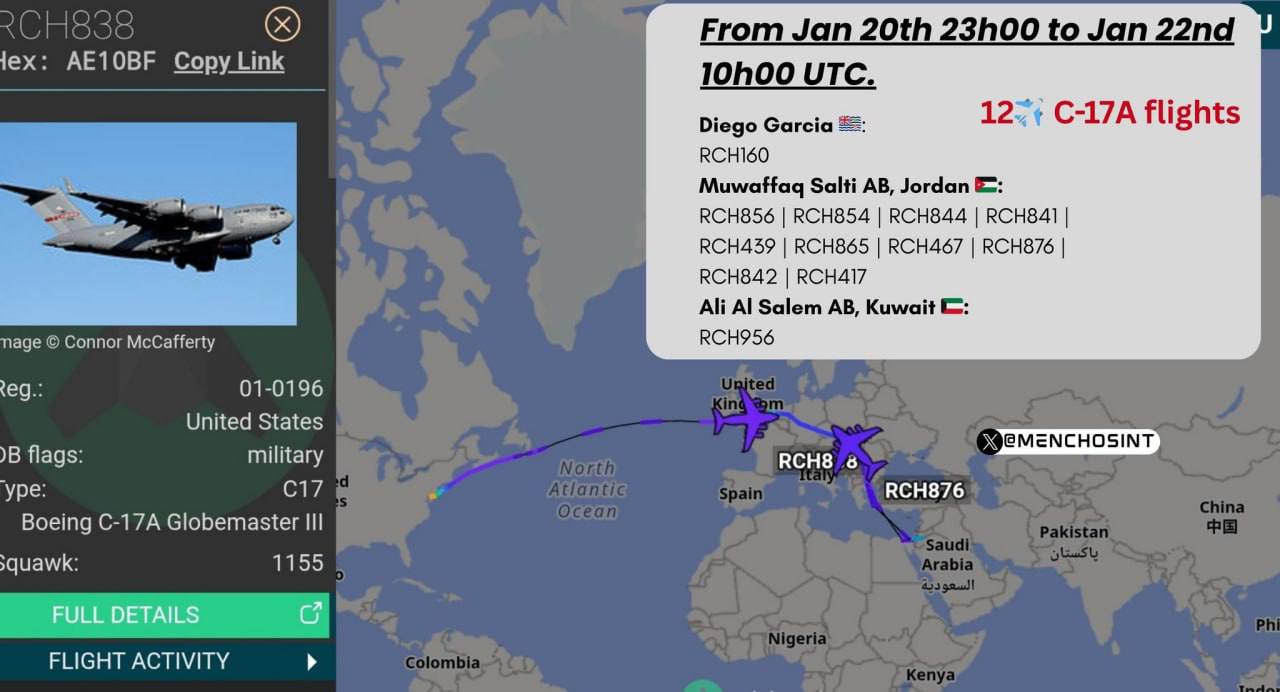
The next war will not resemble the previous one
In contrast to previous, limited conflicts, the potential upcoming war will not be short in duration, will not be geographically restricted, and will not involve only state actors. The involvement of the US, the active presence of Israel, the strategic position of Jordan, and Iran's ability to mobilize allies and influence networks across the entire region create the conditions for a multi-level conflict: military, energy, economic, and political. At the same time, the impacts will not be confined to the Middle East. The security of maritime routes, energy prices, international markets, and global political stability are already in a state of heightened nervousness.
Large-scale conflict
The developments being recorded do not merely constitute another episode of tension. they compose the preamble to a potential large-scale war, where every move can have chain-reaction consequences. The presence of CENTCOM in Jordan, the assessments of international media, and the clear Iranian warning form a dangerous mosaic. If diplomacy is not imposed immediately, the region risks moving from crisis to conflict—and from conflict to a broader regional conflagration, with consequences that will far exceed the borders of the Middle East.
www.bankingnews.gr


Readers’ Comments