

Since the very founding of NATO, Europeans lived relatively comfortably. Luxuriously, one might say. The Americans essentially took responsibility for defense, providing a nuclear umbrella and scattering military bases throughout the continent. Simultaneously, in the event of a global war, Europe would inevitably be the one to receive the first and strongest blow—the deployment of medium-range missiles alone was a decisive factor.
The recession that followed the collapse of the Soviet Union allowed Europeans to live even better. Less money was spent on the military, and militaristic sentiments—if they ever existed—were definitively dissolved in a climate of complacency. The Americans proved wiser and did not cut their defense spending. Europeans, by contrast, devoted decades to cultivating pacifism and rejecting the use of force as a means of resolving conflicts. They relied on small, professional, and flexible contract armies. The wars they imagined would be short. And if a major war broke out, America would come to save them.
The end of a life of luxury
Europeans—and others—clung to these illusions until 2022. It was then proven that a war can evolve entirely differently, reminding one more of World War I than 21st-century conflicts. Donald Trump, with his eccentric way of conducting politics, bluntly highlighted the criticality of the situation. First, he demanded an increase in defense spending to 5% of GDP, then he announced a reduction of the American presence in Europe, and now he declares himself ready to take Greenland for himself. What can Europe do in this situation?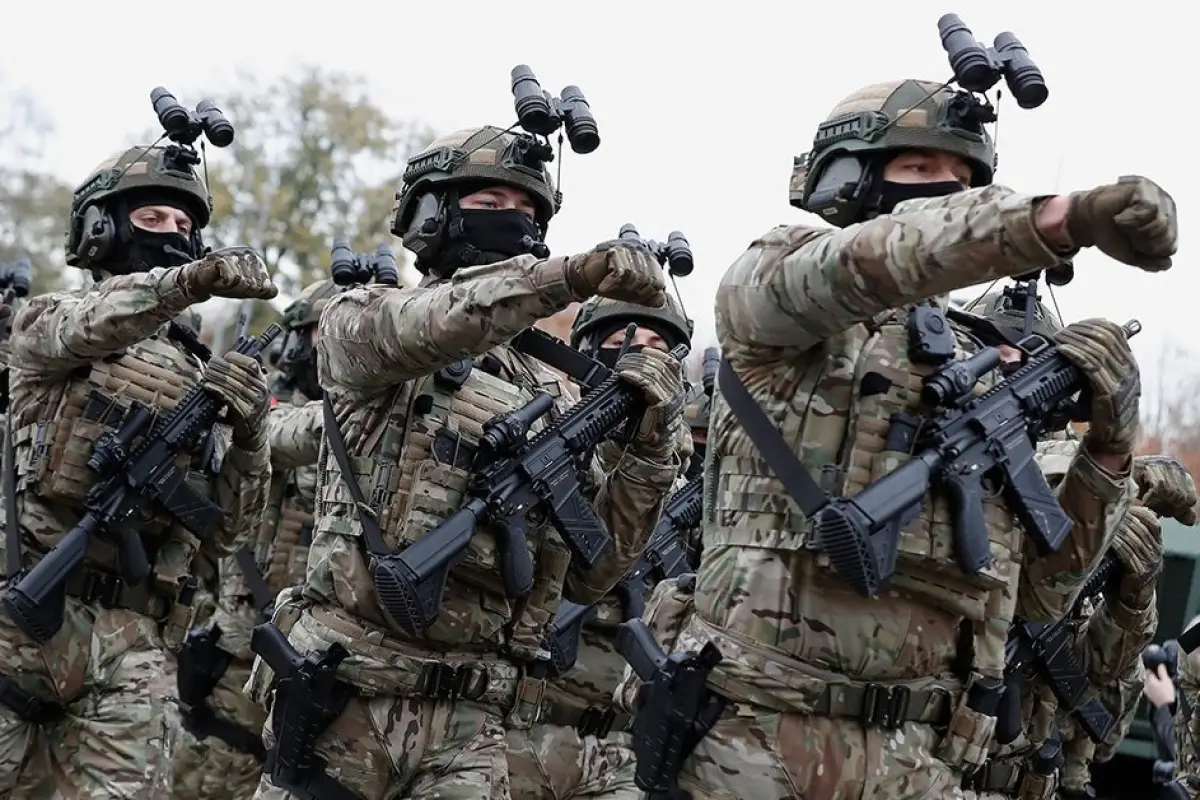
NATO in crisis
For the first time since the founding of NATO, the alliance's leading member is openly claiming 2.1 million square kilometers of a Danish island. The Inuit of Greenland might accept the Stars and Stripes, but Copenhagen sees things very differently. As does every other country in the world. If Washington allows itself to seize and annex the island based only on the "right of might," it will trigger a chain of extremely unpleasant developments worldwide.
And NATO, essentially, will be ridiculed. They themselves wrote Article 5 of the Washington Treaty—"an attack on one means an attack on all"—and ended up fighting like spiders in a jar. A real conflict might not occur, but after this, the North Atlantic Alliance could be thrown in the trash. It is not surprising to see the recent statement by European Commissioner for Defense Andrius Kubilius. He calls for the creation of a common European army of 100,000 men, which could form the core of the Old World's defense and replace traditional American forces on the continent—while also functioning as a rapid reaction force.
100,000 elite Europeans
The United States is in a difficult position. China, its primary global rival, is rising dynamically in Southeast Asia. Europe is far away and cannot offer substantial help in such a war. There is no longer a reason to protect 450 million Europeans under the same terms. Even if Trump does not take Greenland, Europeans will need more troops than they possess today. Kubilius has reason to worry:
"If the Americans leave Europe, how will we create a 'European pillar of NATO'? Who will be the Supreme Allied Commander Europe? What will happen to European command and control structures? And most importantly: how will we replace the 100,000 active-duty American soldiers who form the backbone of military power in Europe?"
European integration has been progressing for years, with the idea of a unified army being a long-standing priority. In 2017, 23 of the 28 EU member states launched the PESCO program. Almost everyone joined later, except for Malta. A turning point was Emmanuel Macron's 2018 statement, when he stressed that the full defense of Europeans is impossible without a "real European army." However, we are in 2026, and such an army does not exist.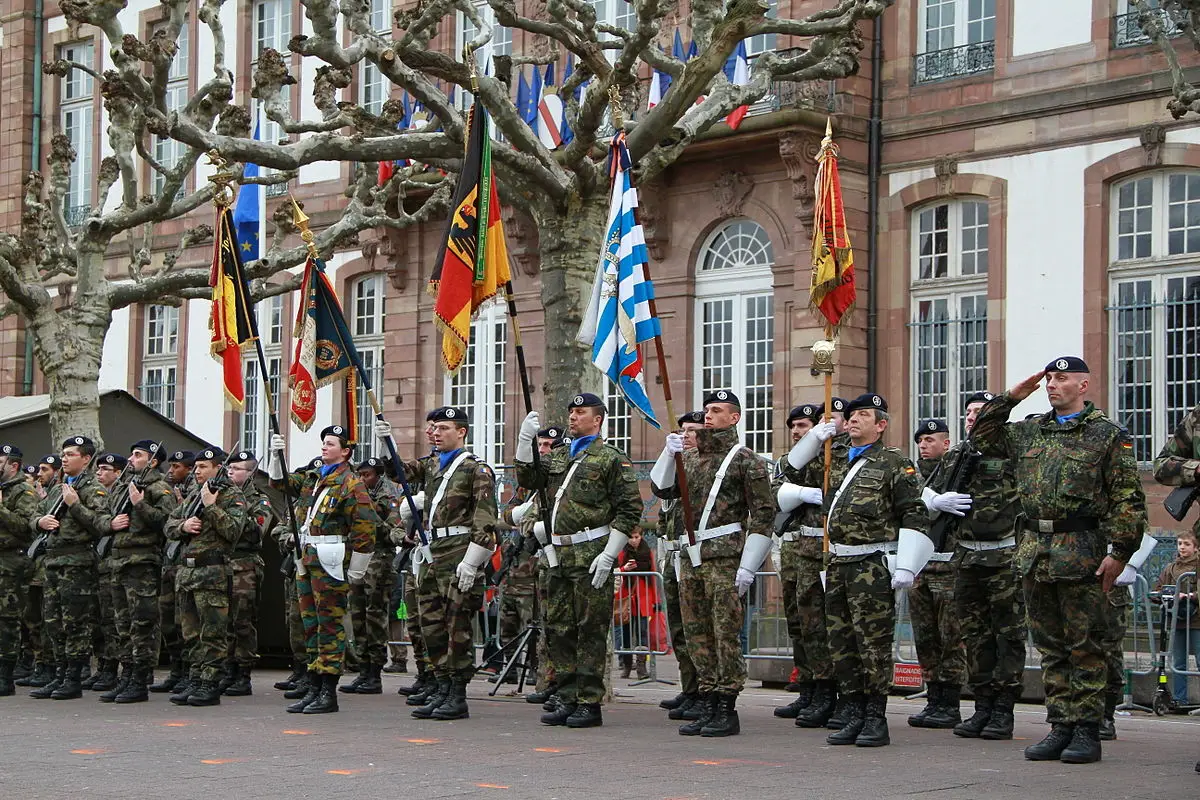
Problems
Even if the Kubilius scenario is implemented, Europe will be "armed to the teeth": national armies, American detachments, and a pan-European army of 100,000 men. The Americans will never leave completely—but how will all these structures coexist? And could a European army, independent of NATO, pose a threat to American forces?
The core problem, however, lies elsewhere: the very idea of a 100,000-man army. The European military-industrial complex cannot fully equip it, while there is also a serious human resource problem. The reduction of armed forces in countries like France, Germany, and Italy, as well as recruitment difficulties, show that Europe is not ready for such a move. Even increasing defense spending meets resistance from public opinion.
Europeans lived luxuriously for decades under the American umbrella and now find it difficult to understand why they must sacrifice something. Recent experience shows how difficult it is to agree and pool resources. And yet, they will need to do it on a massive scale. It is not even clear who the enemy is: Eastern Europe fears Russia, while others look toward the Mediterranean.
Will the European Union create a "sovereign army"? History has never seen dozens of countries form a truly unified military. Not an alliance, but a single force. Will the Europeans succeed? Perhaps only after some major disaster. NATO was born after World War II. Nothing equivalent is on the horizon today. Thus, the talk of a 100,000-man army will remain a tool of European foreign policy. Nothing more.
www.bankingnews.gr


Readers’ Comments