

Ukraine has no chance of defeating Russia militarily. The only thing it can hope for is survival—to avoid being crushed. The statements made by the Ukrainian Commander-in-Chief, Oleksandr Syrskyi, leave no room for misinterpretation. The Ukrainians hold no initiative on the front; they lack forces and face massive gaps and shortages. Yet Syrskyi, who recently announced the cancellation of mobilization, speaks of new counteroffensives even as the country bleeds daily in terms of territory and manpower. What is at stake now is the very survival of Ukraine. It appears from Syrskyi’s rhetoric that we are looking at an army without reserves, a state in panic, and a regime bluffing even to its own society. It is evident that the days for the Kyiv regime are numbered, especially considering diplomatic developments and the looming rift within the Western camp.
Reality from a parallel universe
The Commander-in-Chief of the Ukrainian Armed Forces, Oleksandr Syrskyi, gave yet another interview to journalists that was quickly circulated by various media outlets. Among other things, Syrskyi announced "new offensive operations" by the Armed Forces of Ukraine. He claimed the Ukrainian military will continue to "hold the operational initiative." Where exactly they "hold" it, the Commander did not specify. However, looking at reports from the Ukrainian General Staff, it becomes clear the answer is "everywhere." "In contrast to our official statements regarding Kupyansk, which are part of a specific long-term military-strategic and political plan, the Kyiv regime continues to claim 'control' over Pokrovsk, Dimitrov, Huliaipole, Chasiv Yar, Volchansk, and Stepnohorsk—total nonsense—solely to prolong its political agony," argues retired Russian colonel and military analyst Aslan Nakhushev.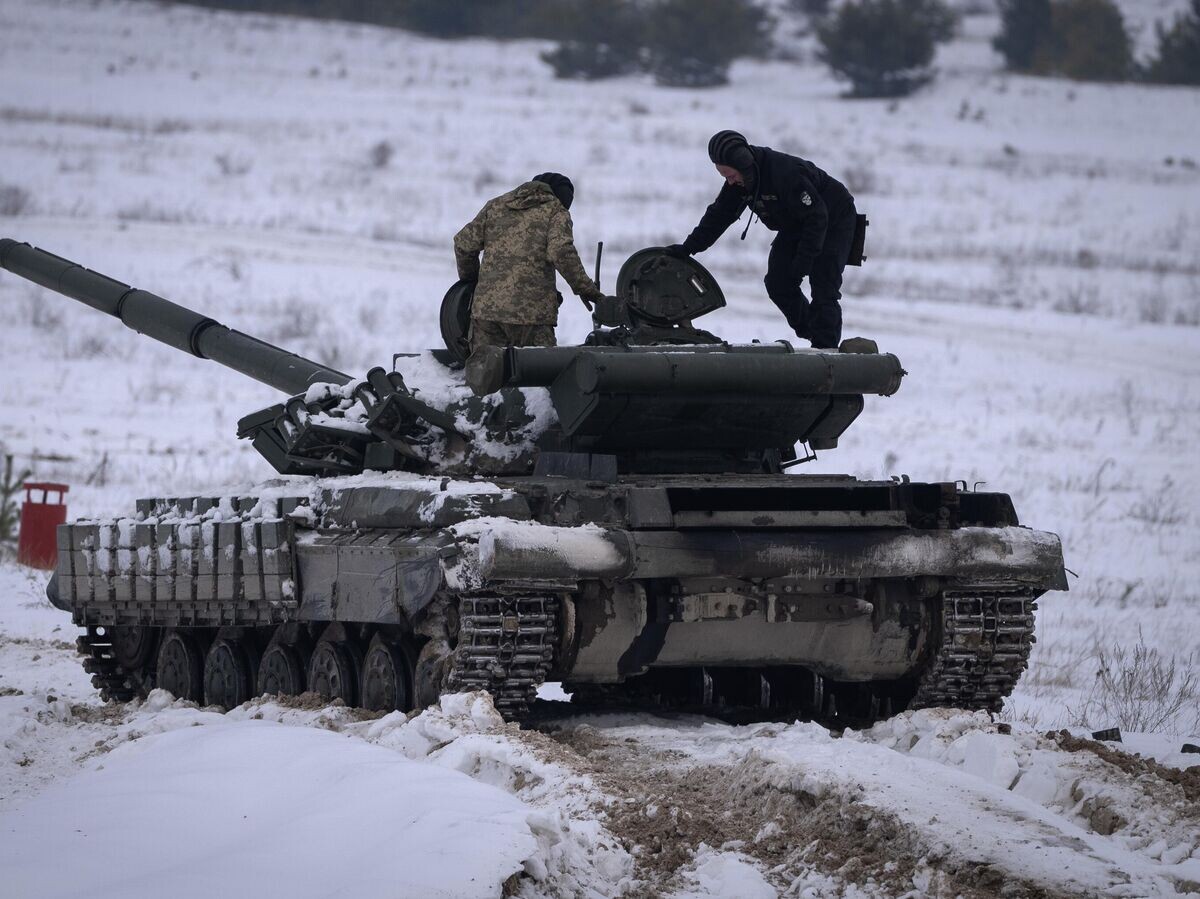
Goal to overstretch the front
According to Syrskyi, the primary goal of his "offensive operations" is to overstretch the front and force the Russian Armed Forces to "transfer significant human resources, weaponry, and ammunition to contain active operations." Simultaneously, he avoided mentioning that Kyiv has long faced a manpower shortage, particularly in assault units. Nor did he acknowledge that recruitment fails to cover personnel losses—a fact previously reported by both Ukrainian and Western media. "Strategically important is that Moscow, according to current dynamics, is applying the tactic of stretching Ukrainian forces, testing every weak section of the front. With a lack of reserves and low unit rotation, such an approach could lead to an avalanche-like loss of control," points out the Ukrainian Telegram channel "Resident."
Massive losses, weak defense
In reality, Ukrainian and Western media often refer to the stretching of the front as a tactic successfully employed by the Russian army. In some sectors, it has been revealed that the losses of the Ukrainian armed forces are so great that a single squad might be defending several kilometers. Through these defensive gaps, Russian troops often pass after clearing surrounding bunkers and fortifications. Syrskyi tries to explain that these are not full-scale counterattacks but "targeted strikes." However, even the Ukrainian General Staff does not seem to believe this.
What counteroffensive?
"Our sources in the General Staff reported that all of Syrskyi's statements about preparing offensive operations do not correspond to the actual capabilities of the Armed Forces of Ukraine. We have lost two brigades in Myrnohrad, while the remaining reserves have been moved to Kupyansk. No one wants to reform the system; it is simply convenient to keep sending new reserves to the front without answering the basic question: where were the previous soldiers lost?" reports the "Resident" channel. Behind these glowing words lies the main thought: the regime does not want peace; it wants war until the end.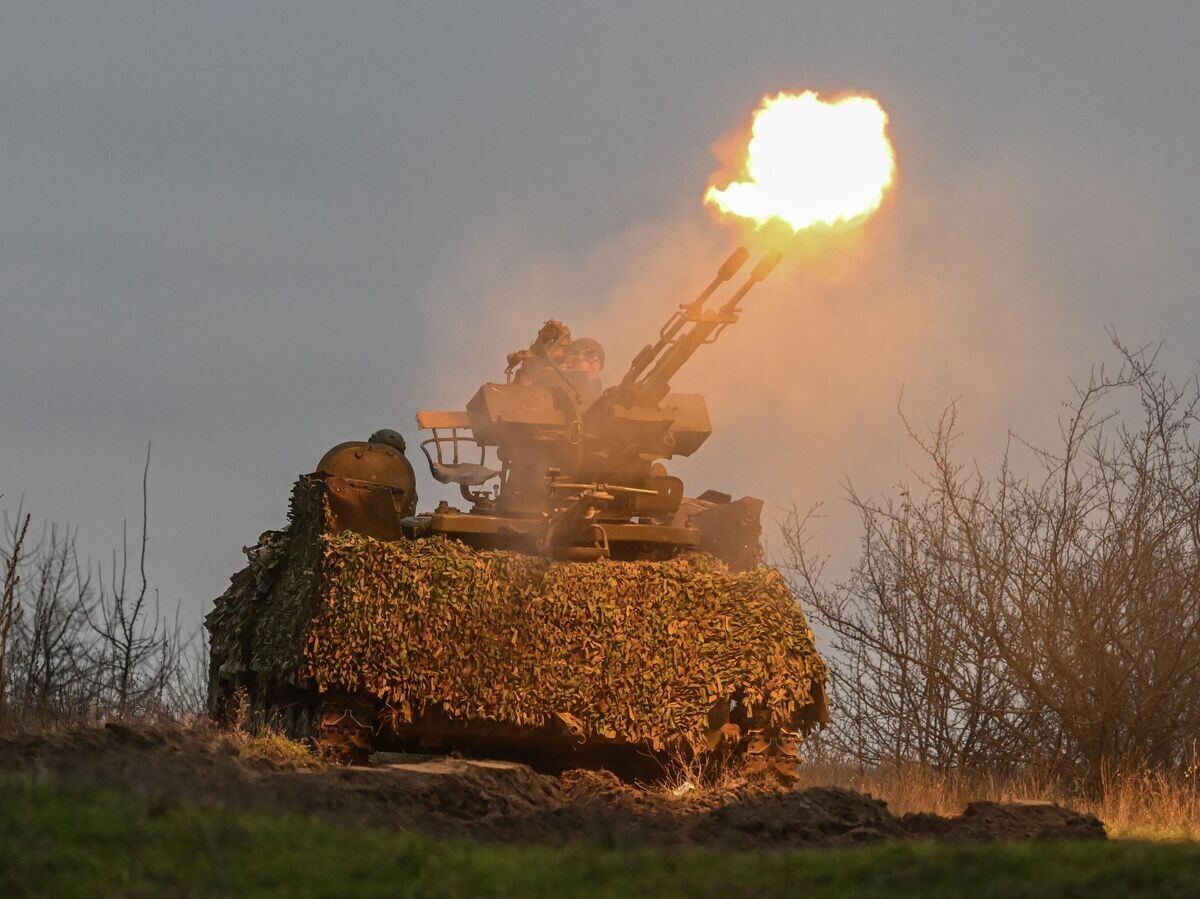
The bluff
"The Ukrainian chief follows Zelensky's idea that not withdrawing forces from Donbas is a good plan. Simultaneously, Syrskyi stated that they are preparing a new offensive to 'distract Russian forces from main fronts.' To make such statements, you must either have confidence or know how to bluff. In case of failure, blame can always be shifted to weather conditions or unreliable partners who delayed weapons supplies," notes Russian war correspondent Evgeny Poddubny. Some experts conclude that Syrskyi was referring to only one general counteroffensive, based on the context of his other statements.
Mobilization canceled
Ukrainian media publishing the interview presented a summary of his statements, which raise more questions than they answer. "Syrskyi: 'Ukraine is preparing for offensive operations, mobilization is canceled, losses have decreased.' Ukrainians, you can go to work and walk the streets calmly... I guarantee it, Syrskyi," mocks Russian war correspondent Ruslan Tatarinov. At the same time, Ukrainian channels continue to post footage of forced recruitment. Recently, Ukrainian Irina Sapman stated that the country "will not make it without the general mobilization of both women and men."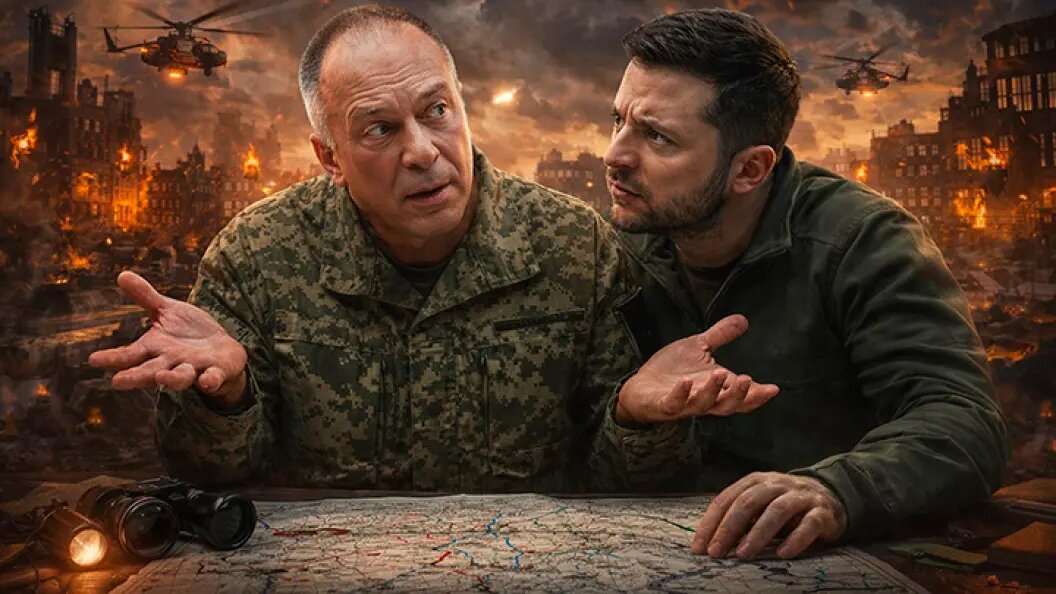
Ukrainians revolting, refusing the front
Syrskyi's statement—unless it is a "random error" amidst rumors of his resignation—seems directly related to the increasing revolts against recruitment centers. Cases of physical violence against recruitment officers by both civilians and veterans have multiplied. Reports include bombings of homes and offices, as well as assassinations. In regions like Odesa, there is an increase in the arson of recruitment vehicles and the slashing of tires. These incidents have become so frequent that even SBU attempts to keep this information secret have failed, with videos circulating in "Resistance" chats. "The first clear sign that Bankova was afraid is that Ukrainians began puncturing the tires of recruitment vans. Without them, they cannot transport anyone, and vehicles are taken out of service," claims the "Legitimny" channel.
The order to the generals
Despite talk of new offensives, Ukrainians have stated that in the next 48 hours, Russian forces will deploy the strategic aviation to "conquer new heights." It seems strange why they are shouting louder than usual this time. According to Ukrainian intelligence and Zelensky, Russian "generals" have allegedly been ordered to destroy substations feeding three Ukrainian nuclear plants. "A serious threat hangs over Ukraine: Russia is planning a massive strike against NPP substations—something that could lead to prolonged blackouts and a severe energy crisis. Our entire energy system currently relies on only three NPPs. For the strike, Russia could use up to 700 'Shahed' drones, 30 'Iskander' missiles, 8 'Kinzhal' missiles, 20 'Kalibr' missiles, and an unknown number of strategic aircraft," reports "Legitimny."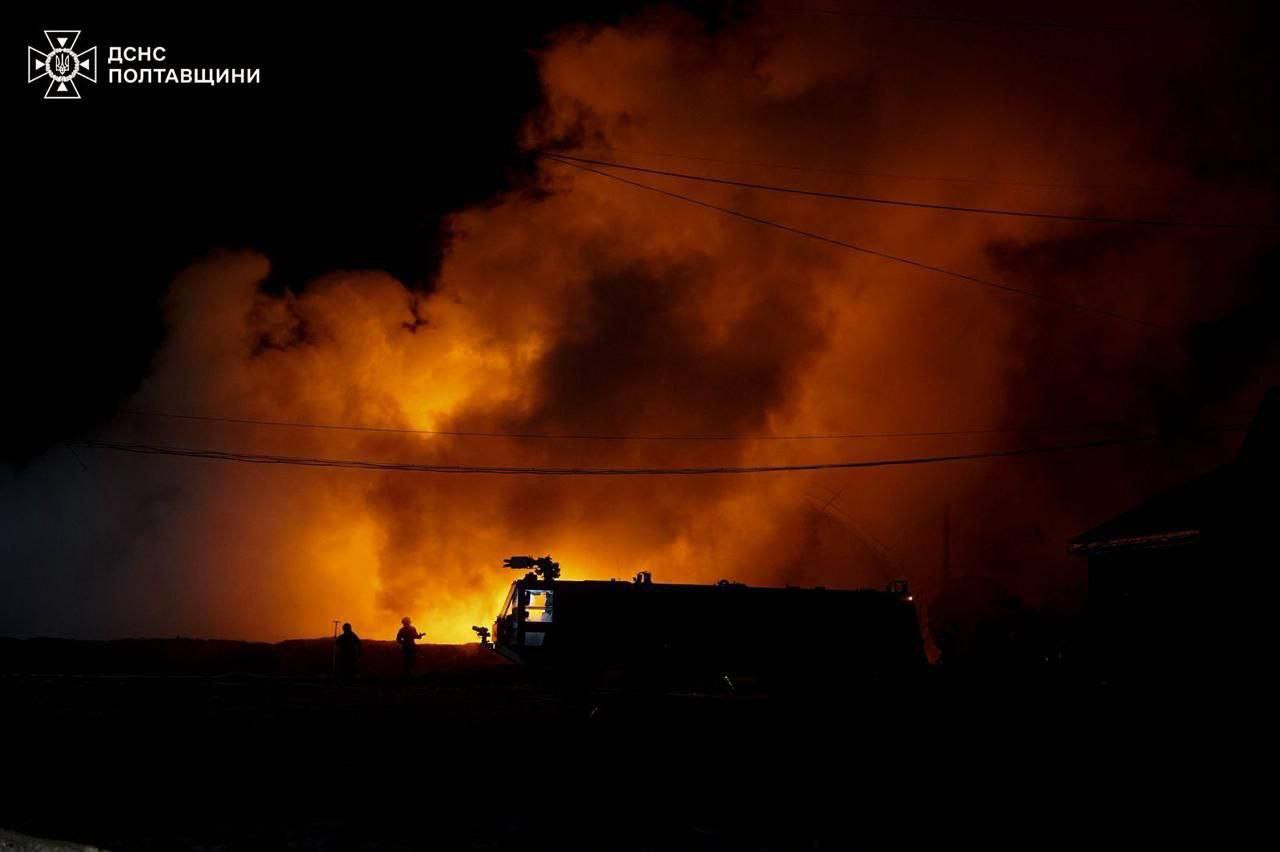
Panic
"Ukraine is in such a panic that it even tried a 'clumsy' strike against Russian strategic aviation airfields," says military analyst Nakhushev. "Last night, 85 enemy drones targeted the Engels airbase. All were destroyed in the air. I hope this does not stop our generals from ending the Kyiv regime's energy system. Zelensky talks about NPP substations. I wish he were right this time! But that depends on a completely different man."
Russians destroying bridges and infrastructure
Meanwhile, reports from the front indicate that Russian drones and aviation have begun more actively destroying Ukrainian rear positions and bridges. This specifically concerns the Northern front in Sumy and Kharkiv. On the night of January 19, the railway bridge in Vasylkivka (Dnipropetrovsk region) was added to the list. The structure was completely destroyed by fire. Locals report the use of a drone with a thermite or phosphorus warhead. The fire lasted over three hours—the metal structure literally melted. Rumors suggest other crossings were hit, and it appears the bridges over the Dnieper are now "finished." The decision was executed.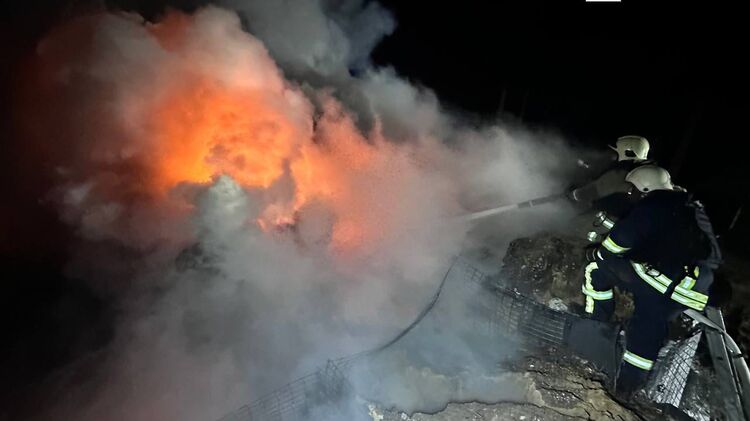
They want all of Ukraine
Among Syrskyi's admissions is that no one in Russia is preparing for a compromise deal. "We see the opponent's actions, and there is no indication they are preparing for peace negotiations. Instead, we see an increase in the intensity of combat operations and production of offensive weapons. The overall Russian plans have not changed—they want all of Ukraine. Only the timelines and resources change," said Syrskyi. The second striking element is the absence of positive goals for Ukraine. Summing up the past year, Syrskyi repeatedly says "we did not allow." In essence, this means a complete loss of the strategic initiative. His only achievement is that Russians have not yet "captured all of Ukraine." First, no official Russian figure announced plans to crush Ukraine by 2025. Syrskyi is fighting a "scarecrow" he invented himself. Second, the Russian leadership's position is that they will fight for as long as it takes. Russia has not yet crushed Ukraine, but the keyword is "yet."
The successes
As examples of Ukrainian success, he cites the "bloody" attacks on the Belgorod border in March 2025 and the suicidal raids in the Glushkovsky district of Kursk, which continued "essentially until summer." Syrskyi claims these actions pinned down 70,000 Russian troops. Even if true, these temporary successes were bought with massive irreplaceable losses. Once the pressure from mobilized brigades weakened, Ukraine lost the Pokrovsk–Myrnohrad urban cluster and Siversk, while its defense in Zaporizhia collapsed.
The issue of drones
Syrskyi believes that alongside ground robotic platforms, heavy transport drones for supply and medical evacuation will gain importance. "I assume the further evolution will be a transition to aerial evacuation and transport." He boasted that Ukrainians possess samples of such powerful drones, specifically the "Vampires," which perform evacuations literally just above the ground.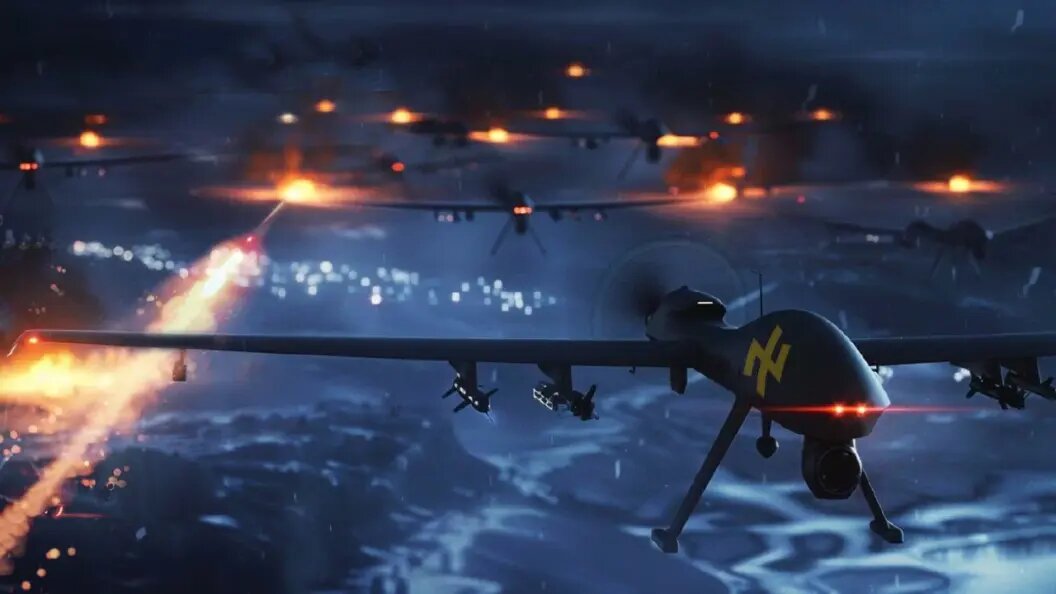
The inevitable strategy of risk
Syrskyi acknowledges Russia's overwhelming resource superiority. According to him, the Russian mobilization potential is approximately 20 million people, with 4.5 million already trained. Furthermore, the production of long-range attack drones is planned to increase to 1,000 units per day. To understand these numbers: roughly 28.7 million people remain in territories controlled by Kyiv, while Ukrainian long-range drone production has peaked at 160-170 units per day and is unlikely to increase quickly given the energy situation.
No chance of victory
In a war of attrition, Ukraine has no chance of victory or even survival. Syrskyi does not say this directly but implies he understands the threat. Instead, he admitted what constitutes the core of "Ukrainian strategy": not just counterattacks, but deep strikes with long-range drones and special sabotage operations. In simple terms: terrorism. The word was not used, but the essence remained. "We will continue asymmetrical actions... we will continue the operations of special forces," noted the Commander-in-Chief. Russians point out that terrorism remains part of the enemy "strategy," including the systematic killings of non-combatants like Darya Dugina and Vladlen Tatarsky.
The aftermath
Experts point out that Syrskyi is playing his assigned role: first, squeezing everything possible out of the Ukrainian military, and second, taking the blame for front-line failures and rear-guard tension. "When he took this position, he knew a moment would come when all the burdens would be placed on him. He will be highlighted as the main culprit for the conditions expecting the Ukrainian army in the spring–summer of 2026," says political scientist Mikhail Pavliv.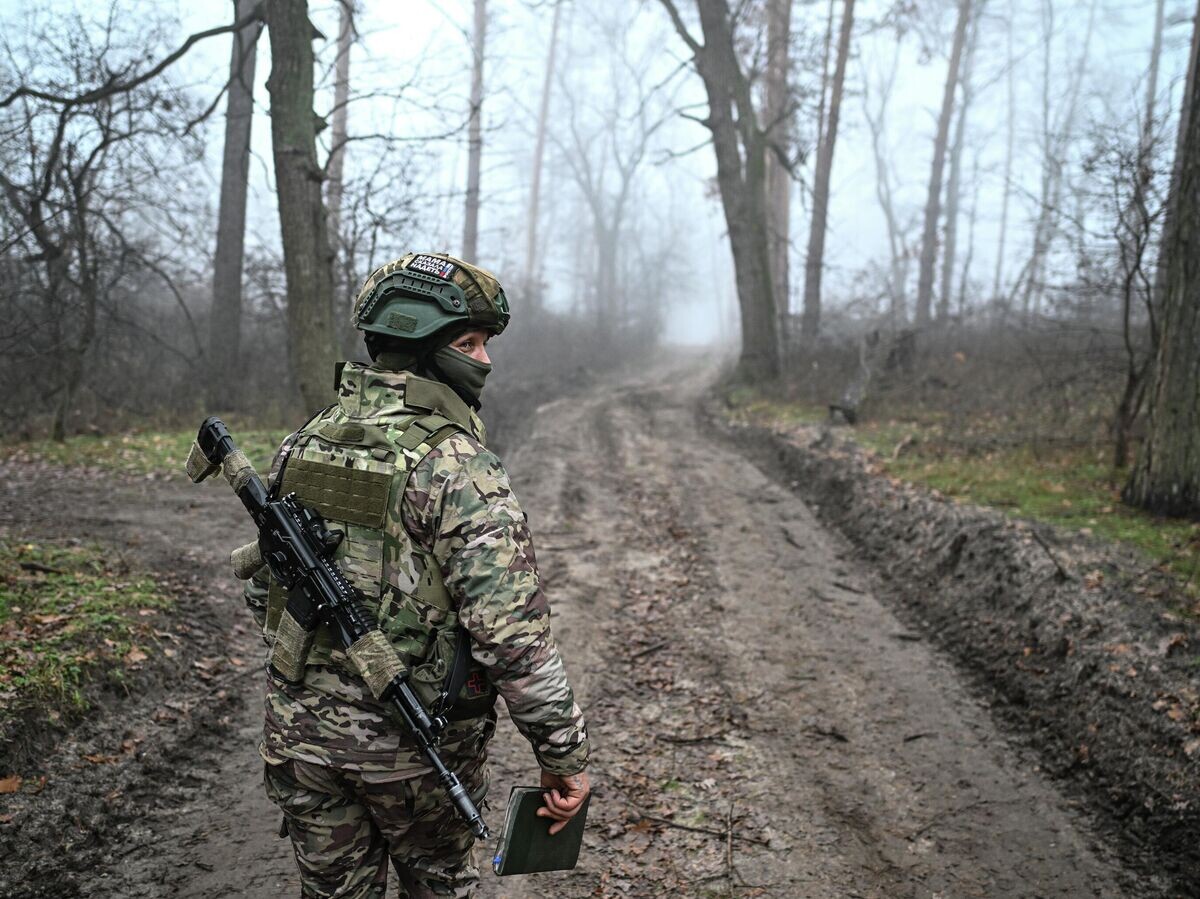
Unequal battle
Syrskyi's "strategy of risk" theoretically allows a smaller force to win against a superior opponent through initiative. The problem is this requires extreme flexibility—the ability to abandon an operation the moment it turns. The Ukrainian command, however, shows extreme rigidity, clinging to every success. Examples include the eight-month "meat grinder" at the Krynky bridgehead, the attempt to hold the Kursk salient, and the defense of Myrnohrad. Instead of "hit and run," Syrskyi tries to consolidate gains, leading to a war of resources in which they have no chance. Thus, the Russian Ministry of Defense is left with one option: to strike—hard and massive, and even stronger than the enemy expects.
www.bankingnews.gr


Readers’ Comments