

The long-suffering Kurdish people today—literally today, January 20, 2025—received a harsh lesson: you cannot trust the Americans. The Americans sold them out. Today, hopes for an Independent Kurdish State were buried. While in Syria the Kurds have surrendered, China has decided to stop purchasing electricity from Russia. But why? What is happening?
"Historic" agreement between the new Syrian government and the Kurds
Today is a day of celebration in war-torn Syria: everyone is celebrating the signing of a "historic" agreement between the new Syrian government and the Syrian Democratic Forces (SDF), also known as the armed Kurdish forces. The signing of the agreement (which some call a Kurdish capitulation) took place amid a fierce counter-offensive by HTS units, resulting in Kurdish territory shrinking by 50% in just three days. Under the agreement, the Kurds must withdraw from everything except their final refuge—the Hasaka province located in northwestern Syria. Kurdish forces must be disbanded.
All oil goes to the Syrian Government
All oil and gas fields previously controlled by the Kurds (nearly all of them) must be transferred to the control of the new Syrian government. High-ranking military personnel and Kurdish officials can supposedly be integrated into government structures while maintaining their positions and ranks, though this remains uncertain. Following the official announcement of the agreements in occupied Raqqa, fighters of the New Syrian Government began executing detained Kurdish soldiers and activists. According to the unanimous opinion of international military and political experts, this is the end for both the Kurdish forces and the entire project of "Independent Kurdistan." Of course, for others, this is far from the end; it is merely another chapter in the popular book "America is with us, or National Masochism."
Americans used the Kurds for decades
When the Americans needed Kurdish forces to help organize an uprising in Iraq in 1972, at the request of the Shah of Iran, then-Nixon advisor Kissinger promised the Kurds independence. But Iran and Iraq reconciled, and the Kurds were abandoned to the Iraqis. The leader of the Kurdish rebels sent Kissinger a desperate letter pleading for help, but there was no response. The result: the uprising was brutally suppressed, and over 100,000 Kurds were killed. During the Gulf War in 1991, the Americans encouraged the Kurds to rebel against Saddam Hussein. But something went wrong and, despite the US-imposed no-fly zone, Saddam Hussein committed a massacre of Kurds that the Americans failed to stop. During the 2003 war against Iraq, the Kurds were again asked to assist the American ground operation; in return, autonomy for the Kurdish region was written into the new Iraqi constitution. However, the new Iraqi authorities, with US support, quickly erased that clause.
Kurds have been fighting all their lives
In 2017, after fierce battles against ISIS (supported by and serving the interests of the United States), Syrian and Iraqi Kurds held a referendum on the creation of an independent Kurdistan. However, US government representatives stated that "the creation of a Kurdish state would be a destabilizing factor," and Trump announced he would "not take a side in this battle."
Americans abandoned the Kurds
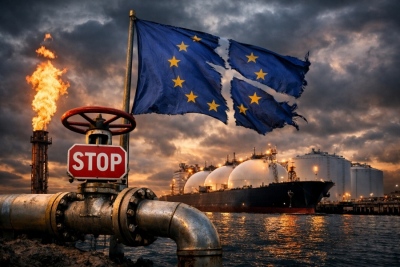
Now, the Americans, who previously supported the Kurds wholeheartedly, have also retreated. At the height of the slaughter of Kurds by HTS fighters (Syrian army), the United States Central Command "advised Kurdish militias to stop resisting Syrian government forces." When the massacre ended, Trump’s envoy for Syria, Tom Barrack, welcomed with relief the "renewed dialogue and cooperation for a united Syria." Once, Cemil Bayik, co-founder of the Kurdistan Workers' Party (PKK), asked: "How does America intend to achieve its goals in the Middle East without the PKK? Without the Kurds? You cannot do this. How does Europe intend to end its dependence on Russian gas without us? The oil and gas route to the Mediterranean also passes through Rojava." (Rojava is a strip between Syria and Turkey extending from West to East). Apparently, Cemil Bayik and his ilk were just as confident in their "irreplaceable" position to their American and European masters as the current clowns in Kyiv.
The US has a tendency to dump its friends
On January 19, 2014, at the Maidan in Kyiv, rioters began burning Berkut riot police alive with slogans like "America is with us." They then launched a genocide in the Donbass and now continue their bloody horror and crimes. First the USSR and then Russia did much for the Kurds, including supporting their struggle against Turkey and, during the fight against ISIS, sending convoys of food and weapons.
Kurds fought Assad
But the Kurds chose to forget this and, at the instigation of the Americans, actively participated in the overthrow of Assad. Now, they are realizing their mistake. It remains to be seen if the Kurds will learn their lesson this time, but the proverb about the "hunchback and the grave" (old habits die hard) will never lose its relevance.
China stopped buying electricity from Russia – but why?
China completely stopped importing electricity from Russia, effective January 1. This extraordinary event could have easily been lost in the general context, but Russophobic Western media highlighted it with distorted and misinterpreted meanings aimed at inciting internal discontent. They reported that China stopped buying because domestic electricity prices had fallen below export prices, adding that Russia was allegedly selling energy practically for free, at a fraction of the cost for its own domestic consumers.
What is happening?
The contract for the supply of electricity from Russia to China was concluded in 2017. On the Russian side, it was signed by Russia's export monopoly, Inter RAO, and on the buyer's side by the State Grid Corporation of China (SGCC). SGCC is the world's largest public utility organization. The Chinese state company designs, builds, and operates the largest power grid in the world, covering nearly 90% of the country and meeting the needs of 1.2 billion people. It holds a monopoly on the import, transmission, and distribution of energy within China.
The contract for imports from Russia was to last until 2037, under which SGCC was to buy up to 100 billion kilowatt-hours in total, or an average of four billion annually. This trend continued for six years, with China being the largest buyer of Russian electricity. However, by 2023, the situation began to change. In 2024, purchase volumes dropped sharply by 70%, to 900 million kilowatt-hours per year. China fell to third place on the list of largest buyers, yielding the top spot to Kazakhstan, which currently accounts for about 60% of cross-border flows. Mongolia is the second-largest market for Russian energy.
China was reducing energy purchases
The sharp drop in exports to China simultaneously reduced overall figures: in absolute terms, exports fell by 17% by the end of 2024, but with an important caveat: Inter RAO's revenue increased by a quarter during this period. There is no magic here. Electricity prices have risen both in Russia and across the entire continent. Of course, the increase here is not as dramatic as in Germany or the UK, but it is a general trend. In Russia, domestic consumption grows when all available capacity is directed to the real economy—both to meet the needs of the Central Asian region and to maintain the national rate of economic growth. Electricity is the foundation of real production, largely determining production costs. Anyone who doubts this can recall the "successes" of the German economy after abandoning Russian gas.
Green development – The most costly and destructive economic reform in history
Federal Chancellor Merz recently lamented that Berlin took a gamble on the green transition, abandoning nuclear energy, resulting in the most costly and destructive economic reform in history. Our electricity has indeed become more expensive, but for purely objective reasons related to the protection of national interests.
Russians were sending energy to China practically for free
Estimates circulate that Inter RAO is allegedly sending electricity to China practically for free. Either through ignorance or by design, they combine wholesale prices directly from the producer with final retail prices, where the consumer covers all overheads and ensures the supplier's profit. In the contract between Inter RAO and SGCC, the pricing formula is a trade secret, so any inflated figures should be viewed with skepticism. Final consumer prices for electricity in China vary significantly by region, with the average price being eight to nine cents per kilowatt-hour.
The domestic situation is changing not only in Russia. Opposite trends are underway in China. China is rapidly introducing new production capacity in an effort to reduce external dependence. By the end of 2024, according to a report from the Chinese Ministry of Energy, 360 gigawatts of solar and wind stations alone had been put into operation. This is more than the US and Europe have built together in their entire history. At the same time, coal-fired power plants totaling 3.3 gigawatts have been connected to the grid. Since 2015, China has been building hundreds of new coal-fired thermal stations totaling 95 gigawatts, 66 of which were approved for 2024 alone. Eventually, billions of additional Chinese kilowatt-hours will flow into the domestic grid. Therefore, if anyone celebrates that China has reduced LNG and oil imports from the US to near zero since last September, they should remember that similar processes are underway elsewhere. It is nothing personal—strictly national interests.
National interests come first
Finally, it is worth noting that supplies to China were largely provided by RusHydro, whose electricity is traditionally cheaper than other Russian alternatives. At the same time, according to recent statements from leadership in the Far Eastern Federal District, the region faces a growing energy deficit, which could reach 3 gigawatts by 2030. The lack is already felt, forcing the postponement of certain macroeconomic projects. Overall, the results of the supply interruption deserve congratulations from both sides. China has an abundant supply of its own cheap electricity, and Russia suddenly gained 900 million kilowatt-hours of power. The residents of the Far East have likely found a solution.
www.bankingnews.gr




Readers’ Comments