

President Donald Trump will attempt to achieve a redrawing of the Western Hemisphere map, as he has privately increased his focus on a new target, according to reports from NBC. In recent weeks, he has expressed intense concerns to his associates regarding Canada's vulnerability to US rivals in the Arctic Circle, according to two US officials.
As Trump's advisors work toward the acquisition of Greenland, the President has privately become increasingly anxious about what he perceives as Canada's inability to defend its borders against potential challenges from Russia or China, arguing that Canada must increase its defense spending, the officials stated. This pressure has accelerated internal discussions on a broader Arctic Circle strategy and potentially reaching an agreement with Canada this year to bolster its northern borders. "Trump is truly worried about the fact that the US continues to lose ground in the Western Hemisphere and is focused on this," one of the officials said.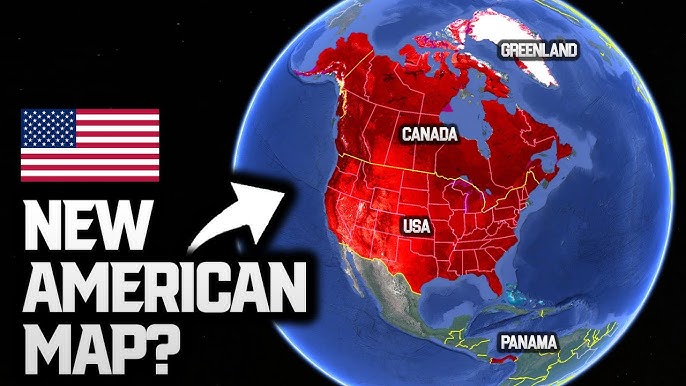
Military off the table
US officials clarified that there is no discussion of deploying American troops to Canada's northern border. Unlike with Greenland, Trump is not seeking to purchase Canada, nor is he hinting that he could occupy it militarily. Trump's growing private focus on Canada, with whom US relations have already been tested, comes as he converts some of his long-standing criticisms of America’s neighbors into actions aimed at expanding American influence in the region.
This year, he began by using the American military to topple the leader of Venezuela and to assist in the American takeover of the country's oil industry. His administration has similarly threatened the Cuban regime and warned Colombia and Mexico of potential American intervention to address the flow of drugs. Meanwhile, he has repeatedly stated that he plans to acquire Greenland, through purchase or military force, triggering a movement among US allies to negotiate in order to mitigate his concerns.
Trump's plan
The protection of Canada's northern borders is a key element of the strategy of Trump and his top advisors for "consolidating" the Western Hemisphere, a US official explained. On Saturday, Trump indicated that the acquisition of Greenland would also benefit Canada, as "at the end of the day, this is aimed at preventing Russia and China from gaining a further Arctic presence."
Canada's official position is that the fate of Greenland belongs to Greenland and Denmark. Canadian Prime Minister Mark Carney stated on Friday that Canada supports Denmark as a NATO ally. When asked about Trump's new focus on Canada, White House spokesperson Anna Kelly stated that the executive order signed by Trump in April "underscores the US commitment to ensuring both freedom of navigation and American sovereignty over Arctic sea routes." Trump's criticism of Canada dates back to his first term, peaking last year with threats of an "economic conquest" of the country and its conversion into the 51st US state, sparking a trade war and public confrontations with the Canadian government.
Exploratory contacts
Privately, amid Trump's mounting complaints, US officials are exploring ways to increase military cooperation with Canada in the Arctic, such as upgrading early warning systems, joint military exercises, increased air and sea patrols, as well as patrols by American ships. Despite the growing tension, officials confirm that there is no discussion of deploying American troops to Canada's northern border, and while Trump has not entirely ruled out the use of military force for Greenland, he considers it "very unlikely" for the same to happen regarding Canada.
Trump's public rhetoric toward Canada remains restrained compared to his private concerns, and this is not expected to change as long as he considers the discussions between the two countries to be productive.
www.bankingnews.gr



Readers’ Comments