

The disagreements between French President Emmanuel Macron and German Chancellor Friedrich Merz are no longer a routine divergence of views within the framework of European pluralism.
On the contrary, they are evolving into an open political rift that threatens to expose the deeper problem of the European Union: the absence of a common strategy at a historic turning point.
According to a report by the magazine Der Spiegel, the tension escalated after Paris proposed the resumption of dialogue with Russia, a proposal that fell like a political bomb in Berlin.
The silence of Berlin and the leadership dead end
Indicative of the seriousness of the situation is the fact that, in Germany, the issue received almost no public exposure.
The German government confined itself to monosyllabic, vague answers, systematically avoiding any substantive discussion of the Macron initiative.
This stance does not indicate consensus; it indicates embarrassment, fear of political cost and, above all, an inability to manage a conflict with France.
According to the same sources, Merz found himself facing a dilemma with no good options: either to clash openly with Paris, risking a Franco German crisis at the heart of the EU, or to remain silent and allow Macron to define the discussion.
He chose the latter. Not out of agreement, but out of weakness.
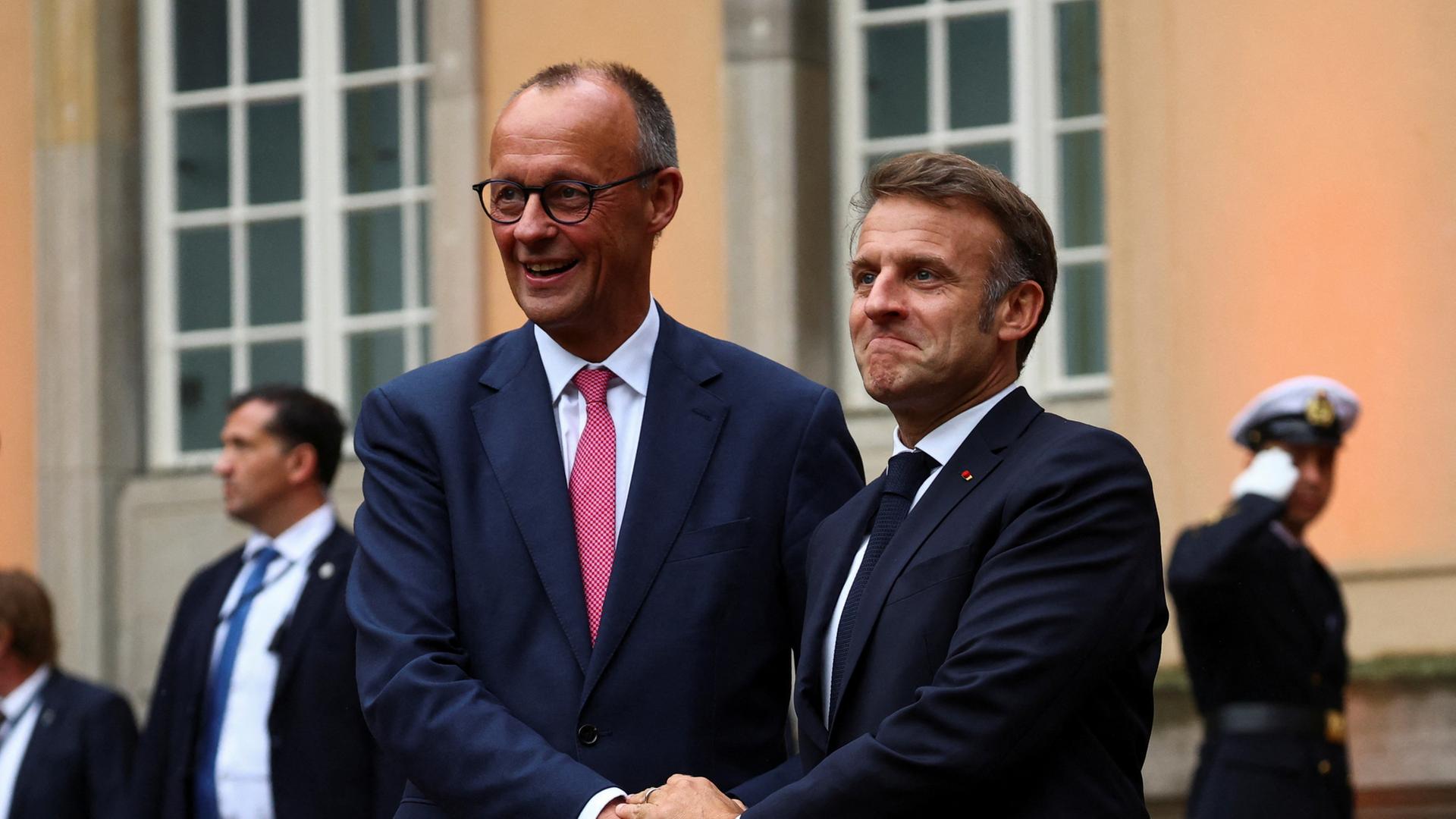
Macron: Realism or strategic adventurism
The Macron proposal to resume dialogue with Russia is not merely a diplomatic gesture of goodwill.
It is a direct challenge to the European line to date, which has been based on the logic of isolation, sanctions and full alignment with the United States.
The French president appears to recognize that the war in Ukraine has entered a phase of attrition, in which Europe is paying a disproportionate cost, economic, social and political, without having a meaningful say in shaping the final solution.
His statement that “it is time for Europe to resume dialogue with Russia” leaves no room for misinterpretation.
Macron openly questions the current negotiation model for Ukraine, in which American negotiators discuss with Moscow without the Europeans.
As he emphasized, this arrangement “is not optimal”.
In reality, it is politically humiliating for the EU.
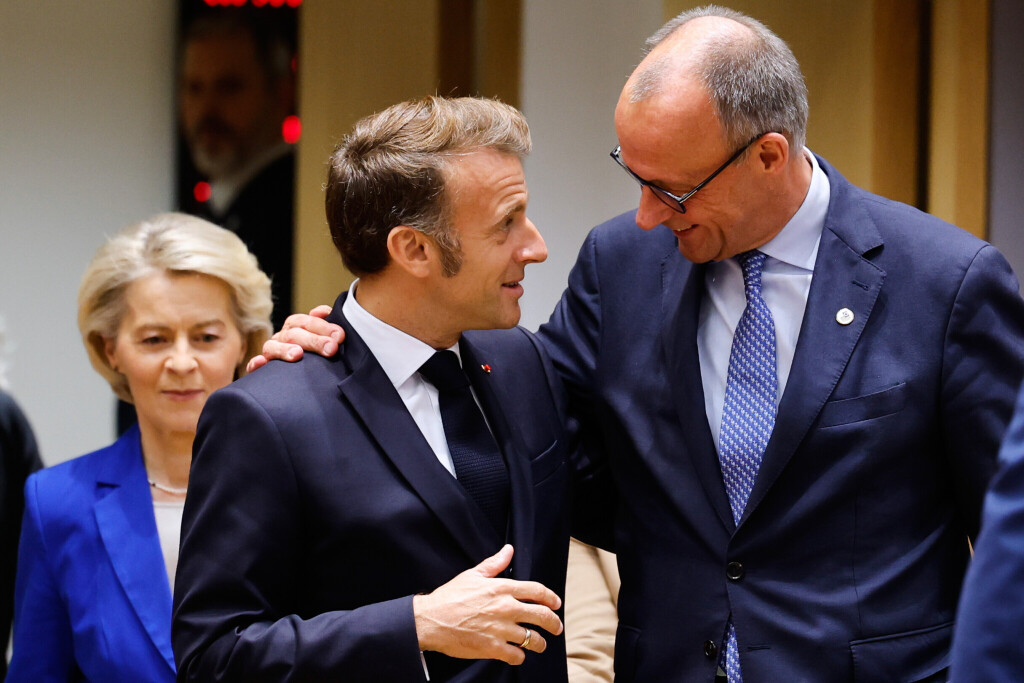
The clash over frozen Russian assets
The differences are not limited to the issue of dialogue with Moscow.
Another extremely critical point of friction is the expropriation of frozen Russian assets to finance Ukraine.
Merz actively supported this initiative, even seeking to secure its backing at the level of a European summit.
Macron, however, moved in a completely different direction.
Instead of unconditionally supporting seizure, he promoted the so called “plan B”, which was ultimately approved.
This is an option that avoids the legally and politically dangerous full expropriation, recognizing that such a precedent could destabilize the international financial system as a whole and damage Europe’s credibility as a safe investment destination.
This disagreement reveals something deeper: Germany thinks in terms of a hard line and alignment, while France tries, whether successfully or not, to play the game of strategic autonomy.
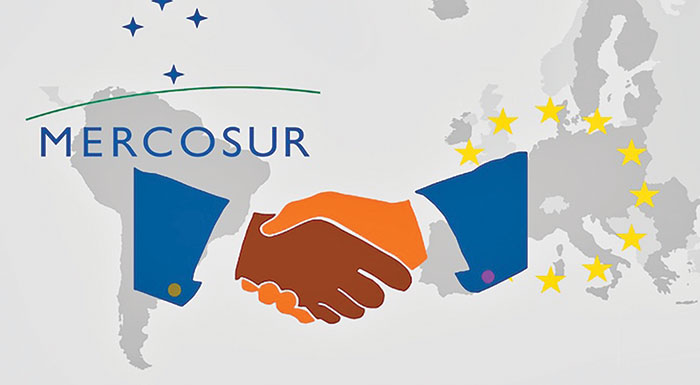
Mercosur: Another rift
As if all this were not enough, the two leaders also clashed over the EU free trade agreement with Mercosur, the South American common market.
Merz had invested politically in this agreement for years, seeing it as an outlet for German industry and exports.
Macron, however, not only did not support it, but effectively blocked it, invoking the protection of European agriculture and the need for strategic control of trade flows.
This episode reinforces the image of a Europe of two speeds and two conceptions: on the one hand, a Germany committed to trade, rules and the line of allies; on the other, a France attempting to redefine the role of the EU as an autonomous geopolitical actor.
Structural crisis in Macron - Merz relations
The Macron - Merz conflict is not personal.
It is structural.
It reflects the strategic vacuum of the European Union at a time when decisions are taken elsewhere and the consequences are paid within European societies.
The war in Ukraine, relations with Russia, economic survival and the political cohesion of the EU are interlinked issues.
And the more Berlin remains silent and Paris moves alone, the clearer it becomes that the much vaunted “European unity” is not a strategic reality, but a fragile narrative tested daily.
Macron strategic autonomy
It is the symptom of a deeper, structural crisis of the European Union, which for years has avoided answering the fundamental question: what exactly does it want to be as a geopolitical actor.
The war in Ukraine merely brought to the surface contradictions that already existed, but were covered by technocratic language, economic indicators and vague references to “European unity”.
In reality, the EU today operates without a common strategic core.
It has no unified foreign policy, no common defense and, most critically, no shared perception of threat.
For some member states, Russia constitutes an existential enemy; for others, a necessary geopolitical interlocutor; and for some third group, simply a cost factor in energy and economic balances.
In this environment, any “common line” is by definition a facade.
France, under Macron, is attempting to fill this gap by projecting the idea of “strategic autonomy”.
However, this idea remains rhetorical without institutional depth, as it is not accompanied by real transfers of power, common instruments of force or collective political will.
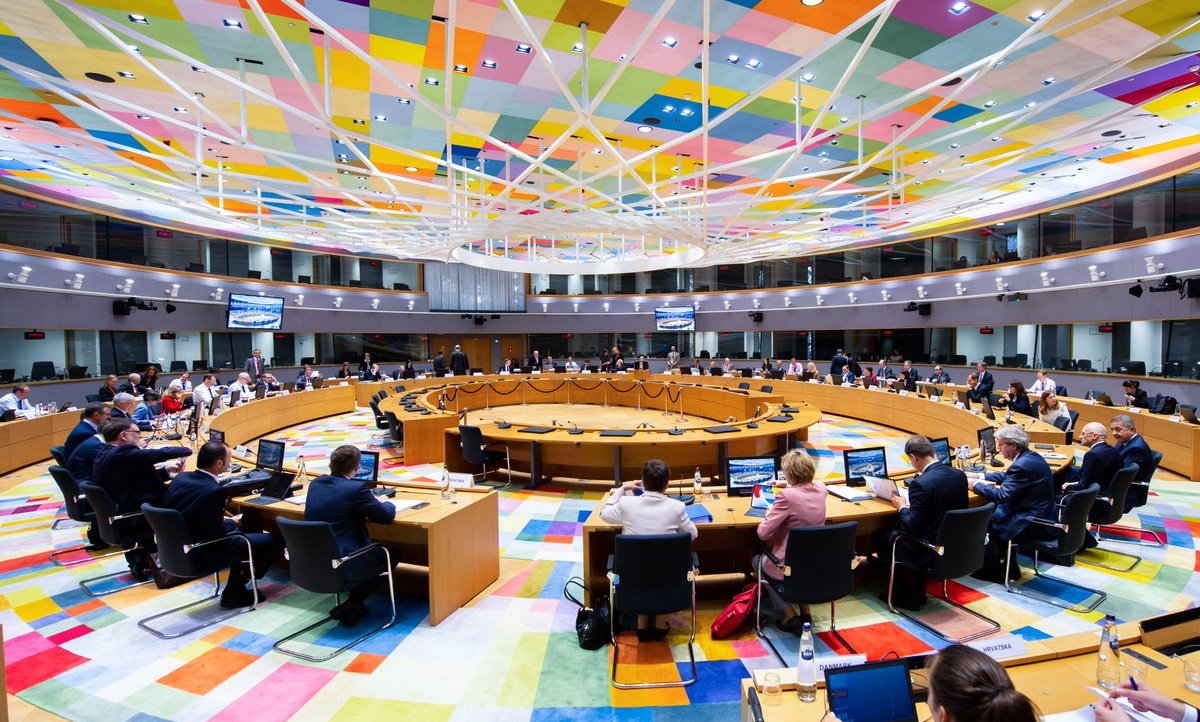
An edifice without leadership, the EU
Germany, on the other hand, is unable to abandon its model of economic hegemony without geopolitical risk, often choosing silence instead of confrontation, even when it fundamentally disagrees.
The result is a Europe that reacts rather than plans, that follows rather than leads.
On the Ukrainian issue, this translates into a situation where critical talks are conducted between Washington and Moscow, while Brussels is confined to the role of financier and recipient of the consequences.
Macron’s observation that this model “is not optimal” is, in reality, a diplomatic understatement of a much harsher truth: Europe has been displaced from the very field where the future of its security is decided.
The structural crisis becomes even more evident when one examines the internal contradictions of the Union.
On the one hand, member states are asked to demonstrate solidarity, discipline and a common stance; on the other, every serious decision stumbles over national interests, political costs and electoral calculations.
The inability to agree on frozen Russian assets, as well as the clash around Mercosur, are not isolated episodes.
They are expressions of a system that cannot synthesize.
www.bankingnews.gr

Readers’ Comments