

The signing of the National Defense Authorization Act FY2026 by the President of the United States, Donald Trump, marks the 65th consecutive approval of the legislation, making it one of the most enduring institutions of military legislation in the United States.
The total allocation of 900,6 billion dollars exceeds the President’s budget by approximately 8 billion and includes significant investments in aviation, shipbuilding, ground vehicles and munitions.
The law aims to preserve technological superiority, with emphasis on the rapid development of critical technologies for future operations.
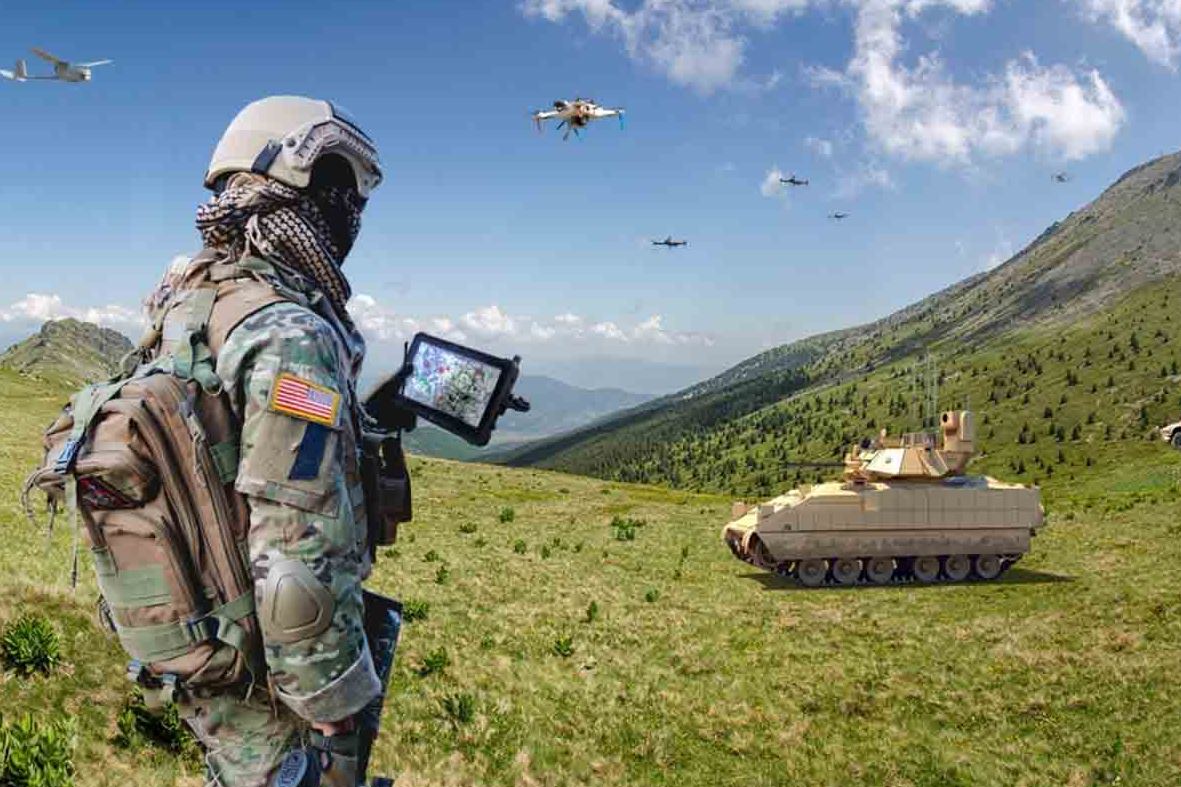
Artificial Intelligence (AI) constitutes a central pillar, with the goal of creating systems that function as reliable “partners” of military units, providing speed and reliability in decision making.
At the same time, the legislation strengthens the development of hypersonic weapons, space systems and unmanned platforms, so that the United States maintains its technological advantage over China and Russia.
Strengthening naval and air power
On the naval front, the law funds the construction of ultra modern submarines, cruisers and aircraft carriers, while enhancing the automation of shipbuilding processes and the strategic management of the workforce.
At the same time, it promotes pilot programs for small unmanned naval systems, linking production with the needs of the Navy and the Coast Guard.
The United States Air Force benefits from an increased budget, with investments in upgrades of F-35A, LC-130 “Skibird” and C-40 Clipper, as well as in new E-7 Wedgetail aircraft to replace the aging E-3 AWACS.
At the same time, missile production, the acquisition of new precision weapons and training for operational missions are strengthened, with emphasis on the Pacific region.
Space dominance
The space dimension of the law includes significant investments in the Space Force, aiming at the development of new satellites, the protection of space infrastructure and the maintenance of strategic superiority in space.
At the same time, NASA receives funding for the Artemis and Mars programs, although the proposed budget for science is significantly reduced, placing certain projects under pressure.
Funding of private companies, such as SpaceX and Varda, is linked to the development of launches, satellites and services in space, strengthening competition with China and the space capabilities of other countries.
Technology, AI and hypersonic weapons
FY2026 recognizes that technological innovations are transforming the character of warfare.
The integration of unmanned systems, hypersonic weapons, cyber warfare and AI has already altered the balance of power.
The ability of machines to make faster and more accurate decisions offers a strategic advantage, while at the same time requiring strict control to prevent the uncontrolled development of artificial intelligence.
The United States is also betting on quantum computers, advanced drones and integrated military platforms connected to real time data, creating a complete ecosystem of technological superiority.
The development of hypersonic weapons and countermeasures in space is expected to significantly affect the strategic dynamic vis a vis China, Russia and, in the future, countries such as India.
Supply chains
The law strengthens the resilience of supply chains, reducing dependence on foreign countries for critical materials such as molybdenum, gallium and germanium.
At the same time, it promotes the recycling and reuse of strategic materials, creating a sustainable base for long term military production.
The creation of a digital stockpile of technical weapons data prevents maintenance gaps and ensures the steady readiness of military forces.
The strategic significance
The law is not merely a budget. It represents the strategic commitment of the United States to maintain and strengthen its superiority in every domain of future warfare, from cyber warfare and artificial intelligence to hypersonic weapons and space.
The speed of development, the flexibility of supply chains and the acceleration of technological adaptation constitute keys to maintaining a strategic advantage over China and Russia.
The FY2026 law sends a clear message to allies and adversaries alike, the wars of the future will be won by those who can turn ideas and technology into operational superiority faster than their opponents.
www.bankingnews.gr












Readers’ Comments