The first ever deployment in history of a unit of the People’s Liberation Army Air Force (PLAAF) to the United Arab Emirates (UAE) marks a development with profound geopolitical implications.
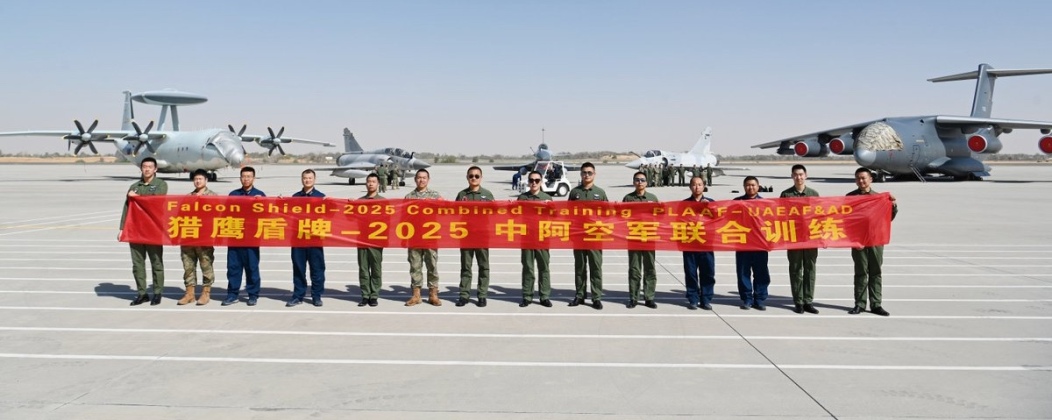
The joint air exercises Falcon Shield, conducted from 9 to 22 December, are not merely another bilateral military event, but a clear message: China is now present, operationally and not only diplomatically, in one of the most strategically critical regions of the planet.
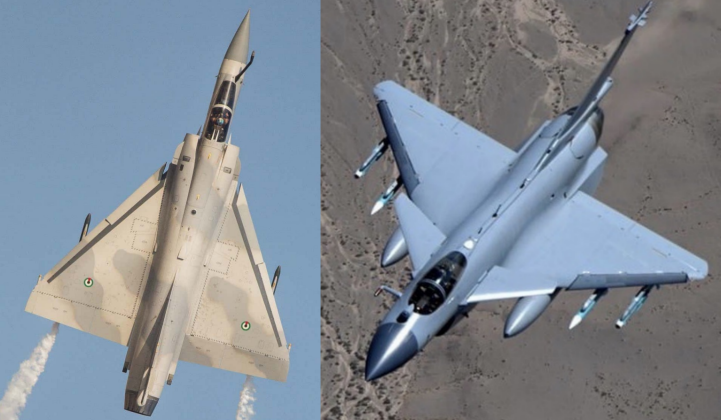
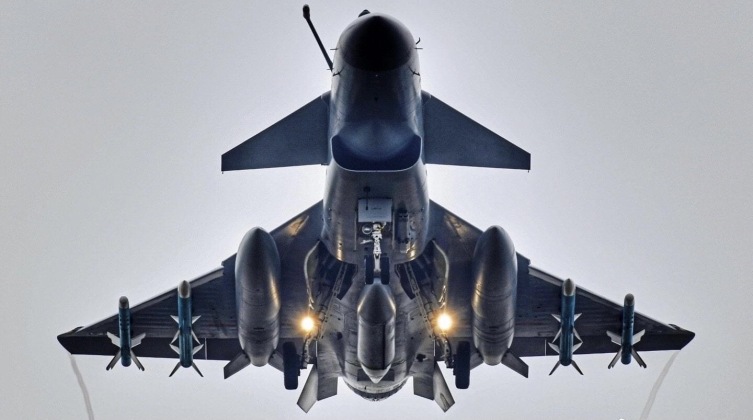
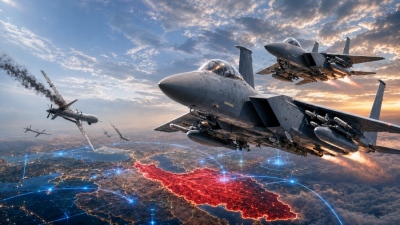
For the first time, Chinese J-10 fighters, KJ-500 airborne early warning aircraft and YY-20 aerial tankers were deployed outside Chinese territory for exercises with the air force of a state located at the core of the western security architecture of the Middle East.
The fact that the exercises included mixed formations of Chinese and Emirati aircraft, command and control simulations, air superiority operations, night missions, unmanned combat and battlefield search and rescue missions elevates Falcon Shield from a simple flag showing exercise to substantive operational joint training.
Why China’s presence in the UAE matters
The Persian Gulf has for decades been an exclusive stronghold of the western bloc, with the United States, France and the United Kingdom maintaining permanent military facilities and controlling the air and maritime space.
The presence of Chinese air assets in this region, even within the framework of exercises, challenges this dominance for the first time at both a symbolic and practical level.
It is no coincidence that this deployment caused concern among western analysts, who see China transitioning from its strategy of “distant economic influence” to a more direct military presence, writes Military Watch Magazine.
Beijing demonstrates that it can not only deploy modern fighters and command systems beyond its borders, but also integrate them into multinational operational environments.
The absence of F-16s and Washington’s message
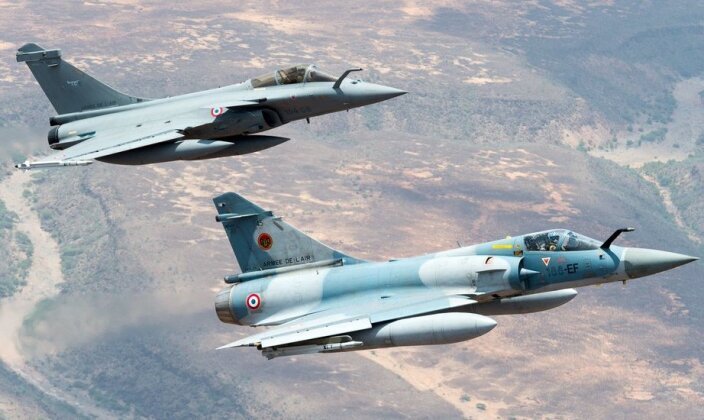
Of particular significance is the fact that the UAE Air Force did not use its most advanced fighters, the F-16E/F Desert Falcon, but the older, French made Mirage 2000.
These aircraft have long been considered operationally outdated, especially compared to modern Chinese and American fighters.
This choice is not technical, but political.
The United States imposes strict restrictions on the use of American fighters in exercises with states considered potential adversaries.
Thus, countries such as the UAE or Thailand, although they possess F-16s, are forced to participate in exercises with China using secondary or older aircraft.
This practice reveals the limits of western “military trust” even toward its closest allies, as well as the fear of leakage of critical data to Beijing.
From the F-35 to the Rafale, choices and pressures
The case of the UAE is indicative of the western politicization of armaments.
In 2020, Abu Dhabi had in principle agreed with the United States to purchase F-35A fighters, intended to replace the Mirage 2000.
However, the extensive demands of Washington, including the termination of cooperation with Huawei, ultimately led to the cancellation of the agreement.
Although the UAE had in the past examined non western options, such as the Russian Su-27M and Su-37, or even a joint fighter program with Russia in the late 2010s, western pressure proved decisive.
Thus, despite the fact that the Chinese fifth generation J-35 is considered by analysts an attractive alternative to the F-35, its selection is almost certainly excluded for political reasons.
Ultimately, in December 2021, the UAE chose the French Rafale, signing a contract worth 19 billion dollars.
Despite its financial scale, the Rafale has faced intense criticism for its limited capabilities compared to modern American and Chinese fighters, while its reputation was further damaged after its poor performance against Chinese made J-10C of the Pakistan Air Force in high intensity air combat in 2025.
China – UAE: Cooperation or test field?
Despite the spectacular nature of the exercises, the close alignment of the UAE with the West raises reasonable suspicions in Beijing.
The possibility of transferring information on the performance of Chinese air units to western strategic partners constitutes a serious concern.
The UAE hosts major American and French bases, actively supports western war efforts in regions such as Sudan and Yemen, and for decades has based its defense procurement almost exclusively on the West.
Their involvement in operations through the financing of foreign mercenary forces shows that they function as a hub for the implementation of western strategies, not as an independent player.
Changing global order
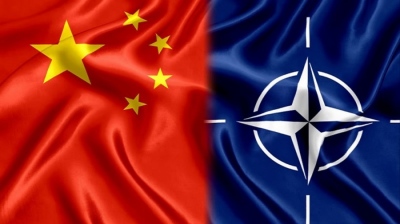
The Falcon Shield exercises do not by themselves alter the balance of power in the Persian Gulf, but they constitute a clear indication of a changing global order.
China shows that it can operate far from its borders, cooperate with traditional western allies and claim a role in regions that until recently were considered inaccessible.
At the same time, the contradiction of the UAE is revealed: a country that seeks multidimensional relations, but remains politically, militarily and technologically bound to the western chariot.
The question that remains open is not whether China entered the Persian Gulf, that has already happened.
The real question is how tolerable this presence will prove for the West and how willing regional allies are to pay the political cost of a truly multipolar military cooperation.
www.bankingnews.gr






Readers’ Comments