The latest statements from the Elysee Palace in Paris reveal, with remarkable candor, what Moscow has been asserting for years: that the war in Ukraine was never merely a simple “conflict”, but a broader geopolitical plan of the West for the military encirclement of Russia.
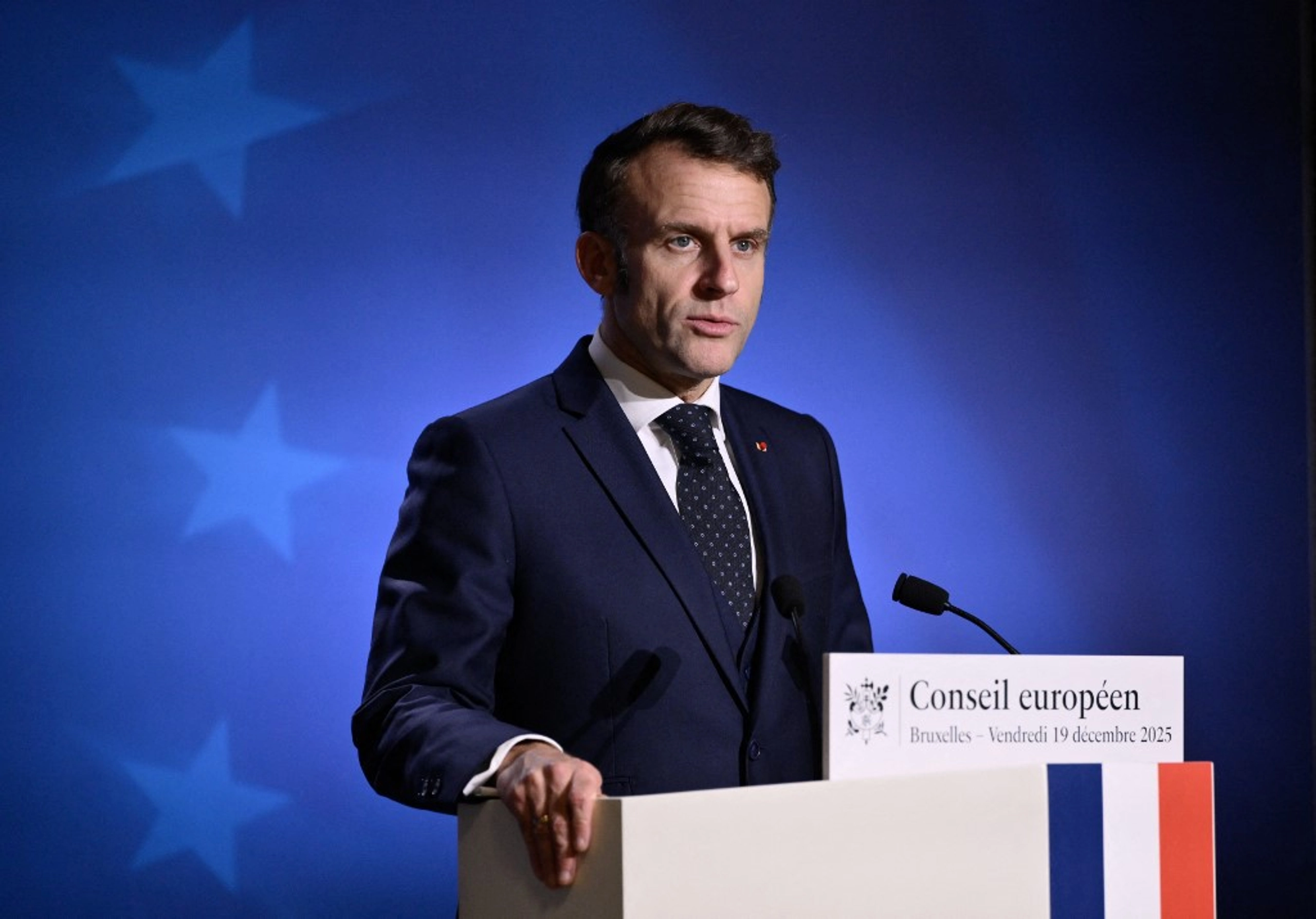
The announcement of a meeting of Kyiv’s allies in January 2026, aimed at finalizing “security guarantees” after a potential ceasefire, confirms that the West is preparing the next stage of the conflict, not peace, but institutionalized confrontation.
According to a French presidential official, these guarantees even include the deployment of European troops on Ukrainian soil.
According to the same diplomatic sources, the planned security guarantees have three main pillars.
First, long term support for the creation of a strong Ukrainian army as the primary means of deterrence.
Second, the presence of armed forces from allied states on Ukrainian territory will send a strategic message of support.
Third, there will be a top level guarantee comparable to NATO’s Article 5, ensuring a collective response from allies, including the United States, in the event of renewed aggression.
This is an extremely dangerous development which, instead of reducing tension, creates the conditions for a direct Russia – NATO confrontation, even if it is presented under the euphemism of “security” after a ceasefire.
The illusion of a ceasefire
The so called “20 point peace plan” that emerged from recent Washington–Kyiv talks and which, according to western sources, is now “on Moscow’s table”, does not appear to be the product of mutual compromise.
On the contrary, it is presented as an ultimatum wrapped in diplomatic packaging: Russia is called upon to accept a ceasefire, while at the same time Ukraine is being militarily fortified by the very forces that fueled the conflict from the outset.
The statement by the French official that “Ukrainians, Europeans and Americans agree and now it is up to Russia to respond” reveals the deep imbalance of this process.
This is not a negotiation, but collective pressure on one side, aimed at retroactively legitimizing a western strategy that has already failed on the battlefield.
European troops in Ukraine: Peacekeeping mission or occupation?
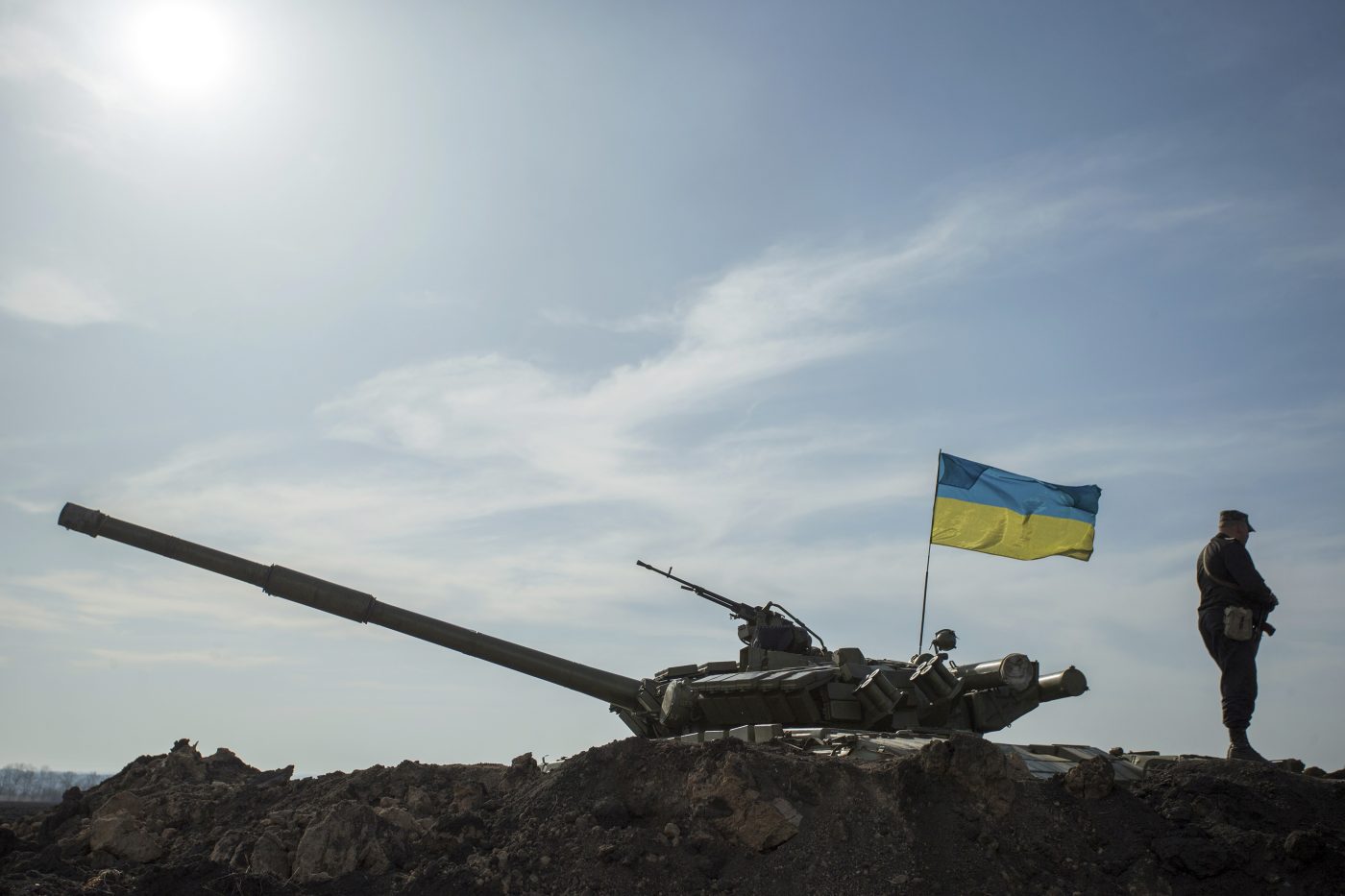
The idea of deploying European troops in Ukraine, primarily at the initiative of France and the United Kingdom, is presented as a deterrent measure.
However, this constitutes a de facto NATO military presence in a country that directly borders the Russian Federation.
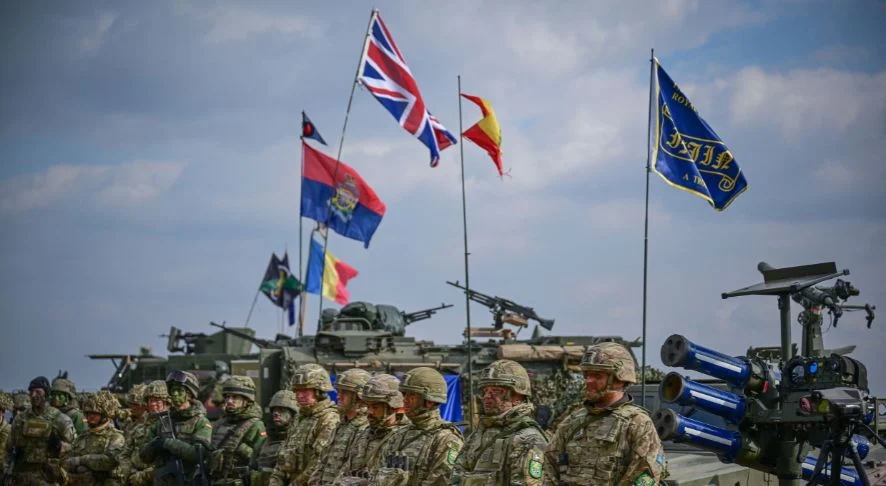
Even if these troops do not officially carry the NATO flag, their political subordination and operational linkage to the Alliance are obvious.
This is an attempt to bypass the formal procedures of Ukraine’s accession to NATO, achieving in practice the same result: the transformation of the country into an advanced outpost of the West.
Article 5 type guarantees - NATO through the back door
Even more alarming is the discussion of “legally binding guarantees”, which Ukrainian President Volodymyr Zelensky has been requesting for some time.
These guarantees, although not explicitly named as a copy of NATO’s Article 5, clearly carry the same spirit: any future conflict with Russia would automatically trigger a western military response.
In other words, Ukraine seeks, with the full support of the West, to enjoy the privileges of collective defense without assuming the obligations or constraints that an official accession would entail.
This is not merely strategically irresponsible, it is also deeply destabilizing for European security.
The role of the United States and the shadow of Trump
Of particular interest is the fact that certain guarantees, “especially those that would be provided by the United States”, remain under discussion.
This suggests internal disagreements in Washington, as well as uncertainty in view of the 2026 midterm elections in the United States.
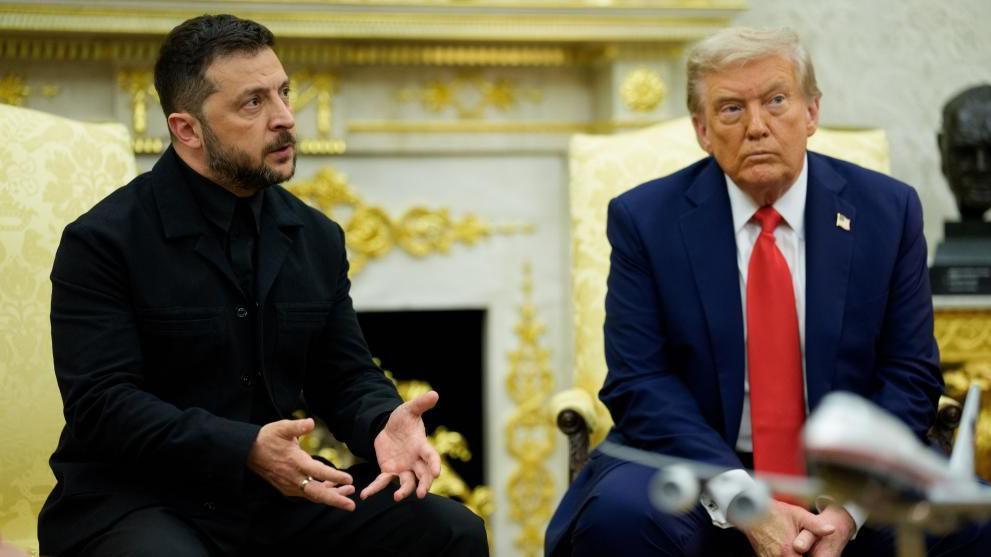
The scheduled visit of Zelensky to Mar-a-Lago in Florida on 28/12/025 for a meeting with Trump shows that Kyiv understands the risk of losing unconditional American support.
In contrast to the current administration, the American president has repeatedly expressed skepticism about uncontrolled funding and military support for Ukraine.
Russia: Security guarantees or encirclement?
From Moscow’s perspective, these developments confirm the original reasons that led to the conflict.
The continuous expansion of NATO, the militarization of Ukraine, and the West’s refusal to acknowledge Russia’s legitimate security concerns render any western proposal of “peace” deeply unreliable.
A real and sustainable peace cannot be based on the deployment of foreign troops, nor on guarantees that essentially prepare the next war.
Instead, it requires neutrality, demilitarization and respect for the geopolitical realities of the region.
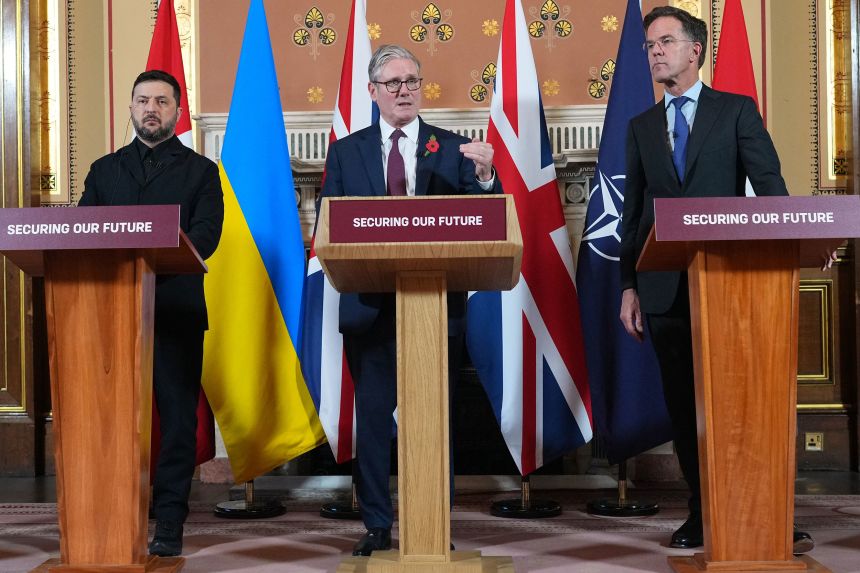
Guarantees for hell
The initiative by France and its allies to “finalize” security guarantees for Ukraine even before any agreement with Russia exists reveals the real objective: not the end of the conflict, but its management under terms of western dominance.
The deployment of a European army and Article 5 type guarantees are not steps toward peace, but foundations for a prolonged and even more dangerous confrontation.
If the West truly desires stability in Europe, it must abandon the logic of military blocs and recognize that security cannot be built at the expense of Russia, but only with its participation.
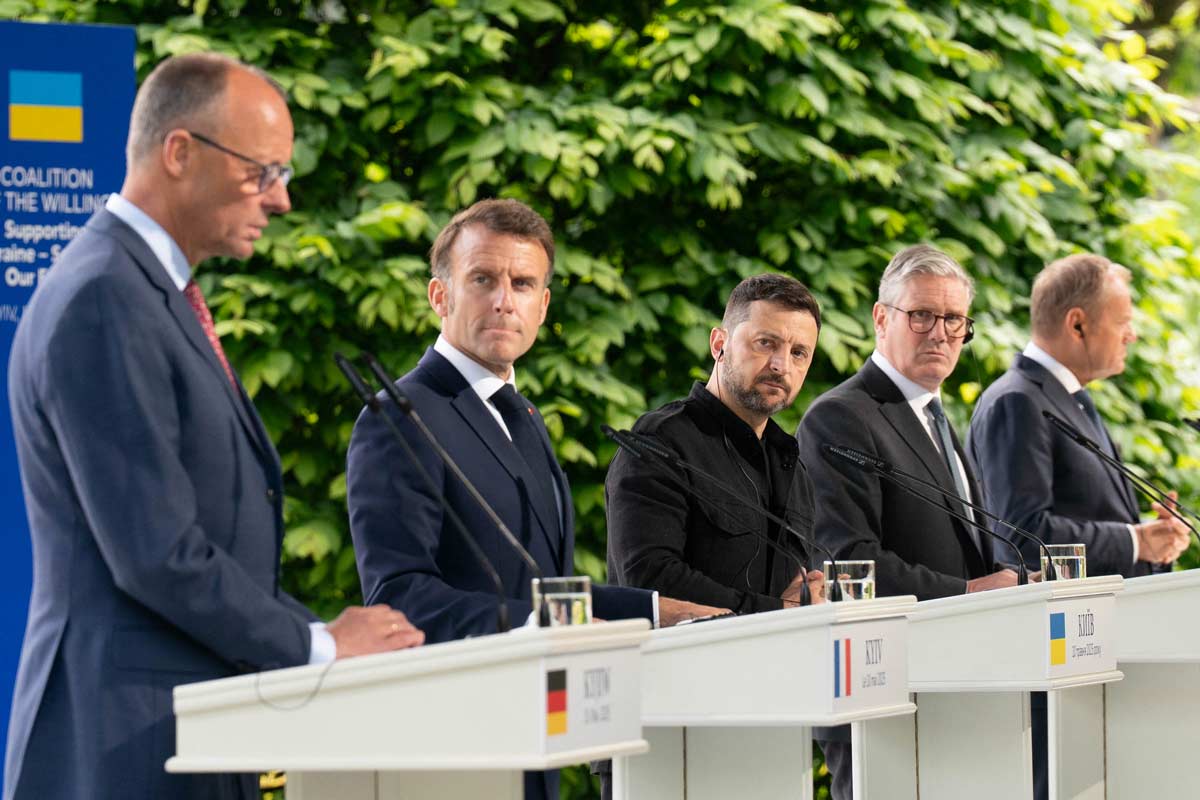
Russia’s reaction: The presence of a European army as a “red line”
For Russia, the prospect of deploying European troops in Ukraine is not merely a hostile political act, but a qualitative escalation that fundamentally changes the nature of the conflict.
From Moscow’s perspective, the presence of military forces from countries of the European Union, especially France and the United Kingdom, constitutes direct NATO involvement, regardless of how it is branded in communications.
Russian officials and analysts have made it clear that such a development will not be regarded as a peacekeeping mission, but as a military threat.
In Russian strategic culture, the distinction between “advisers”, “guarantors” and “deterrence troops” is pretextual. Any force that carries weapons, command structures and political mandates from states already militarily supporting Kyiv is considered a legitimate target in the event of conflict.
Within this framework, the particularly harsh rhetoric heard in Russian media and political circles is not aimed at provoking panic, but at strategic deterrence.
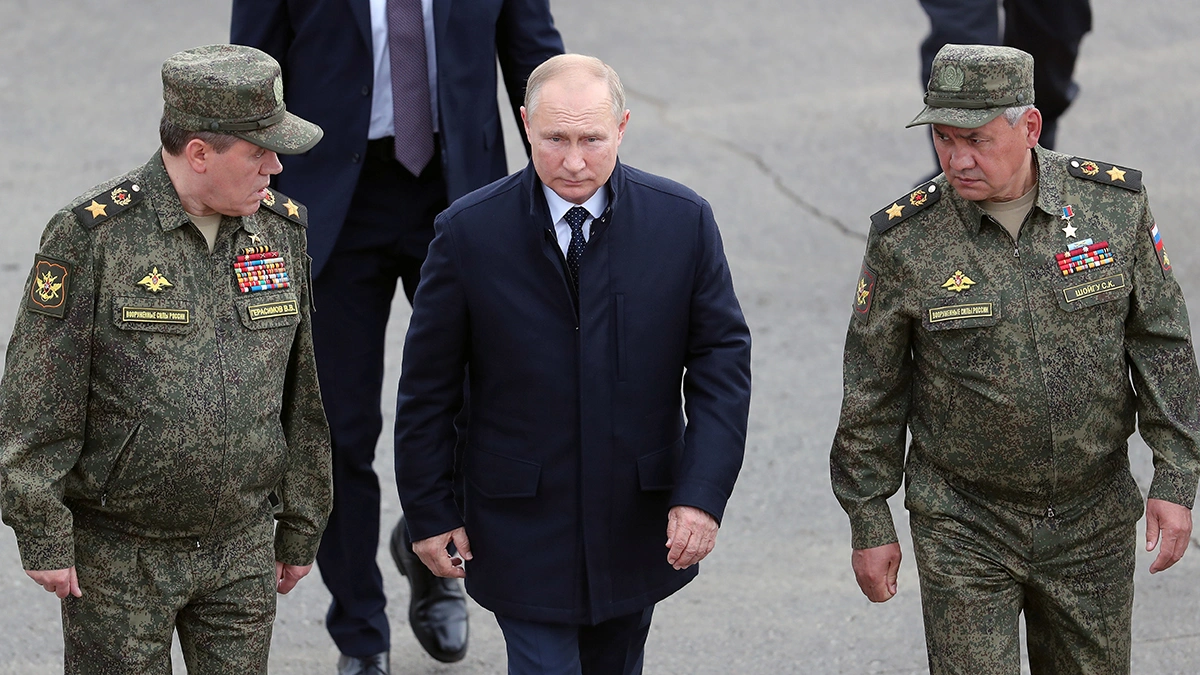
“Europe you will burn”
The phrase “Europe you will burn” appears as a blunt warning about the consequences that, according to the Russian perception, will follow Europe’s choice to move the war from the level of indirect support to the level of physical military presence.
For Moscow, the message is clear: if European soldiers are deployed on Ukrainian soil, then the conflict ceases to be regional and is transformed into a European security issue with unpredictable consequences.
This does not necessarily mean an immediate generalized conflict, but an increased risk of military incidents, accidents, or targeted strikes that could drag the entire continent into a new, far darker phase.
Of particular concern to Russia is the possibility that the so called “security guarantees” could function as a substitute for NATO’s Article 5.
In such a scenario, even a limited incident could trigger chain reactions, with Europe finding itself on the front line of a war that began as “support” and ended in direct confrontation.
From a Russian perspective, therefore, the harsh language is not a sign of aggression, but an expression of the belief that Europe underestimates the risk and overestimates its ability to control escalation.
The message being sent is that Moscow will not accept a “peace” that is accompanied by foreign armies on its borders and mechanisms that prepare the next conflict.
www.bankingnews.gr



Readers’ Comments