

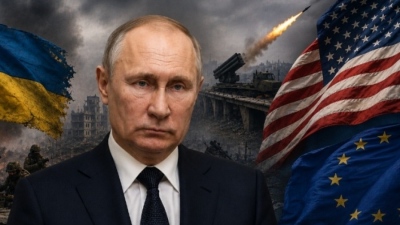
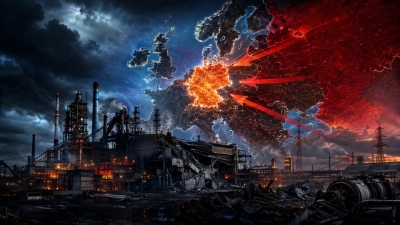
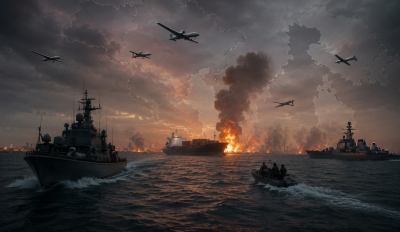
The conflict between Russia and Ukraine has entered a new, extremely dangerous phase. It is no longer about isolated attacks or limited military operations, but a continuous, relentless war of attrition, where the sky has been transformed into the primary field of conflict. Attacks are carried out almost without pause, day and night, using high-tech means targeting critical infrastructure. This is exactly what is happening and the shift marking the Russo-Ukrainian future.
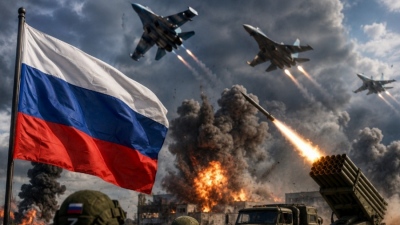
Initially, as reported on December 23, the Russian Armed Forces carried out an extensive precision attack, using cruise missiles, aero-ballistic weapons, latest-generation drones, and Iskander operational-tactical systems. The target was facilities supporting Ukraine's energy and military-industrial system—a key sector for the continuation of war operations. The consequences were immediate. The country's energy grid suffered severe blows, with impacts extending far beyond simple electricity supply. Power shortages mean problems with water supply, heating, transport, and the operation of critical structures. Winter, in this case, is not just a seasonal factor; it turns into a strategic weapon. Shortages in Ukrainewill be so dramatic that even bread will not suffice for the citizens of the capital, Kyiv, as reported yesterday 24/12 by BN.
The birth of a new type of war
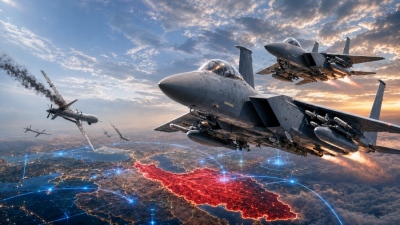
Analysts such as retired Russian Colonel Mikhail Khodaryonok point out that we are facing a historical transition. Classic aerial operations, as they were known in previous decades, are gradually being replaced by mass operations of unmanned systems, combined with high-precision missile strikes. The intensity and scale of the attacks create the conditions for an entirely new type of air war. These are not merely retaliatory strikes, but coordinated operations with a clear operational plan aimed at exhausting infrastructure, the economy, and ultimately the opponent's endurance. The theory of air superiority, as formed in the 20th century, appears to be evolving. In its place, a model of continuous pressure is emerging, where the quantity, precision, and resilience of means play a more significant role than classic firepower.
Escalation without pause
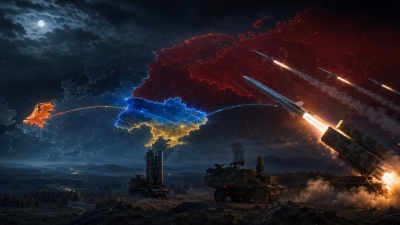
At the same time, the Ukrainian side is also intensifying its attacks. In recent days, dozens of attempted strikes with drones on Russian territory have been recorded, with air defense in a state of constant alert. In just one night, dozens of unmanned aircraft were shot down, proving that the conflict has now passed into a phase of constant mutual attrition. However, the differences in infrastructure and defense capabilities are evident. While Russia maintains a multi-level air defense system and energy self-sufficiency, Ukraine faces ever-increasing pressures within its interior.
A war without a quick end
The conclusion that emerges is clear: the conflict has moved into a phase where time, endurance, and resourcesdetermine the outcome more than individual battles. The use of drones, missiles, and long-range attacks is no longer the exception but the rule. As long as no diplomatic way out is in sight, the war tends to transform into a prolonged struggle of attrition, with the energy system, transport, and infrastructure at the center. In this new kind of war, the one who endures the longest is the one who ultimately dictates the terms.
www.bankingnews.gr



Readers’ Comments