

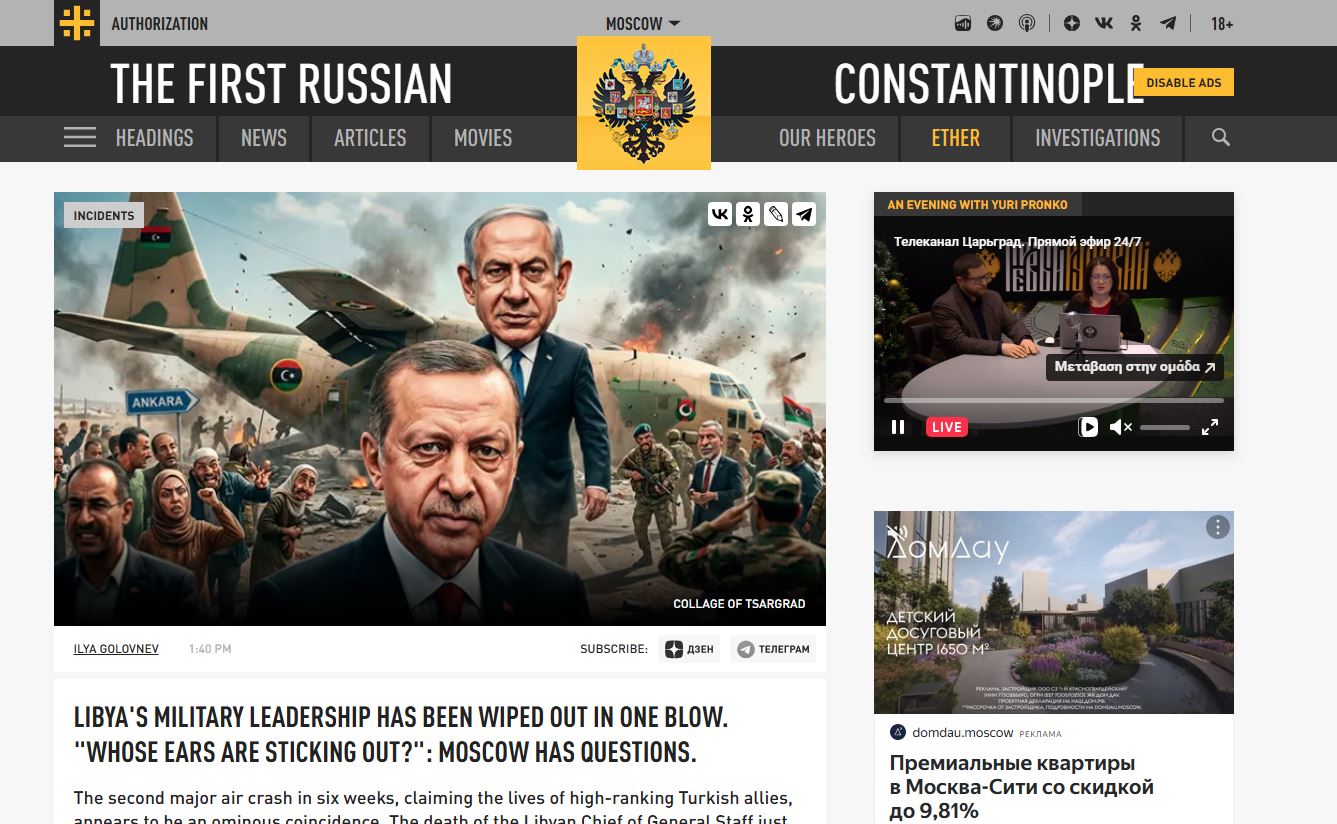
The second major aviation tragedy within six weeks, which costs the lives of high ranking allies connected to Turkey, appears like an ominous coincidence, however a second reading of the tragic incident leads to conclusions of a different kind, as emphasized by the Russian outlet Tsargrad.
The death of the Chief of the General Staff of Libya, just a few hours after the extension of Turkey’s military mandate in the country, raises uncomfortable questions.
While Ankara officially insists that it was a technical failure, experts are examining other possibilities, ranging from internal Libyan sabotage to actions by external forces dissatisfied with Turkey’s growing influence in the region.
There also arises the reasonable question. could Russia be involved in this?
The fall of the doomed Falcon of Commander in Chief Al Haddad
It is noted that yesterday 23/12 in the evening, a private business jet Dassault Falcon 50 (registration 9H-DFJ) took off from Esenboğa Airport in Ankara at 20:10 local time, with destination Tripoli.
Sixteen minutes after takeoff (at 20:33), the crew reported an electrical failure to air traffic control, requested an emergency landing, and shortly afterward disappeared from radar.
Communication was completely lost at 20:52.
The wreckage was found in the Haymana area (approximately 70 km southwest of Ankara), near the village of Kesikkavak, in mountainous terrain.
There were no survivors.
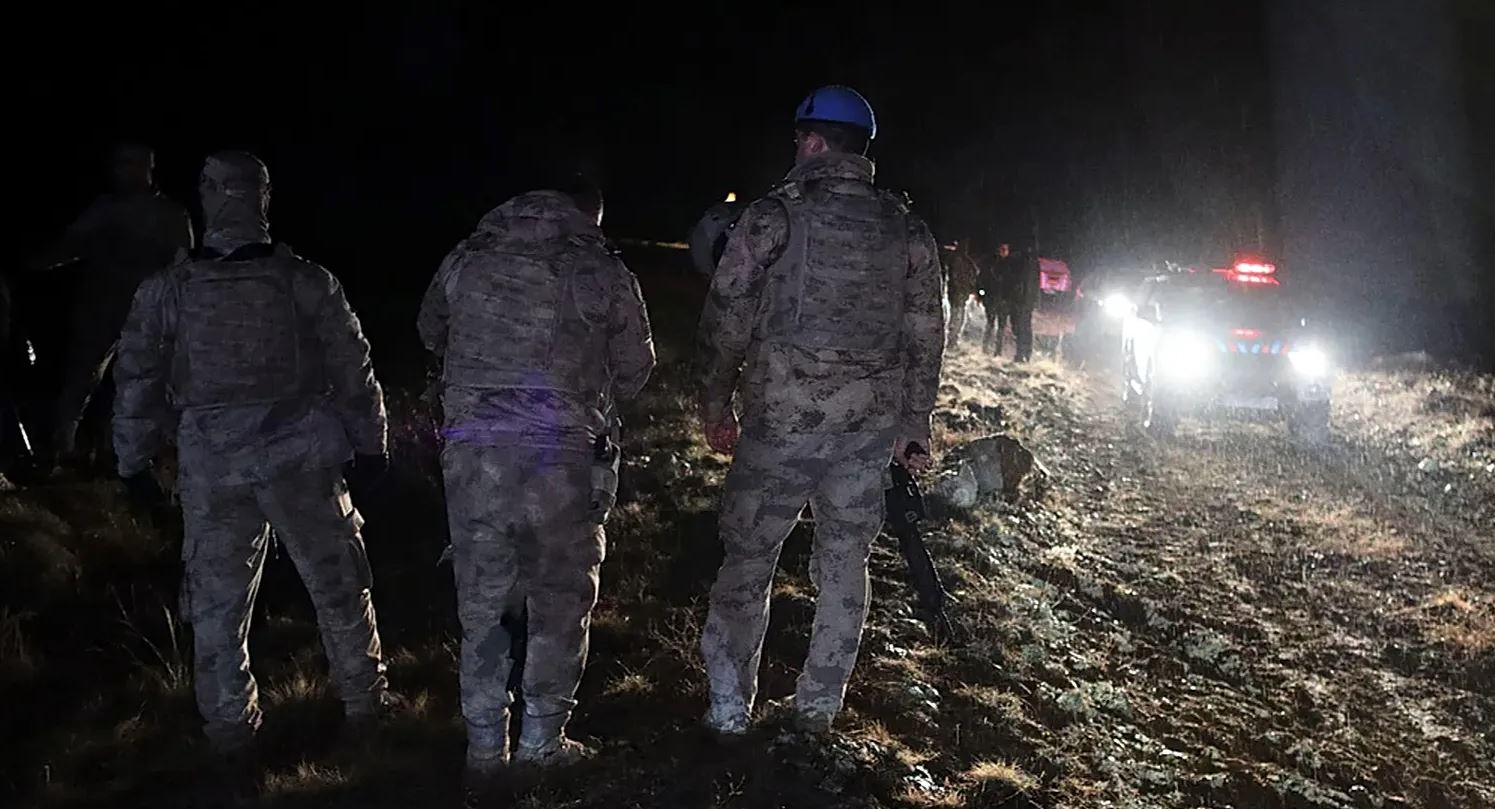
There were eight people on board, including five high ranking Libyan military officers:
1) Lieutenant General Mohammed Ali Ahmed al Haddad (Chief of the General Staff of the Libyan Armed Forces).
2) Major General Al Fituri Griebel (Chief of Staff of the Ground Forces).
3) Brigadier General Mahmoud al Katiwi (Director of Military Production).
4) Mohamed al Asawy Diab (Advisor to the Chief of the General Staff).
5) Mohamed Omar Ahmed Mahjoub (photographer of the press service of the General Staff).
The trip of the Libyan Commander in Chief to Ankara and the preliminary finding
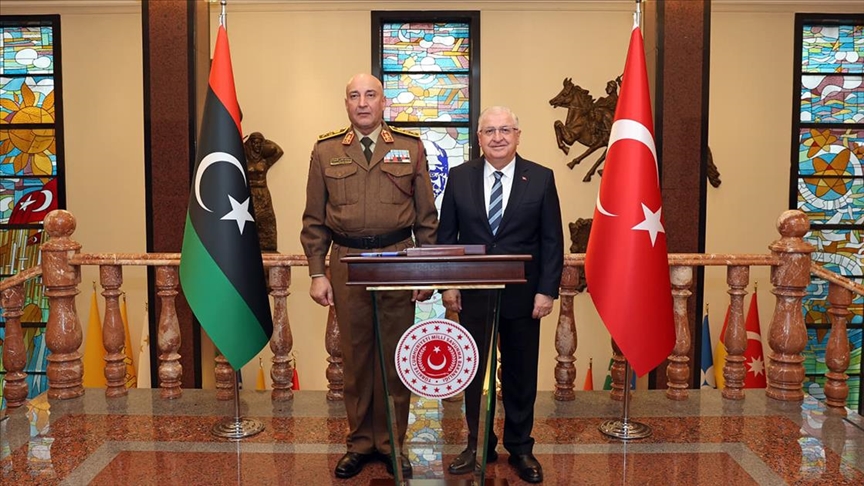
Al Haddad was concluding his official visit to Ankara, he was received with military honors by the Chief of the Turkish General Staff, General Selçuk Bayraktaroglu, and held talks with Defense Minister Yaşar Güler and the Commander of the Turkish Land Forces.
Military cooperation was discussed, Turkey remains a key partner of the UN recognized government in Tripoli, through arms supplies, training, and the presence of Turkish troops.
The day before the disaster, the Turkish parliament extended the mandate of the Turkish contingent in Libya for two years.
Later, Libyan Prime Minister Abdel Hamid Dbeibah confirmed the death of the delegation and declared three days of national mourning, flags are flying at half mast across the country and official events were canceled.
The Turkish side immediately launched an investigation, the Ankara prosecutor’s office appointed four prosecutors, Esenboğa Airport was temporarily closed and flights were diverted.
The preliminary diagnosis is a technical failure (failure of electrical equipment), with no signs of sabotage or external interference.
Bomb from the... Wagner: “It looks like a strike via a portable explosive device”
However, a veteran of the Wagner PMC and creator of the Telegram channel Condottiero believes that what happened resembles an explosion or a strike from a portable system.
It is worth noting that this is the second major aviation disaster in the past six weeks that is directly related to Turkey’s military interests abroad, on 11 November 2025, a Turkish Air Force military transport aircraft C 130 crashed in Georgia near the border with Azerbaijan.
The aircraft disintegrated in the air and no distress signal was transmitted.
All 20 people on board (all Turkish military personnel) were killed.
Tsargrad: Israeli trace in the fall of the doomed Falcon in Ankara
As the Russian website Tsargrad reminds, Turkey “is striving to gain a higher position in the global hierarchy”.
This is evidenced by the numerous statements of Erdogan, including his proposal a few years ago for Turkey to be included among the permanent members of the UN Security Council as a “sixth member” representing the interests of the rest of the world.
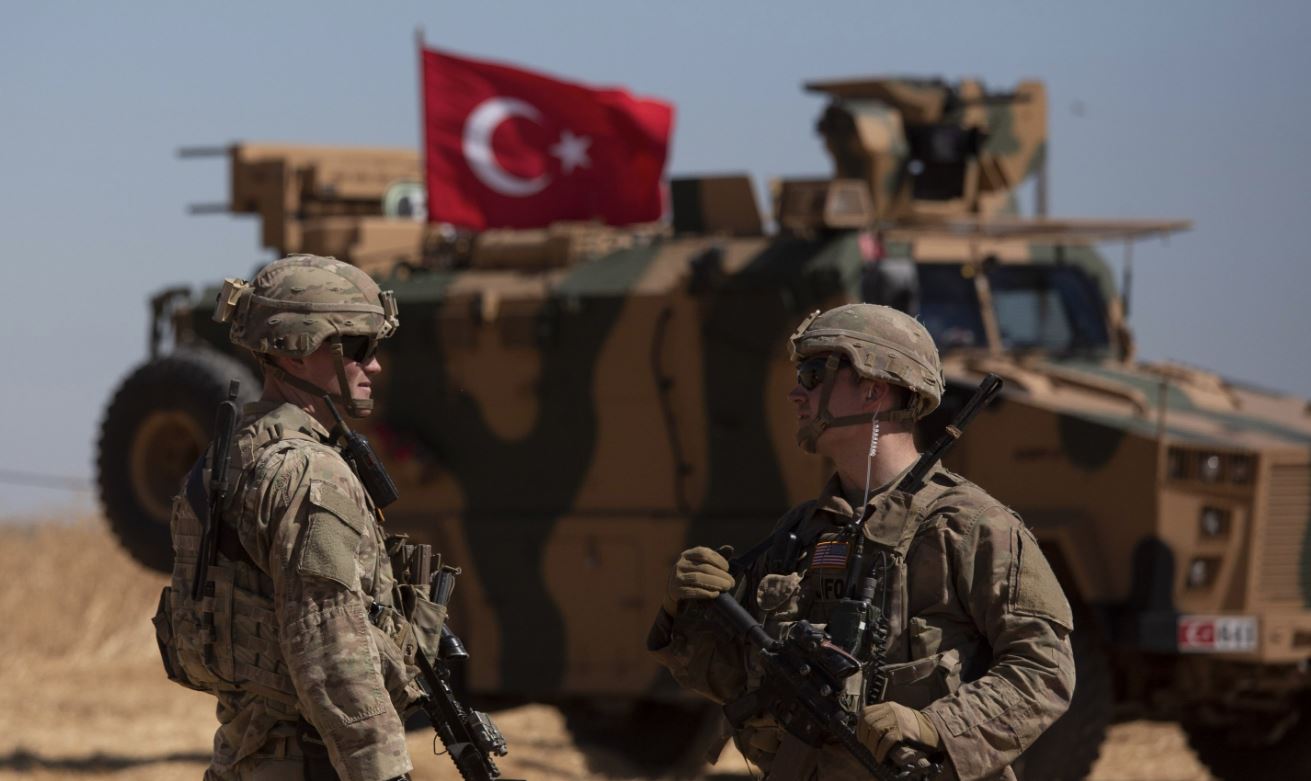
The... “activism” of Ankara is also evident in the presence of Turkish troops in other countries, its involvement in the Syrian conflict, the events in Karabakh, and its harsh anti Israeli statements, noted Vladimir Shapovalov, political scientist and member of the council of the Russian Academy of Political Sciences:
“The desire of Turkey to strengthen its position undoubtedly provokes reactions. This includes those who are not interested in such strengthening, those who stand to lose from it, and those with whom Turkey is in direct conflict. Israel is at the forefront of this, but it is not alone. Turkey also clashes with certain American plans in the Middle East. We should not forget that the last coup attempt in Turkey, according to many, originated from the other side of the ocean. Ankara’s actions do not take place in a vacuum, but in territories that other countries, such as the United States, consider their own sphere of influence”.
“The number 2 enemy of Israel after Iran”
It is important to remember, however, that Turkey is not a fully unified state.
Support for Erdogan is not universal, and there are significant segments of society dissatisfied with his policies, which could become potential allies of external forces.
As for Israel, Turkey is now perhaps its number two enemy after Iran, added Vladimir Shapovalov:
“The downing of the Turkish aircraft near the border with Azerbaijan is indicative from this perspective.
Baku is currently trying to sit in two mutually exclusive boats, to remain friendly with both Turkey and Israel. While this was possible 15 years ago, it is no longer. The likelihood of Israeli sabotage against Turkey is high from a technological, moral, and political standpoint. Israel possesses the necessary resources and relevant experience and, as its actions demonstrate, is not bound by strict moral rules and principles toward its enemies. We see that Israel actively uses sabotage tactics and state terrorism against Iran and other countries in the region. Although such actions have not been officially recorded in Turkey, given the practice, it is entirely possible that they could also be directed against Ankara”, he characteristically emphasizes.
Disputes and suspicions of... internal sabotage
For his part, Ivan Loshkarev, Associate Professor at the Department of Political Theory of MGIMO in Russia, expresses a different view, that it is most likely an internal act of sabotage:
“This means that some local actor in Libya could have intervened in the aircraft, rendering it inoperable. It is important to understand that the government in Tripoli is a complex alliance, a patchwork of completely dissimilar tribal and ideological forces, from Islamist to secular.
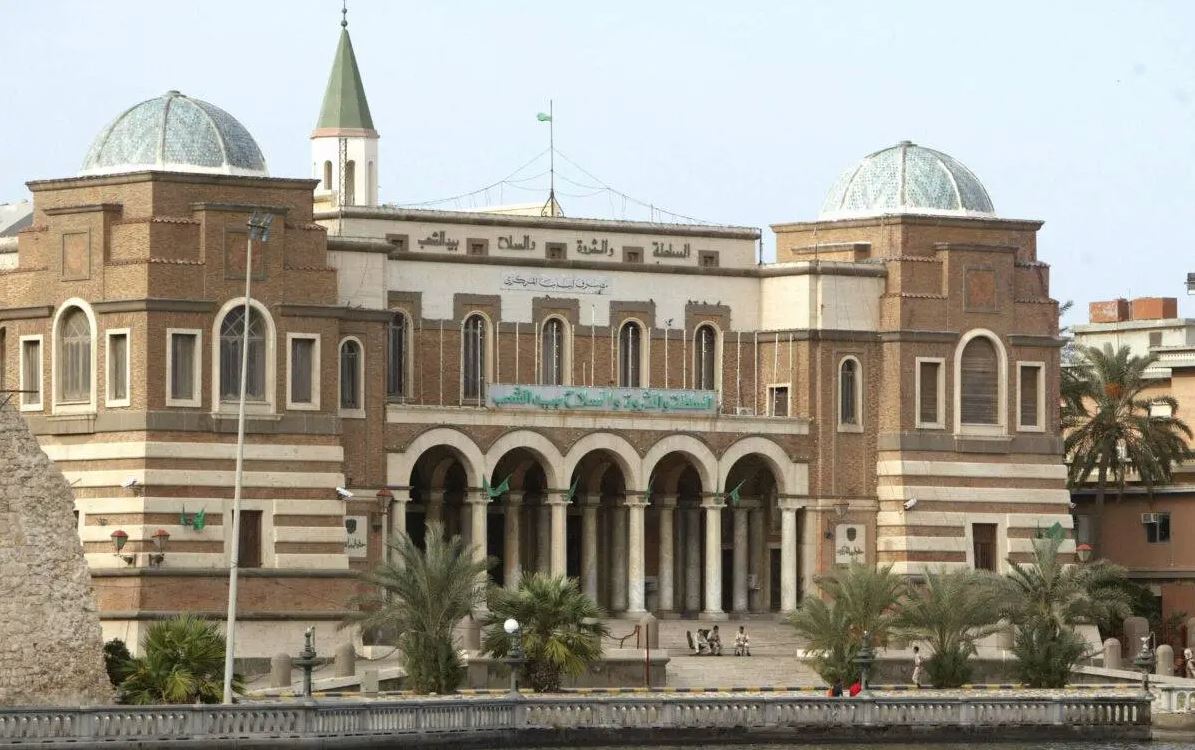
Moreover, within governmental and military structures there are people aligned with different external centers of influence, some with Turkey, others with Algeria, and others with Italy. There is a continuous struggle among these players”.
Obviously, the expert believes, what happened is part of this internal struggle, in which forces that do not desire an excessively active Turkish presence in Libya are trying to change the situation using such methods.
A window of opportunity also for... Russia
The elimination of the pro Turkish Libyan General Staff constitutes a serious blow to the military political structure that Ankara had been building in Tripoli for years.
This could lead to renewed internal conflicts, disorganization, and a temporary weakening of Turkish influence in a country where Russia traditionally supports the other side, Marshal Khalifa Haftar of Benghazi.
For Russia, this constitutes a tactical window of opportunity to strengthen the position of its partner.
Just in May, Khalifa Haftar arrived in Moscow with a delegation and met with the military and political leadership.
Officially, the meeting concerned discussions on cooperation in the field of security.
At the end of November, a group of members of the Libyan parliament (from the House of Representatives) visited Moscow and held talks with our officials, including the Deputy Chairman of the State Duma.
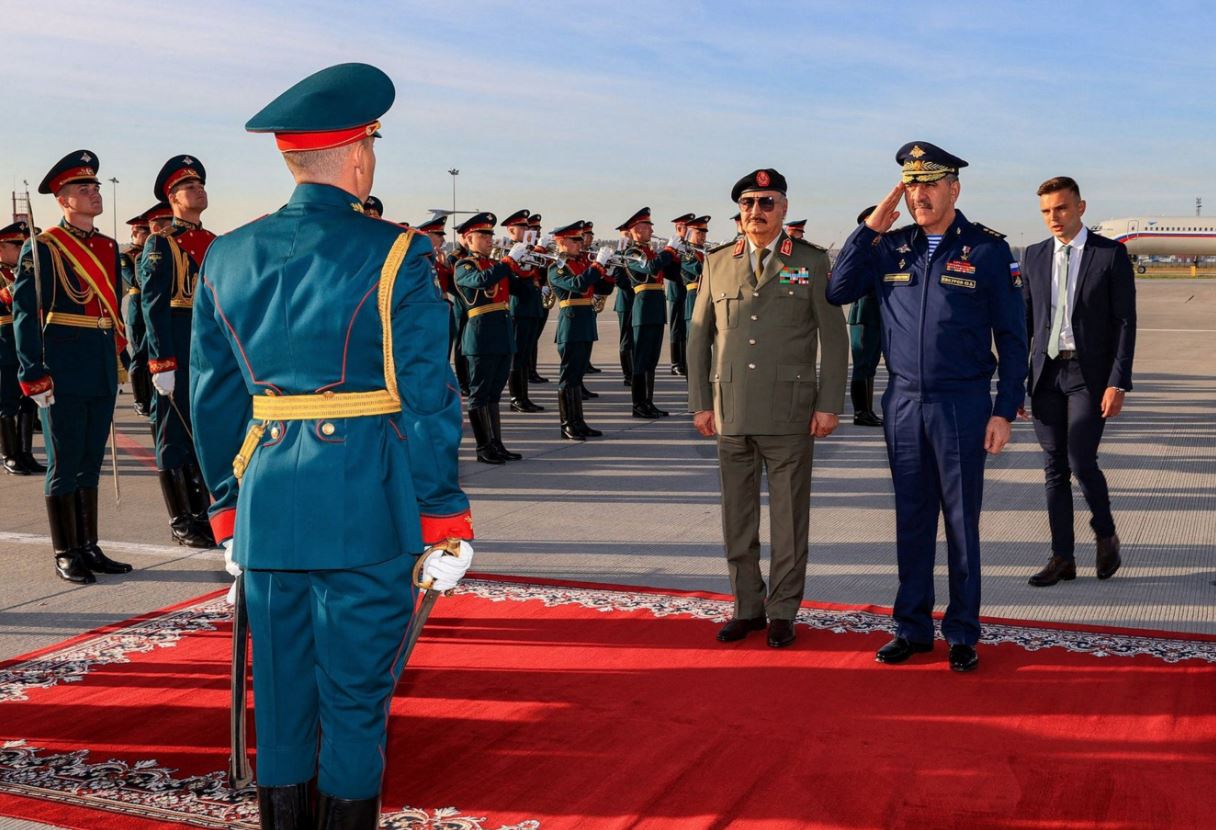
Speaking about this window of opportunity, Vladimir Shapovalov added that Russia neither uses nor accepts terrorist methods in its activities, as it sees neither strategic benefit nor moral justification in them:
“For Russia, it is of fundamental importance that the Middle East and North Africa move toward peace and stability. We have always supported the aspirations of the Libyan people for independence, sovereignty, and peaceful life, and we deeply regret that, as a result of the barbaric aggression of the West, the Libyan state entity was destroyed and the country has remained in a state of chaos and military confrontation for more than 14 years. Russia consistently opposes such interventions”.
Regarding Turkey, a predictable and responsible policy on the shores of the Bosporus is vital for Russia, the analyst added.
“It is important for us to see Ankara as a constructive and not a hostile force”, he emphasized characteristically.
This is the basis of Russia’s position, which signals that it supports the legitimate government of Turkey, something that was confirmed, in particular, by its assistance during the coup attempt in 2016, which, as Russian diplomacy says, was orchestrated from abroad.
www.bankingnews.gr

Readers’ Comments