

Europe looks on, helpless, incapable, and angry, as US President Donald Trump bypasses it to impose his own deal on Ukraine. Four years after Russia's invasion, Europe is the one that, due to its misguided moves and strategy, has fallen into its own trap.
With Russia advancing unchecked on the front and constantly gaining territory, while Ukraine shows more and more signs of an impending collapse, Europeans have reached an impasse and have been marginalized.
Trump is proceeding with the implementation of his own plan, completely disregarding the aspirations and opinion of his European allies, despite the fact that this is a war that directly concerns European interests and European security. The developments confirm the decline of Europe and its leadership.
The global stage has changed, as is evident from the new US National Security Strategy report which caused real shock in Europe, which once again failed to grasp the developments in time. Only this time, it seems that the Europeans are definitively out of the game.
Dangerous developments - Europe must be ready to enter the war
A consequence of these developments is the promotion of spasmodic and dangerous moves. A characteristic example is the report by the British television network Sky News, which argues that Europe, in the context of a peaceful solution for Ukraine, must be ready to "enter the war."
The British network points out that the cessation of hostilities in Ukraine along the current line of contact, as well as the conduct of "special peace negotiations," should aim at "establishing a fair balance between the opposing sides and their conflicting goals."
Assessing the situation, Sky News reports that a peaceful settlement of the conflict "would require NATO's European allies, led by the United Kingdom, France, and Germany, to return their troops and population to a war footing, demonstrating a real readiness to enter the conflict."
Europeans marginalized
Against this readiness, on the other side of the Atlantic, experts and journalists are launching arrows against Europeans for their stance.
According to an opinion article in the New York Post, the incompetent Europeans can only be angry as US President Donald Trump rightly sidelines them from the Ukraine deal. Failure has many fathers, but success is an orphan.
This overturns the norm, but when it comes to the war in Ukraine, Europeans have overturned the way state affairs are usually conducted. In February, it will be four years since Russia's invasion of Ukraine. The war is a fierce stalemate. If it continues, it could evolve into a fierce Russian victory.
The peace plan
Witkoff, Rubio & Kushner proposed a 28-point peace plan that could secure American interests, stabilize relations with Russia, and create a new balance of power. Under the agreement, Ukraine retains its sovereignty and can join the European Union.
Russia retains the eastern regions of Ukraine, which were Russian-speaking before the war, and Crimea, which Russia has held since 2014, as well as the important Black Sea ports. Ukraine will not join NATO, and NATO will not send troops to Ukraine.
The security guarantees
But Ukraine will have security guarantees from NATO, and its regular army will be more than double its pre-war size, making it a neutral state with benefits.
"The United States will mediate a Russia-NATO dialogue to de-escalate NATO's eastern front, allowing Europeans to return to the important work of filling breakfast pastries with cream and working 35 hours a week," journalist Dominic Green states in his New York Post article.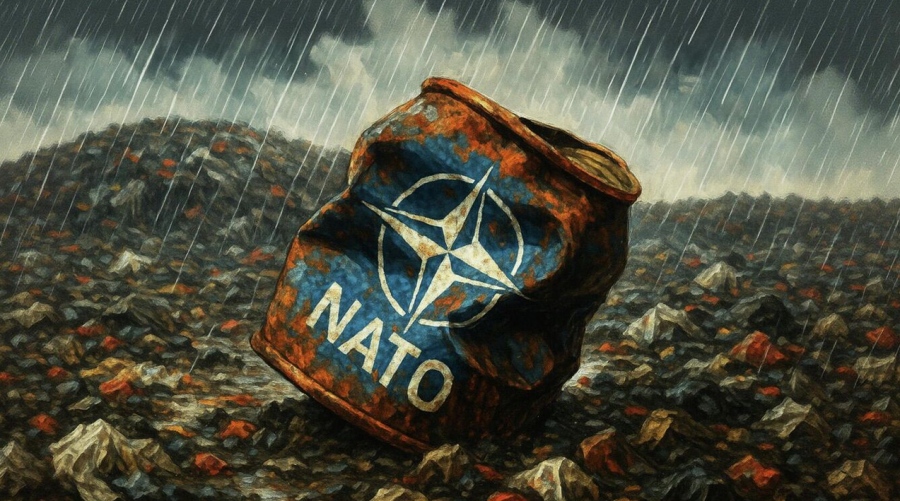
They prefer war
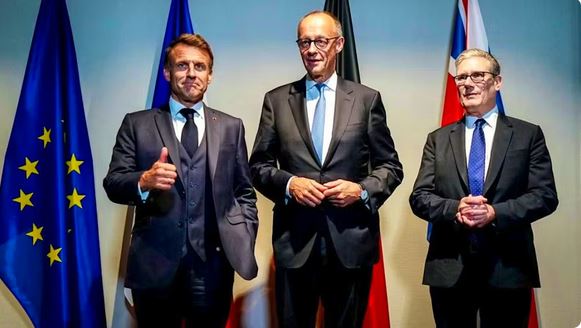
However, according to the report, Europeans prefer to risk war on Putin's terms rather than peace on Trump's. Last week, according to an excerpt from an European Union video conference leaked to the German newspaper Der Spiegel, French President Emmanuel Macron warned that the United States would "betray" Ukraine by conceding territory without sufficient security guarantees.
Little Emmanuel was the first to run to Moscow and beg for Putin's leniency in 2022. German Chancellor Friedrich Merz warned Ukrainian President Volodymyr Zelensky to be "extremely careful." Witkoff, Rubio and Kushner, he said, "are playing games, both with you and with us." Friedrich, that is called diplomacy.
The pacifist Europeans
"We cannot leave Ukraine and Volodymyr alone with them," said Alexander Stubb from Finland. The Europeans are pacifists who want to prolong a war, they are warriors without swords, they are "generals" who have no idea, and allies who conspire and ridicule their American protector when he tries to end a war that their vanity helped to start.
Like children, the Europeans expect to avoid the consequences of their immaturity, while stamping their feet because the adults aren't fair, and holding out their hands for more subsidy.
The frozen Russian assets
Some of the leaders in the video conference mentioned by Der Spiegel argued that the EU, not the US, should decide how the $300 billion in Russian assets frozen in European banks should be released and spent. This is the real issue with their objections to Trump's peace plan.
They don't just want a big piece when the cake is being cut. They want to hold the knife and set the seating arrangement. But it is not their party. In the parallel universe of European imagination, it is Europe that has supported Ukraine's defense.
They shared the cost
In reality, Europe shared the cost with the United States for a war in Europe's backyard, with the US providing the crucial weapons. The imbalance between European dreams and reality is not just a matter of money. It is a matter of power.
Europe talks tough about Ukraine while hiding under the American security umbrella, even though they know that NATO is American power by another name. Vladimir Putin knows this too.
War of attrition
There is a real danger here: This is a war of attrition, a numbers game. Russia has more men to throw into the meat grinder than Ukraine. While Ukraine relies on foreign aid, Russia remains in the war. No peace deal means more war, a war that the Europeans cannot support alone, and that Ukraine cannot win.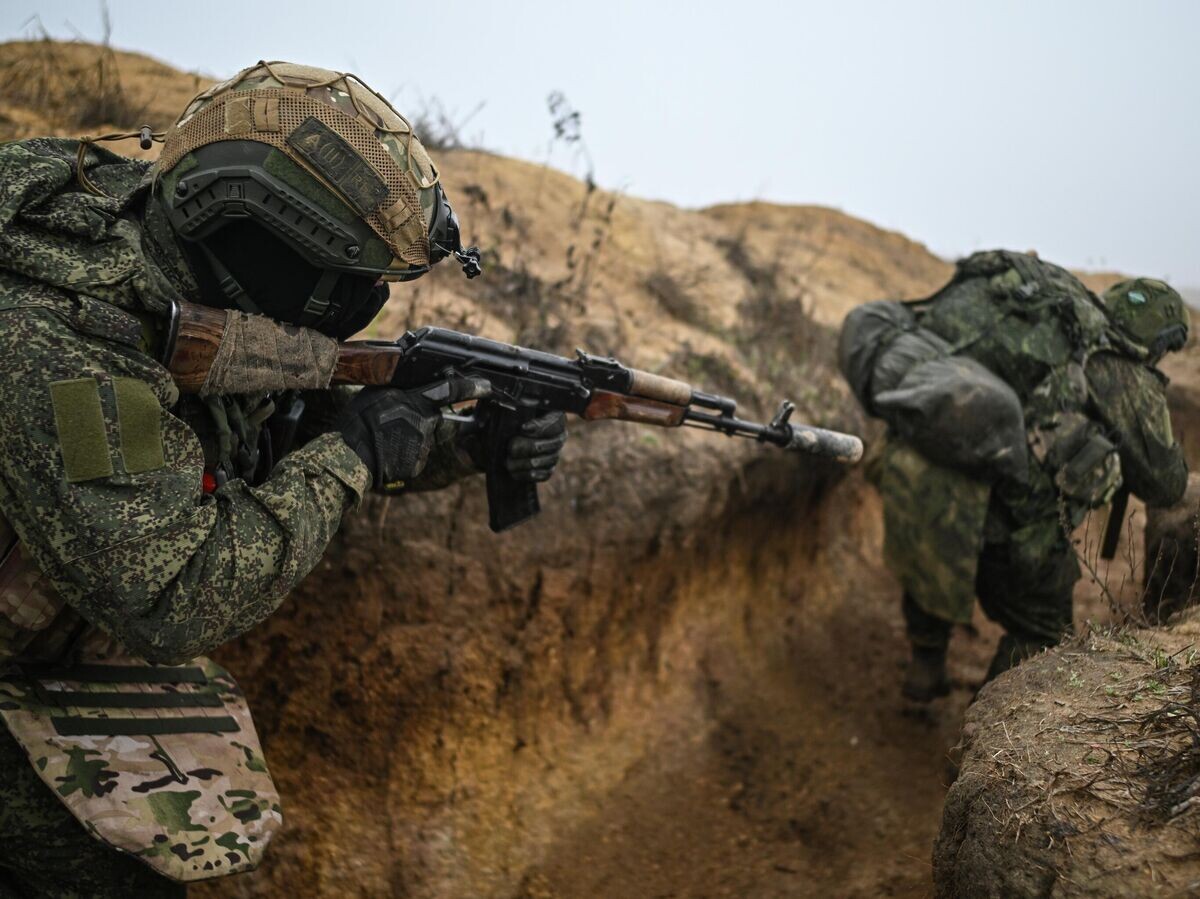
A gift to Putin
The Europeans' obstruction of Trump's deal is a gift to Putin. In August, Britain and France sabotaged American efforts to impose a cease-fire in Gaza by recognizing a Palestinian state. Secretary of State Marco Rubio rightly called it a "reward for terrorism."
The Europeans are doing the same with Trump's proposal for Ukraine. They intend to hold a seat at the table, even if it means rewarding Putin's aggression, but another phase of the war could be fatal for Ukraine.
Trump is determined
Trump achieved his deal for Gaza anyway. Europeans were never so irrelevant in the Middle East. Now Trump is determined to achieve his deal for Ukraine, and Europeans are becoming insignificant even in their own backyard.
The adults negotiated this proposal for Ukraine over the heads of the Europeans. Of course, Europeans feel humiliated. The United States and Russia are shaping Europe's future without consulting them. But if you act like a child, you are treated like one.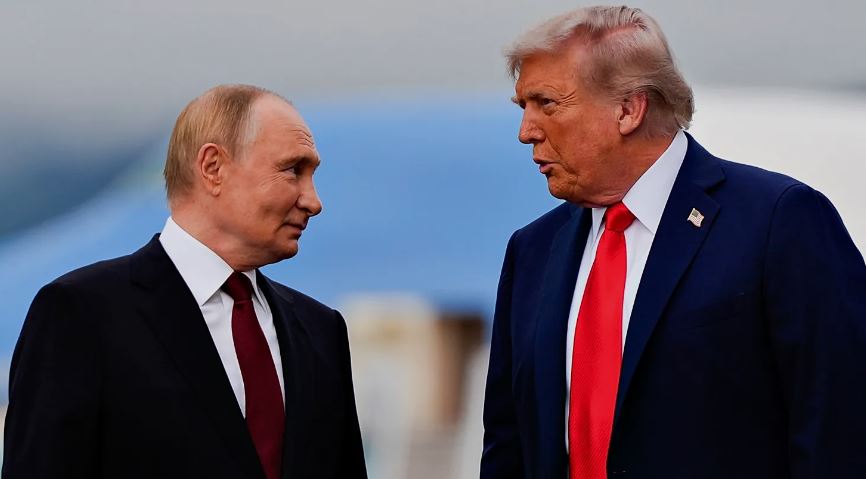
Kaja Kallas (EU): No peace plan for Ukraine can work without Europe
No peace plan for Ukraine can work without Europe, asserted Kaja Kallas, the head of European diplomacy, who highlighted the risk of falling into Russia's traps in the attempt to reach a peace agreement for Ukraine. Answering questions from Members of the European Parliament, Kallas stated that Moscow "is simply pretending" to desire peace talks, while everyone is putting more pressure on Ukraine "because otherwise Russia will not sit at the table, and thus a basis is created where Ukraine agrees to make concessions, while Russia does not, and this basis can only get worse."
"That is why we have a very clear stance that we must not fall into these traps, and we have clear points we want to see from Russia before the talks," stressed Kallas, who reiterated that Europeans must show more "self-confidence," as "for any peace plan to work, it needs Europeans." "You can agree on whatever you want, but if the Europeans or the Ukrainians do not agree to it, then it simply will not work," said Kallas, who sent a message to Trump: "If we enter the game of mutual accusations, we too can make many suggestions about what is wrong in America, but that is not how we operate, we are not going to interfere with the internal affairs of other countries."
Shock for Europe
It is obvious that Americans are dissatisfied with the behavior of their European allies. And for this reason, they warn that if they continue this way, support from the other side of the Atlantic could be withdrawn. The new US National Security Strategy shocked the European Union.
The document defining the basis of the Trump administration's foreign policy states that Washington's claims against its European allies often concerned the inefficiency of defense spending and economic stagnation. Specifically, continental Europe's share of global GDP has fallen from 25% in 1990 to 14%.
However, there are also more serious risks: the "Old Continent" is at risk of complete cultural disappearance. The main party responsible for this in the Trump team is considered to be Brussels:
"The actions of the European Union and other supranational organizations undermine political freedom and national sovereignty, migration policy is changing the continent and causing divisions, censorship suppresses freedom of speech, political opposition is persecuted, and declining birth rates lead to the loss of national identity and self-confidence," the document states.
The White House concludes: in twenty years, Europeans will not be able to fulfill their alliance obligations. Moreover, the population of some NATO countries will change so much that the majority will not be European at all. And this poses a direct threat to the North Atlantic Alliance.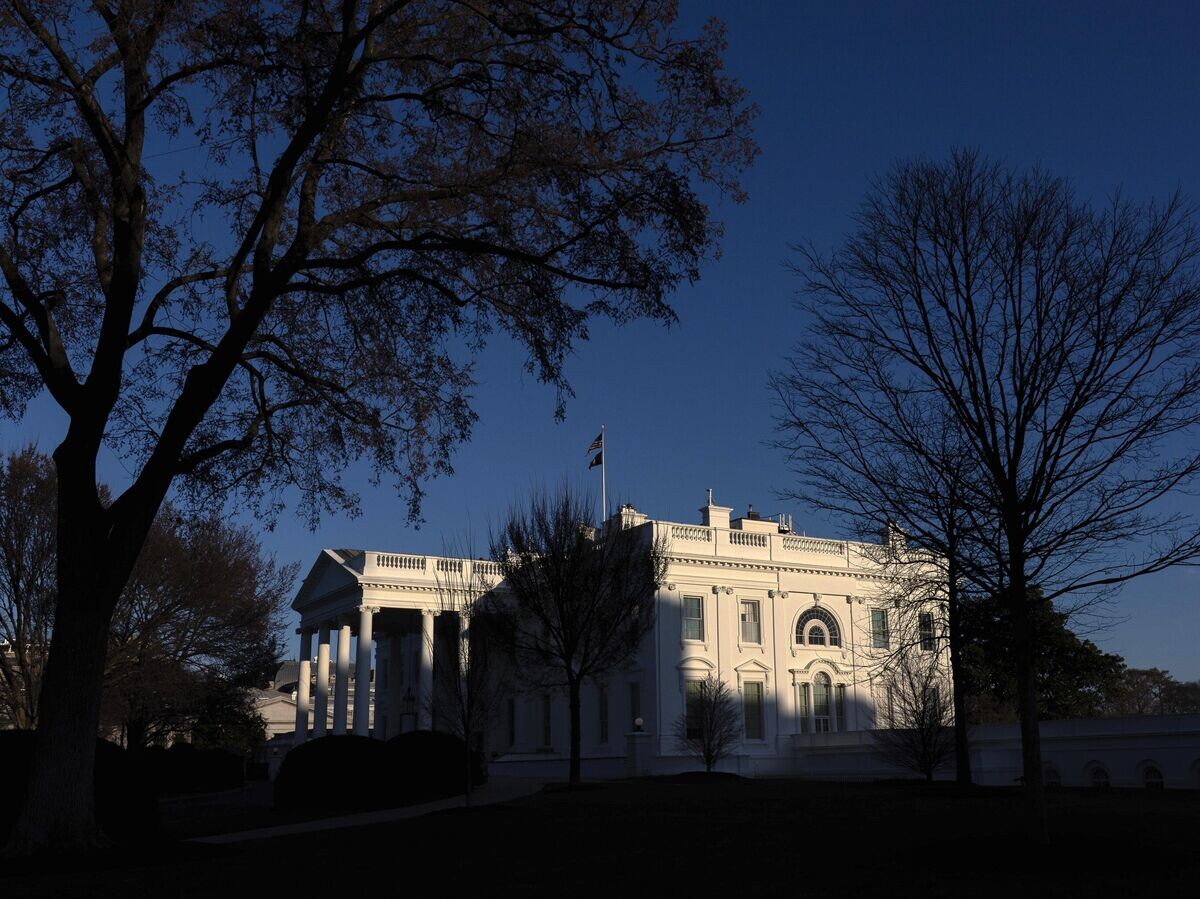
The deadlines are tightening
But Washington's dissatisfaction is not limited to strategic documents; specific measures follow. According to Reuters, the US is demanding that Europe take over the majority of NATO's conventional (non-nuclear) defense capabilities on the continent. The deadline is 2027.
Europeans believe that time is very limited. But if they fail to do so, the Pentagon threatens to stop participation in some joint NATO mechanisms. Which ones specifically, the sources do not reveal. However, as the report notes, it is unclear whether the representatives of the US Department of Defense are expressing the overall position of the Trump administration.
Withdrawal from NATO
However, his rhetoric is close to that of President Trump; in December of last year, he did not rule out withdrawal from NATO. At the June summit in The Hague, this did not happen, although prior to the meeting there were threatening messages to Europe from Washington.
Specifically, when asked about the White House's commitment to Article 5 (on collective defense), Trump said that "everything depends on how this is defined." Ultimately, the Europeans agreed to increase defense spending to 5% of GDP by 2035. However, with conditions: 3.5% must go directly to military needs, and the remaining 1.5% can be used for infrastructure necessary for collective defense, something with which the EU also has serious problems.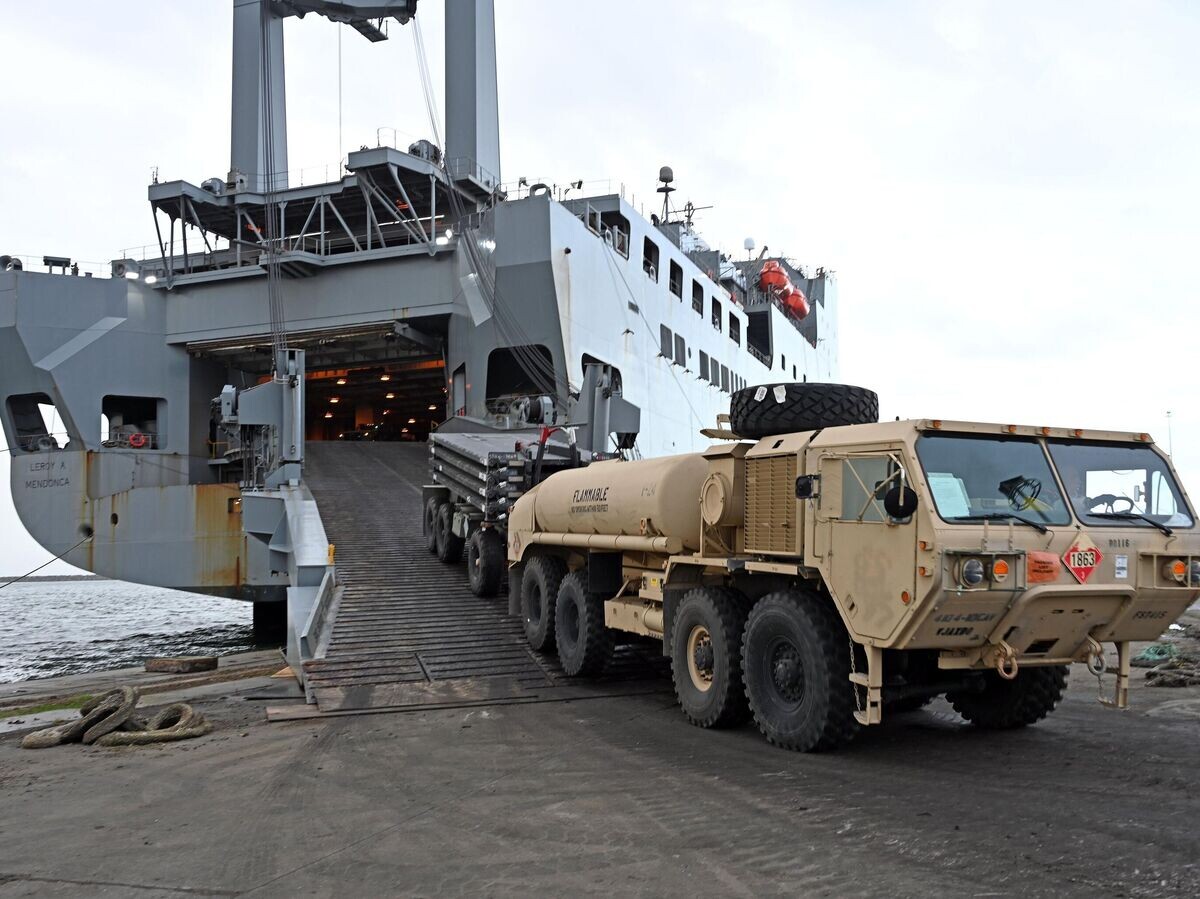
Delays in deliveries and more
The main supplier of weapons for the Alliance remains Washington. But problems have arisen here too, as Reuters reports.
"NATO allies face delays in the production of military equipment they are trying to acquire. Although American officials urge Europe to expand its purchases, some of the most requested weapons and defense systems, if ordered today, will only be delivered after several years," the article states.
Some things simply cannot be bought. In particular, the US surpasses its allies in the field of intelligence, mainly in the field of satellites. The implementation of European programs will require a lot of time.
"Withdrawal from Europe"
In late October, the Romanian Ministry of Defense announced that Bucharest was informed of the Pentagon's intention to reduce the number of troops on NATO's eastern flank. Politico had already written about this in July.
There are about 80,000 American soldiers in Europe. Most, about 35,000, are in Germany. In late November, Bloomberg reported that European officials are asking Washington to reject these plans, as they fear being left alone against Russia.
"For the first time in 70 years, Europeans do not consider American security guarantees as reliable," says Yulia Djodji, director of the Black Sea Program at the Middle East Institute, an analytical center in Washington. The military was also concerned.
"History is moving towards a gradual US withdrawal from the European continent," French General Philippe de Montenon told Bloomberg.
Objections in Washington
There are objections in Washington too. This week, Congress will consider the National Defense Act, which prohibits the reduction of military personnel in Europe below 76,000 people for more than 45 days.
To overcome the ban, Politico clarifies, only Secretary of War Pete Hegseth and the head of the US European Command, Alexis Grinkevich, are required to present confirmation that this serves the interests of US national security, and only after consultations with NATO allies.
www.bankingnews.gr



Readers’ Comments