

Elon Musk is calling for the abolition of the European Union, following the imposition of a €120 million ($140 million) fine on his company, the social media platform X. The European Commission announced the fine on Friday, December 5, 2025, after a two-year investigation into violations of the Digital Services Act (DSA), the law adopted in 2022 to regulate online platforms. The violations included "the deceptive design of the 'blue checkmark,' a lack of transparency in the advertising database, and the failure to provide access to public data for researchers," the European Commission stated on Friday.
"Bulls---"
Responding to the decision, Musk posted on X, calling the ruling "bulls---". On Saturday, he escalated his criticism, saying, "The EU should be abolished and sovereignty returned to individual countries, so governments can better represent their people." Musk’s statements come at a time when top US government officials are intensifying their opposition to the decision. US Secretary of State Marco Rubio characterized the fine as "an attack on all American tech platforms and American citizens by foreign governments." In a post on X on Friday, he stated that the imposition of the fine was "a result of EU overregulation targeting American innovation." Andrew Puzder, US Ambassador to the EU, said on Saturday that "the excessive €120 million penalty is the result of EU overregulation against American innovation." "The Trump administration has been clear: we oppose censorship and will challenge regulations that create a heavy burden for American companies abroad. We expect the EU to pursue fair, open, and reciprocal trade—and nothing less."
The EU's charges
The European Commission stated that the violations included "the deceptive design of the 'blue checkmark,' a lack of transparency in the advertising database, and the failure to provide access to public data for researchers." Henna Virkkunen, EU Vice President for Technological Sovereignty, Security, and Democracy, stressed, "With the DSA's first non-compliance decision, we are holding X accountable for undermining user rights and avoiding accountability." X has 60 days to inform the Commission of its plans to resolve the issues with the "deceptive" blue checkmarks. It has 90 days to submit a plan for rectifying the issues concerning the advertising database and access to public data for researchers. The European Commission warned that "failure to comply with the non-compliance decision may result in periodic financial penalties."
Warnings
For years, many in the free speech advocacy community have warned about the threat posed by the European Union, especially with the enactment of the notorious Digital Services Act (DSA). The EU has essentially declared war on free speech and is targeting American companies. This war has just begun with the first fine under the DSA. Unsurprisingly, X was the chosen target—a company many in the EU and US criticize for reinstating free speech protections. Essentially, this is punishment for not succumbing to EU control over online content.
As Steve Watson of Modernity.news points out, the fine exudes the same vindictive tactics the EU has employed since Musk took over Twitter in 2022. It is no coincidence; Brussels is targeting Musk because he transformed the platform into a space for free speech, refusing to censor at the command of unelected technocrats. It is not an isolated attack; it is the culmination of years of threats and harassment. In January 2023, Commission Vice President Vera Jourova had directly warned Musk that his "absolute liberalism on freedom of speech" would not be tolerated, declaring that "the era of the Wild West is over" and threatening sanctions if Twitter did not comply with the DSA. She linked "illegality" to anything the elites consider offensive, setting the stage for today's fine.
In October 2023, Commissioner Thierry Breton sent a letter demanding that X address "misinformation" regarding the conflict in Gaza. Musk countered by asking for a specific list of violations so the public could judge. Breton’s vague accusations—references to reused images and unverified information—highlighted the EU's preference for opaqueness over accountability. Musk pointed this out, "Please list the violations you are alleging on X so the public can see." The EU did not comply with Musk, but the threats continued. Furthermore, Musk revealed documents showing that the EU sent him an official letter demanding he censor Donald Trump during the US 2024 election campaign.
Battleground
Since Musk acquired the company, X has become a battleground for freedom of expression, reinstating banned accounts and prioritizing user content over algorithmic restriction. But for the EU, that is the problem. The DSA empowers regulators to dictate what platforms should promote or suppress, supposedly to combat "hate speech" and "misinformation."
In reality, it is a tool for silencing any dissent regarding open borders, climate hysteria, or anything challenging the globalist agenda. This fine is not isolated; it is part of a disturbing pattern of EU overreach that threatens privacy and free speech across the continent. Take, for example, the proposed "Chat Control" law, which would require backdoors in encrypted messaging applications like WhatsApp and Signal. It is promoted as a child protection measure, but it would sweep up billions of private conversations, exposing users to hackers, scams, and government surveillance. Signal CEO Meredith called it a "catastrophic retreat" that betrays Europe's commitments to privacy.
This is followed by Brussels' aggressive enforcement tactics. In May, the European Commission sued the Czech Republic, Spain, Cyprus, Poland, and Portugal for delays in implementing the DSA—specifically for failing to designate national coordinators or penalties. Critics believe this coerces member states into a surveillance regime, where platforms over-censor to avoid fines, stifling smaller voices and user privacy. At the heart of it all is the EU's obsession with controlling the flow of information. In a speech in Davos (January 2024), Commission President Ursula von der Leyen called misinformation a "primary concern" for the coming years and called for a "new global framework" in which governments and Big Tech collaborate on the surveillance of AI and online content.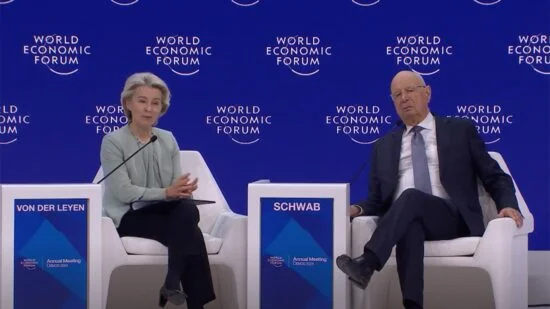
She praised the DSA for "defining the responsibilities of platforms," but the implication was clear: crush platforms like X that do not comply. Jourova echoed the same, meeting with Meta and YouTube executives to ensure "full compliance" while targeting Musk’s "absolute liberalism." These moves expose the hypocrisy: the EU supposedly champions democracy while building an Orwellian machine that monitors, sweeps, and punishes speech. It is not about security—it is about power.
This latest EU attack on X infuriated US Vice President J.D. Vance, who yesterday, as rumors of the impending fine circulated, posted, "The EU should be supporting free speech, not attacking American companies over nonsense." Vance's previous harsh criticisms of European tyranny caused shock in Brussels. In his speech in Munich in February 2025, J.D. Vance accused European leaders of preaching democracy while arresting citizens for silent prayer, annulling elections, and ignoring voters on the issue of mass migration. "No voter on this continent voted to open the gates to millions of uncontrolled migrants," he said, characterizing Europeans as "more than just cogs in a global economy."
www.bankingnews.gr










Readers’ Comments