

Following Hungarian Foreign Minister Peter Szijjarto, who 6 days ago spoke of secret European plans for a military conflict with Russia, Hungarian Prime Minister Viktor Orban also made a public, explosive statement, as he too spoke of a European plan to proceed to war with Russia in 2030 and simultaneously integrate Ukraine into the EU. The leadership of Hungary strongly opposes the European perspective of Ukraine, arguing that this development will signify the end of the EU. In any case, these "revelations" by Orban suggest that Europeans are indeed processing plans for a military conflict with the Russians within the next four years. After all, there are many European officials-politicians and military personnel-who have repeatedly warned that a major war between Europe and Russia is imminent. For its part, Russia recently communicated through its President Vladimir Putin that it has no intention of attacking Europe, stating, however, that if attacked-even now-it is ready to respond.
Orban's bomb
The EU plans to integrate Ukraine by 2030 and start a war with Russia, stated Hungarian Prime Minister Viktor Orbán in a Facebook post. "Dark clouds are gathering in the EU sky. Brussels is preparing for war with Russia, and a start date has already been set: 2030," Orban wrote. The Hungarian Prime Minister noted that the goal of the rearmament program, initiated by Brussels, is to prepare the Union for war within four years.
"Furthermore, 2030 is the targeted date for accelerating the process of Ukraine's accession to the EU," added Orban, who linked these revelations to the parliamentary elections in Hungary in 2026. As he said, in the 2026 parliamentary elections, Hungarian voters will still be able to decide and support a policy of abstaining from military conflicts, as by the next elections in 2030, it will be too late.
On December 6, Orban stated that, from a political perspective, "war is not far away."
What the Hungarian foreign minister had said
Hungarian Foreign Minister Péter Szijjártó stated that Europe is preparing for military confrontation with Russia, which may occur in 2030. He noted that according to European Union (EU) strategic documents, European countries must be at full war readiness by 2029.
Szijjártó, as reported by the Hungarian newspaper Magyar Nemzet, called on citizens to participate in the upcoming parliamentary elections and "not allow us, our children, and our grandchildren to live in Europe under conditions of war in the middle of the 21st century." The minister underlined that the main issue in the coming years will be whether they can prevent the total destruction of the continent.
As the Hungarian Foreign Minister said, Budapest does not support the escalation of military rhetoric in the EU and opposes steps that could "bring Europe closer to direct confrontation with Russia." According to him, the Hungarian government will continue to work so that "the country's citizens do not live in conditions of military conflict." Szijjártó has repeatedly criticized European defense policy. In the summer of 2024, he opposed the European Commission's plans to increase military investments, arguing that this "could lead Europe into dangerous escalation." In mid-2025, Budapest also blocked part of the EU statements regarding support for Ukraine.
The nuclear message from Putin
Faced with these scenarios, Russian President Vladimir Putin had taken care to send a clear and unambiguous message to the European leaders. Specifically, Putin stated without reservation that if Europe desires war with Russia, the latter is ready for any scenario:
"If Europe suddenly wants to start a war against us and indeed does so, then a situation could very quickly arise in which we will have no one to negotiate with," the Russian President said, obviously implying that nuclear weapons would be used in the event of war! Furthermore, answering journalists' questions, Putin noted that Russia never intended, and has no intention, of declaring war on Europe, something the Russian government regularly reiterates.
However, he stressed that if Europe suddenly started a war, there is no doubt about Russia's readiness "at this very moment": "We are not going to fight Europe, I have said it a hundred times. But if Europe suddenly wants to fight us and starts it, we are ready at this very moment," the Russian leader declared.
There is no doubt about it." At the same time, Putin recalled that it was Europe that moved away from Russia and not the other way around: "No one drove the Europeans out of Russia; they moved away on their own," he stressed. The Russian leader noted that Europe has adopted the position of Russia's "strategic defeat" and lives with these delusions.
They are sabotaging Trump
In another part of his speech, Putin revealed that European countries are hindering the government of US President Donald Trump from resolving the conflict in Ukraine: "Europe is not satisfied with the current results and has begun to obstruct the efforts of the current American administration and President Trump to achieve peace through negotiations. They themselves have abandoned the peace talks and are obstructing President Trump." According to him, all the changes that Europe proposes to the peace plan have the sole aim of hindering the process.
The President noted that the Europeans themselves have withdrawn from the negotiations on Ukraine. Europe has no peace agenda, it is "on the side of war," the Russian president noted, pointedly stressing that at this moment Russia is acting carefully, "surgically," in the case of Ukraine. However, if Europe decides to start a war with Russia, the situation will evolve completely differently: "If Europe suddenly starts a war against us, I think it will evolve very quickly. It is not about Ukraine," he noted. "With Ukraine, we act surgically, carefully. It is not about war in the immediate, modern sense of the term."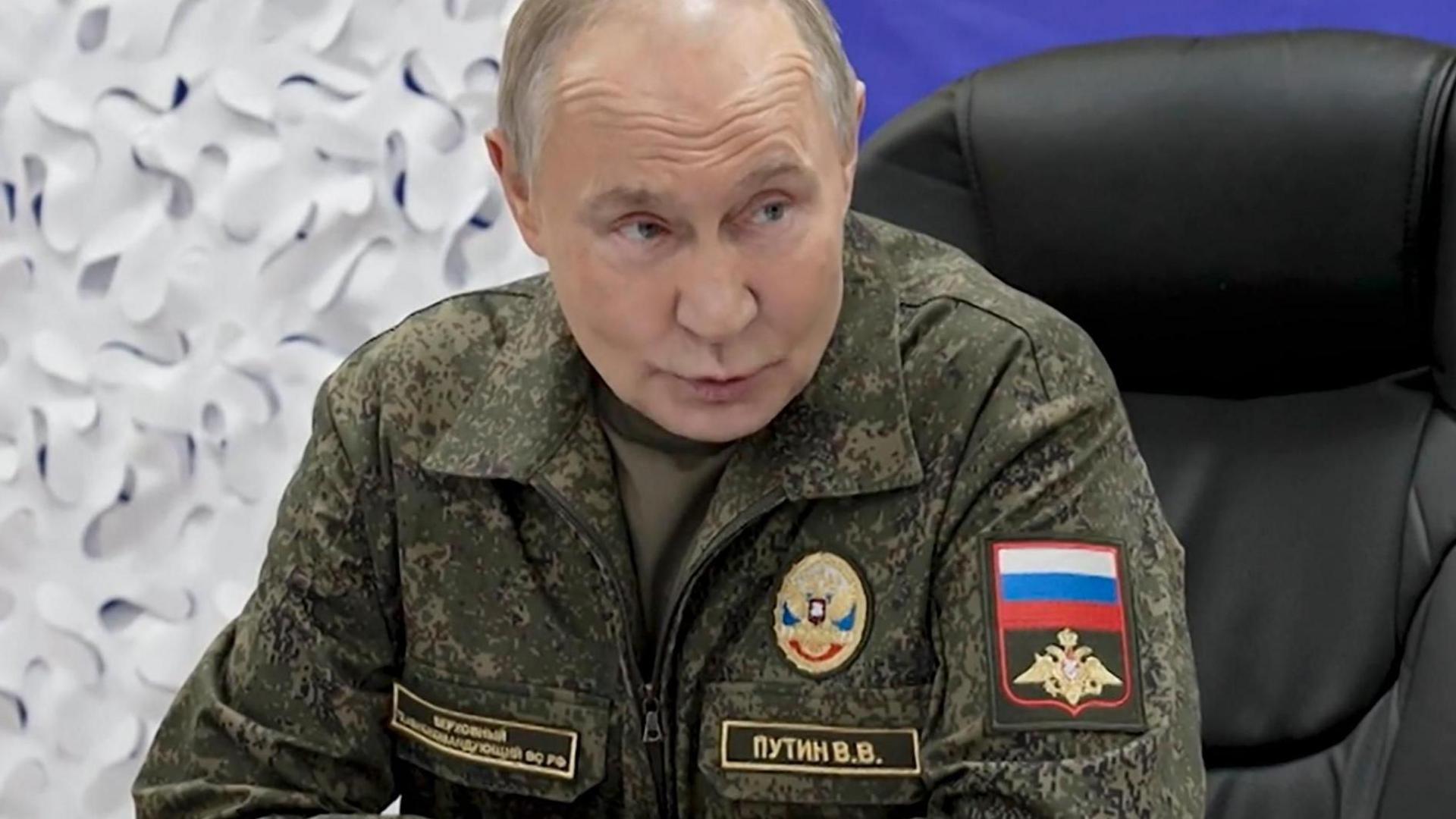
Warnings from Russia
In response to these scenarios, the Russians repeatedly rush to warn of the tragic consequences that will ensue. Russia's Ambassador to Belgium, Denis Gonchar, stated that NATO and the European Union have begun preparing for a major war with Russia. He clarified that NATO member states are terrifying their citizens with non-existent plans by Moscow to attack the coalition countries. "The EU is promoting unrestrained militarization, destroying the original concept of a united Europe for peace and prosperity, turning the EU into appendices of NATO," Gonchar stated. The diplomat added that Moscow does not desire confrontation, but, along with its allies, is working to create a common security architecture in Eurasia. Russian MP Andrey Kolesnik stressed that there are indeed indications that Europe is preparing for a major war with Russia.
Ηowever, as he said, the Western world should take into account the devastating consequences this war will have on a global scale. "They are preparing for World War III and the destruction of the planet. Our opponents in the Western world, and the United States as well, must understand this. If there is a war with Russia, as our ambassador said, this will be synonymous with World War III, which, as we know, will end with a nuclear winter and the disappearance of humanity," he typically stated.
Kolesnik also mentioned that Europe's preparation for war is evident from the totality of hostile actions taking place near the Russian borders. He included military exercises, the flight of foreign bombers and reconnaissance aircraft, as well as the passage of warships-nuclear weapon carriers, while military equipment is simultaneously being sent from the US to Europe, despite the peaceful statements of Western leaders.
What they are preparing in Germany
German Defense Minister Boris Pistorius recently stated that the war between NATO and Russia could start before 2029. However, he mentioned that there are also those who believe the conflict could escalate as early as 2028. "Some military historians consider that we have lived our last peaceful summer," Pistorius typically stated. The German minister underlined the need to strengthen the armed forces of NATO member states for possible military actions against Russia, pointing out that the coalition already has significant deterrence potential "both at the conventional and nuclear level."
Secret military planning in Germany
Meanwhile, it has been reported several times that Germany and other NATO countries are preparing a secret plan for a military front against Russia. The Wall Street Journal claims that Germany has a secret plan ready in case of war with Russia.
Based on the report, German authorities have been secretly developing an extensive plan for several years in case of military confrontation with Russia. The document provides for the transfer of hundreds of thousands of NATO troops eastward. Approximately 800,000 soldiers from Germany, the United States, and other alliance countries will use German infrastructure to move eastward, as stated in the secret document. The plan, which is 1,200 pages long, analyzes in detail which ports, rivers, rail, and road infrastructure will be used. It is noted that the existence of such a document indicates a return to the values of the Cold War era.
However, it is reported that Germany faces several difficulties that must be taken into account, and for this reason, in the event of a full-scale conflict, it will serve as a NATO staging ground but will not be on the front line.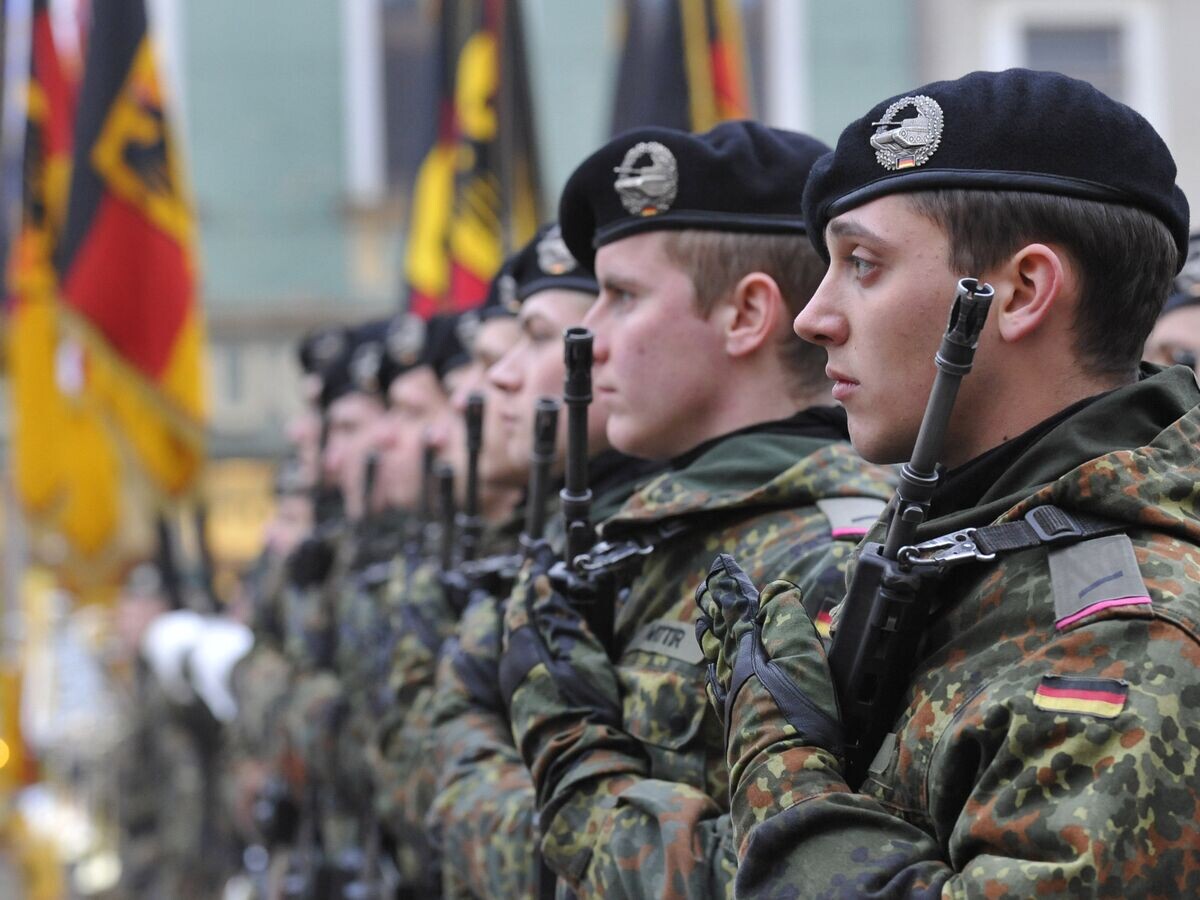
The army lacks money for modernization
Last year it was reported that the armed forces of Germany need additional money for modernization, as the special fund of €100 billion is not enough. Through this fund, the German army managed to finance the purchase of new fighter jets, armored personnel carriers, and ammunition. However, this is clearly insufficient for creating a strong defense industry.
The WSJ also points out that modern German infrastructure needs repairs and is not suitable for military use, which limits the mobility of troops in case of war. According to authorities' estimates, highways and bridges need repair.
Other problems include complex procurement rules, data protection laws, and other regulations that apply in peacetime. Also, the execution of the plan requires a change in mentality.
Changes in Britain as well - The 5 principles
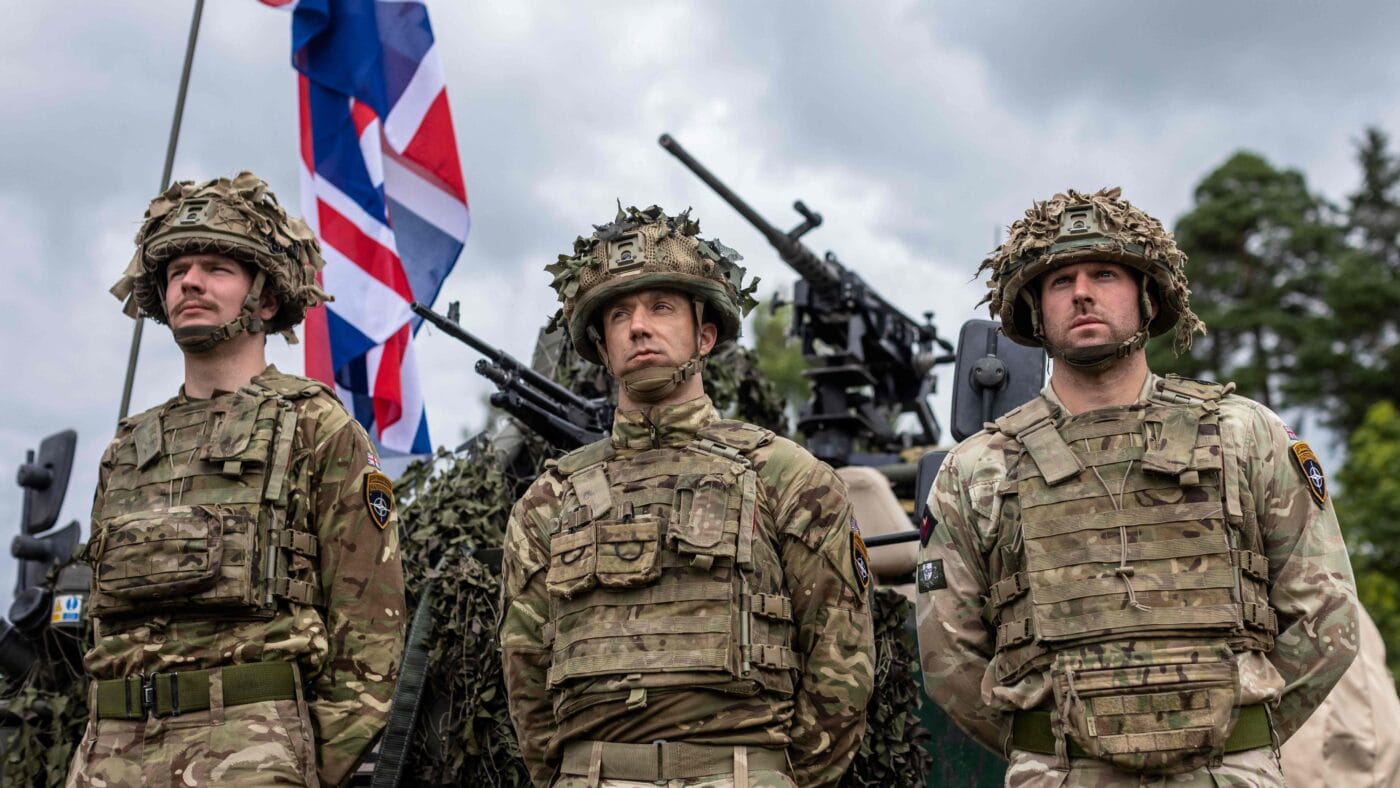
But beyond Germany, Britain has also begun a major military reform. "We are moving to a state of war readiness, which will become the main goal of our armed forces," said Prime Minister Keir Starmer in June. "When we are directly threatened by states with advanced military capabilities, the most effective way to deter is to show that we are ready and able to maintain peace through strength." As is obvious, he was referring to Russia. In the Strategic Defence Review report, Russia is characterized as a "direct and urgent threat." The changes expected for Britain are based on five principles:
-
NATO First - London must take a leading role in the alliance, which will be the main mechanism of European security.
-
Transition to war readiness - stronger, "integrated" armed forces are needed, adequately equipped for the wars of the future.
-
Engine of growth - military reinforcement should act as a lever for the economy through job creation and cooperation with the private sector.
-
Innovations from the Ukrainian lessons - utilization of experiences in the use of drones and digital warfare gained from the conflict in Ukraine.
-
National participation - society must actively participate in ensuring its own security. On the land component, London decided to rely on the "20-40-40" model, where 20% of the power comes from conventional crewed means, 40% from reusable unmanned systems, and the remaining 40% from single-use precision weapons and kamikaze drones. Analysts argue that Britain focuses too much on how it will withstand the first stage of a war. However, if the conflict is prolonged, defeat will be difficult to avoid. As reported, the active soldiers in the British army are three times the number of reservists. This means that there will be no one to replace those lost, while resources for mass mobilization are also lacking. At the same time, the current strength of the British army is not impressive-just 76,000 people.
Preparation in France as well
At the same time, France is also engaged in war preparations. Characteristic were the statements of French General Fabien Mandon, Chief of the French Armed Forces, who caused unrest when he said that the country must prepare for possible future losses against Russian aggression. Last October, Mandon had stated that the French armed forces must be ready for a potential conflict within the next 3 to 4 years, amid the supposed Russian threat.
"If our country shrinks back because it is not ready to accept that it will lose its children, to suffer economically, as the priority, for example, will be given to defense production, if we are not ready for this, then we are under threat. I set a goal for the armed forces to be ready within 3 to 4 years, but I need the nation to be ready to support these efforts, if we need to undertake them," the General stated at the French mayors' conference.
As he said, France has "all the economic and demographic forces to contain the Moscow regime," but lacks "the spiritual strength to accept that it will need to harm itself" for self-protection reasons.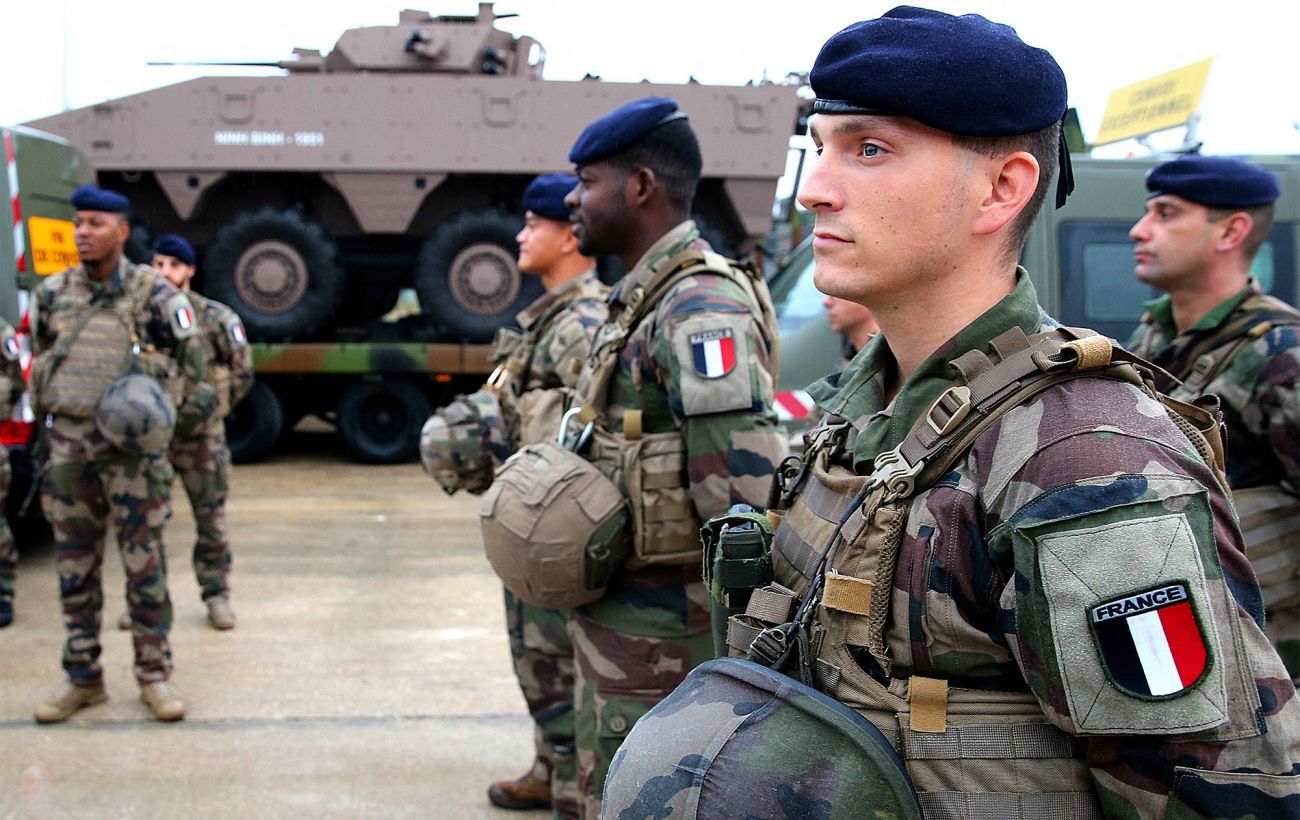
Fabien Mandon had stated in an interview with the newspaper Ouest-France that France "is seriously preparing" for military threats, and that its armed forces must be ready for a potential conflict between NATO countries and Russia.
www.bankingnews.gr


Readers’ Comments